Keywords: World Mission Society Church of God; An Sang-hong; God the Mother (Zahng Gil-jah); Theological divergence.
1. Introduction
Over the past few decades, the global religious landscape has witnessed an explosion of New Religious Movements (NRMs) rooted in Christianity across East Asia. South Korea has emerged as a hub for the development of these movements, driven by a synthesis of Western theology and local culture. Among them, the World Mission Society Church of God (WMSCOG) often referred to as the “Church of God the Mother” is the organization that has experienced the most rapid growth while also being the most controversial. The emergence of this organization in Vietnam has elicited diverse reactions from society, regulatory authorities and traditional religious denominations. From a scholarly perspective, this article does not pass judgment on the validity of its spiritual claims; rather, it focuses on dissecting the organization’s ideological structure, identifying theological departures from mainstream Christianity and in doing so, unraveling the sources of its appeal as well as its broader social implications.
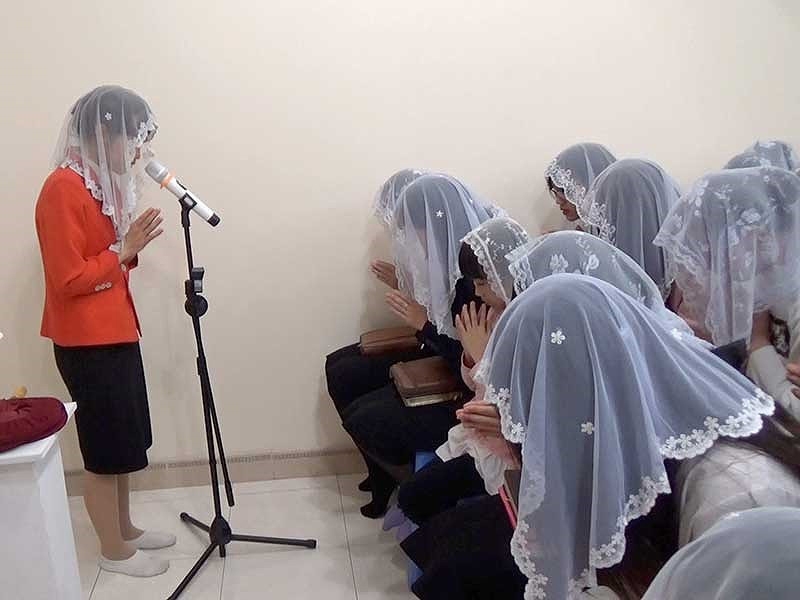 The activities of the World Mission Society Church of God, which bear the hallmarks of a cult, have been banned in Vietnam
2. Historical Origins and Formation of the WMSCOG
2.1. Role of An Sang-hong
The person who laid the initial foundation for this movement was Ahn Sahng-hong (1918-1985). Born during the Joseon dynasty in what is now South Korea into a family influenced by traditional values, Ahn Sahng-hong later joined the Seventh-day Adventist Church in 1947 and was baptized in 1948.
However, due to profound disagreements regarding biblical interpretation, specifically concerning the timing of the end times and the observance of Old Testament laws - Ahn Sahng-hong was expelled from the Seventh-day Adventist Church in 1962. In 1964, he officially established his own religious group, known as the World Mission Society Church of God (literally: “Church of God of the New Covenant Passover”).
During this period, An Sang-hong’s teachings focused on restoring the observances of the early Church practices he believed had been corrupted by the Roman Catholic Church following the Council of Nicaea in 325 AD. He emphasized observing the Sabbath on Saturday and celebrating the Passover with bread and wine, while rejecting symbols such as the cross and holidays like Christmas.
2.2. The Turning Point of Separation and the Appearance of God the Mother
In 1985, An Sang-hong died suddenly following a stroke, leaving no clear directive regarding an absolute spiritual successor; this triggered a deep schism within the religious movement he had founded.
The first branch, the World Mission Society Church of God (New Covenant Passover), has chosen to adhere to the original writings of Ahn Sahng-hong. They regard him as a prophet and a great pastor who has since passed away and they vehemently reject the concept of a “God the Mother”.
The second branch, led by Kim Joo-cheol and a woman named Zahng Gil-jah, undertook a bold theological reform. They relocated their headquarters to Bundang, in the city of Seongnam, and established the World Mission Society Church of God. This branch reveres Ahn Sahng-hong as the second person of the Trinity (Jesus Christ) who has returned in the flesh and honors Zahng Gil-jah as “God the Mother” living on earth.
It is this second branch that has rapidly established a global missionary network and it serves as the primary subject of examination in this article, under the name “World Mission Society Church of God”.
3. Core theological divergences
3.1. Divergence in Theology – The Construction of God the Mother
The most defining and shocking difference of this sect is the introduction of a feminine essence into the supreme structure of God.
Firstly, the WMSCOG’s method of interpreting the scriptures
In order to legitimize the presence of God the Mother, the theologians of this organization rely on several key biblical passages, most notably Genesis 1:26-27: Then God said, Let Us make mankind in Our image, in Our likeness... So God created mankind in His own image, in the image of God He created them; male and female He created them.
They argue that the use of the term “Us” demonstrates that God is not a singular being possessing a masculine nature. Since humanity was created as both male and female in the image of God, they infer that there must be two corresponding beings within the Godhead: a God in a masculine form (God the Father) and a God in a feminine form (God the Mother).
They further cite Galatians 4:26 which states that “the Jerusalem that is above is free, and she is our mother” as well as Revelation 22:17, which depicts the Spirit and the Bride offering the water of life. Based on these passages, they assert that in the end times, for humanity to attain eternal life, it is essential to seek out and believe in the Bride that is, God the Mother, who exists in the flesh on this earth.
Secondly, a rebuttal from the perspective of orthodox Christian theology
All major Christian denominations such as Catholicism, Orthodoxy, and the majority of Protestant traditions regard the aforementioned argument as a fallacious interpretation of Scripture.
About the terms “Elohim” and “Us”: The WMSCOG has conflated the third person (the Holy Spirit) and the second person (Jesus) into a single individual - Ahnsahnghong, while simultaneously positing “Mother” as a distinct entity, existing as a counterpart to God the Father. The current phrasing fails to highlight the logical breakdown inherent in their theology: they ostensibly acknowledge the Trinity (Father, Son, and Holy Spirit) yet simultaneously introduce a dualistic model (Father and Mother).
About the incorporeal nature of God: The Bible affirms that God is Spirit (John 4:24) and transcends all physical and biological limitations, including gender. The personification of God as a specific woman - Zahng Gil-jah is condemned by traditional Christianity as blasphemous and heretical.
Thirdly, divergences in Christology and eschatology
A second core point of divergence lies in how the returning Christ is identified. Traditional Christianity holds that Jesus will return in glory at the end of the world, descending upon the clouds so that every eye may behold Him. In contrast, the World Mission Society Church of God has developed a Christological framework deeply rooted in a localized eschatology, one inextricably linked to the nation of South Korea and the individual Ahn Sahng-hong.
Fourthly, the prophecy concerning the fig tree and King David
The WMSCOG has developed a complex system for calculating dates, based on the metaphor of the fig tree found in Matthew 24:32-33. They argue that the “fig tree” serves as a unique symbol for the nation of Israel. The establishment of the State of Israel in 1948 marks the moment the fig tree puts forth its leaves - a sign that Christ has returned to the world, appearing quietly in the flesh. Coincidentally, 1948 was also the year Ahn Sahng-hong received baptism within the Seventh-day Adventist Church.
They also make use of the prophecy concerning the kingship of David. King David reigned for 40 years. During His first coming, Jesus carried out His ministry for only three years before being crucified. Therefore, the One who returns must complete the remaining 37 years of ministry to reach the total of 40 years. Their theological system calculates the total duration of his ministry according to their own cyclical framework: Ahn Sahng-hong began his missionary work in 1948 and passed away in 1985, a span of exactly 37 years. For followers of the WMSCOG, this serves as an irrefutable, divinely mathematical proof that Ahn Sahng-hong is, in fact, God the Holy Spirit incarnate.
Fifthly, the Eastern perspective
Up to now explain why Christ would return in South Korea rather than in Jerusalem, this sect cites Isaiah 46:11 which mentions calling a "bird of prey from the East” and Revelation 7:2, which refers to an angel bearing the seal of God ascending from the direction of the sunrise. They interpret the “East” relative to the island of Patmos, where the Book of Revelation was written as being the nation of South Korea.
3.3. Divergences in soteriology and ritual practice
While the Protestant movement emphasizes the principles of Sola Fide (faith alone) and Sola Gratia (grace alone) maintaining that human beings are saved through faith in the blood of Jesus shed on the cross, rather than by their own works, the World Mission Society Church of God establishes a mechanism for salvation that is highly conditional and strictly dependent on one’s actions.
Firstly, the Passover - an exclusive ticket into the Kingdom of Heaven
The WMSCOG claims that all contemporary Christian churches are headed to hell because they have abandoned the Passover, which was established by Jesus during the Last Supper. They argue that the Council of Nicaea in 325 AD, presided over by Emperor Constantine, abolished the Passover and replaced it with Sunday worship and Christmas, observances they contend are rooted in the pagan, sun-worshipping traditions of ancient Rome.
For them, consuming bread and wine during the Passover observed according to the Jewish calendar is the only way to receive a protective mark against accidents and calamities during the end times, and is also a prerequisite for attaining eternal life.
Secondly, the rejection of the Cross
While the Cross stands as the ultimate sacred symbol of Christ’s love and sacrifice for Christianity worldwide, the World Mission Society Church of God views it as an abominable form of idolatry. They argue that the Cross was originally an instrument of execution used by the Roman Empire and was later introduced into the church as a pagan symbol. Consequently, they equate the displaying or venerating of the Cross with the sin of idolatry, a grave violation of the second of the Ten Commandments.
4. From the perspectives of sociology and the psychology of religion
A major question arises for researchers: How could a religious group with a disjointed, somewhat contrived set of doctrines, one that runs counter to thousands of years of Christian tradition attract millions of followers across more than 175 countries (according to its own self-reported figures)? Answering this requires an analysis of the organization’s operational structure and the psychological techniques it employs.
Firstly, an apocalyptic mindset and the fears of the time
WMSCOG operates based on a highly intense eschatological framework. They continuously compile information regarding natural disasters, pandemics, wars and climate change to argue that the end of the world is imminent.
The fear of death and divine retribution stands as one of the most potent psychological motivators for human beings. By offering a concrete solution, the “Passover mark”, this sect provides an immediate psychological lifeline, helping to alleviate the existential anxiety experienced by individuals in an increasingly unstable modern society.
Secondly, alternative spiritual family structures
The name “World Mission Society Church of God” (literally:
“Church of God the Mother”) carries an inherent, powerful psychological appeal. In the minds of many, the figure of a “Father” is often associated with rules, judgment, and discipline, whereas the figure of a “Mother” represents tolerance, nurturing, and unconditional love. By emphasizing a maternal deity, the group taps into the psychological voids of individuals who are wounded, lonely or lacking emotional support within their own families.
This organization establishes small, evangelistic groups structured as a tightly-knit “spiritual family”. When a new member joins, they are met with an intense, overwhelming display of care and affection - a phenomenon known in the sociology of religion as “love bombing”. This fosters a profound sense of belonging, leading adherents to gradually shift their primary allegiance from their biological family to their church family.
Thirdly, proactive evangelism methods and group pressure
Unlike traditional churches, which tend to be passive waiting for congregants to come to them, the WMSCOG employs a proactive, two-person outreach approach, often targeting vulnerable groups such as young people, university students and stay-at-home housewives. For students, the pressure stems from the psychological crises of early adulthood, while for homemakers, it arises from social isolation, postpartum depression, or a lack of emotional support. They employ smart electronic devices to display short, elaborately edited videos featuring depictions of catastrophes alongside carefully curated, decontextualized Bible verses designed to swiftly dismantle the target’s capacity for critical thinking.
5. Context and current situation in Vietnam
Upon its introduction into Vietnam, typically through returning migrant workers, students coming back from South Korea, or foreign experts, this organization has undergone various distortions and come into profound conflict with both the indigenous cultural foundation and the existing legal framework.
Firstly, profound cultural conflict
Vietnam is a nation profoundly influenced by Confucian thought and the practice of ancestor worship. Filial piety - the act of caring for one’s parents and honoring one’s ancestors serves as a core moral value that underpins social stability.
Upon joining the World Mission Society Church of God, many adherents driven by an absolute belief in the impending end of the world and a view of their earthly parents as merely temporary, physical connections have engaged in extreme behaviors. These include abandoning ancestral altars, smashing incense bowls, refusing to participate in traditional death anniversary commemorations, and even severing ties with their own biological parents. Such actions have inflicted severe psychological trauma on families, fractured the fundamental units of society and provoked a fierce backlash from the community.
Secondly, the perspective of state management and law
Under Vietnamese law, the Law on Belief and Religion affirms that the State respects and protects the right to freedom of belief and religion for everyone. However, the law also strictly prohibits the exploitation of religious activities for personal gain, the disruption of social order and safety, the infringement upon the physical integrity, health, life, or property of others, the violation of the honor or dignity of others and most notably - actions that cause divisions within families or undermine the great national unity.
As this organization lacks an official license to operate in Vietnam and employs various methods of psychological manipulation and religious coercion claiming that failure to make offerings will result in curses, a loss of salvation, or the commission of a sin against God, thereby compelling followers to “voluntarily” contribute out of fear - authorities have repeatedly issued warnings and taken administrative action against these unauthorized gathering sites.
6. Conclusion
The World Mission Society Church of God serves as a quintessential example of a new religious movement in the era of globalization. By transforming its theology of God into a dual-gender model, localizing the figure of Christ and absolutizing Old Testament laws as a means of psychological control, this sect has effectively distanced itself from the mainstream of Christianity. Their growth serves as a reminder to traditional churches regarding their pastoral approaches, while also requiring regulatory authorities to clearly recognize the underlying theological nature of the situation in order to implement firm yet humane solutions aimed at safeguarding family values and the nation’s traditional culture.
References
1. Government Committee for Religious Affairs of Vietnam, Handbook for Identifying Unfamiliar Religious Organizations and New Religious Phenomena in Vietnam Today, Religious Publishing House, Hanoi, 2023.
2. Government Committee for Religious Affairs, Addressing New Religious Phenomena: The Case of the World Mission Society Church of God - Current Situation and Solutions, Religious Publishing House, Hanoi, 2021.
3. Dinh Quang Tien, “Identifying New Religious Phenomena in Contemporary Vietnam and Some Issues Pertaining to State Management”, Journal of Religious Research, No. 08/2019.
4. Le Tam Dac, New Religious Movements: Theoretical and Practical Issues in Vietnam, Social Sciences Publishing House, Hanoi, 2020.
5. Nguyen Thanh Xuan, “Some New Religious Phenomena in Vietnam Today: Characteristics, Impacts and Development Trends”, Journal of Religious Affairs, No. 11/2017.
6. Institute for Religious Research, Proceedings of the Scientific Conference: Religious Fluctuations and Challenges to Cultural Security in Vietnam, Vietnam Academy of Social Sciences, Hanoi, 2022.
7. Vu Thanh Nam, “Value Conflict Between the Teachings of the World Mission Society Church of God and the Vietnamese Tradition of Filial Piety”, Journal of Contemporary Psychology and Sociology, No. 04/2023.
