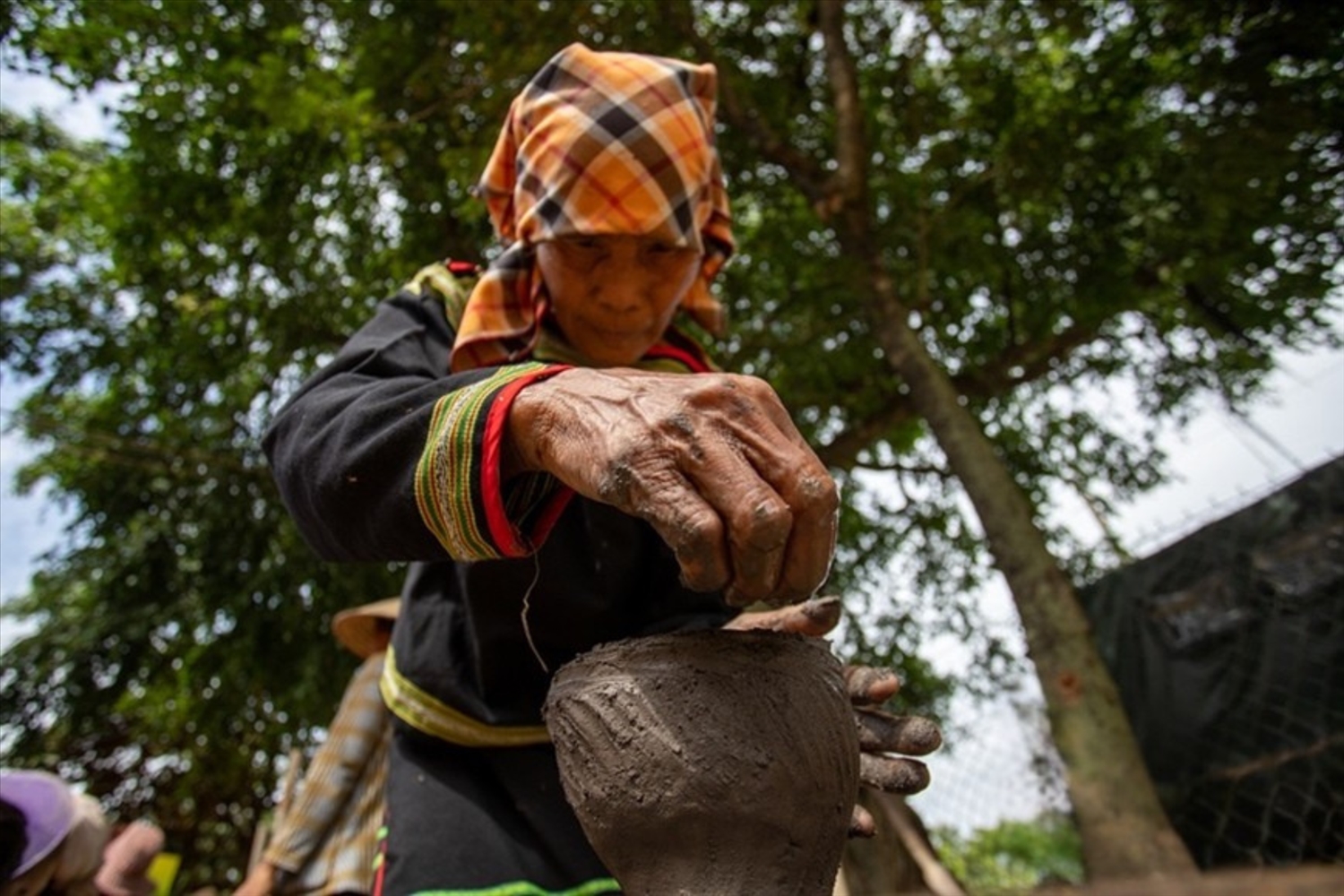
 No potter’s wheel, no molds, no glaze, only clay, fire, and the hands of Mnong women shaping the vessels, transforming Yang Tao black pottery into a precious heritage
Unlike renowned pottery centers such as Bat Trang (Hanoi) or Phu Lang (Bac Ninh Province), Yang Tao pottery has not developed along industrial lines. It exists as a “distinct stream” with many unique characteristics; here, Mnong R’lam women are the sole practitioners of the craft. Instead of using a potter’s wheel, they rely on their own hands and body movements to shape the clay; each woman acts as a “living potter’s wheel”. They move in a circle around the pottery table, using a thin bamboo strip and a wet cloth to shape and smooth the piece and a porcupine quill to draw patterns. The entire production process is carried out entirely by hand without molds or blueprints - resulting in a truly personalized creation. Each product is unique, with no identical counterpart, embodying exactly what many modern consumers are constantly seeking.
The uniqueness of Yang Tao pottery lies in its distinctive black color, which is achieved through firing techniques rather than chemical additives. After being shaped and air-dried, the raw pieces undergo an open-air firing process using le bamboo (cui le) and straw (rom) - fuels that burn intensely without producing embers, ensuring the pottery heats evenly. The product is placed on the bare ground, small objects are arranged inside, large objects are arranged around the outside, and underneath is a layer of dry firewood. After an hour of heating, immediately put it in rice husks to smoke. When cooled, just rinse with cold water, the ceramic will appear a characteristic glossy black color, completely different from other types of ceramic. The method may appear rudimentary, yet it raises a thought-provoking issue. While many craft villages chase after glazes, chemicals and modern technology, Yang Tao pottery preserves a production process that remains virtually unchanged, embodying indigenous knowledge distilled over generations.
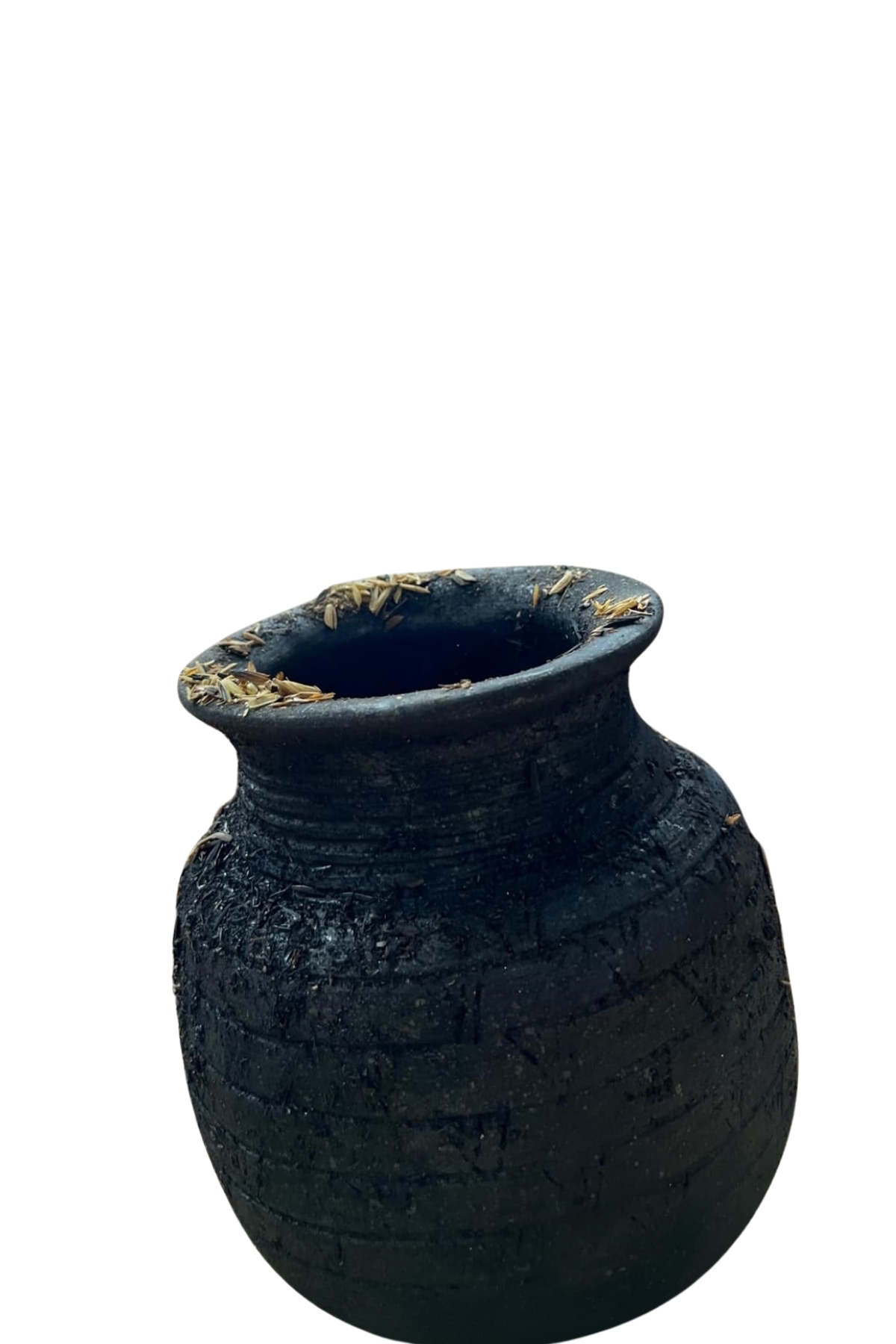 Every step from preparing the clay and shaping the product to painting the patterns is done by hand
In 2024, the Yang Tao pottery craft was recognized as a National Intangible Cultural Heritage. This recognition helps preserve the long-standing craft, fosters local economic and tourism development and honors the ethnic cultural identity. However, this designation also raises a question that is by no means new, how can a craft unsuited to mass production survive in a market economy?
Within the new mindset that views culture as a resource for development, the shift in the value of Yang Tao pottery transforming from ordinary utility items into cultural products deeply imbued with ethnic identity may well be the fitting answer. Yang Tao black pottery does not compete through intricate refinement, nor does it cater to mass tastes; instead, its value lies in three core aspects: Authenticity (remaining virtually unchanged over time), individuality (each product is unique), and cultural significance (deeply rooted in the life of the Mnong people). In an era of industrialization and modernization, these values have not become obsolete; on the contrary, they are becoming increasingly valuable thanks to the distinctive characteristics that have been preserved. Therefore, transforming the Mnong R’lam people’s unique black pottery production process into experiential tourism products, cultural gifts or art displays represents a suitable approach to preserving and sustaining the unique values of this traditional craft in contemporary life. When properly situated within a suitable economic-cultural ecosystem, Yang Tao pottery is not merely a legacy of the past; it can also become a product imbued with profound significance that transcends its mere utility, both now and in the future.
Between the ceaseless changes of life, Yang Tao black pottery endures as a quiet, resonant note in the passage of time. Through earth, fire and the hands of Mnong women, these creations are more than mere objects; they preserve a dialogue with nature rooted in patience and respect. Perhaps in the future, industrial products may continue to dominate the market in the future, fundamental elements like Yang Tao pottery are unlikely to disappear; they are deeply embedded in a community’s cultural memory and resonate with the modern human desire to reconnect with authentic values./.
