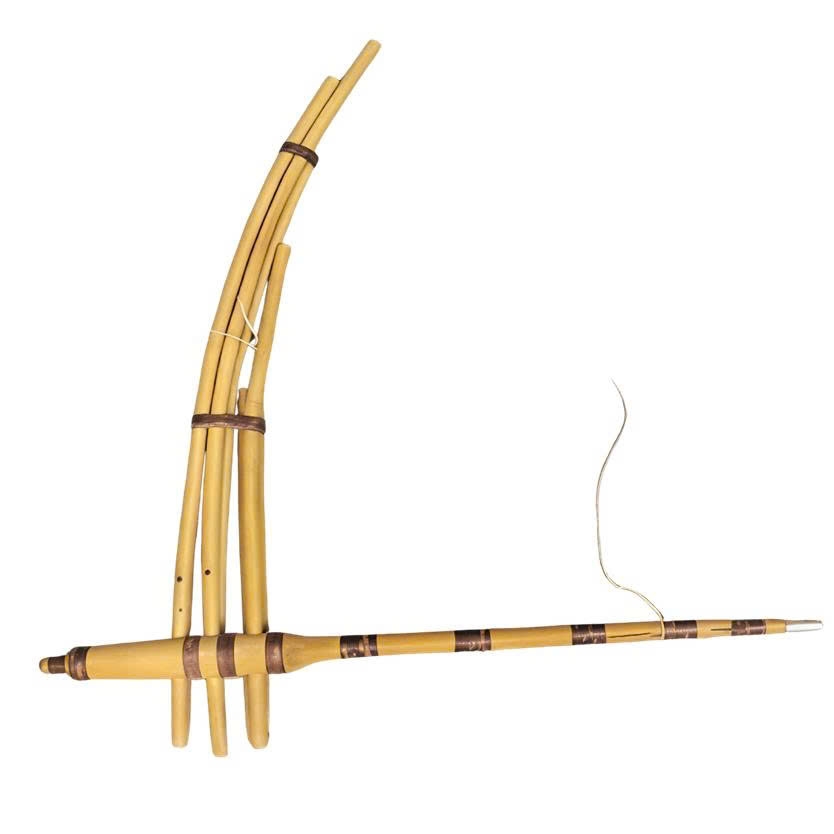
 Mong flute
For the Mong people, the flute (a type of bamboo flute) is not just a musical instrument, but the soul of their spiritual life. From the Gau Tao festival and the traditional Lunar New Year to community rituals, the sound of the flute is always present. The flute can tell stories of love, longing, gratitude to ancestors, or the aspirations for life of the people in the highlands. When the sound of the Mong flute resonates, the Mong people feel as if they are returning to their cultural roots.
The Mong mouth organ is elaborately crafted from wood, bamboo tubes and copper. The craftsman must select good quality wood and mature bamboo, then meticulously assemble many tubes to create the rich, resonant sound. But the value of the Hmong mouth organ lies not only in its craftsmanship, but also in the way the Mong people “breathe life” into it. As the Mong boy plays the reed pipe and dances, each turn and step harmonizes with the rhythm of the pipe, creating a performance that is both powerful and graceful, like a dialogue between man and the mountains.
Mr. Sung Dai Hung, former Director of the Department of Labor, War Invalids and Social Affairs of Ha Giang province (now Tuyen Quang province) shared: The Mong flute is the spiritual language of the Mong people. Through the sound of the flute, they express their emotions, convey messages, and pass on the history of their community. If the Mong flute disappears, a part of the Mong culture will fade away”. This view suggests that the sound of the flute is not only an artistic sound, but also a collective memory of an entire nation.
During spring festivals, the Mong flute often resounds at highland markets. Young men in traditional costumes enthusiastically play the flute and dance around a wide open field. The sound of the flute becomes a bridge for young men and women to meet, for the community to gather. This atmosphere makes spring in the highlands even more vibrant and rich in cultural identity.
Today, the Mong flute is not only present in local cultural life, but has also become a highlight of cultural tourism in many mountainous areas of the North (Vietnam). At community-based tourism destinations such as Dong Van (Tuyen Quang province), Sa Pa (Lao Cai province) or Moc Chau (Son La province), tourists often have the opportunity to enjoy unique performances of the flute dance. Many Mong artisans and young people participate in performances for tourists, thereby earning a stable income.
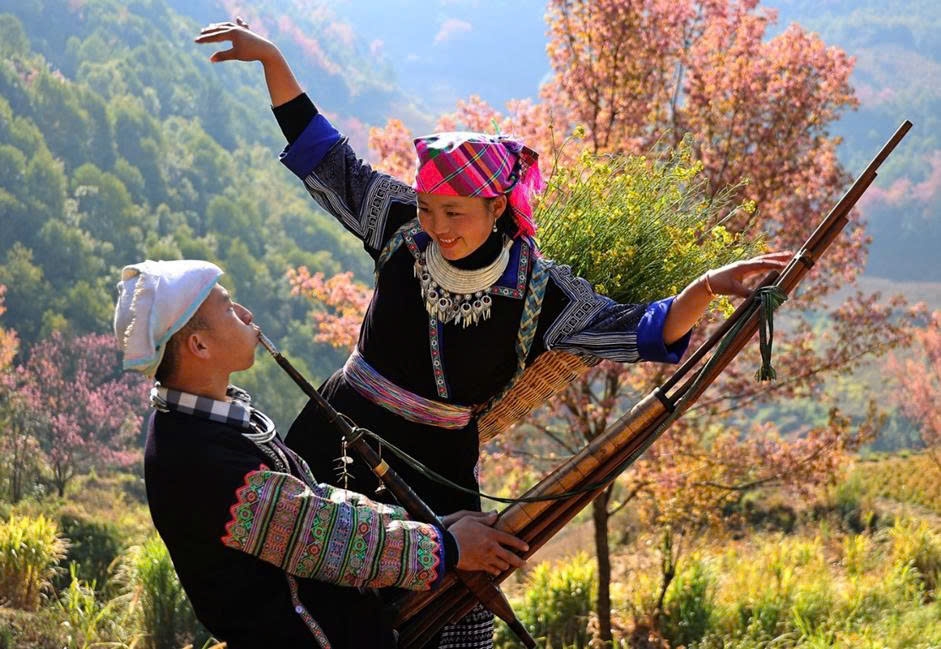 Tiếng Khèn gọi mùa xuân
Integrating the flute (a traditional Vietnamese wind instrument) into tourism activities not only helps promote cultural identity but also contributes to the preservation of cultural heritage. Classes teaching the flute to the younger generation are opened in many villages, encouraging young people to learn to play and dance to the flute. When culture becomes a livelihood, people become more aware of the value of the heritage left by their ancestors. Thanks to the combination of cultural preservation and community-based tourism development, the lives of many Mong families in the northern mountainous region have undergone positive changes. Local handicrafts, brocade fabrics and agricultural products are also promoted more widely through festivals and cultural activities associated with the sound of the flute.
Between the mountains, forests, and clouds, and the hustle and bustle of modern life, the sound of the Mong flute still resonates. That sound not only revives traditional cultural values but also opens up hope for a prosperous and happy future for the people in the highlands. When the sound of the flute is heard, the mountains and forests seem to listen and people rediscover pride in their own identity.
The Mong flute - a sound that awakens the mountains and forests is therefore not only a melody of varying pitches and tones, but also a cultural symbol of a resilient people. From the mountain villages in the North, the sound of the Mong flute continues to resonate, carrying the soul of the ethnic group and the aspirations of the Mong people today.
