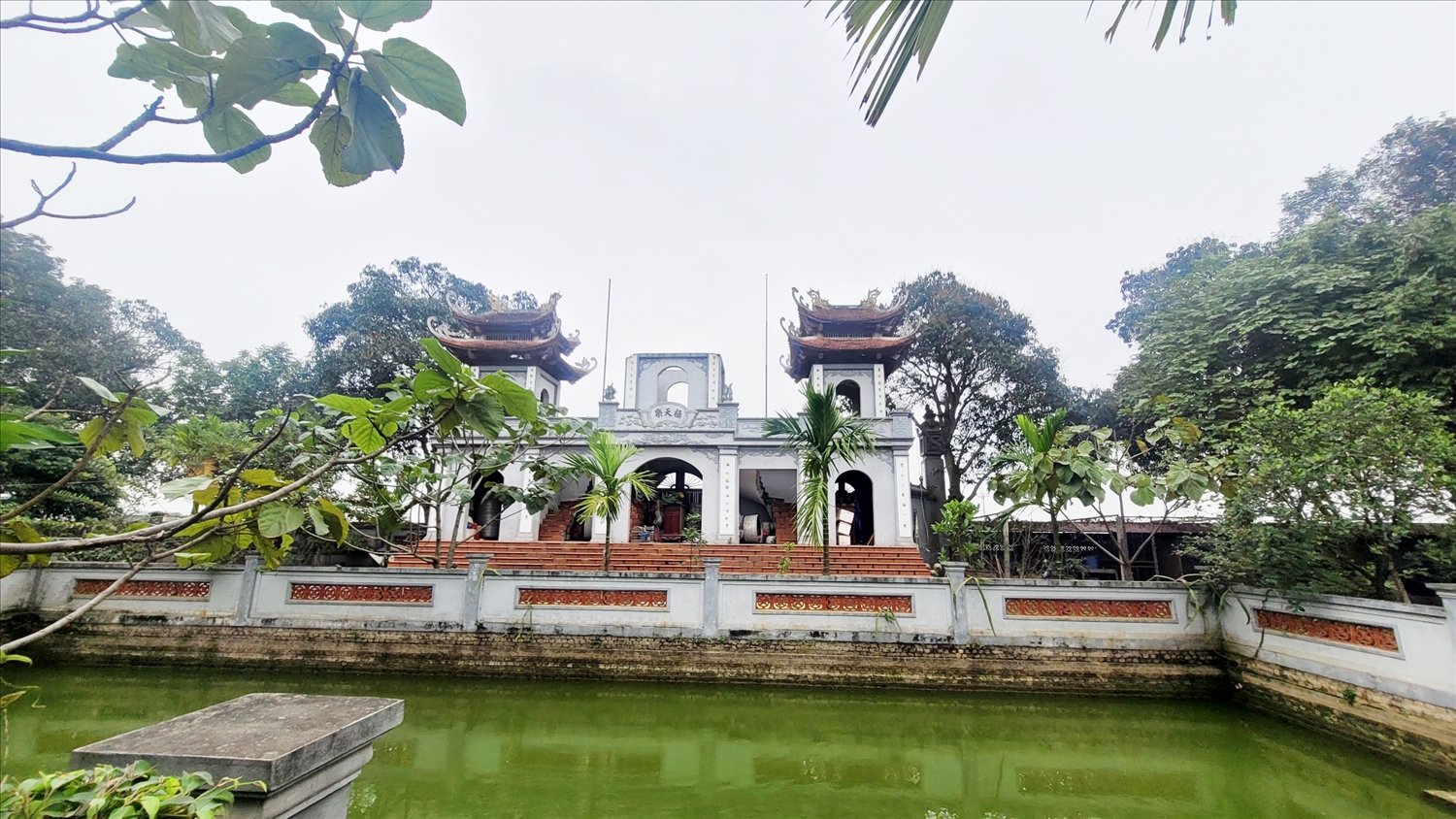
 A corner of Bao An pagoda
In the history of Vietnamese Buddhism, the name “Bao An” (Repayment of Gratitude) carries profound philosophical weight. Far more than a mere designation for a place of worship, the term embodies the “Four Great Gratitudes” of Mahayana Buddhism, virtues that every Buddhist holds deeply in their heart: gratitude toward one’s parents for giving life, toward all sentient beings, toward the nation and society and toward the Three Jewels for spiritual guidance. Bao An pagoda in Tri Le village is an ancient temple deeply imbued with the historical character of Northern Vietnamese village life. Having weathered the many vicissitudes of time, the pagoda stands as a vivid testament to the resilient spirit of a rural community rich in traditions of faith and patriotism, and to the enduring vitality of village spirituality, a place where moral values are woven into the daily lives of the local residents.
Every year, on the second day of the third lunar month, Bao An pagoda holds a grand ceremony to commemorate the successive generations of patriarchs and a joint memorial service in their honor. This is far more than a mere religious ritual; it is an occasion for local residents and Buddhists from near and far to practice the virtue of gratitude, remembering the source of the water one drinks and to honor the merits of the forebears who founded the pagoda, developed the land and safeguarded the homeland.
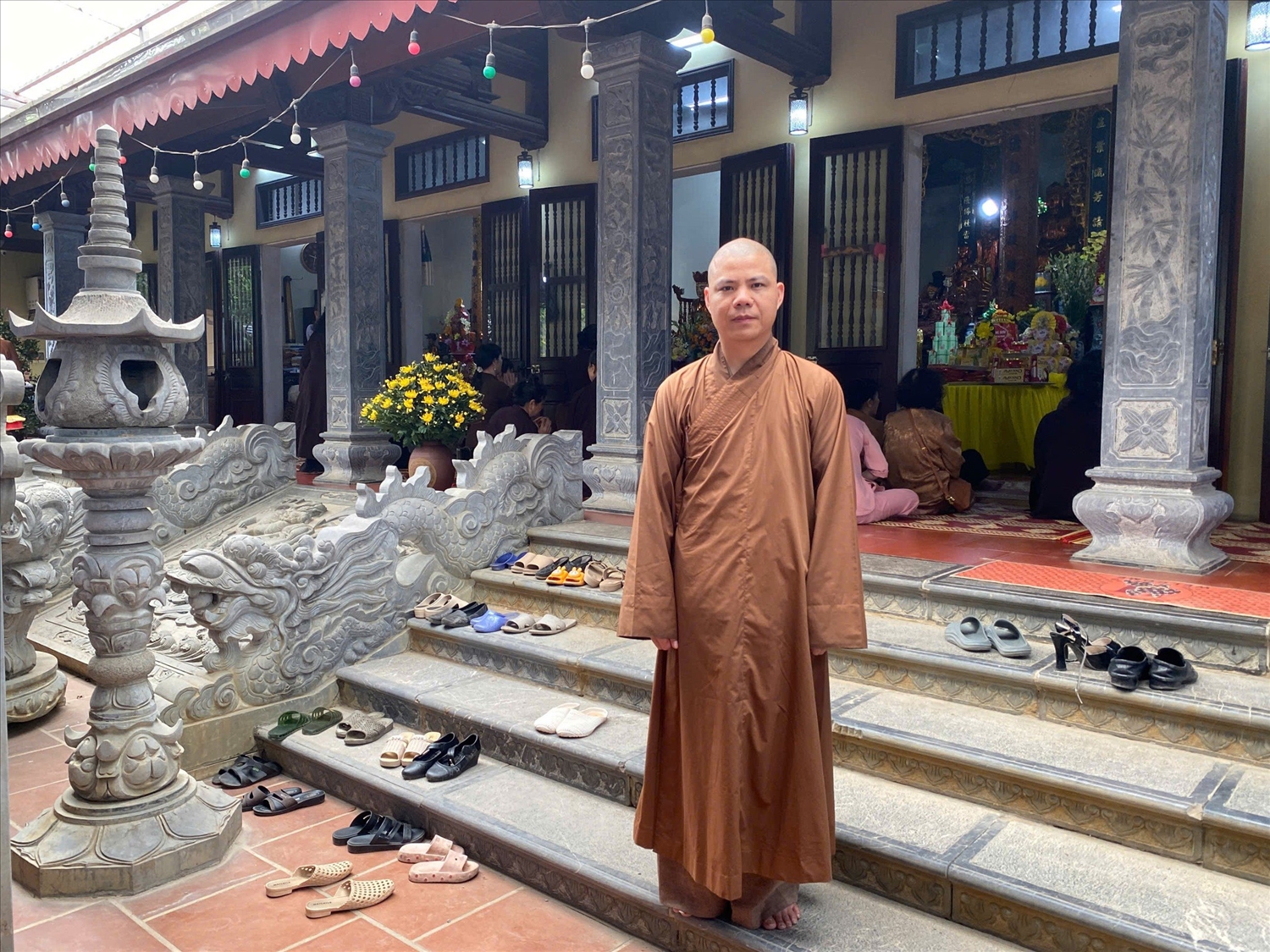 Venerable Thich Minh Thuan has frequently organized various spiritual practice and community activities since becoming the abbot of Bao An pagoda
In Buddhist philosophy, compassion extends beyond mere theory; it is tangibly embodied in the architectural spaces and the conduct of people within the temple grounds. Upon stepping through the three-arched gate of Bao An pagoda, the ancient architecture harmonizes with the rural landscape, evoking a sense of serenity, rustic simplicity, intimacy and inclusiveness.
Despite periods of deterioration over time, the pagoda has never lost its sense of warmth. It is a place where village elders come to find serenity in their twilight years, where children run and play in the shade of the courtyard and where anyone burdened by the worries and exhaustion of daily life can pause to seek unconditional solace. That compassion is further embodied in the spirit of service shown by the local Buddhist community. For a long time, Bao An pagoda has served as a shared home, a place that nurtures wholesome values through Dharma activities, prayers for peace and guidance toward goodness for the people. The temple bell, resonating morning and evening, does more than simply awaken the world; it serves as a gentle reminder from the heart, urging people to let go of anger and envy and to live with greater love and tolerance toward both themselves and others.
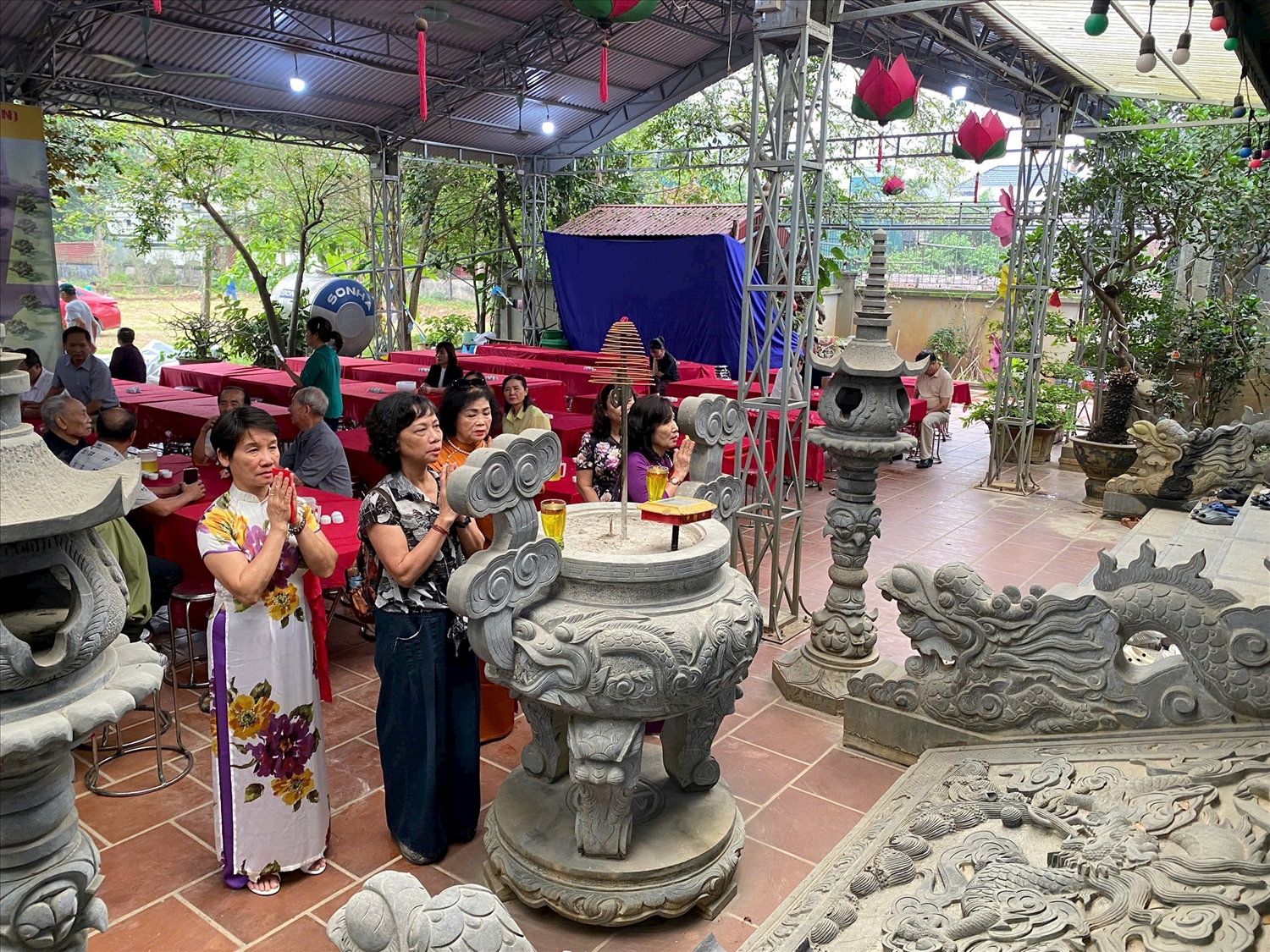 Local families and clans offer tributes to commemorate the contributions of the founding masters
If compassion is the gateway to peace, then mindfulness is the key that enables one to attain true inner freedom. Bao An pagoda offers an ideal space to nurture that very source of mindfulness. In today’s fast-paced life, people are easily swept up in the whirlwind of fame, fortune and invisible pressures, leaving their minds in a constant state of agitation and anxiety. Upon arriving at Quan pagoda and standing before the majestic Triple Gem, amidst the faint, soothing scent of agarwood incense, one’s mind instantly finds stillness. Gazing at the serene Buddha statues and listening to the steady rhythm of the wooden fish and chanting, each person is led to reflect upon their own inner self.
Mindfulness here begins with the smallest of things: recognizing the value of a gentle breath, cherishing the quietude of a suburban afternoon or grasping the impermanence of all things through moss-covered walls and the time-worn tiled roofs of an ancient pagoda. Awakening is the realization that true happiness stems from within, from a tranquil soul, rather than from outward, glittering distractions. With its pristine beauty and serene atmosphere, Bao An pagoda awakens the dormant spark of mindfulness within every traveler, a spark long obscured by the dust of the mundane world./.
