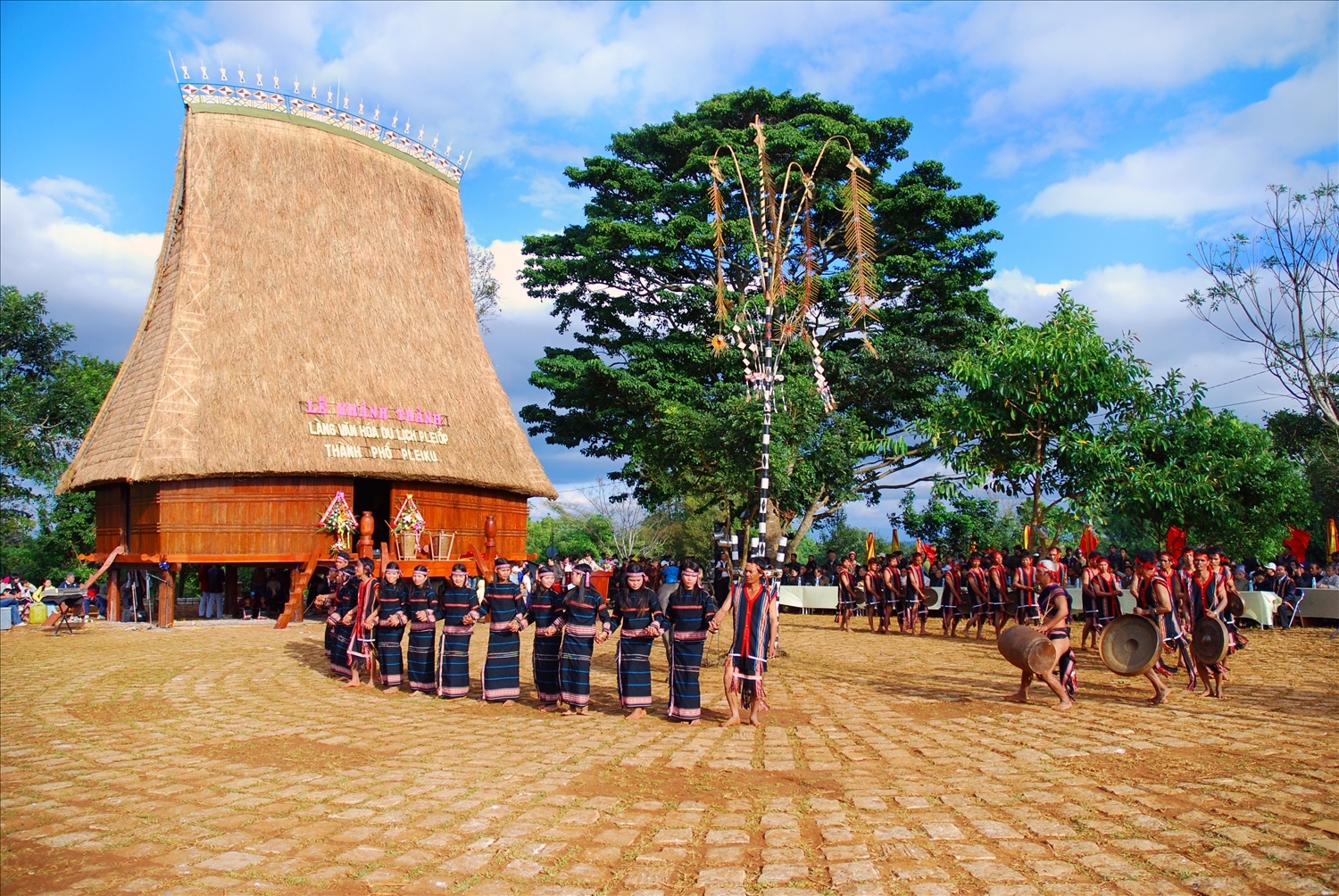
 Gia-rai people from Op village perform gongs beside the traditional communal house
From the stilt house
Upon entering renowned community-based tourism villages such as Mo Hra or Kep, home to the Gia-rai people in Gia Lai province, the first thing that catches a visitor’s eye is the unique longhouses, characterized by their rustic wooden structures and thatched roofs. For the Gia-rai people, the longhouse is more than just a shelter from the elements; it is a symbol of clan unity within their matrilineal system. Each house serves as a “living museum”, drawing visitors to sit by the glowing central hearth, listening to village elders recount legends of the gods (Giang), and gain insight into the profound spiritual life deeply connected to the local nature.
The sound of gongs, the Xoang dance
Within the realm of community-based tourism, gongs are restored to their rightful place as the very breath of life. Traditional festivals such as the New Rice Ceremony and the Grave-Abandoning Ceremony (Po Thi) are authentically reenacted for visitors while preserving their sacred nature. Visitors are not just spectators but are invited to immerse themselves in the flexible circle of Gia-rai girls, creating a bond. It is the pride of seeing their ethnic culture admired by foreigners and visitors from afar that has spurred young Jarai people to pick up their gong mallets once more and relearn the musical pieces handed down by their ancestors. Tourism has generated an intrinsic drive for preservation from within the community itself.
From the artistry of brocade weaving to wood carving
One of the highlights of community-based tourism in Gia Lai province is the revival of traditional craft villages. The brocade textiles of the Jarai people featuring intricate patterns and a distinctive color palette of black, red and white have evolved from everyday attire into valuable souvenirs. Under the towering communal house roof, the sight of Gia-rai women painstakingly working at their rudimentary looms has become a symbol of perseverance. Alongside this is the art of carving funerary statues, a distinctive feature of Gia-rai spiritual beliefs. The wooden statues surrounding the tomb complex depicting figures resting their chins on their hands, a mother cradling her child, or various animals not only showcase the art of sculpture but also embody the Gia-rai people’s concepts regarding death and the worlds of the living and the dead.
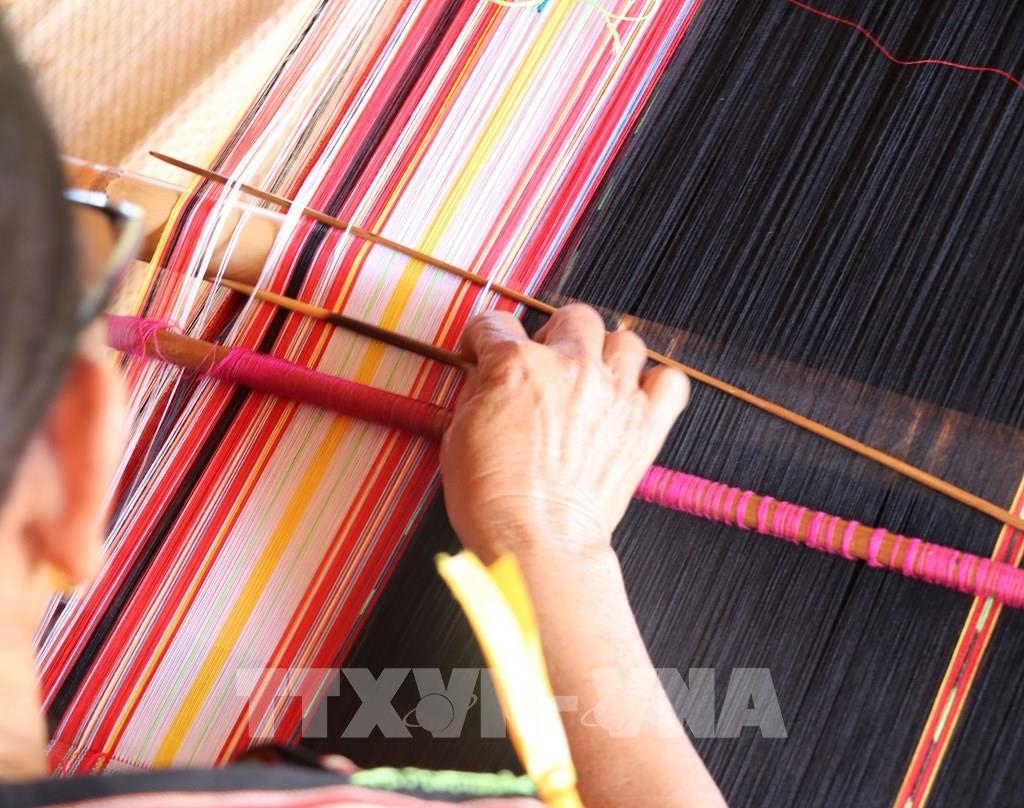 Gia-rai women work meticulously at rudimentary looms to create unique brocade fabrics
Cuisine
The Jarai people have skillfully transformed rustic dishes such as fragrant, chewy bamboo-tube rice, fire-roasted chicken infused with the flavors of the mountains and forests, and uniquely tangy, spicy weaver ant salt into unforgettable specialties. Gathered around the jar of traditional stem-sipping wine (ruou can), visitors experience a communal drinking ritual from the way the Gia-rai people offer the wine to the sharing of grilled meat that radiates warmth and sincerity, making guests feel not like strangers, but like part of the village.
It is evident that the Jarai people preserve the soul of their culture by allowing it to thrive within the community, enabling it to engage with the world and shine in the eyes of international friends through tourism. This approach not only provides a livelihood but also represents a journey of self-affirmation for an ethnic group. The region preserves a priceless cultural “treasure” one that is invaluable not only to the Gia-rai people but also to the rich, diverse tapestry of Vietnamese culture./.
