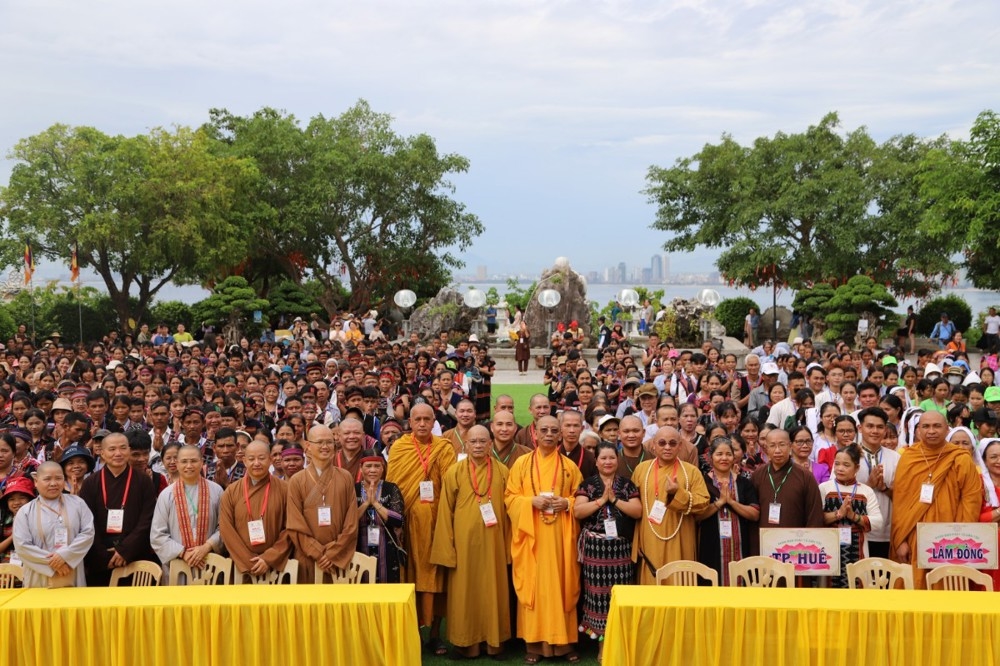
 Developing and effectively implementing policies and laws on belief and religion is important to ensure everyone’s right to freedom of belief and religion
Keywords: Beliefs and religions; Guidelines, policies and laws; Faith and religious affairs; Vietnam.
1. Introduction
Vietnam is a multi-ethnic and multi-religious nation with a rich and diverse spiritual life, shaped and developed over a long history through cultural exchange and acculturation between Eastern and Western civilizations. Beliefs and religions not only meet the spiritual needs of a large segment of the population but also exert a profound influence on cultural and social life, contributing to the strengthening of national unity and the promotion of the country’s development.
Throughout the process of reform and international integration, the Party and State of Vietnam have consistently upheld the stance of respecting and guaranteeing the freedom of belief and religion for all people; at the same time, they continuously refine the system of policies and laws to establish a legal framework ensuring that religious and belief-related activities take place in a stable and lawful manner, while promoting the positive values of religion in social life. In particular, the promulgation of the 2013 Constitution, the 2016 Law on Belief and Religion, and their guiding documents has established a crucial legal foundation for guaranteeing the right to freedom of belief and religion and for enhancing the effectiveness of state management in this area.
Practical experience shows that, alongside the results achieved in implementing policies and laws regarding belief and religion, new trends are emerging in the religious and spiritual life of Vietnam; these trends pose new demands for state management, mass mobilization and the leveraging of religious resources for national development. Therefore, evaluating the implementation of policies and laws regarding belief and religion in Vietnam today holds both theoretical and practical significance; it contributes to clarifying achievements while proposing solutions to further ensure the right to freedom of belief and religion and to promote the positive values of belief and religion in the cause of national construction and development.
2. The situation of beliefs and religions in Vietnam
Vietnam possesses a rich and diverse landscape of beliefs and religions, with approximately 95% of the population holding religious or spiritual beliefs. Its system of beliefs and traditions is deeply rooted in history, encompassing ancestor worship, rites associated with the human life cycle, occupational beliefs and the veneration of deities and saints. Furthermore, there are currently 16 religions in Vietnam with 43 organizations officially recognized and registered by the State, comprising approximately 27.7 million adherents, over 61,000 members of the clergy, more than 144,000 religious functionaries, and nearly 30,000 places of worship. Religious organizations generally operate in a stable manner, comply with the law, actively participate in social welfare and humanitarian charitable activities, and contribute to the cause of national construction and development. The majority of religious dignitaries, officials, and followers place their trust in the Party’s guidelines and the State’s policies and laws, thereby helping to strengthen the great national unity bloc.
The diversity of beliefs and religions in Vietnam is the result of a long-standing process of cultural exchange and acculturation among civilizations from the region and the wider world. Traditional forms of belief and imported religions coexist and thrive in an environment of harmony, remaining deeply connected to the nation while adapting to the contemporary social context. Overall, the legitimate religious and spiritual lives of the people are respected and safeguarded, thereby contributing to the preservation of national cultural identity, the strengthening of social consensus and the promotion of ethical and humanistic values within the community.
In this context, the effective formulation and implementation of policies and laws regarding belief and religion are of great importance in ensuring everyone’s freedom of belief and religion, while also promoting the positive values of belief and religion for the country’s sustainable development.
3. Implementation of policies and laws on belief and religion in Vietnam
3.1. Regarding the recognition of organizations
The process of recognizing religious organizations and registering their activities is stipulated in the Law on Belief and Religion and represents a key aspect of legal implementation in Vietnam. This framework safeguards the rights of legitimate organizations, ensures the religious activities of these organizations and the religious practices of their followers, fosters a stable environment for religious activity and curbs the exploitation of religion by non-religious organizations and individuals. Therefore, this is a work that the government is interested in. Up to now, the number of organizations recognized and granted operating registration is 43 organizations belonging to 16 religions. For some religions whose organizations have not been recognized, they are granted registration for centralized religious activities.
Alongside the approval of their organization and registration of activities, religious organizations are permitted to establish schools and open training classes for religious professionals, thereby enabling them to secure sufficient personnel to manage and organize religious activities. As of December 2023, the country had over 54,000 religious dignitaries and more than 144,000 religious functionaries, effectively meeting the growing need to provide religious guidance to the faithful. Concurrently, competent authorities proactively guided religious organizations in matters such as the ordination and appointment of clergy, personnel transfers, the drafting and amendment of charters and statutes and the registration of annual religious activities in accordance with the law.
In recent years, with the opening of integration, more and more foreigners have come to Vietnam to invest and do business, followed by the need for religious activities, including religions that do not exist in Vietnam or do not have the same organization or sect, but are also of interest to the authorities at all levels, creating conditions to allow renting places for concentrated religious activities. The trend of globalization in religion has made Vietnam an attractive place for foreign religions looking for missionary opportunities and establishing new organizations.
The continued consideration of recognizing organizations and granting operational registration to eligible religious groups reflects, on the one hand, Vietnam’s commitment to upholding the right to freedom of belief and religion and the principle of religious equality; on the other hand, it facilitates the local management of religious and belief-related activities.
3.2. Guidance and management of belief and religious activities
Religious and faith-based activities are conducted annually in accordance with programs registered with the authorities. For religious organizations, these activities are based on resolutions from their periodic congresses as well as their respective charters and statutes, ensuring full compliance with legal regulations. Many religious events are organized on a grand and solemn scale such as Vesak, the Vu Lan Festival, Christmas, Easter, the Yen Dieu Tri Cung festival, founding anniversaries of various religions, the Kate Festival and Ramadan attracting large numbers of followers and members of the public.
Supporting and facilitating the successful organization of international religious events by religious organizations not only affirms Vietnam's consistent policy of religious freedom and its commitment to religious activities, but also helps promote the image of a nation capable of hosting international events. It underscores a secure environment, a wholesome cultural and spiritual atmosphere, an attractive destination for both investment and tourism; furthermore, it serves as a foundation for defending Vietnam’s human rights record and countering hostile forces that seek to exploit religion to undermine the country’s achievements under the renewal process.
3.3. Foreign affairs activities related to religion undertaken by competent authorities
Foreign affairs activities related to religion constitute a key task in state management of religious affairs. These activities span various areas ranging from training, conferences, and seminars to the sharing of experiences and matters concerning religious outreach with a steadily increasing number of delegations traveling abroad and visiting Vietnam to study and gain insight into the religious landscape and policies, all conducted in accordance with regulations. Support is provided to religious organizations to actively participate in regional and international religious conferences and forums, such as: Initiatives such as the Asia-Europe Meeting (ASEM) Interfaith Dialogue and the Asia-Pacific Interfaith Dialogue serve a dual purpose: they meet the need to expand international relations while creating favorable conditions for religious organizations to enhance their roles and standing in the global religious arena. Furthermore, these activities enable foreign entities to gain a better understanding of the country, thereby facilitating Vietnam’s external outreach and public diplomacy efforts.
External relations activities by competent agencies have also been stepped up, making significant contributions to work regarding religion and human rights. In 2023, the Government Committee for Religious Affairs released a “White Paper” providing information on achievements in ensuring the human right to freedom of belief and religion in Vietnam, while refuting inaccurate information regarding the religious situation in the country. Regularly maintain and strengthen dialogue with embassies and international organizations in Vietnam to provide information on the religious situation and Vietnam’s religious policies and to refute ill-intentioned, distorted claims regarding democracy, human rights and religious freedom in Vietnam.
3.4. Efforts to mobilize religious dignitaries to contribute to social affairs
Ensuring social welfare is a major policy and undertaking of the Party and State of Vietnam within the country’s renewal process. Regarding religion, the Party’s policy as articulated in the documents of the 13th National Party Congress is to harness religious resources for national development. Accordingly, relevant ministries and agencies have endeavored to institutionalize this policy into legal regulations designed to unlock religious resources for national development while simultaneously serving as a framework for guiding and managing religious-led social welfare activities.
Relevant authorities have effectively raised awareness among religious dignitaries and followers, encouraging them to properly observe the Party’s guidelines and the State’s policies and laws, foster national unity and participate in campaigns launched by the government. Notably, during extraordinary circumstances such as storms, floods, and disease outbreaks, religious individuals and organizations have not only strictly complied with regulations but also made substantial contributions in the form of money, supplies and manpower, thereby playing a vital role alongside the Party, the State and other entities in providing timely support to affected areas.
Regarding management, and in accordance with their respective functions and duties, departments and agencies have advised the Provincial Party Committee and People’s Committees at all levels on guiding and managing religious affairs, as well as encouraging religious communities to participate in social welfare and charitable activities in compliance with regulations. They have provided guidance and procedural support to religious individuals and organizations for the establishment of educational, healthcare and social protection facilities; furthermore, they have conducted inspections and monitoring to promptly acknowledge and encourage achievements, while also addressing violations through reminders, corrective measures or sanctions to ensure that activities remain aligned with their intended purposes and legal requirements. Consequently, the number of participating religious individuals and organizations is steadily rising, as is the number of social welfare facilities; furthermore, the financial resources contributed by religious groups increase year after year. Many religious individuals and organizations have been commended and honored by the Prime Minister and the Fatherland Front at various levels for their significant contributions to the development of the social welfare system.
In the field of social charity, all religions participate according to their abilities with a variety of models: building charity houses, building bridges and roads, contributing to building new rural areas; charity kitchen, support for learning materials, scholarships; building clinics, drug addiction treatment and counseling for people with HIV/AIDS; ambulance; Emergency support during natural disasters and epidemics, especially during the COVID-19 pandemic. Religious organizations contribute hundreds of billions annually, actively supporting the country’s social welfare activities. These contributions help alleviate the burden on the state budget and narrow the gap between different social groups.
Efforts are made to encourage and enlist the support of religious dignitaries, officials, clergy and followers to serve as deputies in the National Assembly and People's Councils and as members of socio-political organizations; to leverage their pivotal role in disseminating information and mobilizing the faithful to actively contribute to local patriotic emulation movements; in order to ensure a healthy social environment in religious communities; and in order to prevent hostile forces from exploiting or inciting religious sentiments to sow ethnic and religious division.
4. Conclusion
Regarding religion, Vietnam has adopted a secular state model that embraces religious diversity. Consequently, the country prioritizes maintaining religious stability and developing policies and laws concerning religion as well as land, healthcare, education and social welfare to ensure regulatory coherence. This approach establishes a legal framework that encourages religious organizations with the requisite capacity and resources to contribute to national development. Concurrently, efforts are being made to disseminate policies and laws regarding religion to clergy, followers, and the general public in order to raise awareness and foster compliance with the law. Resources are being allocated to support and manage religious activities in accordance with regulations. Complex issues concerning beliefs and religion are being addressed promptly and decisively. Proactive measures are being taken to prevent and resolve religious conflicts, as well as to counter attempts by hostile actors to exploit religion to sow discord among religious and ethnic groups and undermine the well-being and stability of the country.
References
1. Party Central Committee (2003), Resolution No. 25-NQ/TW, dated March 12th, 2003, on religious affairs.
2. Communist Party of Vietnam (2021), Report on the 10-Year Socio-Economic Development Strategy (2021-2030), Documents of the 13th National Party Congress, Vol. I, National Political Publishing House of Truth, Hanoi.
3. Government (2017), Decree No. 162/2017/ND-CP dated December 30th, 2017, detailing a number of articles of and measures for the implementation of the Law on Belief and Religion.
4. Government (2023), Decree No. 95/2023/ND-CP dated December 29th, 2023, detailing a number of articles of and measures for the implementation of the Law on Belief and Religion.
5. Thao Nguyen (2012), Results of the implementation of the Prime Minister’s Directive No. 1940/CT-TTg regarding religious housing and land in Thai Binh Province, Journal of Religious Affairs, No. 6.
6. National Assembly (2013), Constitution of the Socialist Republic of Vietnam.
7. National Assembly (2016), Law on Belief and Religion, No. 02/2016/QH14, dated November 18th, 2016.
8. National Assembly (2013), Land Law, No. 45/2013/QH13, dated November 29th, 2013.
9. Vu Chien Thang (2021), Theoretical and practical foundations for leveraging religious resources in the process of national construction and sustainable development, ministerial-level scientific research project.
10. Prime Minister (2008), Directive 1940/CT-TTg regarding religious-related housing and land.
11. Nguyen Thanh Xuan, Le Tam Dac (2019), Religious Life in Vietnam during the Renewal Era, Religious Publishing House, Hanoi.
