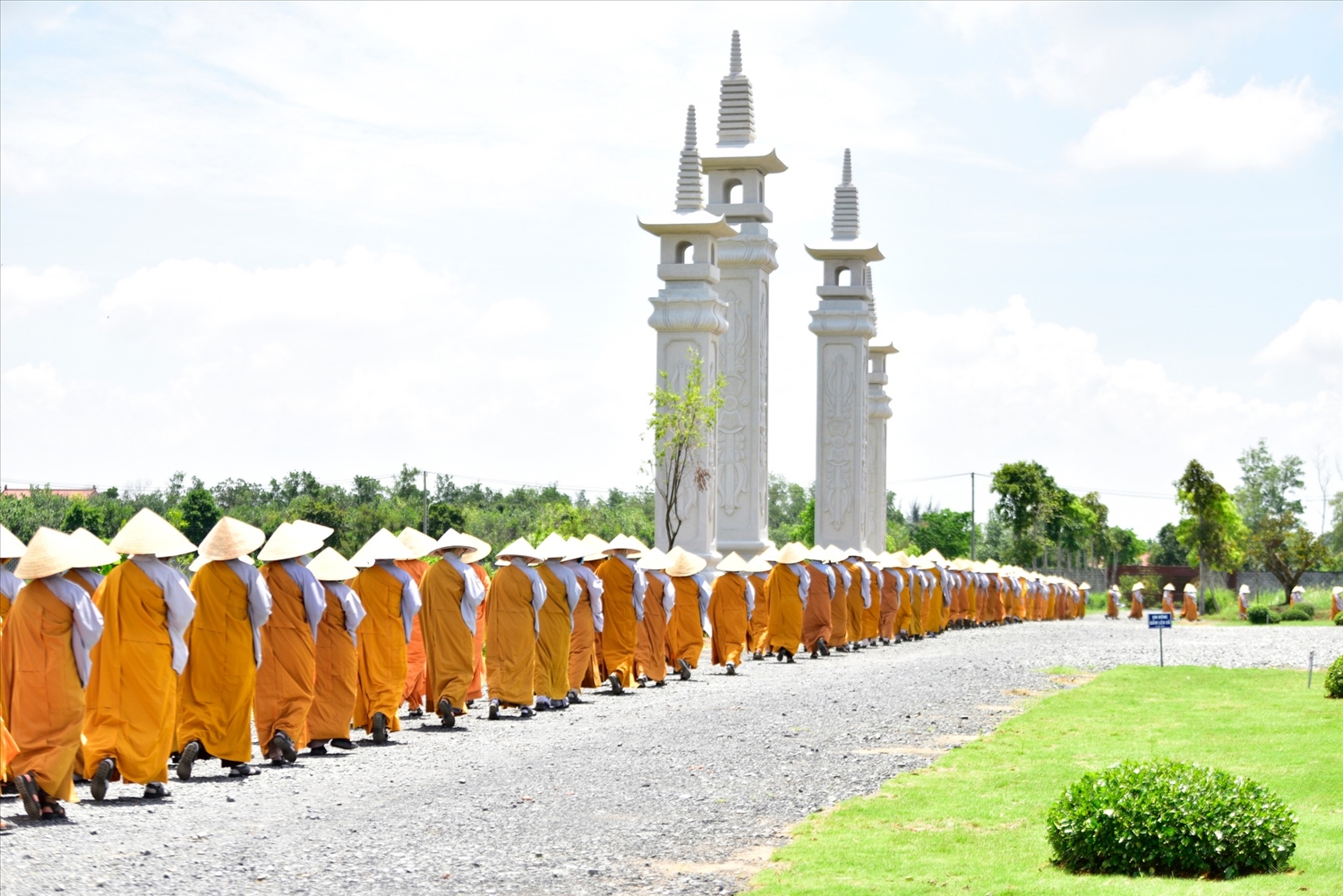
 The Summer Retreat is a special time to strengthen the enduring bond between the monastic community and lay Buddhists
Origin and meaning
The tradition of the Rains Retreat originated in India during the lifetime of Shakyamuni Buddha. Amidst the three-month rainy season, the traveling of monks not only faced logistical difficulties but also inadvertently caused harm to the lives of insects and flourishing vegetation. Motivated by compassion and a reverence for life, the Buddha instituted the practice of the Rains Retreat, requiring monks to halt their travels and devote themselves to spiritual practice at a fixed location.
In Vietnam, depending on the tradition (Northern or Southern) and geographical conditions, the monastic community observes the Rains Retreat during two periods: the early retreat, beginning on the 16th day of the fourth lunar month and the late retreat, starting on the 16th day of the fifth lunar month. The term of “Summer Retreat” carries the following meaning: “Retreat” refers to remaining in one place, while “Summer” signifies the establishment of boundaries for the purpose of spiritual practice during the three months of summer. This is a period when monks and nuns gather at monasteries and temples to set aside external Buddhist activities and focus on cultivating morality, concentration and wisdom.
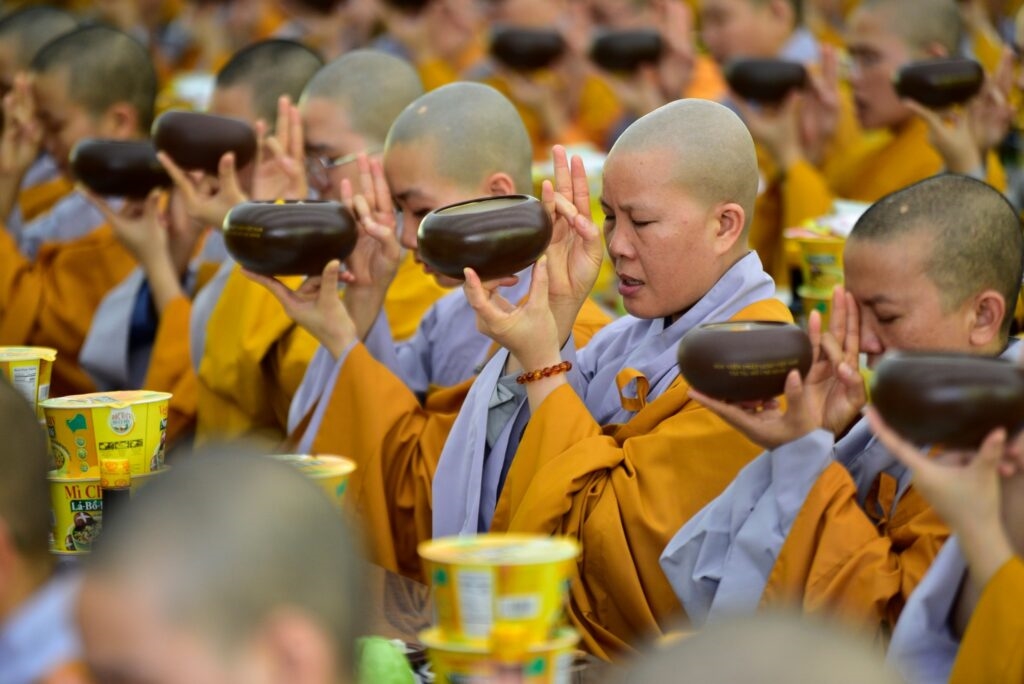 An activity during the Summer Retreat for monastic students
The core essence of the Rains Retreat
The Summer Retreat is not merely a formal ritual; it embodies the core values of Buddhism.
Firstly, the responsibility to protect life. The paramount humanitarian value of the Rains Retreat is respect for nature and the environment. Limiting one’s range of movement demonstrates compassion for tiny living beings while simultaneously cultivating in the practitioner an awareness of controlling their behavior with every step.
Secondly, it involves strengthening morality, concentration, and wisdom. Over the course of three months, through schedules of chanting, repentance rituals, meditation and Dharma talks, monastics immerse themselves in a framework of strict precepts. This is a period of purifying body and mind, helping practitioners fortify their virtuous conduct and cultivate wisdom.
Thirdly, fostering unity within the Sangha. Living and practicing together in a shared space enables the Sangha to embody the spirit of the Six Harmonies (Six principles of harmony and respect). It serves as an ideal environment for monastics to remind and encourage one another and to collectively overcome shortcomings in their monastic lives.
Fourthly, establishing one’s standing within the Sangha. The number of vassas (monastic years) serves as a measure of seniority in the Dharma. Each completed Rains Retreat counts as one monastic year, marking spiritual maturity and the deepening of spiritual power, while also determining precedence in Sangha rituals.
Spiritual connection and socio-cultural values
The Summer Retreat is a special time for strengthening the enduring bond between the monastic community and lay Buddhists. Through acts of offering and supporting the Triple Gem, lay disciples have the opportunity to access authentic teachings, practice the virtue of generosity and receiving instruction on ethics and the law of cause and effect. The mutual support between monastic and lay forces in the summer creates a lively rhythm for monastic life, contributing to spreading Buddhist moral values into community life.
Over the course of more than 2,500 years, the Summer Retreat has preserved its original value, reflecting the timeless wisdom and compassionate spirit of Buddhism. It is not merely a monastic rule but a distinctive spiritual and cultural tradition that fosters a lifestyle of harmony and respect for both nature and humanity. In the context of modern society, this tradition increasingly affirms its vital role in guiding humanistic values and building a peaceful, mindful community./.
