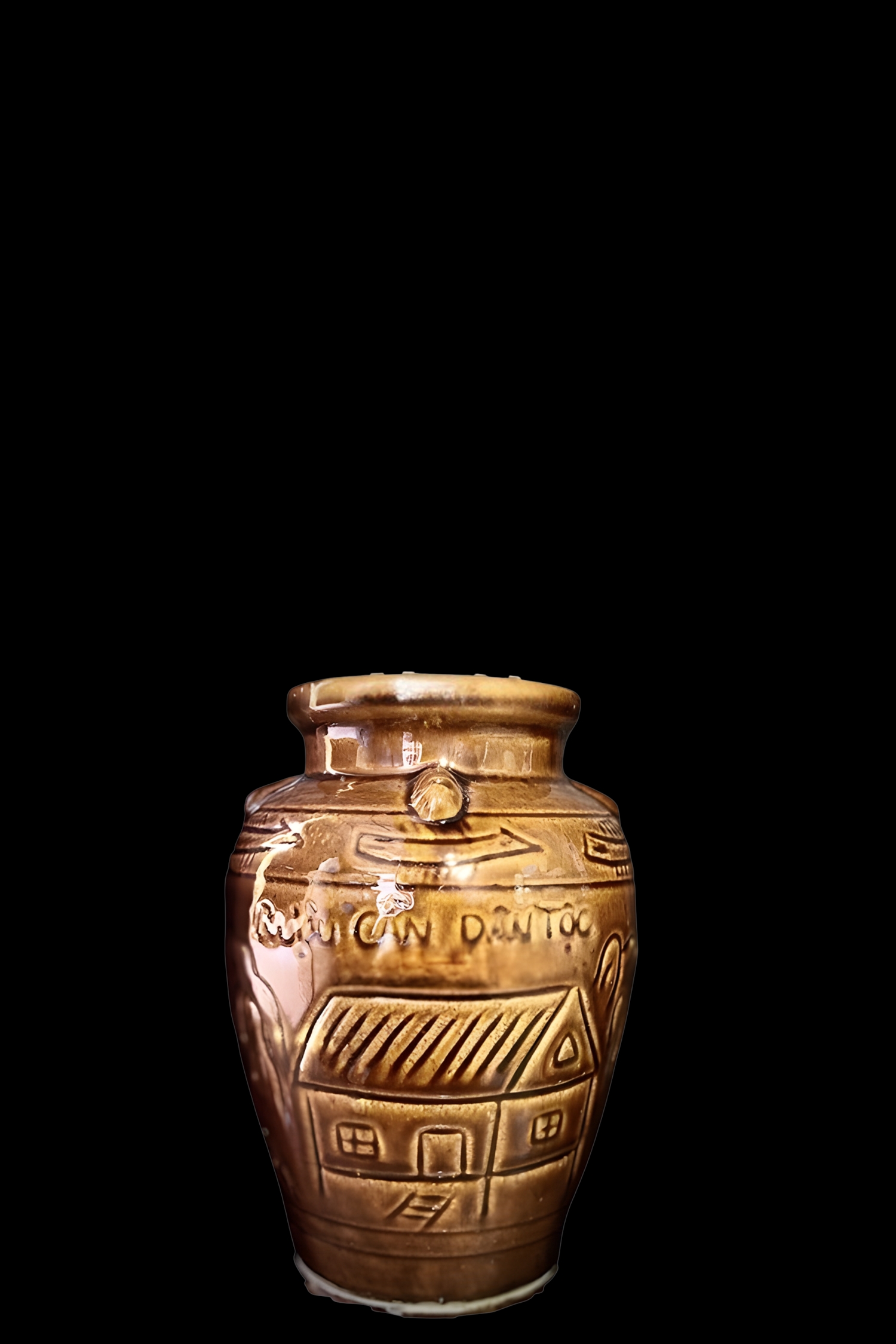
 The Gia-rai people always have a jar of rice wine placed in the center of the house as a sincere invitation to honored guests
Rice wine has long been an indispensable part of the lives of the Gia-rai people in the Central Highlands. From funeral rites, weddings, housewarming parties to traditional New Year celebrations, the Gia-rai peoplealways have a jar of rice wine placed in the center of the house as a sincere invitation to honored guests. Drinking rice wine isn't about getting drunk, but about meeting people, connecting with the community, and bringing people closer together. Therefore, rice wine is always considered a cultural tradition and has been preserved by the Gia-rai people for generations.
What gives Gia-rai rice wine its unique identity lies in its yeast - the “soul” passed down through generations. The yeast is made from the roots and bark of precious trees harvested from deep in the forest according to each family’s secret recipe, then washed, dried and ground into a fine powder. Adult Gia-rai women all know how to make yeast and brew rượu (rice wine). This is both a survival skill and a responsibility to preserve their ethnic culture.
In Phu Ma Miong village, Ia Sao commune, Gia Lai province, Nay H’Tó is one of the people quietly preserving the traditional craft of making rice wine. Since 2000, she has been brewing rice wine like other Gia-rai women to entertain guests, for ceremonial purposes and as gifts. The first batches of wine were not for commercial purposes but simply a continuation of her family’s cultural traditions.
In 2014, she boldly introduced Gia-rai rice wine on social media platforms, and the product gradually became known to more people. Nay H’Tó’s family’s rice wine gradually spread beyond the village, reaching consumers both within and outside the province. But even with market expansion, the winemaking process remains meticulous and rigorous. According to Ms. Nay H’Tó, selecting the right ingredients is crucial for a delicious jar of wine. The rice must be clean, free from pesticides and have a clear origin. The rice husks used for brewing must be from the spring-summer harvest, with whole, unbroken grains that are free from mold. The yeast used is traditional yeast made from forest roots, with absolutely no additives. Carefully selected ingredients ensure that the product not only has a distinctive flavor but also guarantees food safety and hygiene for consumers. Each stage of production is also closely supervised by skilled craftsmen.
Gia-rai rice wine is not drunk from cups or poured into glasses. Drinkers use a rattan straw inserted deep into the bottom of the earthenware pot, sucking up sips of wine and slowly savoring it. This way of drinking reflects equality, without distinction between rich and poor, noble and humble, symbolizing honesty, simplicity, unpretentiousness, community spirit, hospitality and harmony between humans and nature. Everyone sitting around the wine jar shares the same rhythm, the same story, the same joy.
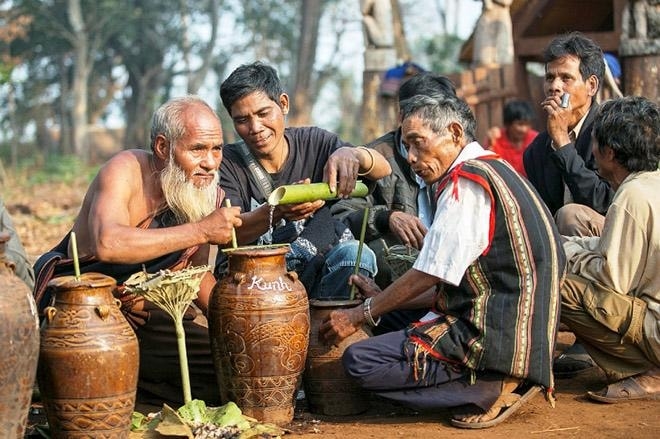 Drinking rice wine isn’t about getting drunk, but about experiencing the culture and human connection
Currently, the Gia-rai-Ayun Pa branded rice wine produced by Ms. Nay H’Tó’s establishment has been recognized as meeting the OCOP standards of Gia Lai province, becoming a typical product associated with the local identity. In order to meet the growing market demand, the facility is continuously refining its brewing formula, investing in equipment and improving production conditions to ensure consumer health while preserving the traditional flavor. This contributes to preserving and promoting the cultural identity of the Gia-rai people and boosting household and local economic development.
If you ever have the chance to visit Gia Lai province, be sure to stop by Phu Ma Miong village, sit beside a jar of Gia-rai rice wine, listen to stories of the mountains and forests and savor a sip of the fragrant wine. That jar of wine contains not only the intoxicating flavor but also memories, culture and the warm hospitality of the Central Highlands people./.
