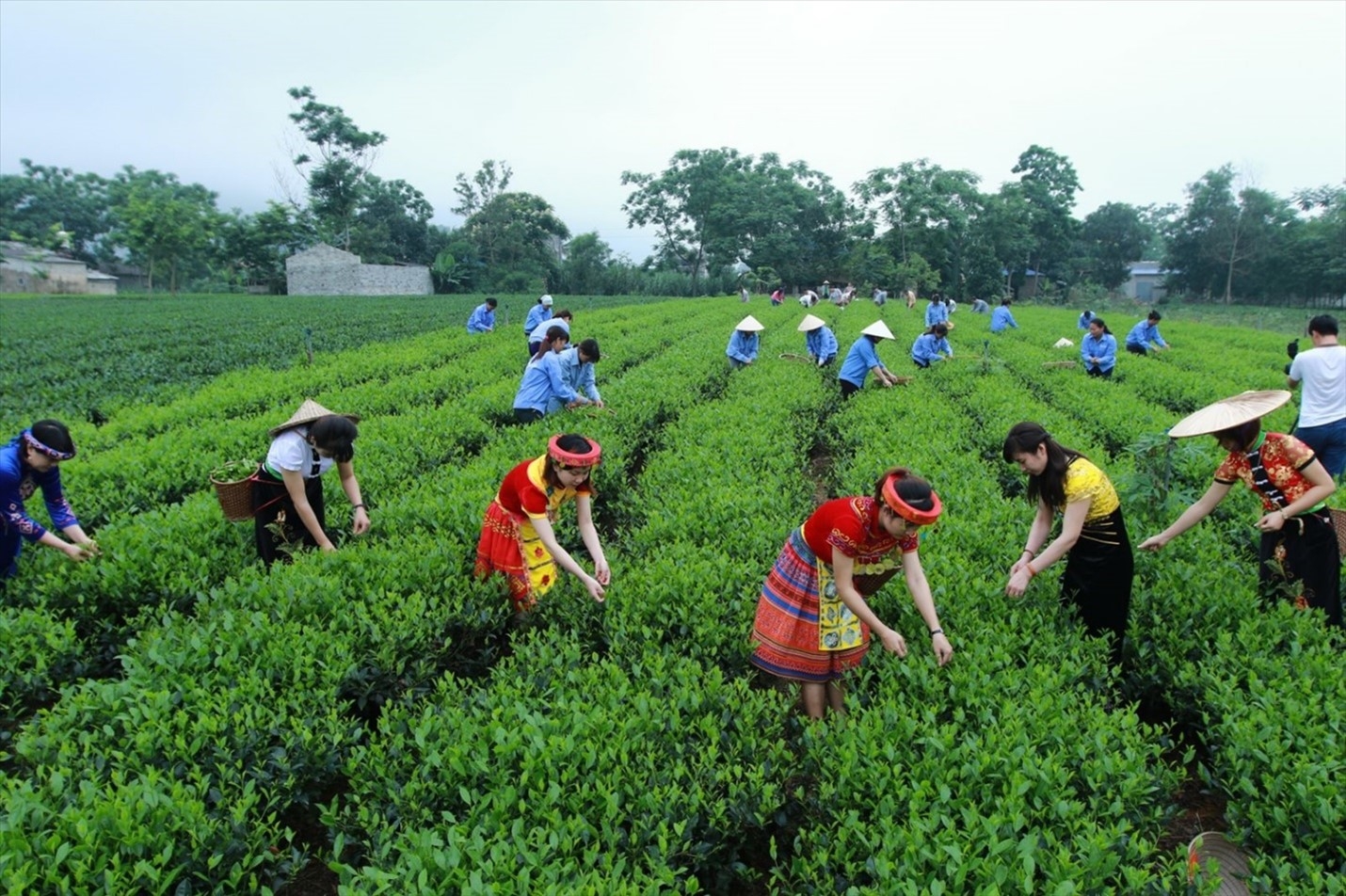
 The participation of ethnic minority communities in tea production has contributed to the economic development of Thai Nguyen province
Keywords: Role; Ethnic minority communities; Economic development; Mountainous regions.
1. Introduction
Developing the economy of mountainous regions has always been one of the key tasks in Vietnam’s socio-economic development strategy, aiming to narrow the development gap between regions, ensure social equity and achieve long-term stability. Mountainous regions are the primary living areas of ethnic minorities and they possess abundant potential in terms of natural resources, culture and local knowledge. However, in practice, this area still has a low level of economic development, a high poverty rate and limited access to markets and social services.
Over the years, economic development policies for mountainous regions have primarily been implemented using an external support approach, focusing on infrastructure investment and livelihood assistance. This approach has yielded certain results, but it has also revealed limitations, such as dependence on state resources, lack of sustainability and failure to fully promote the role of ethnic minority communities as key stakeholders. Community resources, including local knowledge, production experience, social capital, and self-organizational capacity, have not yet been effectively harnessed to become a driving force for economic development.
In the context of changing growth models and the demands of sustainable development, shifting from a “support” approach to one that “empowers the community” becomes crucial. Research on promoting the role of ethnic minority communities in the economic development of mountainous regions is not only of theoretical significance in refining community-based development approaches, but also has profound practical significance, contributing to the proposal of policy solutions to unleash internal strengths, enhance self-reliance and promote sustainable economic development in mountainous regions in the current period.
2. esearch results
2.1. The current situaton of economic development in mountainous regions and the role of ethnic minority communities
In recent years, economic development in mountainous regions has achieved significant results, contributing to improving the material and spiritual lives of ethnic minority communities. Thanks to the attention of the Party and the State, the socio-economic infrastructure system in many mountainous localities has been gradually improved; programs for production development, sustainable poverty reduction and new rural construction have been implemented relatively synchronously. Agricultural and forestry production, household economies, cooperative economies, and some new livelihood models have initially proven effective, creating more jobs and increasing people’s income.
Within that overall picture, ethnic minority communities play a crucial role in organizing and maintaining the unique economic activities of mountainous regions. The community is the direct user and manager of natural resources such as forest land, arable land and water resources. At the same time, they possess local knowledge and traditional production experience that is suitable to the local ecological conditions. In some areas, models of ecological agriculture, sustainable forestry economics, livestock farming linked to forest protection and the development of local specialty products have demonstrated the positive role of communities in creating stable livelihoods and ensuring sustainable development.
However, the current state of economic development in mountainous regions still faces many limitations. Overall economic growth is low and unstable; the economic structure is slow to shift; production is small-scale, fragmented and has low added value. The rate of poor and near-poor households among ethnic minorities remains high compared to the national average. One of the key reasons is that the role of ethnic minority communities in economic development has not been fully utilized. In many programs and projects, communities still primarily participate as beneficiaries, lacking the right to participate in decision-making and monitoring, leading to unsustainable economic results.
In addition, the community’s capacity in organizing production, accessing markets and applying science and technology is still limited. The skill level of the workforce, management skills, ability to link value chains, and access to capital are limited in many ethnic minority communities, making it difficult to transform internal strengths into drivers of economic development. In particular, barriers related to infrastructure, transportation, information and institutions continue to widen the development gap between mountainous regions and other areas.
The above situation shows that, although ethnic minority communities have played and continue to play an important role in the economic development of mountainous regions, this role has not yet been exploited to its full potential and effectiveness. Shifting from a development approach heavily reliant on external support to one that empowers communities is an urgent requirement to unleash internal strengths, enhance self-reliance and promote sustainable economic development in mountainous regions in the current period.
2.2. The role of ethnic minority communities in the economic development of mountainous regions
Ethnic minority communities play a key role in the economic development of mountainous regions, not only as a direct workforce, but also as the subjects who hold and operate the unique endogenous resources of the locality.
Firstly, the community is the subject of production and livelihood organization, based on local knowledge, traditional farming experience and long-term adaptation to the natural and ecological conditions of the mountainous region. Forms of agricultural, forestry and livestock production, non-timber forest product harvesting and traditional crafts reflect the central role of communities in maintaining and developing appropriate and sustainable livelihoods.
Secondly, ethnic minority communities play a key role in the sustainable management and utilization of resources. Through self-governing institutions, community conventions, and cultural norms, communities contribute to protecting forests, water resources and land, thereby ensuring a resource foundation for long-term economic development. This role is particularly important in the context of mountainous regions, which are ecologically sensitive areas where economic development is closely linked to environmental protection.
Thirdly, communities are a source of social and cultural capital that fosters economic integration. Family and village relationships, along with traditional values of solidarity and mutual assistance, creating conditions for the formation of production groups, cooperatives and associations. These linkages help reduce transaction costs, increase risk sharing, and enhance community participation in local economic value chains.
Fourthly, ethnic minority communities play a driving role in the sustainable development of mountainous regions. When empowered to participate in decision-making, with enhanced capacity and a fair sharing of benefits, communities are able to proactively innovate their livelihoods, access markets and apply appropriate science and technology. Thus, promoting the role of ethnic minority communities not only contributes to improving the effectiveness of economic development in mountainous regions, but also ensuring inclusiveness, social stability and long-term sustainability in the development process.
2.3. Issues arising in promoting the role of ethnic minority communities
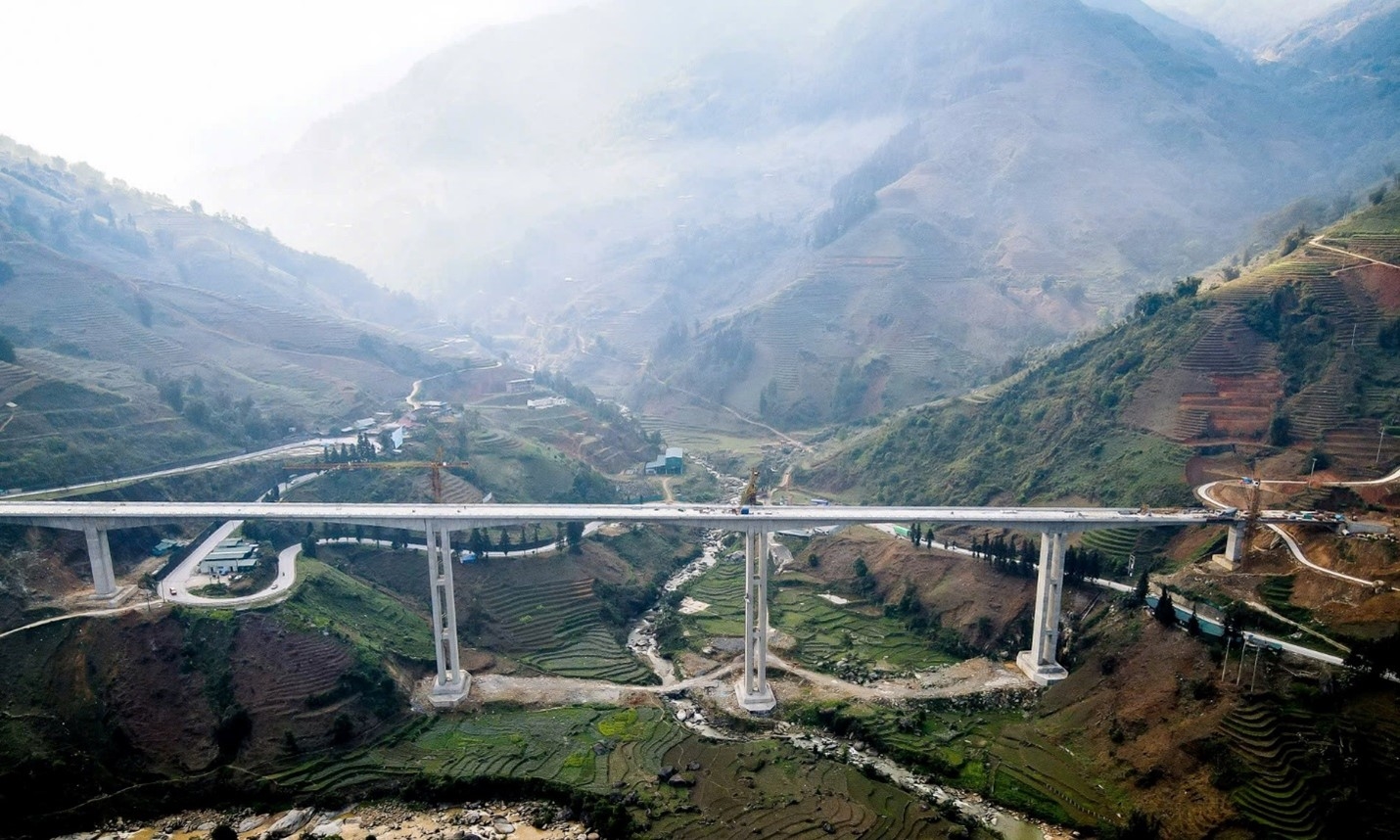 Mong Sen Bridge connects to the Noi Bai - Lao Cai expressway
Although ethnic minority communities play a crucial role in the economic development of mountainous regions, fully and effectively utilize this role in practice still faces many issues that need to be identified and addressed.
Firstly, limitation is the community's capacity. Many ethnic minority communities have low levels of education, production management skills, access to science and technology and markets, resulting in economic activities that are primarily self-sufficient, small-scale and have limited added value. This reduces the ability of communities to participate deeply in the economic value chain of mountainous regions.
Secondly, the role of the community as an active participant in development programs has not been fully realized. In many policies and projects, the community still primarily participates as a beneficiary, lacking the right to participate in the decision-making, monitoring and evaluation processes. This top-down approach undermines endogenous motivation, leading to dependence on external support and a lack of sustainability in economic development.
Thirdly, institutional, infrastructural and market barriers continue to limit the role of communities. Transportation infrastructure, information and production support services in many mountainous regions are still weak; the mechanisms for linking communities with businesses and markets are not yet effective. In addition, access to land, credit, and financial services remains difficult, limiting the ability to expand and improve production quality.
Fourthly, the erosion of local knowledge and social change also pose challenges to promoting the role of the community. Urbanization, labor migration, and the impact of the market economy are eroding some traditional cultural values and social capital, which are crucial foundations for community economic development. These issues require a comprehensive approach, combining capacity building, institutional improvement, and the preservation of the intrinsic values of ethnic minority communities in the economic development of mountainous regions.
2.4. Orientation and solutions for promoting the role of ethnic minority communities in the economic development of mountainous regions
Promoting the role of ethnic minority communities in the economic development of mountainous regions should be guided by a sustainable development approach, with the community at the center and internal resources as the foundation. The overarching direction is to shift from a development model based primarily on support and subsidies to one that empowers, enhances capacity, and creates conditions for communities to actively participate in the entire economic development process.
Firstly, continuing to refine policies for the economic development of mountainous regions, focusing on strengthening the participation of ethnic minority communities in the planning, implementation and monitoring of programs and projects. Policies need to be flexible, tailored to the socio-cultural characteristics and ecological conditions of each region, while ensuring a fair benefit-sharing mechanism to encourage long-term community participation. About capacity building, emphasis should be placed on developing local human resources through vocational training, management skills development, production skills training and market access training for ethnic minority communities. The application of science and technology and digital transformation should be carried out in a way that is appropriate to the level and conditions of the community, in order to improve productivity, product quality and competitiveness.
Secondly, promoting economic models based on local strengths such as ecological agriculture, sustainable forestry, agricultural processing and community tourism. At the same time, strengthening the links between the community and businesses, cooperatives and markets to form a stable value chain.
Thirdly, it is necessary to preserve and promote local cultural values and knowledge as an important resource for economic development. A harmonious combination of economic development, environmental protection and preservation of cultural identity will create a solid foundation for ethnic minority communities to play a leading role in the sustainable economic development of mountainous regions.
3. Discussion
Promoting the role of ethnic minority communities in the economic development of mountainous regions is not only a policy choice, but also a methodological requirement for sustainable development.
Firstly, there is a need to shift the mindset from a "beneficiary" approach to a “developer” approach. When communities are empowered to genuinely participate in the process of organizing production and distributing benefits, the economic efficiency and sustainability of development models are significantly enhanced.
Secondly, an important issue that arises is the relationship between the community’s internal strength and external resources. The inherent strengths of ethnic minority communities, including local knowledge, social capital and cultural values, can only be transformed into drivers of development when supported by appropriate institutions, essential infrastructure and effective market linkages. Therefore, promoting the role of the community does not mean reducing the role of the State, but rather requiring the State to shift from direct intervention to creating a favorable environment and conditions for community development.
Thirdly, there is a risk of unsustainable development if the role of the community is only promoted in a superficial way. Integrating communities into development programs must be accompanied by capacity building, ensuring clear rights and responsibilities and avoiding symbolic participation. Furthermore, the economic development process in mountainous regions needs to focus on balancing economic growth, environmental protection, and the preservation of cultural identity.
Fourthly, promoting the role of ethnic minority communities is a long-term process that requires coordinated efforts between policies, resources and governance mechanisms. Only when communities truly become the center of development can the economy of mountainous regions achieve inclusiveness and long-term sustainability.
4. Conclusion
Promoting the role of ethnic minority communities is a decisive condition for the sustainable and inclusive economic development of mountainous regions. Ethnic minority communities are not only direct participants in production, but also possess important endogenous resources such as local knowledge, social capital and unique cultural values. Practical experience in developing the economy of mountainous regions shows that community-based models are only effective when communities are genuinely empowered, have their capabilities enhanced and fully participating in the decision-making process, implementation and benefit sharing. Therefore, a shift from a supportive development approach to one that empowers the community as an active participant is essential. A harmonious combination of community strengths with institutions, resources, and markets will create a solid foundation for promoting sustainable economic development in mountainous regions, contributing to narrowing the development gap and ensuring long-term social stability.
* National Defence Academy, Ministry of National Defence
References
1. Central Committee of the Party (2003). Resolution No. 24-NQ/TW dated March 12th, 2003 on ethnic affairs. Hanoi.
2. Government (2021). Decision No. 1719/QD-TTg dated October 14th, 2021, approving the National Target Program for socio-economic development of ethnic minority and mountainous areas for the period of 2021-2030, Phase I from 2021 to 2025, Hanoi.
3. Nguyen Duy Dung (2019), Results of implementation of some policies on socio-economic development for Khmer ethnic people in the southwest region, Journal of Ethnic Minorities Research, Volume 8, Issue 4, June.
4. Nguyen Duy Dung (2025), Ethnic policy: Achievements and challenges in the new era, Journal of Ethnic and Religious Research, No. 1 (September).
5. Luu Thi Kim (2024), Socio-economic development of ethnic minority areas in Nghe An province in accordance with the spirit of Resolution No. 39-NQ/TW of the Politburo, https://www.tapchicongsan.org.vn/web/guest/thuc-tien-kinh-nghiem1/-/2018/980102/view_content
