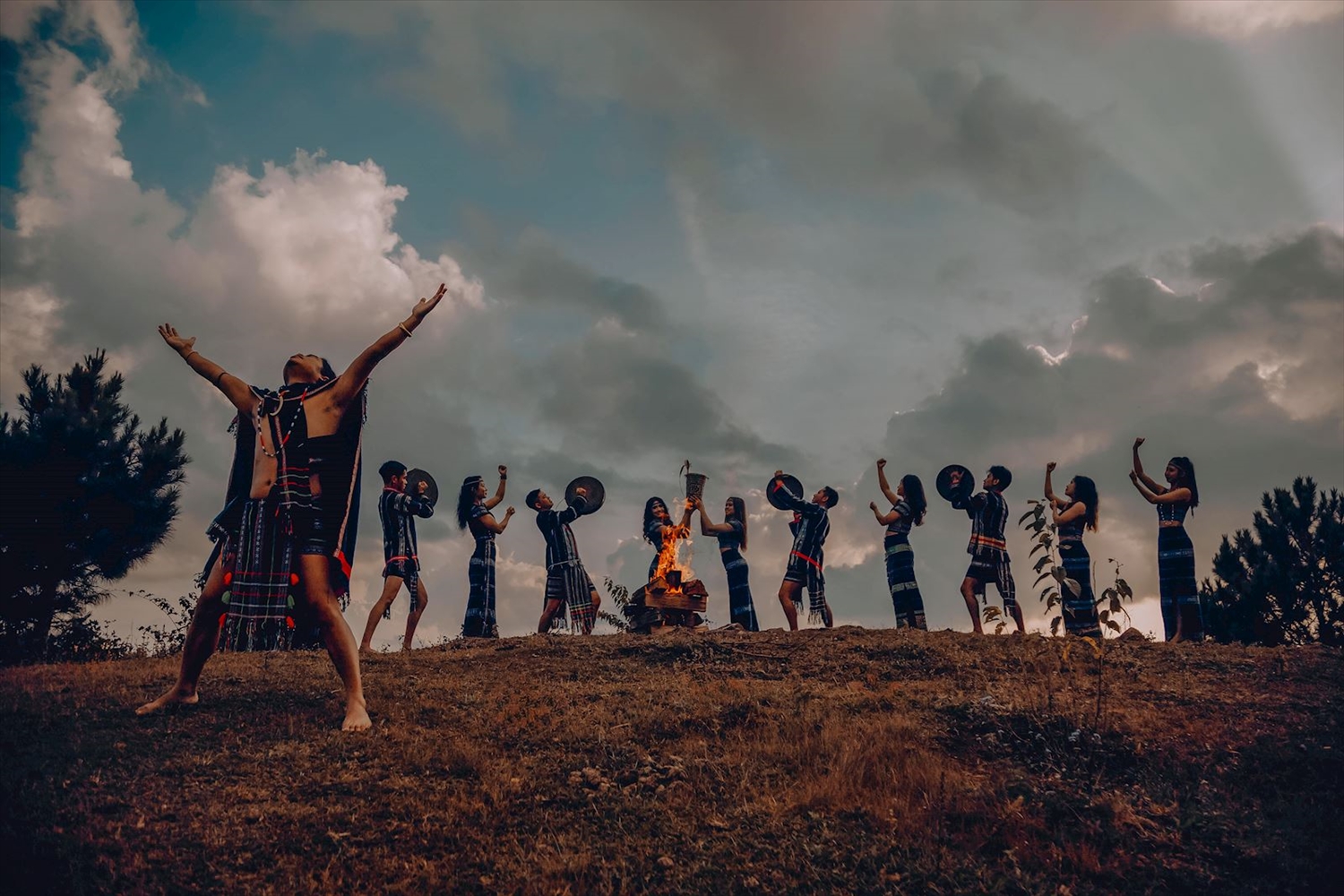
 The Gong Culture Space of the Central Highlands is vividly recreated at the Langbiang Land Gong Square
Lang Biang - Da Lat ward (Lam Dong province) stands out as a prime example of the trend toward leveraging traditional culture as a driver of development, serving as a hub for the cultural heritage of the K’Ho people. Over the years, the locality has focused not only on heritage preservation but also on integrating cultural values into tourism activities. Currently, the ward maintains 11 gong clubs comprising more than 200 artisans who regularly perform, pass on their skills to the younger generation and entertain visitors at local tourist sites.
Alongside the preservation of the gong culture, many traditional rituals of the K'Ho people have been revived; crafts such as brocade weaving, jar wine making, basketry and musical instrument crafting are being maintained and gradually developed into products for community-based tourism. Artisans not only serve as custodians of heritage but also earn additional income from the very cultural values created and preserved by their community.
According to Ms. Nguyen Thi Cam Giang, Permanent Deputy Secretary of the Party Committee of Lang Biang - Da Lat ward (Lam Dong province), the locality holds the view that preservation must go hand in hand with the promotion of cultural value. Consequently, alongside maintaining community gong troupes, the locality is stepping up the use of digital technology to showcase its culture utilizing videos, QR codes, and social media platforms and is promoting OCOP products in conjunction with local tourism destinations.
Following the administrative reorganization, Lang Biang - Da Lat (Lam Dong province) has welcomed over 4.6 million visitors, generating tourism revenue exceeding VND 700 billion. Beyond boosting local revenue, the growth of tourism has created numerous employment opportunities for residents through activities such as artistic performances, guided experiences, the sale of handicrafts and the provision of accommodation services.
Beyond Lang Biang, various other localities in Lam Dong province are also developing community-based tourism models rooted in local culture. In Lac Duong, Dam Rong, Ta Dung and many communes across the province's southern and eastern regions, residents are converting their homes into homestays, offering craft workshops and organizing traditional cooking sessions; they also invite visitors to participate in agricultural activities, listen to stories about village life and explore the local culture.
Notably, alongside agricultural earnings, many households have generated additional income from tourism services. Consequently, culture is no longer merely a value to be preserved but has become an economic resource; it contributes to diversifying livelihoods, reducing reliance on purely agricultural production and motivating local people to actively safeguard their ethnic identity.
However, these opportunities come with the requirement for sustainable development. If the focus shifts solely to short-term gains, excessive commercialization, or transforming traditional values into performances that lack a sense of community, the destination’s appeal will inevitably decline. Therefore, cultural preservation must be placed at the heart of tourism development.
According to Ms. Khuc Thi Thoi, Deputy Director of the Lam Dong Department of Culture, Sports and Tourism, cultural values can only be sustainably preserved when they remain present within the community’s own living environment integrated into the customs, traditions and daily lives of the people rather than merely existing as products designed for tourists.
Following the reorganization of administrative units, Lam Dong province possesses a vast cultural landscape stretching from the highlands to coastal areas and islands. The cultural diversity of its ethnic groups serves as a key advantage for developing distinctive tourism products and expanding the scope for economic growth through the sustainable utilization of heritage values.
Practical experience in Lam Dong provinve demonstrates that when culture is preserved within the community and promoted in the right direction, heritage is not only safeguarded but also becomes a driving force for socio-economic development. This approach allows cultural identity to go hand-in-hand with local development, helping to improve the lives of ethnic minority communities, create sustainable livelihoods and contribute to the nation's development goals in the new period./.
