 Religion is woven into the fabric of daily lifefrom how people greet one another and dine to how they respond to life’s ups and downs
The Fold of Theravada Buddhism and the rhythm of daily life
The vast majority of Thai people practice Theravada Buddhism. A common sight early each morning, whether in the heart of Bangkok or in rural areas like Isan is that of monks clad in saffron robes, carrying their alms bowls as they go on their morning rounds. People wait by the roadside, some cooking the food themselves, others purchasing pre-packaged meals from morning markets or convenience stores, to respectfully offer them to the monks. This custom of almsgiving and merit-making is a familiar part of daily life, carried out quietly and without ostentation.
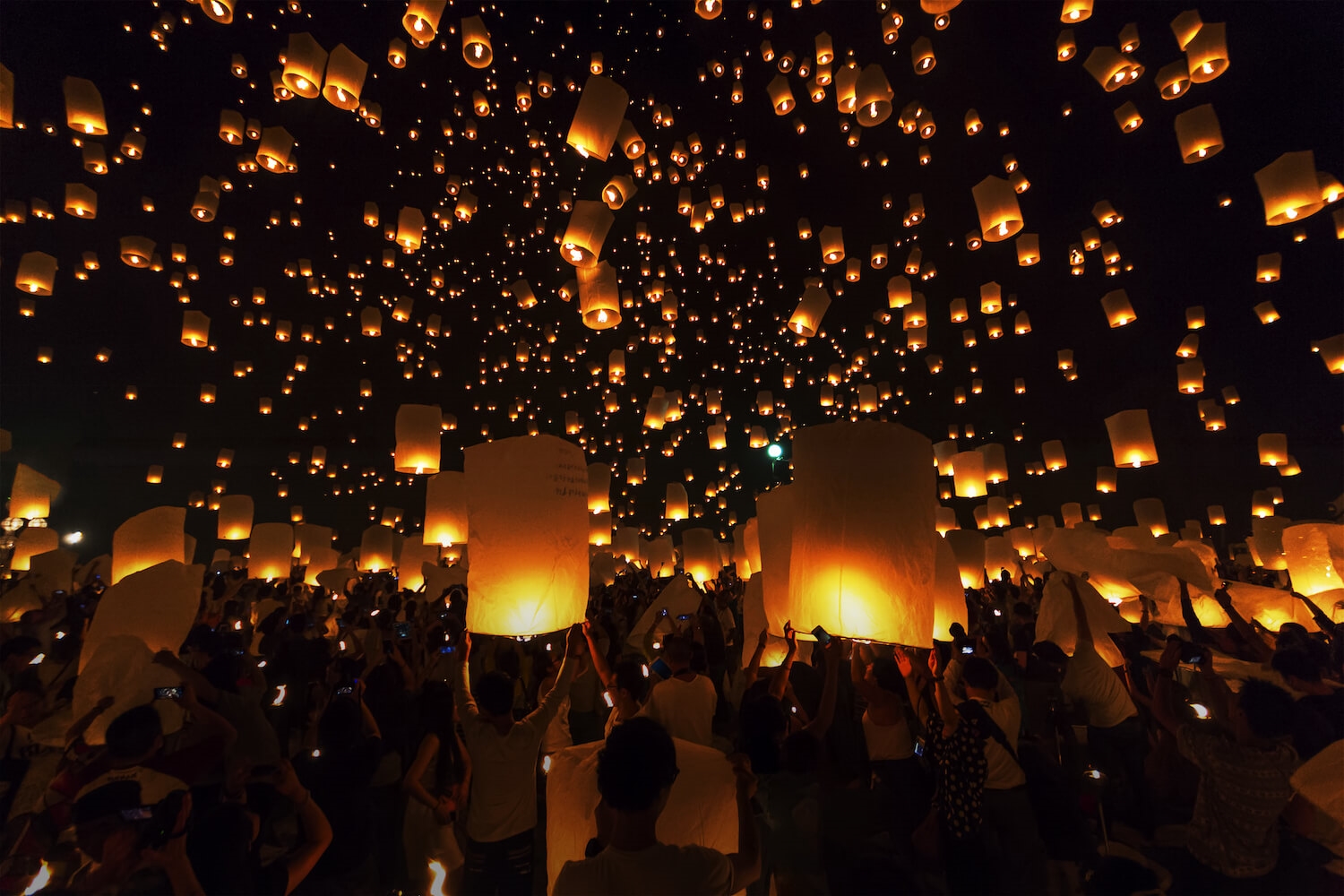
Buddhism is also closely linked to major festivals. On the night of the full moon in the twelfth month of the Thai lunar calendar, which usually falls in November on the Gregorian calendar, people everywhere release Loy Krathong floats onto rivers to offer apologies to the Water Spirit and pray for blessings. In Chiang Mai, the Yee Peng sky lantern release also draws large crowds of tourists, although the activity is now more strictly regulated to ensure flight safety.
The intertwining of Hinduism and folk beliefs
An interesting aspect is that Buddhism in Thailand does not stand in isolation; instead, it blends naturally with Hinduism and the traditional spirit worship of the local people.
Right in the middle of Bangkok’s bustling Ratchaprasong intersection, the Erawan Shrine dedicated to the Four-Faced God, Brahma is perpetually wreathed in incense smoke. People from all walks of life, including office workers, businesspeople and tourists, stop by to offer prayers. Those whose wishes have been granted often return to hire the resident dance and music troupe to perform an act of thanksgiving.
In front of houses, hotels, and large shopping malls, you will also see small shrines dedicated to the Earth God. Thai people light incense and offer fresh flowers; notably, they often offer bottles of red soft drinks, believing this to be a favorite beverage of the deities. Additionally, the practice of wearing protective amulets or getting sacred tattoos is widespread, reflecting a belief in divine protection and good fortune in daily life.
Pieces from other religious communities
In addition to Buddhism, Thailand is home to many other religious communities.
The Muslim community is concentrated in the southern provinces and certain areas of Bangkok. Mosques, Halal cuisine and the sound of the Azan call to prayer create a distinctive cultural atmosphere.
Thai-Chinese culture is most evident in areas like Yaowarat or Phuket, featuring Mahayana Buddhist temples, Taoist shrines and the annual Vegetarian Festival.
Catholicism and Hinduism represented by historic churches along the Chao Phraya River or the Sri Maha Mariamman Temple (a Hindu shrine) in the Silom district also contribute to the overall cultural diversity.
The “Mai Pen Rai” spirit and behavioral norms
The influence of Buddhism, combined with a lifestyle close to nature, fosters a rather relaxed mindset among the Thai people. Concepts such as Sanuk (fun) and Sabai (comfort), along with the ubiquitous phrase Mai Pen Rai (no worries), clearly reflect their approach to life: maintaining composure and taking things in stride. A Thai smile may signify friendliness or it may simply be a polite gesture to maintain a harmonious atmosphere.
Exploring Thailand is about more than just travel or shopping; it is an opportunity to observe how traditional spirituality and modern life coexist, creating a unique allure for the country./.
