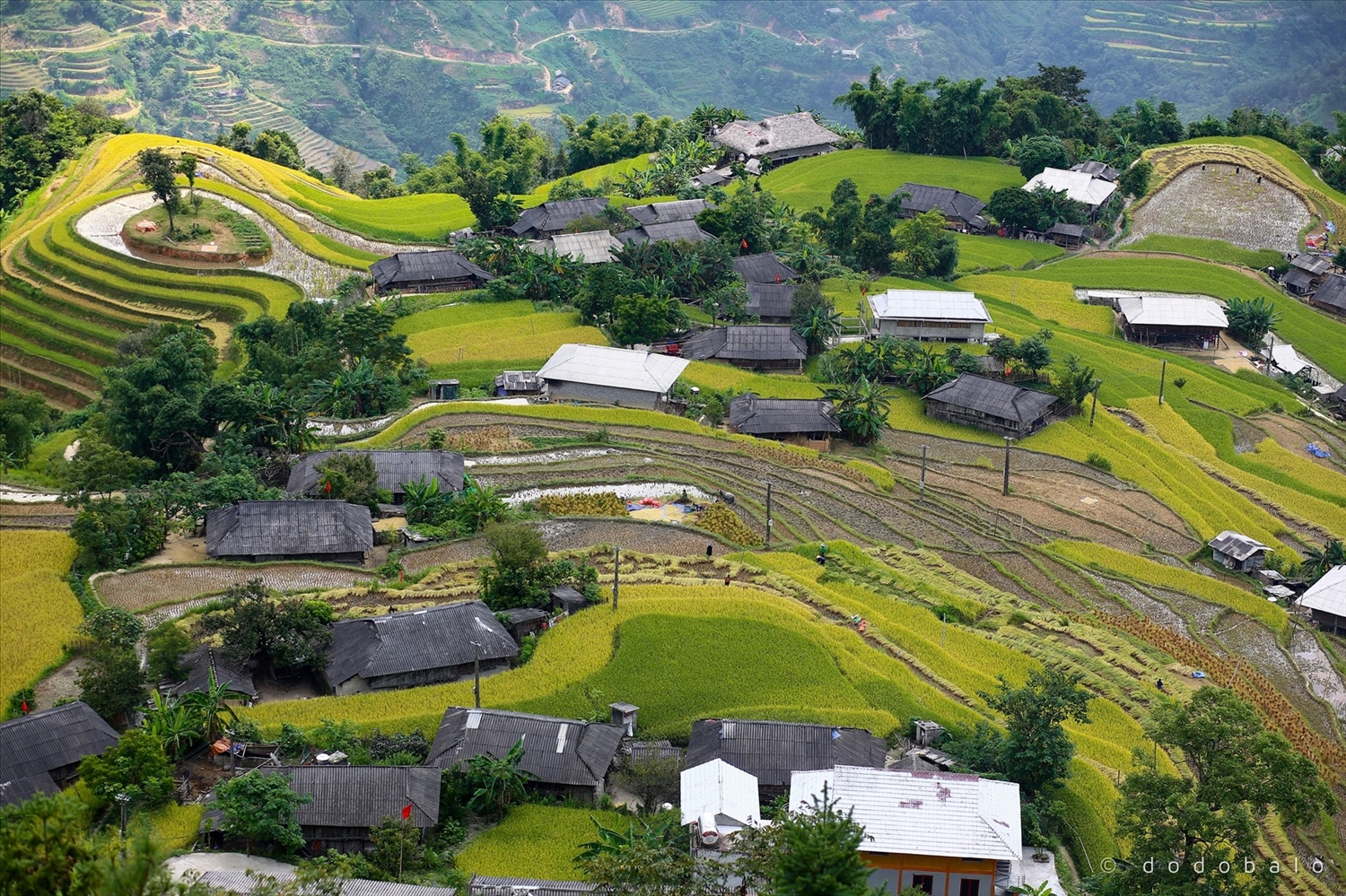
 Thanks to the attention and investment of the Party and the State through ethnic minority programs and policies, ethnic minority areas have made remarkable progress in all fields
Keywords: Ethnic affairs; Ethnic policy; Ethnic minorities.
1. Introduction
Vietnam is a multi-ethnic country with a long history of formation and development under diverse geographical, cultural and social conditions. Currently, 53 ethnic minority groups comprise approximately 14.8 million people, accounting for 14.6% of the country’s population, living across a vast area covering about three-quarters of the national territory.
In the context of international integration, the issue of the rights of ethnic minority groups is widely discussed. However, some external viewpoints suggest that Vietnam has “racial discrimination”. This article aims to clarify three issues: (1) The theoretical basis of ethnic affairs in Vietnam; (2) Achievements in the implementation of ethnic policies; (3) The role of the ethnic policy system in ensuring equal rights and refuting unfounded accusations from outside.
2. The Party’s viewpoint on the national question
During his lifetime, in a speech at the Conference of Mountain Cadres, President Ho Chi Minh emphasized: “The policy of our Party and Government towards the mountainous regions is very correct. In that policy, the two most important things are: national unity and improving the lives of the people” [6].
For the past 96 years, our Party has consistently and effectively applied Marxism-Leninism and Ho Chi Minh’s Thought, continuously improving its understanding and theory on the national question and resolving ethnic relations in accordance with the practical situation of the country and the requirements of each period.
From the First Party Congress (March 1935), the Party issued a Resolution on work among ethnic minorities. It clearly stated: “The Party Congress considers that the fighting force of ethnic minorities is a very large force”… and “the contempt for work among ethnic minorities is a very great political mistake” [4]…
At the Second National Party Congress (February 1951), the Party clearly stated: “All ethnic groups in Vietnam are equal in rights and obligations, and must unite and help each other in the resistance war and national construction. We must resolutely oppose narrow-minded nationalism and overthrow the imperialist plot to sow discord among the people. We must improve the lives of our people, help them progress in all aspects, ensure their participation in government and promote the use of their mother tongue in education in ethnic minority areas”.
Later, through different periods, with different revolutionary tasks, but the Party’s viewpoint on the national issue and national work remained consistent: “The national issue and national unity always have a strategic position in the revolutionary cause. Implementing the policy of national equality, solidarity and mutual assistance for development well” [3] and Vietnam does not support discrimination between ethnic groups.
After more than 15 years of implementing the Party’s reform policies, based on a profound assessment of the domestic and international situation, the importance of the ethnic issue and resolving ethnic relations in the cause of national construction and defense, on March 12th, 2003, at the 7th Conference of the 9th Party Congress, the Central Committee of the Party issued Resolution No. 24-NQ/TW on ethnic affairs in the new situation. In this Resolution, the Central Committee put forward five viewpoints, namely:
Firstly, the issue of ethnicity and national unity is a strategic, fundamental and long-term issue, as well as an urgent one at present for the Vietnamese revolution.
Secondly, the ethnic groups within the great Vietnamese family are equal, united and mutually supportive, helping each other to develop and strive together to successfully implement the cause of industrialization and modernization of the country, building and protecting the socialist Vietnamese Fatherland. To be determined to fight against all schemes to divide the nation.
Thirdly, comprehensively develop politics, economics, culture, society, security and national defense in ethnic minority and mountainous areas; link economic growth with addressing social issues; effectively implement ethnic policies; pay attention to developing and nurturing human resources; care for building a team of ethnic minority cadres; preserve and promote the traditional cultural values and identities of ethnic minorities in the overall development of the Vietnamese nation.
Fourthly, prioritizing investment in socio-economic development in ethnic minority and mountainous regions. Firstly, focus on developing transportation and infrastructure, and poverty reduction; effectively exploit the potential and strengths of each region, while protecting the ecological environment; promote the internal resources and self-reliance of ethnic minorities, at the same time increasing the attention and support from the central government and assistance from localities nationwide.
Fifthly, ethnic affairs and the implementation of ethnic policies are the responsibility of the entire Party, the entire people, the entire army, all levels and sectors and the entire political system.
Our Party has twice summarized Resolution No. 24-NQ/TW on ethnic affairs in the new situation. The first time in 2009, after that, the Politburo issued Conclusion No. 57-KL/TW on continuing to implement Resolution No. 24-NQ/TW. In the second review in 2019, the Politburo continued to issue Conclusion No. 65-KL/TW dated October 30th, 2019, on continuing to implement Resolution No. 24-NQ/TW, in which the Party set out the guidelines and policies for ethnic affairs in the period of 2021-2030 with many new and groundbreaking points.
At the 13th National Congress (January 2021), the Party affirmed its policy on ethnic issues and ethnic affairs for the period of 2021-2025, which is: “Focus on perfecting and effectively implementing ethnic policies in all fields, especially specific policies to address the difficulties of ethnic minority people. Creating livelihoods, jobs, stable settlements for ethnic minorities, especially in remote, mountainous and border areas. Focus on effectively implementing the National Target Program for socio-economic development of ethnic minority and mountainous areas in the period of 2021-2030. Protecting and developing the population of ethnic minorities with less than 10,000 people, especially those ethnic minorities at risk of declining in numbers” [5].
The documents of the 14th National Party Congress (January 2026) continue to affirm: “Ensuring fairness and equality among ethnic groups, religions, classes, social strata and each citizen in accessing opportunities and enjoying the fruits of development” [7].
3. Racism and genuine equality
In the International Convention on the elimination of all forms of racial discrimination, the term “racism” means “any distinction, exclusion, restriction or preference on the basis of race, color, ancestry, national or ethnic origin, with the aim or effect of nullifying or diminishing the recognition, enjoyment or practice, on equal basis, of the fundamental human rights and freedoms of the political, economic, social, cultural or any other area of public life” [2].
Racism is not merely a prejudiced attitude, but rather an act or policy that creates disadvantageous treatment based on ethnic, racial or origin. The core of racism is manifested in three signs: (i) Classification based on innate characteristics or community origin. (ii) Systemic or institutional unequal treatment. (iii) Consequences that deprive or restrict human rights or opportunities for development.
Racism is often manifested in two forms: (i) Direct discrimination: regulations or public acts that exclude a particular ethnic group from specific rights. (ii) Indirect discrimination: policies that create structurally adverse effects on a particular group.
Vietnam has been a signatory to the International Convention on the elimination of all forms of racial discrimination since 1982. The current Constitution of Vietnam clearly stipulates: “All ethnic groups are equal and all acts of discrimination and division among ethnic groups are strictly prohibited; the State implements a comprehensive development policy and creates conditions for ethnic minorities to develop their internal strengths”. And from the Party and State’s perspectives and guidelines on ethnic affairs, these have been institutionalized into laws and ethnic policies; mobilizing the entire political system to build good ethnic relations; consolidating and promoting socio-economic development in ethnic minority and mountainous areas, contributing to building a socialist society with Vietnamese characteristics.
Formal equality is the principle that all individuals are treated equally before the law. This is a crucial foundation of a rule of law state. However, formal equality does not automatically create equality of opportunity. When social groups start from different points due to geographical conditions, history, level of development, access to resources,… “equal treatment” can lead to unequal outcomes. For example, if educational resources are allocated without considering the conditions in remote mountainous areas with poor infrastructure, then in reality, disadvantaged groups will continue to lag behind. Therefore, formal equality is necessary but not sufficient.
Substantive equality aims to ensure that different groups have relatively equal opportunities in accessing rights and resources. Unlike formal equality, substantive equality confronts the reality that gaps exist between social groups due to historical legacies and uneven development conditions, thus requiring the State to implement appropriate policies to narrow these gaps. Targeted development policies such as investing in infrastructure in disadvantaged areas, prioritizing education for ethnic minorities, supporting livelihoods, and developing basic healthcare are not privileges based on ethnicity, but rather a redistribution of resources aimed at narrowing the development gap.
Vietnam’s ethnic minority and mountainous regions have fragmented terrain, difficult infrastructure, low population density, high costs of providing public services and livelihoods heavily dependent on agriculture and forestry. If resource allocation mechanisms are applied purely based on population size or short-term economic efficiency, these regions will continue to be at a disadvantage. Therefore, ethnic policies are the tools by which the State ensures substantive equality. The goal is not to create “ethnic privileges”, but to ensure that all citizens, whether ethnic minorities or the majority ethnic group, living in mountainous or lowland areas, have access to relatively equal opportunities for development.
The current ethnic policy in Vietnam, enacted with the goal of strengthening capacity, developing sustainable livelihoods and gradually narrowing the gap between ethnic minorities and the majority ethnic group, is not discrimination but a necessary adjustment in development governance to achieve genuine equality.
Therefore, assessing whether Vietnam is “racist” must be based on evidence of whether or not ethnic minorities are deprived of their rights.
4. Achievements in implementing ethnic policy rejecting baseless accusations of “racism” in Vietnam
Thanks to the attention of the Party and the State, the strong involvement of all levels and sectors, the efforts of ethnic minority people in implementing ethnic policies, the economic growth rate of provinces in ethnic minority and mountainous areas has been quite high in recent years. Specifically, the Northwest provinces have grown at an average rate of 8% per year; the Central Highlands at 7.5% per year; and the Southwest at 7% per year, contributing to the achievement of the socio-economic development goals of the whole country in general and the target of an estimated 8% growth rate in 2025 (the highest in the past 10 years). 98.4% of communes have roads leading to their centers; 96.7% of ethnic minority households use the national power grid; 100% of communes have preschools, primary schools, and lower secondary schools; 99.3% of communes have health stations, with 83.5% of communes having health stations that meet standards; over 90% of communes have radio and television coverage, 100% of communes have telecommunications infrastructure and mobile phone coverage. The poverty rate among ethnic minorities will decrease sharply by 2025, to approximately 11%. 10,549 households will receive support for residential land; 42,567 households will receive support for housing; 3,387 households will receive direct support for production land; 54,899 households will receive support for vocational retraining; 25,056 households will be planned, arranged and stabilized in their communities…
The work of preserving and promoting traditional cultural values associated with community tourism development is promoted. Many historical and cultural relics are recognized at the provincial and national levels, notably: (1) International Heritage: Cham pottery is recognized by UNESCO as a representative intangible cultural heritage of humanity; (2) Special National Monument: The architectural and artistic monument of Po Nagar Tower (Khanh Hoa province) is ranked as a special national monument; (3) Many folk festivals and unique art forms (such as the Xen Lau No festival of the Black Thai people, the Pung Hieng festival of the Dao Tien people, the Sayangva festival of the Cho Ro people) are recognized as national intangible cultural heritage.
Education and training continue to be a top priority. The major policy of the Party and State to completely waive tuition fees for students from preschool to high school in public schools, implemented from the beginning of the 2025-2026 school year, has created momentum to promote universal education and reduce the burden on ethnic minority communities. Educational facilities are being upgraded to meet standards. Localities in the land border areas have simultaneously launched the construction of hundreds of boarding schools for primary and secondary levels, affirming their determination to develop education in this strategic region.
Healthcare and public health services are given attention and priority. The poor and ethnic minorities in disadvantaged and especially disadvantaged communes are provided with health insurance cards by the State and are entitled to 100% reimbursement of medical examination and treatment costs.
A country is considered racist when it restricts human rights based on ethnicity. Vietnamese law strictly prohibits acts of discrimination and division based on ethnicity; at the same time, the State has enacted many ethnic policies, focusing on the national target program for socio-economic development in ethnic minority and mountainous areas for the period of 2021-2025 and most recently, the National Target Program for building new rural areas, sustainable poverty reduction, and socio-economic development in ethnic minority and mountainous regions for the period of 2026-2035, phase I, from 2026-2030, aims to continuously improve living conditions and development opportunities for ethnic minority communities. The achievements in infrastructure development, education, healthcare, cultural preservation and political stability in ethnic minority areas over the past period are practical evidence refuting accusations that Vietnam is “racist”.
5. Conclusion
In practice, ethnic policies have made significant contributions to ensuring equality among ethnic groups, improving living conditions, preserving cultural identity and strengthening national unity. There is no empirical basis for the external assertion that racial discrimination exists in Vietnam. On the contrary, the system of ethnic policies is a crucial pillar ensuring political and social stability and sustainable development in ethnic minority and mountainous areas.
References
1. Regulations governing the exchange activities of churches and organizations within the Great Way of the Third Period of Universal Salvation at Cau Kho Tam Quan, Binh Dinh province, April 8th, 2012, p.1.
2. Government Religious Affairs Committee (2021), Religion and religious policy in Vietnam, National Political Publishing House.
3. Communist Party of Vietnam (2021), Documents of the 13th National Congress, National Political Publishing House.
4. Nguyen Quoc Tuan (Editor), Cao Dai Religion in Vietnam, Social Sciences Publishing House.
5. Ho Chi Minh (2011), Complete Works, National Political Publishing House.
