Keywords: National unity; Poverty reduction; Ethnic minorities.
1. Theoretical basis of poverty reduction and national unity
During his lifetime, President Ho Chi Minh considered poverty eradication not only an economic task but also a humanitarian, ethical and political issue. Only when we can eliminate hunger and reduce poverty can we gradually build a socialist regime and make all Vietnamese people prosperous and happy [2]. But “What is socialism?” According to President Ho Chi Minh: “It’s prosperity. What else? It’s solidarity, happiness and health” [3].
In his article “Some Theoretical and Practical Issues on Socialism and the Path to Socialism in Vietnam”, commemorating the 131st anniversary of President Ho Chi Minh’s birth (May 19th, 1890 - May 19th, 2021) and the election of deputies to the 15th National Assembly and People’s Councils at all levels for the term of 2021-2026 (May 23rd , 2021), General Secretary Nguyen Phu Trong analyzed that one of the characteristics of the socialist society that the Vietnamese people are striving to build is “Ethnic groups in the Vietnamese community are equal, united, respect and help each other to develop together”; “National unity is the source of strength and a decisive factor in ensuring the lasting success of the revolutionary cause in Vietnam; it continuously promotes equality and solidarity among ethnic groups and religions”.
Based on the views of Marxism-Leninism and Ho Chi Minh’s thought on the national question, throughout the revolutionary periods, our Party has always consistently maintained the basic contents of the national policy and guidelines: “The ethnic groups in the great Vietnamese family are equal, united, mutually supportive and help each other to develop together” [4]. “The basic contents of the national policy are a closely linked, complementary block, must be equal, respect each other and help each other to develop together in order to achieve unity, must be truly and sincerely united in order to achieve equality, truly respect each other and determine to help each other to develop together” [5].
Resolution No. 23-NQ/TW dated March 12th, 2003, of the Seventh Conference of the Central Committee of the Communist Party of Vietnam (9th term) on promoting the strength of national unity for a prosperous people, a strong nation and a just, democratic and civilized society, identified the policy orientation towards ethnic minorities to strengthen national unity as follows: “Focusing on economic development, taking care of material and spiritual life, eradicating hunger and poverty, raising people’s intellectual level, preserving and promoting the cultural identity, language, writing and good traditions of ethnic groups” [6].
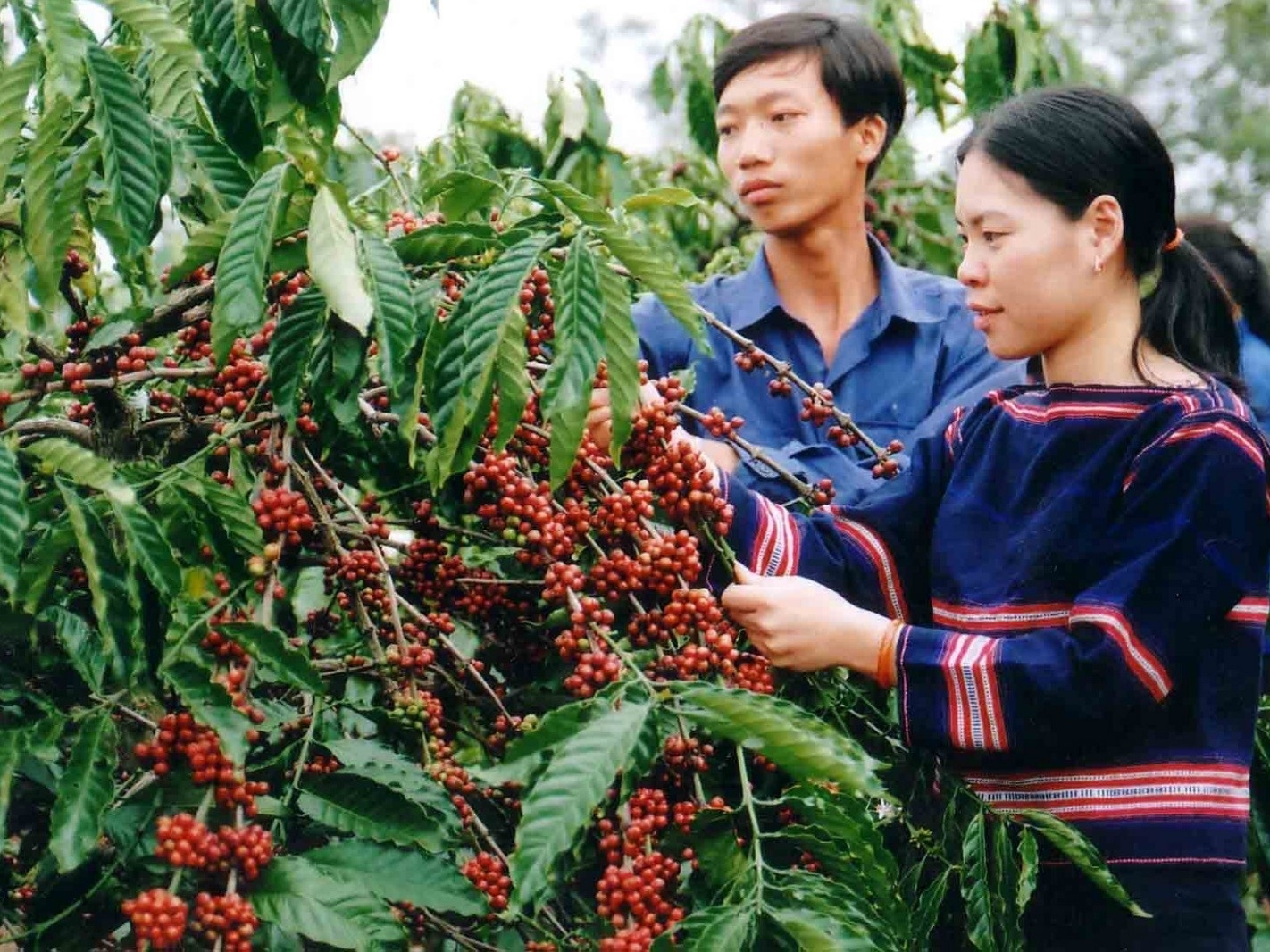 Investing in and supporting ethnic minority communities to develop production and improve poverty reduction efficiency will narrow the regional gap and create social equity
After more than 20 years of implementing Resolution No. 23-NQ/TW, at the 8th Conference, the Central Committee of the 13th Party Congress issued Resolution No. 43-NQ/TW on November 24th, 2023, on continuing to promote the tradition and strength of national unity, building our country to be increasingly prosperous and happy. The Resolution sets forth the following viewpoint: “Taking the goal of building a prosperous and happy Vietnam, becoming a developed, high-income country by 2045, as a common ground to motivate and encourage the people to work together for the future of the nation and the happiness of the people”. For ethnic minority communities, the Resolution requires: “Ensuring equality, solidarity, mutual assistance among ethnic groups, promoting internal strengths and striving for shared development”.
Recently, the article “Promoting the strength of national unity to develop the country” by General Secretary To Lam, which was simultaneously published by mass media on November 17th, 2025, also emphasized: “Continuously improving the material and spiritual lives and protecting the legitimate rights of the people is both a goal and a driving force in strengthening national unity”.
Thus, in Ho Chi Minh’s thought, the Party’s documents and the writings of our Party leader all emphasize the relationship between the material and spiritual lives of the people and the issue of national unity. In order to improve the material and spiritual lives of the people, it is necessary to focus on solving the problem of poverty reduction. “When the people are rich, the country is strong, democratic, just, and civilized, when all citizens enjoy the fruits of development fairly, then the great unity will be even stronger and no force can incite division [1]”.
2. The role of poverty reduction in strengthening national unity
In national development strategies, poverty reduction is always considered an important pillar to create social justice. Not because poverty is the only problem, but because poverty is the first “bottleneck” that causes disadvantaged groups to fall behind. When poverty is not tackled, all other development policies operate ineffectively. Poverty is not just a lack of income, but also a lack of access to public services, educational opportunities, labor skills, market participation, and a voice in community life. When these deficiencies are not addressed, poverty leads to conflicts of interest, fragmentation and a decline in community cohesion. Based on these theories, poverty reduction plays a significant role in strengthening national unity, as demonstrated in the following aspects:
Firstly, poverty reduction helps narrow regional and ethnic gaps, creating social equity
Regional and ethnic gaps stem from inequality in access to resources. Disadvantaged areas often face poor transportation, unreliable electricity and water supply, uneven education, a thin healthcare network and weak digital infrastructure… Income shortages and limited access to basic social services affect people's ability to participate in socio-economic activities, thereby limiting their role in community development. If the gap between rich and poor widens and the poor feel increasingly left behind, the risk of social conflict increases. Poverty reduction means narrowing the income and living conditions gap. The effectiveness of poverty reduction efforts contributes to limiting envy and jealousy among ethnic groups, reducing inequality in enjoying the fruits of national development. When social equality is strengthened, the risk of social stratification decreases, social consensus on the Party and State’s ethnic policies increases, thereby consolidating the solidarity and close ties among ethnic groups.
Secondly, poverty reduction helps strengthen people's trust in the Party and the State
Promoting poverty reduction means addressing the needs that people are most concerned about, which are issues revolving around living standards, income and access to basic social services (healthcare, education, communication, housing, sanitation,...). For the political system, caring for vulnerable groups and ethnic minorities demonstrates both moral and political responsibility. Effective poverty reduction programs directed by the Party and State help people clearly feel the concern in the policies and the transformation of the determination to “leave no one behind” into concrete results in real life. On the other hand, the effectiveness of poverty reduction also reflects the ability to design policies, allocate resources and organize implementation in practice. When people see the Party and the State acting correctly, quickly and effectively, their trust in the policies and guidelines is enhanced. In ethnic minority and mountainous areas, this trust becomes a decisive factor in ensuring security and order and maintaining social stability. The stronger social trust, the more solid the national unity becomes.
Thirdly, poverty reduction creates an impetus for cooperation and mutual support within the community
Poverty is the biggest obstacle weakening communities. When individual households struggle with food and clothing, they are forced to huddle together, prioritizing their immediate family interests over participating in community activities. Scarcity leads to a defensive mindset, insecurity about the future, and a decline in confidence in the ability to cooperate in problem-solving. Therefore, poverty is not just an economic issue but also an invisible barrier that breaks the bonds of cooperation within the community. If poverty reduction policies are implemented effectively, these barriers will gradually be removed, thereby creating a stronger impetus for cooperation. Improving living standards also helps people strengthen their trust in their neighbors, in village institutions and in government policies - key elements for a healthy functioning social structure. As income, livelihoods, and mental well-being improve, people shift towards cooperation to expand their livelihoods, share experiences, and link production. This is the first step in transitioning from a “every man for himself” mentality to a state of readiness for cooperation. In other words, poverty reduction not only raises income but also unleashes the capacity for cooperation, directly promoting increased social cohesion.
Fourthly, poverty reduction helps stabilize socio-political conditions and create a strong foundation of public support
Poverty reduction and socio-political stability always go hand in hand, like two sides of the same coin. When people’s lives improve, the vicious cycle of deprivation - dissatisfaction - irritability is gradually broken. When people have jobs and stable livelihoods, both minor conflicts within the community and extremist behaviors decrease. This is not a subjective observation, but a fundamental principle of all forms of governance. When people's lives are secure, their hearts naturally find peace. From a state management perspective, poverty reduction creates a “synchronization” between the state’s development goals and the people’s aspirations. The effective implementation of livelihood support programs, infrastructure development, healthcare, and education in disadvantaged areas sends a clear message: the State will not leave anyone behind. This message helps strengthen social trust, increase policy acceptance and limit the risks of being exploited by harmful and toxic information.
Maintaining political and social stability is crucial for building “the people’s support”. When people feel they have a place in the development process and opportunities for advancement, they have a reason to remain committed to their community and their nation. When the development gap narrows, the cohesion between community groups is strengthened and people are less susceptible to destabilizing factors. Therefore, poverty reduction is not just a socio-economic policy, but a strategic solution to build social consensus, ensure security, and nurture people’s trust - factors that determine the strength of national unity.
3. Conclusion
Vietnam is a multi-ethnic country. Currently, five prominent issues still exist in ethnic minority and mountainous regions: (1) Most difficult infrastructure conditions. (2) Lowest quality of human resources. (3) Slowest socio-economic development. (4) Most difficult access to social services. (5) Highest poverty rate. These are factors that hostile forces always thoroughly exploit and take advantage of to create “hot spots” in many areas, thereby dividing ethnic groups, causing conflicts, riots, terrorism... to “internationalize” the national issue, “creating a pretext for hostile forces to interfere in internal affairs, destroy the independence, unity and development in the socialist orientation of the Vietnamese national community” [10].
Recognizing the dialectical relationship between poverty reduction and strengthening national unity, the Party and State have consistently focused on enacting and prioritizing the allocation of resources to implement poverty reduction policies in ethnic minority and mountainous areas over the years. According to the Government's report at the 10th session of the 15th National Assembly, the poverty rate among ethnic minorities will be 12.55% by the end of 2024. Vietnam’s poverty reduction achievements demonstrate the Government's strong determination to achieve sustainable development goals. Vietnam is also recognized and highly appreciated by the international community as one of the countries with the fastest poverty reduction rates in the world, achieving the most impressive progress in the sustainable development goals that Vietnam is committed to implementing. According to the United Nations, Vietnam’s happiness index in 2025 ranked 46th, an increase of 37 places compared to 2020 and we have maintained “internal peace and external stability”, “consolidated and strengthened the people’s firm trust in the Party and the State” [6].
Both theory and practice show that poverty reduction directly contributes to narrowing regional disparities, strengthening social trust and creating an environment for sustainable development. As the country enters a new era, more than ever, it is necessary to continue prioritizing the strengthening and promotion of national unity, considering it a key factor in national development. In this new context, poverty reduction continues to be an important solution to consolidate and strengthen national unity.
References
1. General Secretary To Lam (2025), Promoting the strength of national unity to develop the country, https://www.qdnd.vn/chinh-tri/tin-tuc/phat-huy-suc-manh-dai-doan-ket-toan-dan-toc-de-phat-trien-dat-nuoc-1011684.
2. Journal of Political Theory, Ho Chi Minh Thought on Poverty eradication, reduction and the Party’s application in the New Context, https://lyluanchinhtri.vn/tu-tuong-ho-chi-minh-ve-xoa-doi-giam-ngheo-va-su-van-dung-cua-dang-ta-trong-dieu-kien-moi-6757.html, accessed September 20th , 2025.
3. The Committee for Ethnic Minorities Affairs, the Communist Party of Vietnam and Ho Chi Minh’s thought on the national issues, Speech to cadres and students of the Nghe An mountainous region Teacher Training School, National Political Publishing House, Hanoi, 2013, p.584.
4. Resolution No. 24-NQ/TW dated March 12th, 2003, of the Seventh Conference of the Central Committee of the Ninth Party Congress on ethnic affairs.
5. Government (2025), Report proposing investment policy for the National Target Program on building new rural areas, sustainable poverty reduction and socio-economic development in ethnic minority and mountainous areas for the period of 2026-2035.
6. Hoang Xuan Luong, Nation and Development, People’s Army Publishing House, Hanoi, 2013, p.214.
7. Resolution No. 23-NQ/TW dated March 12th, 2003, of the Seventh Conference of the Central Committee of the Communist Party of Vietnam (9th term) on promoting the strength of national unity for a prosperous people, a strong nation and a just, democratic and civilized society.
8. Government, Summary report on the results of implementing the Socio-Economic Development Plan for 2025 and the 5-year period of 2021-2025; Expected socio-economic development plan for 2026.
9. Nguyen Phu Trong (2021), Some theoretical and practical issues on socialism and the path to socialism in Vietnam, https://www.tapchicongsan.org.vn/media-story/- asset_publisher/V8hhp4dK31Gf/content/mot-so-van-de-ly-luan-va-thuc-tien-ve-chu-nghia-xa-hoi-va-con-duong-di-len-chu-nghia-xa-hoi-o-viet-nam.
10. Tran Xuan Dung (2020), Basic and urgent solutions to prevent and combat the conspiracies and activities of hostile forces against ethnic minority and mountainous areas of our country and proposals to supplement and improve the Party’s guidelines and policies and the State’s laws and regulations, Proceedings of the Workshop on Contributing Opinions on Ethnic Affairs in the Draft Document of the 13th National Congress of the Party, p.219-220.
