English review |
Dr. Ly Thi Thu; Hoang Thi Phuong Lien -
19:59, 22/10/2026 Abstract: In the context of developing a socialist-oriented market economy, deep international integration, and rapid social change, the task of consolidating national unity is posing new, profound and broader demands. One of the key factors determining the nature of national unity is the degree of equality in opportunities for development and quality of life among different regions and ethnic groups.
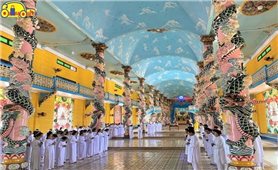
Abstract: Religious unity is an important part of Vietnam’s national unity in the context of reform and international integration. Cao Daiism - an indigenous Vietnamese religion, with its harmonious doctrines, patriotic spirit, and religious practices closely linked to the nation has made positive contributions to strengthening religious unity, social stability and national development.
English review |
Dr. Ly Thi Thu*; Hoang Thi Phuong Lien** -
15:12, 10/08/2026 Abstract: In the context of developing a socialist-oriented market economy, deep international integration, and rapid social change, the task of consolidating national unity is posing new, profound and broader demands. One of the key factors determining the nature of national unity is the degree of equality in opportunities for development and quality of life among different regions and ethnic groups.
English review |
Dr. Le Phu Thang; MA. Nguyen Duy Dung -
15:08, 24/07/2026 Abstract: Throughout history, from the early states to the current period of reform and international integration, unity has always been the source of national strength and the decisive factor in all victories in the cause of building, protecting, and developing the country. This article analyzes the characteristics of national unity, from political consensus and unity of will within the political system to cultural and social cohesion among ethnic communities. At the same time, it also clarifies the need to strengthen unity in the context of globalization, in order to ensure sustainable development and safeguard national sovereignty.
English review |
Dr. Phu Van Han; MA. Nguyen Duy Dung; Lieutenant Colonel, MA. Hoang Duc Thanh -
14:50, 22/07/2026 Abstract: Throughout the long history of nation-building and national defense of the Vietnamese people, the close ties and companionship between ethnic groups and religions with the destiny of the nation have always been a distinctive feature, vividly demonstrating the strength of the great national unity. In the current context, when the country is entering a new stage of development, with high requirements for international integration, sustainable development and maintaining socio-political stability, the accompanying role of ethnic groups and religions has become more important than ever.

(DTTG) - Abstract: This article affirms the consistent policy and stance of the Vietnamese Party and State in ensuring freedom of belief and religion and promoting socio-economic development for the Khmer people. The author focuses on identifying and refuting the distorted narratives of hostile forces, particularly the “Khmer Krom Federation” (KKF), about human rights and religious freedom in the Southwestern region of Vietnam. Through the training of religious leaders, the restoration of temples, and the organization of traditional festivals such as the Kathina robe offering, the Khmer Theravada Buddhist tradition demonstrates a strong connection with national unity, contributing to maintaining political security and social order in the new context.

(DTTG) - Abstract: Vietnam is a country with a long-standing cultural tradition, rich national identity, and a diverse and vibrant religious life with approximately 27.7 million followers, accounting for over 27.7% of the country’s population. People of all religions are an inseparable part of the Vietnamese nation; therefore, ensuring the freedom of belief and religion for all is always a consistent policy of the Vietnamese Party and State, to be the core element in uniting people of all religions within the great national unity, making a significant contribution to the building and development of the country. This consistency has fostered trust, forming the basis for uniting people of all religions and firmly consolidating national unity.
