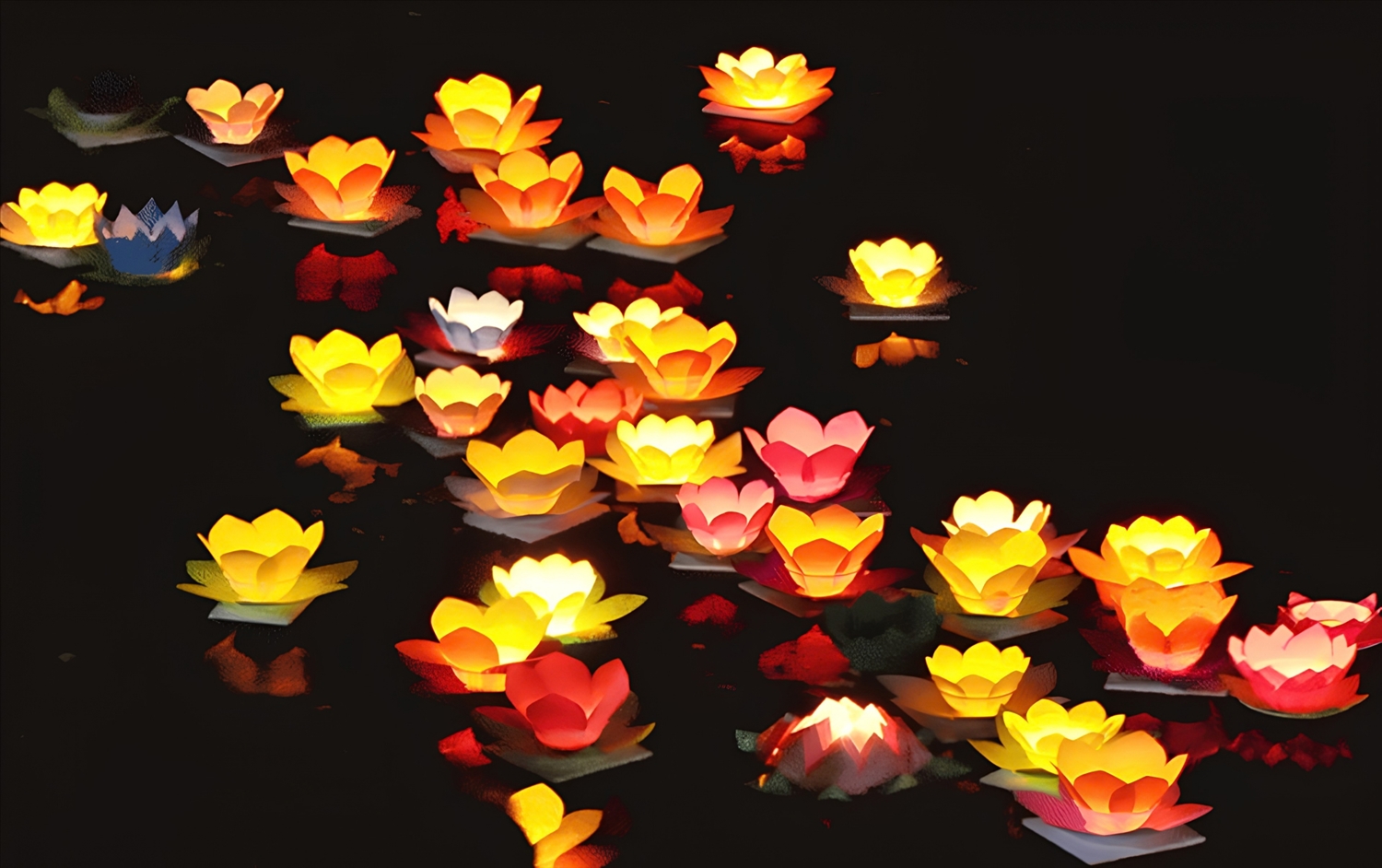
 In Buddhism, the flower lamp symbolizes the radiance that illuminates everything far and wide
Buddhist philosophy regarding “Vu Lan” clearly distinguishes between different levels of practicing filial piety. “Lesser filial piety” entails providing for one’s parents’ material needs such as food and clothing and caring for them during illness. “Great filial piety” (transcendental filial piety) demands a higher spiritual responsibility; a child must not only care for their parents’ physical well-being but also guide them to take refuge in the Three Jewels, renounce unwholesome karma, live joyfully within the True Dharma and cultivate wholesome causes for future lives.
Unlike some folk beliefs that view the full moon of the seventh lunar month, traditionally a time for seeking good fortune or settling spiritual debts, Buddhism approaches the Vu Lan festival from the perspective of transforming one’s consciousness. Buddhist philosophy affirms that liberation or deliverance arises from the interplay between the chanting power of the pure monastic community (following the “Pavarana” ceremony at the conclusion of the summer retreat) and the sincere, diligent devotion of the child. When Buddhists make offerings to seek blessings, engage in volunteer work, or chant sutras and dedicate the merit, they are essentially purifying their own minds and generating a source of peaceful energy to uplift the spirits of their ancestors and bring peace to their living parents.
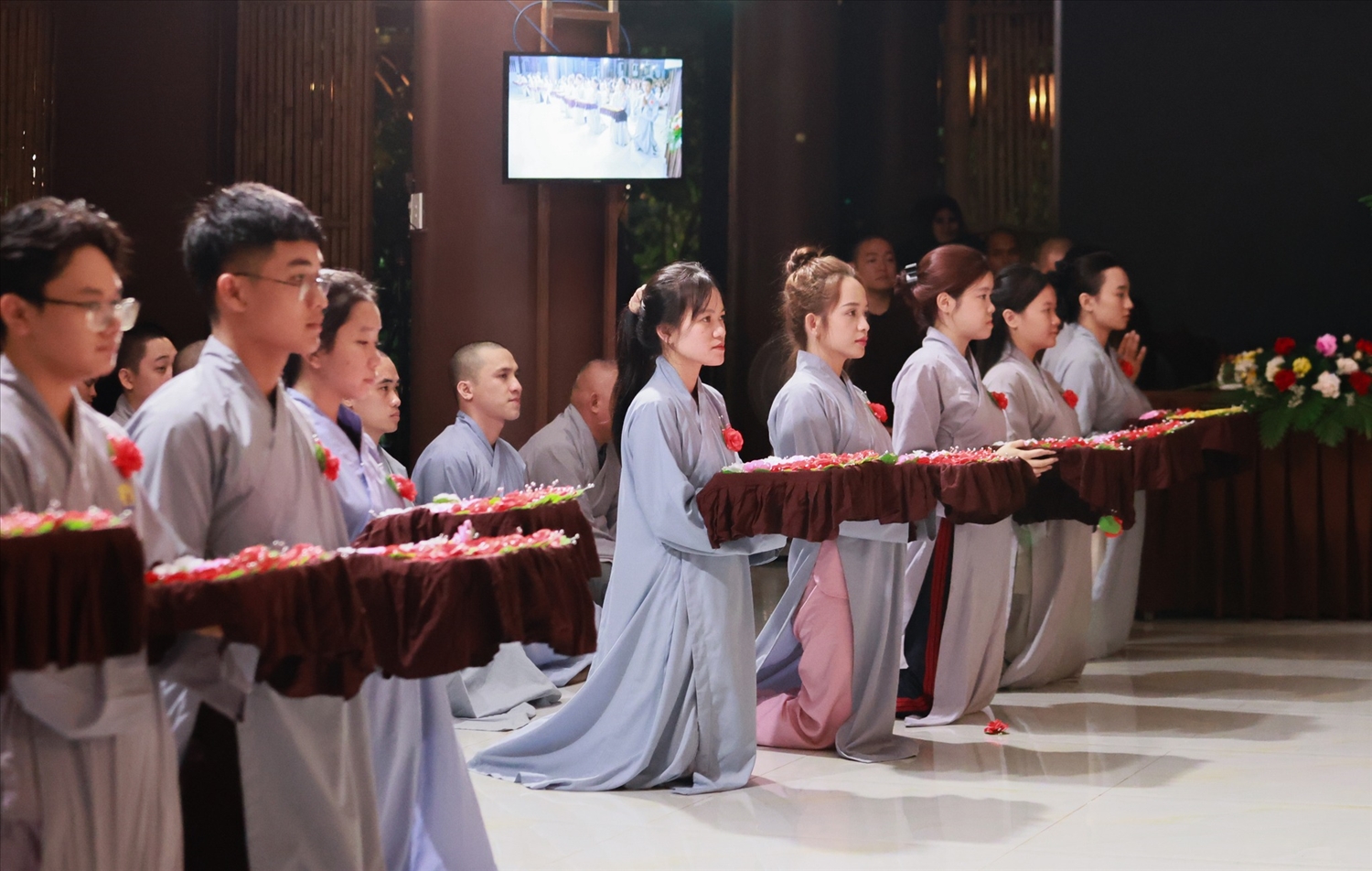 Buddhists reflect deeply during the Vu Lan festival of filial piety at Khanh An monastery, Ho Chi Minh city
On the path of practicing the Bodhisattva way, the spirit of Ullambana expands into the vow to liberate all sentient beings. Viewed through the lens of karma and beginningless cycles of birth and death, the “Brahma-net Sutra” emphasizes the contemplation that all sentient beings have, at some point across countless lifetimes, been our parents and kin. This expansion transforms filial piety from a concept rooted in the biological family into a broad worldview embodying the spirit of the “Four great gratitudes”: gratitude toward parents; the Three Jewels (or teachers and lineage masters); the nation and society; all sentient beings.
Gratitude toward parents: Stemming from the bond of blood-tie love.
Gratitude to the Three Jewels and teachers/lineage masters: Wisdom illuminating the spiritual path.
Gratitude toward the nation and society: Responsibility to the community and appreciation for the generations of forebears who built and defended the country.
Gratitude toward all living beings: Harmony with and gratitude for all things and the surrounding environment.
It is precisely this comprehensive perspective that helps Buddhists cultivate compassion, shed a narrow sense of self and foster a spirit of responsibility toward the community.
In the modern context, Vu Lan serves as an anchor for spiritual awakening. Observing Vu Lan helps Buddhists maintain mindfulness, reminding them that caring for one’s parents is akin to making offerings to the Buddhas and that the family is the primary temple for practicing the teachings.
A practical and rational aspect of Vu Lan philosophy is the practice of “filial piety in accordance with the Dharma”. Buddhism does not encourage expressing filial piety through ostentatious feasts or the habit of burning votive paper, practices that are costly, environmentally polluting and rooted in superstition. True filial piety requires a balance between providing material support and offering emotional and spiritual care to one’s parents while they are alive. For deceased ancestors, the most meaningful action is to cultivate merit through charitable deeds, offerings and the practice of an ethical life and then to dedicate that merit to them.
In short, Vu Lan, the observance of filial piety, serves as a connecting thread in the lives of Buddhists, linking scriptural philosophy with practical action. This cultural-religious stream not only preserves the nation’s tradition of “drinking water while remembering its source” but also elevates gratitude into a practice for personal transformation, serving as a solid foundation for the sustainable development of both family and society./.
