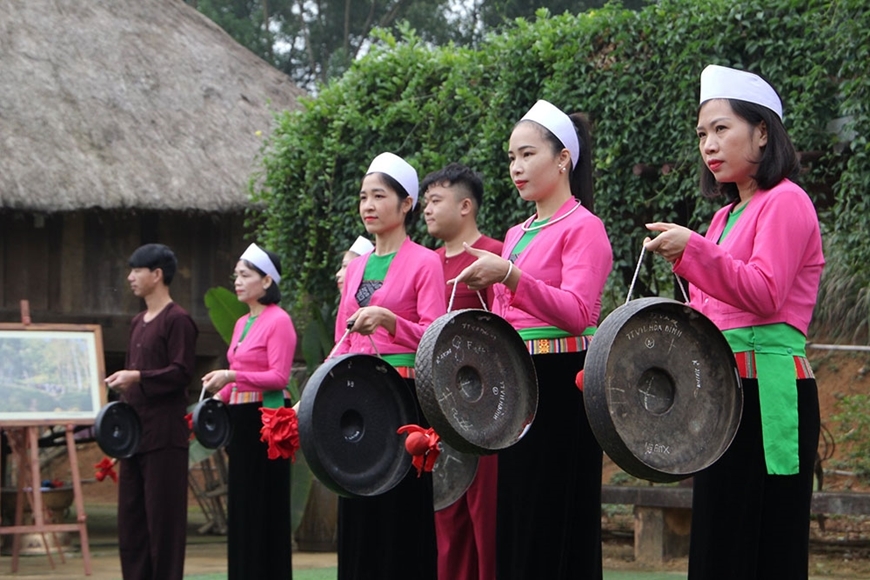
 A performance of Muong gongs - one of the activities during the festive portion of the Mo Muong ritual
In Ninh Binh province, the Muong ethnic community is concentrated in communes such as Cuc Phuong, Phu Son, Phu Long and Lac Van, located in the former mountainous district of Nho Quan. Accounting for 98% of the total ethnic minority population in the area and possessing a rich repository of both tangible and intangible cultural heritage, this region is considered a distinctive “Muong cultural zone”, situated right next to the Trang An Landscape Complex - a UNESCO World Heritage site of both cultural and natural significance.
Venturing beyond the well-trodden cave-tourist routes of Trang An and Tam Coc, visitors can easily discover an entirely different world. Here, villages nestle at the foot of the mountains, stilt houses peek out from beneath the foliage and the Muong language resonates through the rhythms of daily life. Stepping into this environment, travelers are truly immersed in the culture of the Muong people.
The sound of gongs often marks the beginning of experiential programs. For the Muong people, gongs are inextricably linked to festivals, seasons of celebration, and significant village events. In the circular gong dance, Muong women attired in traditional clothing play the gongs while moving in a circle, embodying a spirit of community that has been preserved through generations.
This cultural landscape is further enriched by folk singing (hat dum) and lullabies simple yet distinctive expressions that help define the unique cultural life of the Mường people. Folk singing is a form of traditional, interactive folk singing characterized by a strong sense of community; it typically takes place during festivals, when young men and women gather to socialize. The melodies are gentle and ethereal, often set to free verse or the traditional 6-8 syllable meter, expressing the innermost thoughts, emotions, and aspirations of lovers. Lullabies, sung with deep sincerity and purity, flow like a spring of affection nurturing the souls of children and helping to shape their character. These songs have been passed down orally from one generation to the next.
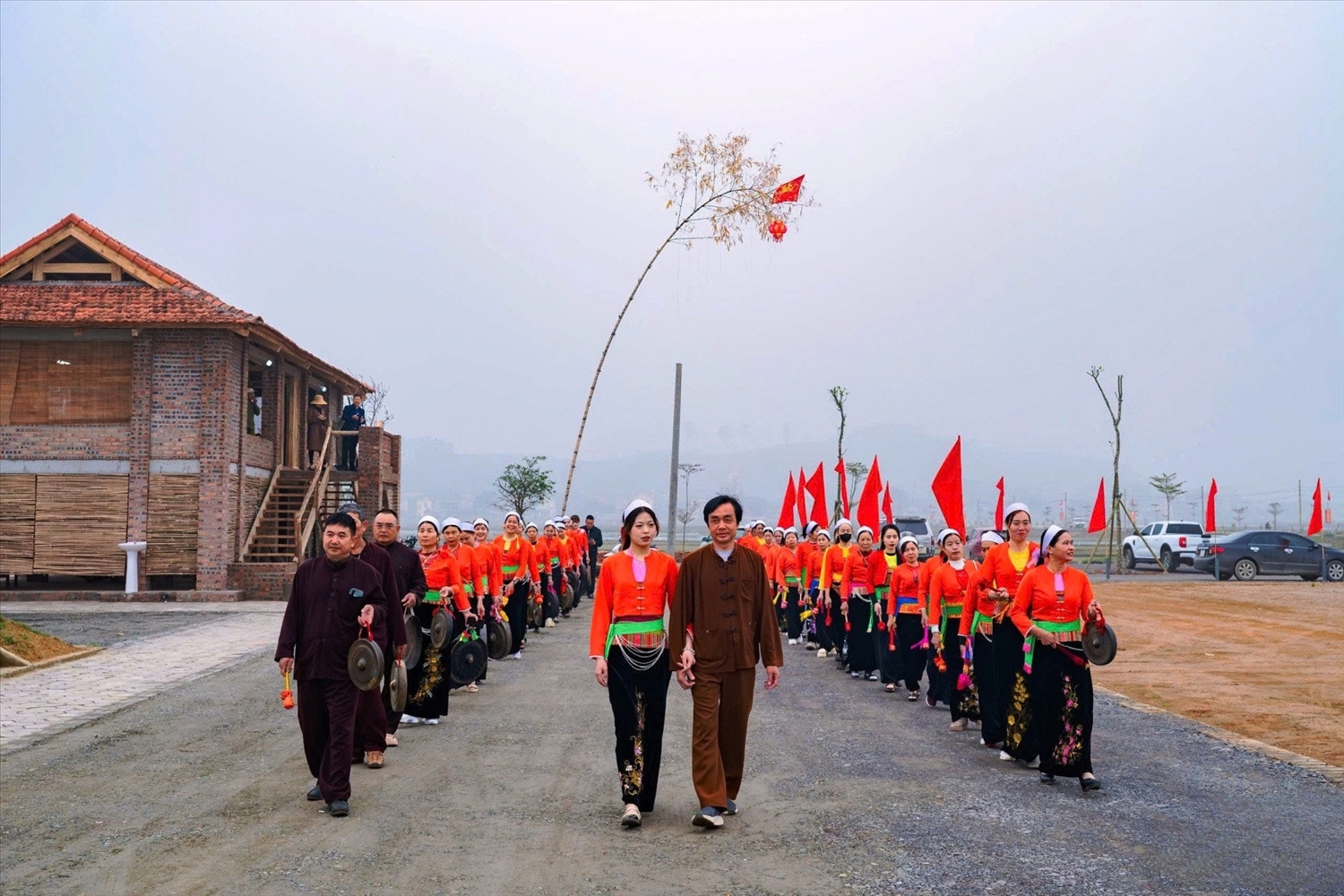 A Muong wedding in Yen Son, Ninh Binh province
What makes Muong culture particularly compelling is that visitors can join the local community in traditional folk gamessuch as walking on stilts, playing a traditional stick-and-ball game (danh cu), tug-of-war or striking the gong. These simple activities foster a genuine sense of connection, effectively dissolving the boundaries between the visitors and the custodians of this heritage.
According to the local cultural authorities, communes with significant Mường populations currently possess over 300 tangible cultural heritage assets and more than 100 intangible cultural heritage assets among which “Mo Muong” (traditional Muong ritual chanting) has been inscribed on the National List of Intangible Cultural Heritage. These assets serve as a valuable resource for the locality to develop community-based tourism models integrated with the preservation of ethnic cultural heritage. It is encouraging that Muong culture is being accorded its proper place within Ninh Binh province’s strategy for heritage tourism development. The local approach is clearly defined: the community serves as the primary stakeholder, culture acts as a resource, and tourism functions as a bridge. Periodic cultural and sports festivals for the Muong people not only provide a space for the community to preserve and practice their cultural traditions but also create new livelihood opportunities for local residents right in their own homeland.
Visiting Ninh Binh province today, travelers can do more than just row through caves or admire mountain peaks reflected in the crystal-clear waters of the Trang An World Heritage Site, a complex of both cultural and natural significance. In this ancient capital region, the Muong culture offers visitors new, culturally enriching experiences: sitting by a traditional stilt house to hear the resonant sound of gongs echoing across the mountains, learning a communal circle dance or listening to heartfelt lullabies drifting through the air in the tranquil highlands…
Muong culture is like a layer of sediment that makes the journey to discover Ninh Binh even more attractive. When those values continue to be practiced and transmitted, the heritage area will not only have a presence in rocky mountains, caves or ancient rivers but will be alive with the thousands of years of cultural identity of the Muong people touched by tourists in today’s life./.
