Keywords: Cultural resources; Ethnic minority; OCOP; Community-based tourism.
1. Introduction
The documents of the 14th Party Congress call for: “Effectively leveraging the cultural values and spirit of dedication of the Vietnamese people, so that culture truly becomes an endogenous resource, a driving force and a regulatory mechanism for national development”. With 53 ethnic minority groups residing primarily in mountainous and border regions, areas of strategic importance for security and ecology, cultural resources hold not only significance for identity preservation but also increasingly evident economic value. The period of 2021-2025 marks a significant shift as the cultural resources of ethnic minority groups are being robustly integrated into rural tourism initiatives and the “One Commune, One Product” (OCOP) program. These efforts aim to build and develop distinctive local brands, thereby gradually establishing the value and quality of products in the marketplace. This serves as a basis for realistically assessing the potential to transform “cultural capital” into “economic capital”.
 Since receiving the "Best Tourism Village” award from the World Tourism Organization in 2023, Thai Hai Village (Thai Nguyen province), home to the Tay ethnic group and a site dedicated to the preservation of their traditional culture has become a popular tourist destination
2. Theoretical basis
The cultural resources of ethnic minority groups are not merely a collection of traditional values existing within the village setting; rather, they constitute a multi-layered value structure capable of transforming into development capital if properly identified and managed. In terms of composition, these resources can be categorized into three main groups.
Firstly, there is tangible cultural heritage, encompassing traditional architecture (such as traditional houses, longhouses and stilt houses), residential spaces, craft villages, costumes, musical instruments and products created based on indigenous knowledge. These represent tangible expressions of ethnic history while also holding the potential to become economic assets within value chains spanning tourism, creative design and the commercialization of distinctive products.
Secondly, there is intangible cultural heritage such as languages, writing systems, festivals, life-cycle rituals, folk performing arts, and traditional knowledge regarding medicine, agriculture and forest conservation. This category of values plays a pivotal role in preserving identity and transmitting community memory. In the context of the creative economy, these elements serve as the “soft raw materials” for developing cultural industry products, ranging from performing arts, documentaries and digital content to cultural experience products.
Thirdly, ethnic knowledge is closely linked to livelihoods encompassing systems of understanding regarding the natural environment, agricultural cultivation, the use of medicinal plants and community resource management. This body of knowledge holds particular significance for sustainable development, as it creates a direct link between culture and the ecological economy. When standardized, protected and integrated into OCOP products, agritourism or organic agricultural produce, this knowledge can generate substantial added value and a distinctive competitive advantage.
According to modern development approaches, culture is not merely a “spiritual resource” but a form of capital - cultural capital. However, unlike material resources that can be directly exploited, cultural capital generates value only when three conditions are met: (i) correctly identifying core values; (ii) designing appropriate governance mechanisms; (iii) ensuring the participation and benefit-sharing of the relevant communities. The absence of any of these three elements could reduce the exploitation process to mere commercialization, thereby eroding authenticity and undermining community trust.
Therefore, the relationship between conservation and development should be viewed as a simultaneous and mutually reinforcing process, rather than as two opposing choices. Conservation does not mean preserving the status quo as if in a museum; nor is development synonymous with altering cultural structures to cater to market tastes. The fundamental principle must be that the community is the central subject of all decisions concerning its heritage. The State plays the role of establishing institutions and providing protection, while businesses organize the market and create products; however, the right to determine core values belongs to the community.
Economic benefits are truly sustainable only when built upon a foundation that preserves original values. A festival shortened or stripped of rituals to cater to visitors might generate immediate revenue; however, severing the community”s sacred significance and symbolic structure entails a long-term cost. Similarly, if handcrafted products are fully industrialized and divorced from traditional processes, they lose their distinctive advantage, the very factor that creates true competitive value.
Therefore, development based on the cultural resources of ethnic minority groups must adhere to three strategic principles: ensuring authenticity, safeguarding community interests and guaranteeing intergenerational sustainability. When these principles are integrated into cultural industry policies, tourism planning and development programs for ethnic minority regions, cultural resources will not merely be “exploited” but transformed into a driving force for long-term, endogenous development.
3. Some results of converting ethnic minority cultural capital into economic capital in the period of 2021-2025
Firstly, as of September 2025, the country had nearly 17,400 OCOP products rated 3 stars or higher far exceeding the set target with ethnic minority individuals accounting for nearly 20% of OCOP producers. OCOP products created by ethnic minorities are closely linked to their cultures, as the majority of these products stem from traditional crafts, cuisine, medicinal herbs, and indigenous knowledge associated with community life.
Many OCOP products serve as “ambassadors”, conveying the human-centric stories of their respective regions and helping to share the cultural values of ethnic minority communities with the world. OCOP products such as roasted coffee, cinnamon essential oil, cashews, wild honey and herbal teas, originating from ethnic minority and mountainous areas and produced by ethnic minority communities have reached over 60 countries, affirming the standing of the region”s agricultural brands in the international market. Once standardized and branded, these cultural values are transformed into market-competitive goods and services. Conversely, OCOP creates economic incentives for communities to maintain traditional crafts and preserve cultural spaces as well as local knowledge. Through rural tourism and cultural experiences, OCOP products serve as a bridge connecting ethnic heritage with modern markets. Consequently, OCOP is not merely a rural economic development program but also a vital mechanism for leveraging the cultural resources of ethnic minority groups to foster sustainable development; it facilitates the transition from fragmented, small-scale production to integrated value chains, establishes stable raw material sourcing areas and creates sustainable livelihoods for remote, isolated and ethnic minority and mountainous areas.
Secondly, rural tourism is gradually evolving from pilot models into a supplementary economic sector linked to cultural identity and OCOP products. Currently, there are over 580 agricultural and rural tourism models in operation nationwide, with a high concentration in the Northern mountainous region and the Mekong Delta.
Numerous agricultural and rural tourism models have achieved success and generated a ripple effect, contributing to the development of local destinations such as the Dao community tourism site in Nam Hong Village (Tuyen Quang province); the Hmong community tourism site “Hello Mu Cang Chai” (Lao Cai province); the Tay ethnic cultural tourism site in Thai Hai Village (Thai Nguyen province); and the White Thai homestay service in Ban Lac (Phu Tho province); ...ecotourism at Nui Chua National Park (Khanh Hoa), linked to the Raglai community; the Kon Ko Tu community-based tourism and cultural village (Quang Ngai province) of the Ba Na people... Rural tourism not only generates economic benefits but also contributes to heritage preservation, environmental conservation and the dissemination of cultural values. It represents a distinctive “green industry” for rural Vietnam.
Approximately 60% of the country's more than 2,000 community-based tourism sites, craft villages and eco-farms are linked to at least one OCOP product.
Approximately 60% of the country's more than 2,000 community-based tourism sites, craft villages, and eco-farms are linked to at least one OCOP product. Revenue from OCOP-linked rural tourism exceeds VND 25 trillion annually, accounting for about 15% of the rural sector's production value. The number of community tourism models increased 1.6 times compared to 2021. Thus, ethnic minority culture is not just an “experiential support” element but is becoming an important component in the tourism product structure.
3. Discussion
Looking at the results from the period of 2021-2025, a deeper shift in the development structure of ethnic minority and mountainous areas is evident.
Firstly, regarding the OCOP program, the cultural assets of ethnic minority communities are being integrated into economic value chains with greater scale and sustainability than before. This involves not merely an increase in the number of OCOP products, but a qualitative shift: moving from purely agricultural goods to products infused with cultural, tourism and service elements. In many localities, traditional crafts, ethnic cuisine, medicinal herbs, festivals, and community spaces have evolved into standardized commercial products complete with their own stories and brands. This demonstrates that local knowledge is no longer excluded from the market but is instead becoming an integral component of the value chain.
In many localities, traditional crafts, ethnic cuisine, medicinal herbs, festivals, and community spaces have evolved into standardized commercial products complete with their own stories and brands. This demonstrates that indigenous knowledge is no longer isolated from the market but is becoming an integral part of the value chain. Achieving an OCOP rating of 3, 4, or 5 stars signifies that a product has undergone a standardization process covering quality, packaging, traceability and production management. This marks a shift from spontaneous exploitation to organized development and from “cultural advantage” to “economic asset”. The challenge lies in ensuring that this integration process does not dilute cultural identity while still securing commercial viability, a task requiring prudent policy management and a long-term vision.
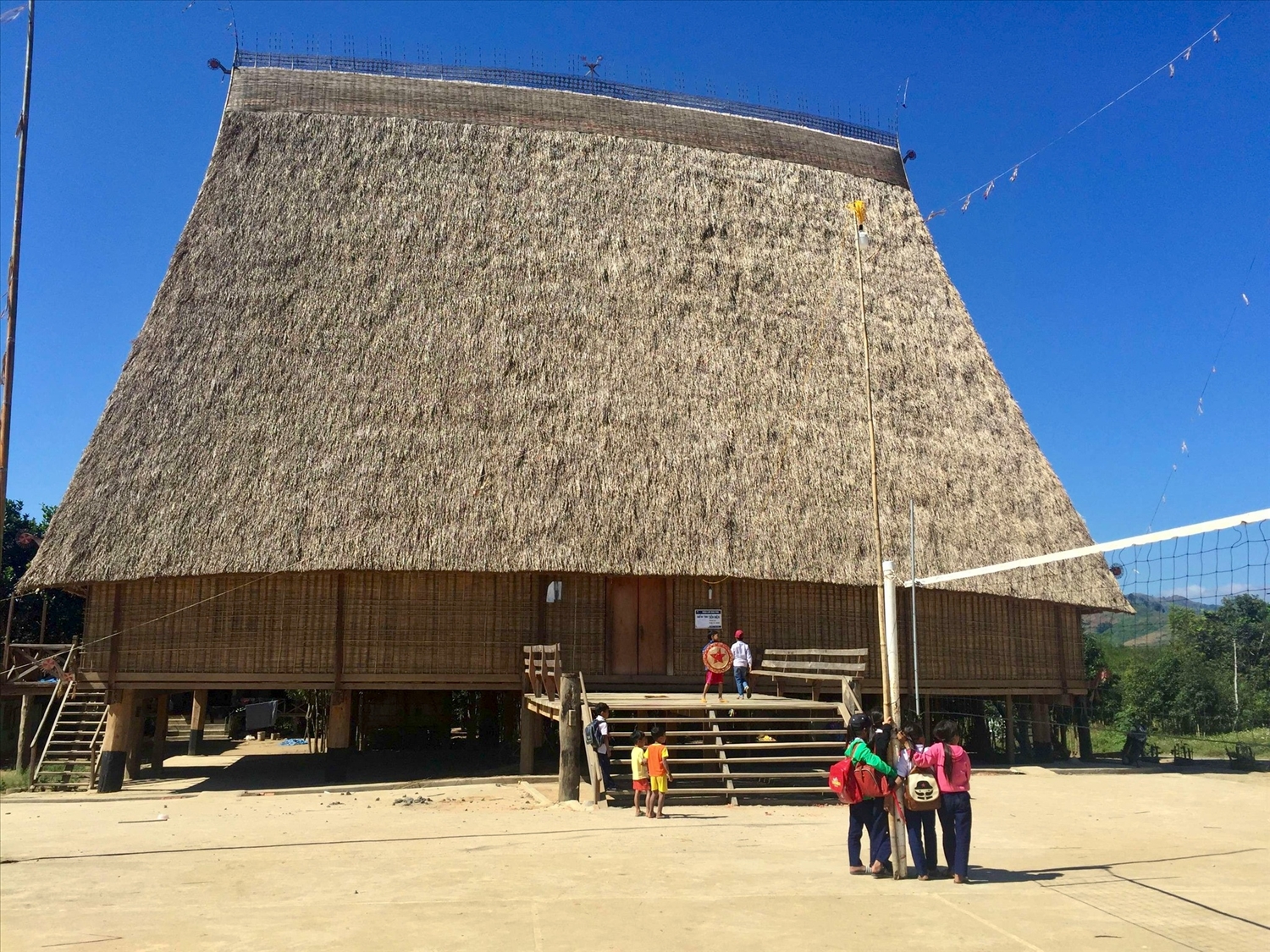 The tradional House - Unique architecture embodying the cultural identity of the ethnic minority groups of the Central Highlands
 The level of participation by women and ethnic minority communities in the OCOP program clearly reflects its social inclusiveness. In many models, ethnic minority women play a pivotal role in cooperatives and cooperative groups, particularly in sectors such as agricultural processing, herbal products, brocade weaving and cuisine. This participation not only creates jobs and boosts income but also elevates women’s social standing within their families and communities. As women engage in managing production and running cooperatives, they simultaneously become guardians of traditional cultural values. From a policy perspective, this shows that OCOP is not simply an economic program but also a tool to promote gender equality and strengthen national unity.
Product digitization and traceability are opening up new avenues for growth. Amidst a market that increasingly demands transparency, the adoption of QR codes, e-commerce platforms and online marketplaces is enabling OCOP products from ethnic minority and mountainous atreas to transcend geographical boundaries. This represents a move of strategic significance: expanding from local markets to the national and even international stage. Digitalization also helps safeguard community interests; by making information regarding origins and production processes transparent, it becomes difficult for intermediaries to appropriate the added value.
Overall, these trends indicate that the OCOP program is shifting from a phase of quantitative expansion to one focused on enhancing quality and deepening development. Ethnic minority cultural resources have been integrated into the economic mainstream; women and communities have gained new opportunities and digital technology is opening the door to markets.
Secondly, rural tourism serves as a bridge between OCOP products and the vibrant cultural experiences of ethnic minority communities. When a brocade-weaving village, a medicinal herb cultivation area or an ethnic culinary space is developed into a community-based tourism site, the product’s value transcends mere tangible goods, evolving into a blend of services, experiences and stories. Tourists not only purchase OCOP products but also participate in the production process and learn about their origins, customs and traditions. This is precisely how local knowledge is transformed into sustainable added value.
In many localities, revenue from accommodation services, cultural experiences and traditional cuisine has generated a significant additional income stream alongside product sales. This helps diversify livelihoods and reduce reliance on purely agricultural production for ethnic minority communities. More importantly, rural tourism provides an impetus for communities to preserve their authentic cultural landscape including traditional housing, handicrafts, festivals and farming practices. When cultural identity becomes an asset that attracts visitors, the community gains a clear economic incentive to preserve its ethnic culture.
Rural tourism is becoming a key component of the OCOP program’s value chain, particularly in areas with large ethnic minority populations. When OCOP products are linked to cultural experiences, craft villages and community activities, their value extends beyond mere commodities to encompass tourism services and cultural experiences. This process creates new employment and livelihood opportunities for local residents. Ethnic minority women often take on roles such as homestay hosts, culinary preparers, and guides for traditional craft experiences. Young people participate in digital promotion, manage online platforms and facilitate market connections. Thus, the value chain extends beyond production to encompass services, communications, and technology, creating opportunities for diverse social groups to participate more deeply in local economic activities; this, in turn, highlights and reinforces the social inclusivity of the OCOP program.
From a long-term development perspective, rural tourism also serves as a “brand launchpad” An OCOP product appearing solely on supermarket shelves competes primarily on price and quality; however, when linked to a specific destination or an ethnic cultural setting, it gains an additional layer of emotional value and local identity. This is particularly important for products from ethnic minority communities, as they embody cultural, religious and spiritual values that hold a unique appeal.
In summary, rural tourism is not merely an ancillary element but a complementary pillar for the OCOP program in ethnic minority and mountainous regions. It expands value chains, boosts incomes, strengthens cultural identity and elevates the status of local communities. The remaining challenge lies in managing development in a way that aligns economic growth with conservation; that is the true measure of sustainable success.
In the context of the National Assembly's agreement to integrate the three National Target Programs of New Rural Construction, Sustainable Poverty Reduction and Socio-Economic Development in Ethnic Minority Areas into one unified program from January 1st, 2026, it will create an important turning point to help increase investment efficiency, avoid overlap and promote regional connectivity, creating a foundation for OCOP and rural tourism to develop more sustainably, especially in ethnic minority areas.
4. Conclusion
The results achieved during the period of 2021-2025 demonstrate that the cultural resources of ethnic minority groups are gradually being transformed into a key component of the country’s socio-economic development strategy. This aligns perfectly with the guiding principles of Resolution No. 80-NQ/TW, dated January 7th, 2026, issued by the Politburo regarding the development of Vietnamese culture: “The development of culture and people serves as the foundation, a vital endogenous resource, a powerful driving force, a pillar and a regulatory mechanism for the country’s rapid and sustainable development”.
Through initiatives such as OCOP and rural tourism development, numerous ethnic cultural values have been identified and standardized, becoming part of product and service value chains that are expanding in scale. This not only creates additional livelihoods for the community but also helps affirm the role of culture as an endogenous resource for sustainable development. If fully recognized, effectively managed, and integrated into creative economic development models, the cultural resources of ethnic minority groups will continue to make significant contributions to sustainable development, at the same time enriching Vietnam’s cultural identity.
References
1. An Hoa (2025), From OCOP to Rural Tourism: Creating a sustainable economic ecosystem and Vietnamese identity, https://dms.gov.vn/ tin-chi-tiet/-/chi-tiet/tu-ocop-den-du-lich-nong-thon-kien-taohe-sinh-thai-kinh-te-ben-vung-va-ban-sac-viet-9119-1.html?
2. Central Steering Committee for National Target Programs (2025), Summary Report on the National Target Program on New Rural Development.
