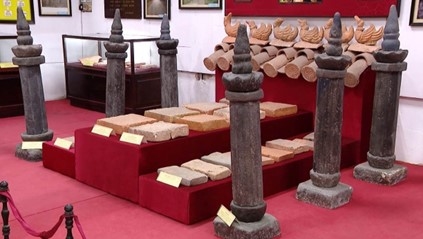
 A model of the collection of Buddhist scripture pillars on display at the Ninh Binh Provincial Museum
The collection of Buddhist inscription pillars currently housed at the Ninh Binh Provincial Museum comprises 49 artifacts, with 29 inventory numbers, all of which are original items, they can be considered unique pieces with their own distinct characteristics, rarity in the inscription system and stone carvings in general that still exist. The Buddhist scripture pillars from the Dinh Dynasty in the capital Hoa Lu were erected by Prince Dinh Khuong Lien of Nam Viet - the eldest son of King Dinh Tien Hoang between 973 and 979 to pray for the Great Victory of Emperor Minh Hoang and can also be seen as an act of repentance by Dinh Khuong Lien himself for killing his younger brother Dinh Hang Lang. In addition, the Chinese characters on the scripture pillars reflect and provide evidence of the development of writing in the 10th century.
The Buddhist scripture pillar is crafted from green stone and is approximately 140cm tall. Each scripture pillar consists of six parts, in order from bottom to top: the base, the pedestal, the pillar shaft, the cushion, the lotus pedestal and the lotus bud.
The base is 11-15 cm high and weighs approximately 28 kg; the pedestal is 8.5-13 cm high and weighs approximately 13.5 kg; the column shaft is 50-69 cm high and weighs approximately 40 kg; the cushion is 5-6.3 cm high and weighs approximately 7.2 kg; the lotus pedestal is 6-9 cm high and weighs approximately 8.5 kg; the lotus bud is approximately 36 cm high and weighs approximately 6.5 kg.
The parts are fitted together using mortise and tenon joints, without adhesive additives, bracing, or other supporting materials and are erected vertically on the ground, demonstrating the skillful style and aesthetic thinking of the stone carvers of the time.
The carvings of Chinese characters on the sides of the pillars showcase the skill of the craftsmen. Each pillar contains approximately 545-563 characters. Over the centuries, the inscriptions on the scripture pillars have remained quite sharp and elegant. Unfortunately, many of the characters have faded and only some are still legible.
The Chinese inscriptions show that the inscription on the Buddhist pillar from the Dinh Dynasty consists of two parts: Buddhist scriptures and a colophon. The sutra contains a transliteration of the mantra from Sanskrit in the Usnisavijàyadhàrani (Sutra of the Supreme Victorious Buddha). The inscription carved after the prayer includes information about the name, title and position of the person who commissioned the erection of the prayer pillar, as well as the reason for its construction. This information serves as the basis for determining the age and time when the canal pillars were erected. The content of inscriptions on the scripture pillars provide valuable historical information related to religious matters, social relations and the land allocation system during the Dinh Dynasty… Much of this content has never been reflected in other historical documents. Modern historiography divides historical sources into two main types: tangible historical sources and written historical sources. The Buddhist scripture pillar from the Dinh Dynasty can be classified into both of these types of historical sources.
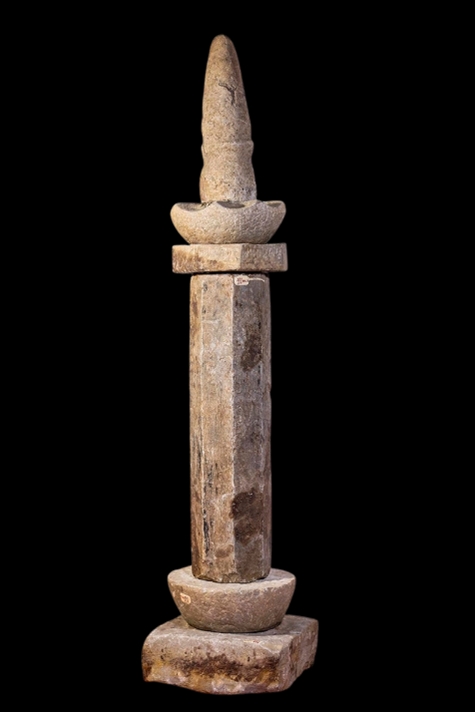 The Buddhist scripture pillar was erected by Dinh Khuong Lien, the eldest son of King Dinh Tien Hoang
The collection of Buddhist scripture pillars from the Dinh Dynasty is an artifact of exceptional historical and cultural value. The inscription on the Buddhist scripture pillar is written in Chinese characters, and up to now the only surviving written historical source compiled during the Dinh Dynasty.
With an age of over 1,000 years, these artifacts record and reflect contemporary historical information.
Given the scarcity of surviving documents on Vietnamese Buddhism from the 10th century, the Dinh Dynasty Buddhist scripture pillar is an extremely valuable and rare document, this is the earliest surviving stelae from the independent feudal period in our country, reflecting the spiritual life of the Vietnamese people more than a thousand years ago. With the above outstanding values, the collection of Buddhist scripture pillar was recognized as a national treasure by the Prime Minister in 2024./.
