The current amendments to the Law on Beliefs and Religions are attracting significant attention from the public and experts, aiming to better ensure the freedom of belief and religion for the people.
From practical requirements to new legislative thinking
After nearly eight years of implementing the 2016 Law on Beliefs and Religions, the spiritual lives of the people have undergone positive and enriching changes, making practical contributions to society. However, in reality, some shortcomings and limitations have arisen, such as many religious and belief activities that are taking place but are not yet regulated by Law; many provisions in the Law have not been decentralized, delegated, administrative procedures have not been simplified in accordance with the Party’s directives... Furthermore, the context of restructuring the state apparatus, organizing local governments at two levels, amending, supplementing, enacting new laws in recent times also necessitates early research into amending and supplementing the Law on Beliefs and Religions to suit the new situation and ensure consistency and uniformity with the legal system.
Expected contents to be included in the Law on Beliefs and Religions (Amended)
Firstly, recognizing and protecting rights in cyberspace. This is a new and modern development, acknowledging the rights of individuals and organizations to conduct religious activities in the digital environment. This means that teaching and preaching activities via livestream and social media will have a clear legal framework, ensuring a balance between freedom and privacy, protecting the personal data of religious organizations.
Secondly, promoting decentralization, delegation of power and protection of vulnerable groups.The draft focuses on granting more authority to local governments in registering religious activities outside of established places of worship. In particular, the new policy aims to protect vulnerable groups such as ethnic minorities, the poor in remote areas and those who are easily exploited by malicious forces who manipulate and incite them.
Thirdly, strong administrative reforms and digital transformation are needed. The amended law aims to simplify procedures as much as possible and reduce unnecessary documentation. Promoting digital governance not only helps to increase transparency in management but also creates the most favorable conditions for religious organizations in their operations.
Balancing respect and management
One of the most hotly discussion issues is ensuring that state control does not become a barrier to genuine trust. Experts emphasize that amendments to the Law must adhere to feasibility requirements, avoiding the creation of regulations that hinder the normal operation of mainstream religions. Conversely, the State also needs sharper tools to prevent deviant behaviors, acts disguised as charity to spread heresy or the misuse of cyberspace to divide national unity. Establishing a data-sharing mechanism between religious authorities and cybersecurity authorities is an urgent solution proposed to protect a healthy religious environment.
Aiming for the highest level of social consensus
The process of amending the Law on Beliefs and Religions is being carried out meticulously, with a constructive and scientific approach, ensuring that the draft submitted to the National Assembly is of the highest quality. The core objective is to enat the same time maintaining the State’s ability to manage affairs to guarantee national stability and security.
Ensuring the quality of the amended Law on Beliefs and Religions is not only an affirmation of Vietnam’s commitment to protecting human rights, but also a foundation for strongly promoting the resources of religions in the cause of national construction and defense. That is a journey towards the peace of every home and the harmonious development of whole society.
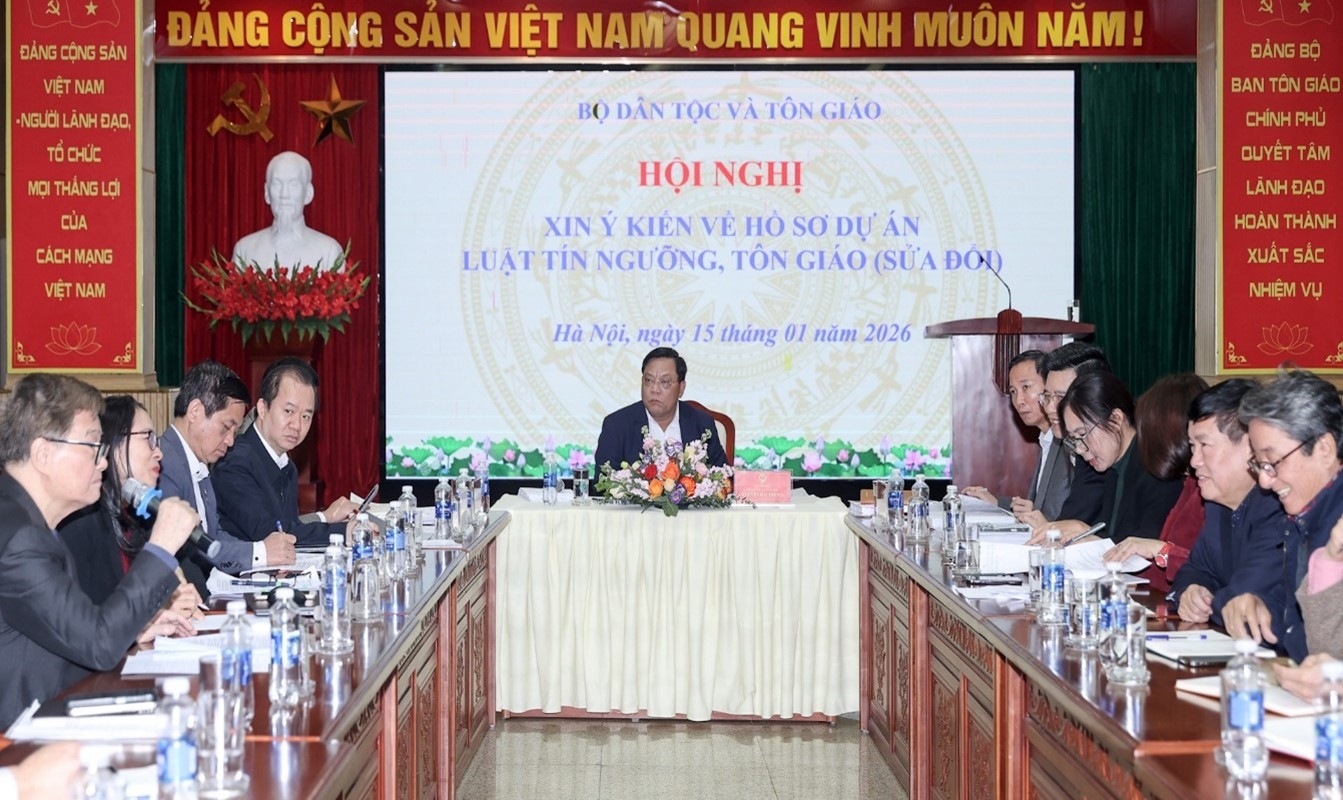 The conference sought opinions on the draft of Law on Beliefs and Religions (amended).
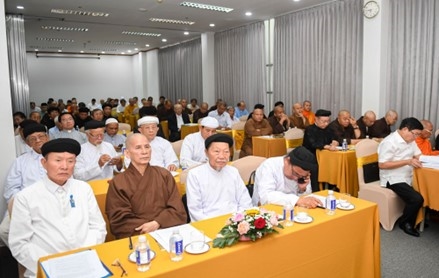 Religious dignitaries and officials from various religious organizations participated in contributing opinions to the draft of Law on Beliefs and Religions (amended).
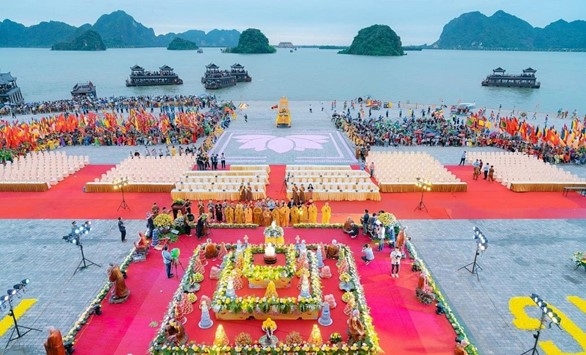 The Vietnamese State has consistently pursued a policy of respecting and guaranteeing the freedom of belief and religion for all people.
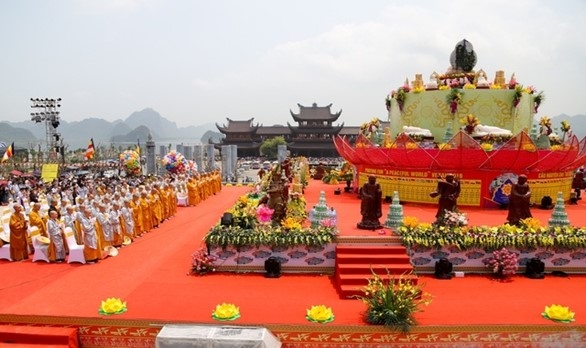 Religious organizations in Vietnam all build and implement religious practices that are in line with traditional culture, closely associated with and accompanying the nation, contributing to the building and development of the country.
