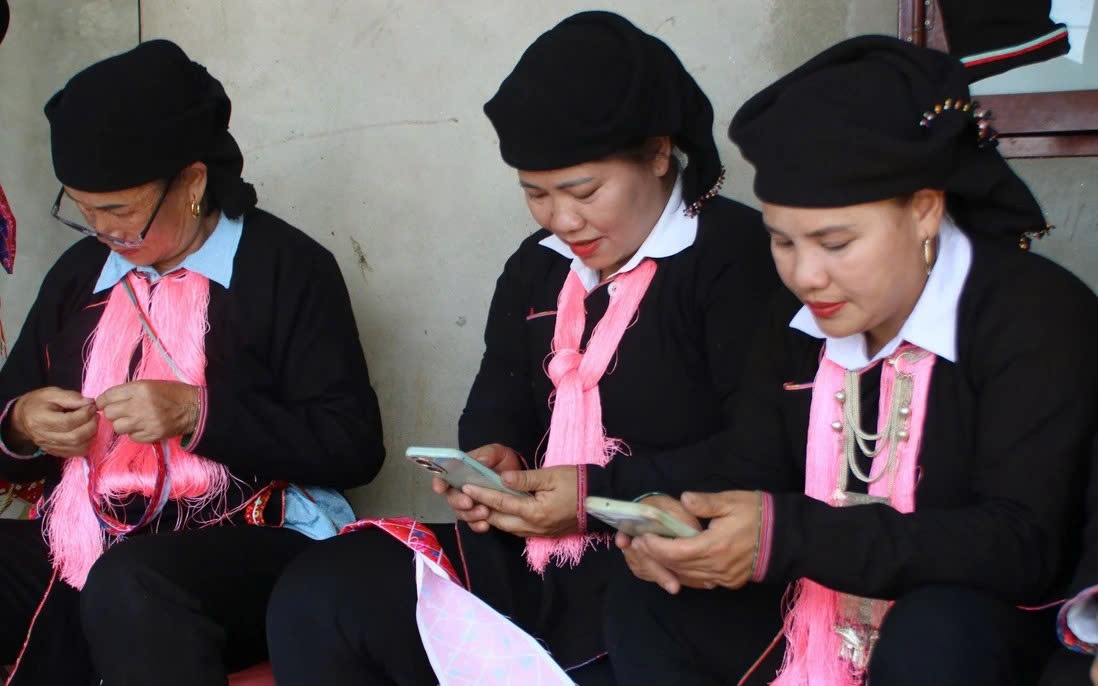
 Building a digital ecosystem to foster sustainable development in ethnic minority and mountainous areas is an objective requirement of the current national digital transformation process
Keywords: Building; Digital ecosystem; Sustainable development; Ethnic minority and mountainous areas.
1. Introduction
Digital transformation is becoming an inevitable global development trend and a key driver of economic growth, improved social governance, and sustainable development. In Vietnam, this is reflected in Resolution No. 52-NQ/TW dated September 27th, 2019, of the Politburo regarding guidelines and policies for actively participating in the Fourth Industrial Revolution and Decision No. 749/QĐ-TTg dated June 3rd, 2020, of the Prime Minister: he approval of the “National Digital Transformation Program through 2025, with a vision to 2030” identifies digital transformation as a strategic solution to narrow the development gap between regions, particularly for ethnic minority and mountainous areas.
Currently, ethnic minority and mountainous areas account for approximately three-quarters of the country’s total land area and are home to over 14 million people belonging to 53 ethnic minority groups (representing about 14.3% of the national population). Despite achieving significant socio-economic development milestones, the region still faces numerous challenges, such as a lack of integrated infrastructure, limited human resource quality and restricted access to information and public services.
In practice, many localities such as Son La, Lao Cai, Tuyen Quang, Phu Tho, Thai Nguyen, Dak Lak and Nghe An,… have begun applying digital platforms to state management, the promotion of OCOP products, community-based tourism development, and the provision of online public services. However, the digital ecosystem in ethnic minority and mountainous areas remains fragmented, lacks data integration, and has yet to fully harness the potential of digital technology.
Based on that experience, researching and building a digital ecosystem to support the sustainable development of ethnic minority and mountainous regions is of particular importance, contributing to the realization of inclusive development goals and ensuring that no one is left behind in the national digital transformation process.
2. Research results
2.1. The role of the digital ecosystem in the sustainable development of ethnic minority and mountainous areas
Digital ecosystems play a crucial role in the sustainable development of ethnic minority and mountainous areas. Beyond narrowing the development gap between mountainous areas and the lowlands, they facilitate access to knowledge, public services and opportunities within the digital economy.
The digital ecosystem contributes to fostering the digital economy and improving livelihoods for people in ethnic minority and mountainous areas. Through e-commerce platforms, social media and digital payment systems, a wide range of agricultural products, OCOP (One Commune, One Product) items and traditional handicrafts from ethnic minority communities have gained access to broader markets. In many localities such as Son La, Lao Cai, Bac Kan and Dak Lak,… thousands of local specialty products have been listed on e-commerce platforms, contributing to increased product value and higher incomes for local residents.
Furthermore, the digital ecosystem plays a crucial role in enhancing the quality of education and healthcare in mountainous regions. Online learning platforms, digital libraries, and distance education systems provide students in remote and isolated areas with greater opportunities to access modern knowledge. At the same time, the implementation of telemedicine, electronic health records and online medical consultations has helped improve access to healthcare services for residents in areas facing significant challenges regarding transportation and facilities.
Notably, another crucial role of the digital ecosystem is the preservation and promotion of the cultural values of ethnic minority groups. Through initiatives such as digitizing heritage, as well as establishing digital libraries, digital museums and cultural databases, many traditional cultural values are being preserved and widely disseminated. The digitization of traditional festivals, folk arts, ethnic minority languages and local knowledge not only supports preservation efforts but also creates resources for cultural tourism development and community education.
Furthermore, the digital ecosystem contributes to enhancing the effectiveness of social governance and the quality of public service delivery. The implementation of digital government, population databases, and online public service platforms helps reduce administrative costs, increase transparency and improve access to policies for people in ethnic minority and mountainous areas. This is a crucial factor in achieving the goal of inclusive development and building a digital society.
Therefore, within the framework of sustainable development, a digital ecosystem serves not merely as technological infrastructure but as a platform connecting the economy, culture, education, healthcare and social governance. Building a comprehensive digital ecosystem will help harness endogenous resources, enhance the adaptability of ethnic minority communities and generate new momentum for the sustainable development of ethnic minority and mountainous areas in the current period of digital transformation.
2.2. Current situation of building a digital ecosystem in ethnic minority and mountainous areas
In recent years, driven by the National Digital Transformation Program and the National Target Program for Socio-Economic Development in Ethnic Minority and Mountainous Areas (2021-2030, Phase I: 2021-2025 referred to as Program 1719), the development of a digital ecosystem in mountainous areas has yielded many positive results. Telecommunications infrastructure, digital services, digital databases, and technology platforms are being gradually expanded, creating a vital foundation for socio-economic development and the improvement of people’s quality of life.
Digital infrastructure in ethnic minority and mountainous areas has developed significantly. Basic telecommunications services have become essential, playing a crucial role in driving socio-economic development. The “Information Poverty Reduction” sub-project (part of Project 6) identifies expanding access to information as a key task (Nguyen Thinh, 2025). By 2024, the majority of communes in ethnic minority and mountainous areas had gained 4G mobile network coverage; many localities such as Lao Cai, Tuyen Quang, Son La, Dak Lak and Nghe An,… had implemented commune-level digital transformation models, enabling residents to access the internet and digital services. Fiber-optic networks continued to expand into remote and isolated villages, helping to narrow the digital divide between mountainous regions and the lowlands.
In addition, the development of digital government and the provision of online public services have yielded positive results. Many mountainous localities have implemented population databases, electronic records and modern administrative management platforms. Citizens can carry out certain administrative procedures online, significantly reducing travel time and costs. This represents a significant step forward in enhancing governance efficiency and improving access to policies for ethnic minority communities.
In the digital economy, various digital technology application models have begun to demonstrate their effectiveness. OCOP products, specialty agricultural produce, and traditional handicrafts from ethnic minority communities have been made available on e-commerce platforms, such as: Postmart, Voso, Shopee, and TikTok Shop. In provinces such as Son La, Thai Nguyen, Tuyen Quang, Lao Cai and Phu Tho,... thousands of local agricultural products have been showcased on digital platforms, helping to expand markets and increase product value. Several ethnic minority cooperatives have adopted online sales methods, contributing to higher incomes and the development of sustainable livelihoods.
The digital tourism sector has also seen significant positive developments. Localities such as Sa Pa and Mu Cang Chai (Lao Cai Province), Dong Van (Tuyen Quang Province), Moc Chau (Son La Province), and Buon Don (Dak Lak Province) have stepped up tourism promotion on digital platforms, created digital tourism maps, implemented QR code technology and developed digital media products. Images of terraced fields, highland markets, traditional festivals, and ethnic cultural spaces are widely shared across social media platforms, helping to boost destination recognition and attract tourists.
In the cultural sector, many localities have implemented the digitization of tangible and intangible cultural heritage. Projects to build digital databases on festivals, folk performing arts, local knowledge and ethnic minority languages are currently underway in the Northwest, Central Highlands and Southwest regions. This represents a significant step toward preserving and promoting traditional cultural values within the digital environment.
However, the development of digital ecosystems in ethnic minority and mountainous areas still faces certain challenges and limitations, such as: (i) a significant digital divide between regions; and unstable telecommunications infrastructure quality in some border, remote and isolated areas. (ii) The proportion of the population with digital skills remains low; many households lack access to smart devices and high-quality internet services. (iii) Digital databases remain fragmented and lack interoperability; the information technology workforce at the local level is both insufficient and lacks the necessary expertise.
It can be said that a digital ecosystem has begun to take shape in ethnic minority and mountainous areas, generating positive impacts on economic, cultural, and social development as well as local governance. However, for this digital ecosystem to truly serve as a driver of sustainable development, continued, comprehensive investment in infrastructure, data and technology platforms alongside efforts to enhance the community's digital capabilities is essential in the period ahead.
2.3. Solutions
In order to build a digital ecosystem supporting the sustainable development of ethnic minority and mountainous areas amidst the current national digital transformation, it is essential to synchronously implement solutions regarding infrastructure, data, human resources and institutions, following an inclusive, people-centered approach to the digital transformation process.
Firstly, it is essential to continue investing in the completion of digital infrastructure in mountainous, remote and border areas, ensuring access to broadband internet, high-speed mobile networks and basic digital services for all citizens. This is a prerequisite for narrowing the digital divide and laying the foundation for the development of the digital economy, digital society and digital government.
Secondly, it is necessary to establish a unified digital database covering population, culture, education, healthcare, livelihoods, and resources in ethnic minority and mountainous areas. Creating an interconnected digital data system will effectively support state management, policy formulation and the development of digital services for the community.
Thirdly, enhance digital capabilities among the public and grassroots-level officials. It is essential to step up training programs on digital skills, e-commerce, information security and the application of new technologies for youth, women, and ethnic minority communities. At the same time, the development of a workforce of “digital citizens” and “community digital technology teams” at the grassroots level should be encouraged.
Fourthly, it is necessary to foster digital economic development aligned with local advantages through e-commerce, digital tourism, digital agriculture and the promotion of OCOP products on digital platforms. Concurrently, efforts must be intensified to digitize cultural heritage, indigenous knowledge and ethnic minority languages in order to preserve and promote traditional cultural values within the digital environment.
The synchronous implementation of the aforementioned solutions will contribute to establishing a comprehensive digital ecosystem, leveraging endogenous resources, improving the quality of life, and creating new momentum for the sustainable development of ethnic minority and mountainous areas in the current period.
3. Discussion
Research findings indicate that building a digital ecosystem acts as a driving force for the sustainable development of ethnic minority and mountainous areas. Unlike previous development phases that relied primarily on physical infrastructure investment, a digital ecosystem creates new avenues for accessing knowledge, markets and public services, thereby helping to narrow the development gap between mountainous areas and the lowlands.
Practical experience in various localities such as Lao Cai, Tuyen Quang, Son La, Phu Tho, Thai Nguyen, Dak Lak and Nghe An,… demonstrates that the recent adoption of digital platforms in mountainous regions has yielded positive results across sectors including administration, e-commerce, tourism and education.
However, research also indicates that the digital ecosystem in ethnic minority and mountainous areas is currently still in the process of formation and development. Limitations regarding digital infrastructure, the quality of human resources, access to technology and a lack of database synchronization are affecting the effectiveness of local digital transformation. In addition, the risks of digital inequality, data insecurity, and the erosion of traditional cultural values in the digital environment are also issues that require attention.
From a scientific and sustainable development perspective, a digital ecosystem is effective only when built upon a foundation of inclusive development that ensures all citizens have the opportunity to access and benefit from the fruits of digital transformation. At the same time, the digitization process must be linked to the preservation of national cultural identity, the promotion of local knowledge and the enhancement of the community’s role as a central agent in development.
Therefore, building a digital ecosystem for ethnic minority and mountainous regions is not merely a technological task but a comprehensive social development strategy, contributing to the goals of sustainable poverty reduction, digital economic growth, cultural preservation and the improvement of residents’ quality of life in the new period.
4. Conclusion
Building a digital ecosystem to serve sustainable development in ethnic minority and mountainous areas is an objective requirement in the current national digital transformation process. The digital ecosystem not only creates motivation to promote the development of digital economy, digital society and digital government, but also contributes to improving the quality of education, health care, cultural preservation and improving the lives of ethnic minorities. In practice, many localities have begun establishing digital platforms to support management, production, business operations and cultural promotion, thereby creating a vital foundation for sustainable development. However, limitations regarding digital infrastructure and the digital workforce, along with the digital divide, remain significant challenges. Therefore, it is essential to implement comprehensive solutions regarding infrastructure, data, and institutional frameworks, while enhancing digital capabilities within the community, in order to effectively leverage digital resources, fostering inclusive development and realizing the goal of leaving no one behind in the nation’s development process.
* Vice President of the Vietnam Association for Support of mountainous area economy
** Journal of Ethnic and Religious Research
References
1. Politburo (2019), Resolution No. 52-NQ/TW dated September 27th, 2019, on a number of guidelines and policies for active participation in the Fourth Industrial Revolution, Hanoi.
2. Politburo (2024), Resolution No. 57-NQ/TW dated December 22nd, 2024, of the Politburo on breakthroughs in the development of science, technology, innovation, and national digital transformation.
3. Nguyen Duy Dung (2026), The role of digital media in preserving the culture of ethnic minorities, Journal of Ethnic and Religious Research, No. 5 (8), May 2026.
4. National Assembly (2020), Resolution No. 120/2020/QH14 approving the investment policy for the National Target Program on socio-economic development in ethnic minority and mountainous areas for the period of 2021-2030, Hanoi.
5. Prime Minister (2020), Decision No. 749/QD-TTg approving the National Digital Transformation Program to 2025, with a vision to 2030, Hanoi.
6. Nguyen Thinh (2025), Telecommunications service development: Bridging the information gap between mountainous and urban Areas., https://danviet.vn/phat-trien-dich-vuvien-thong-thu-hep-khoang-cach-thong-tin-giuamien-nui-va-do-thi-d1364895.html
7. Hanh Tam (2026), Digital transformation for mountainous communities: Opportunities for breakthroughs and challenges, https://vjst. vn/chuyen-doi-so-cho-dong-bao-mien-nui-co-hoibut-pha-va-thach-thuc-77793.html
