Besides its ancient beauty, this place also opens a door for tourists to explore the depths of the past, learn about the life, customs and traditions of the ethnic communities in the highlands.
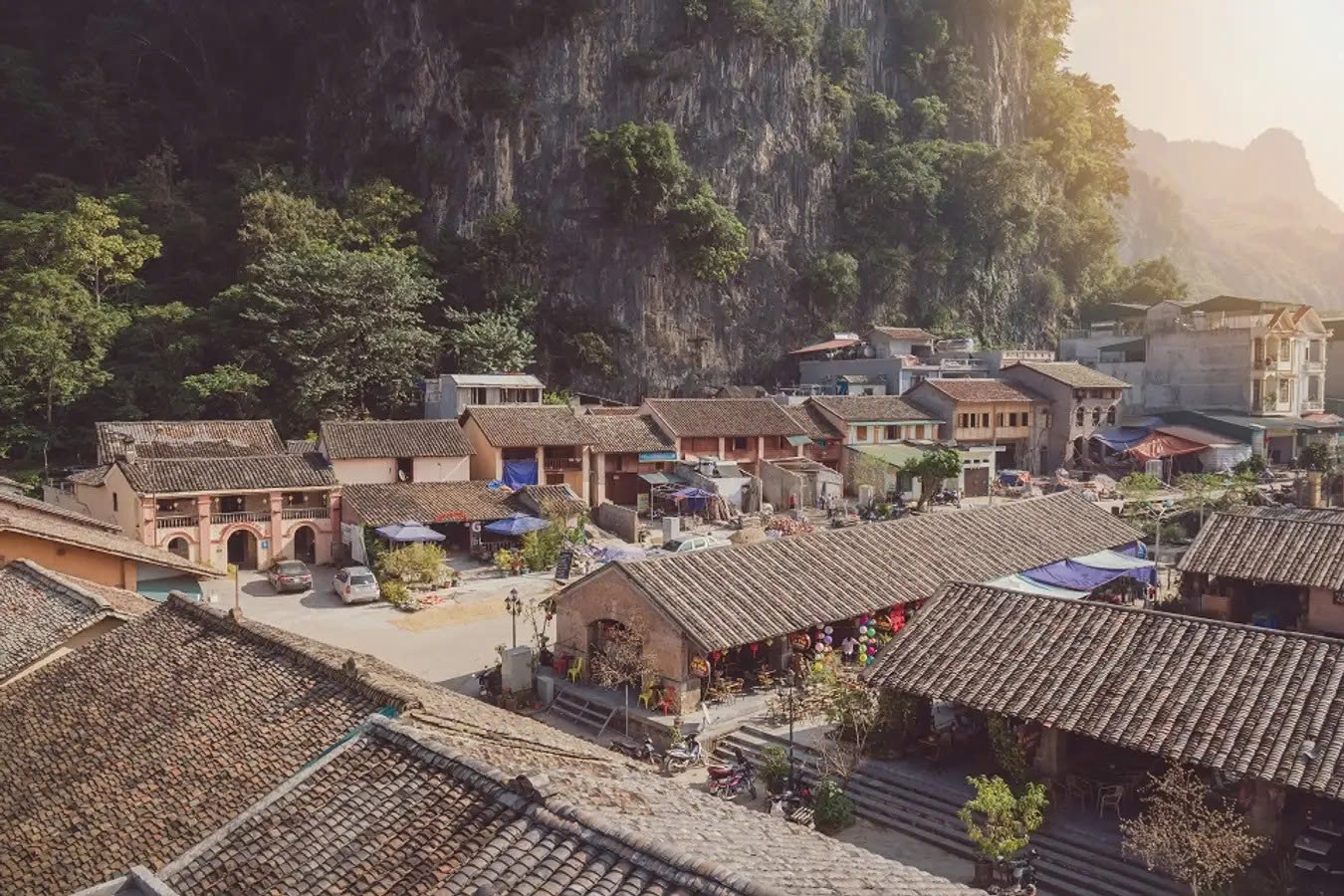 Dong Van old town
Precious heritage
Dong Van old town is a place where time and space intertwine. The yin-yang tiled roofs, plastered walls, uneven stone courtyards, and winding alleyways all speak of history, life and the relationship between people and nature. These are architectural and landscape values that no book can fully recreate if they are lost.
Not only unique in its architecture, Dong Van old town is also the birthplace of ethnic cultural identity: the traditional clothing of Mong group, indigo purple and intricately patterned brocade; the melodious sound of the flute by the stream; the local market, the unique way of preparing local dishes and local festivals… These are intangible cultural heritage items, easily exaggerated and altered if only short term gains are considered.
In recent years, Dong Van has ceased to be merely a geological “roof”, and has become a sought-after destination for both domestic and international tourists. Vibrant homestays, experiential tours, street food, folk performing arts… these are positive signs, opening up great opportunities for income, employment and exploiting the strengths of the highlands. However, along with the opportunities come many risks of architectural distortion. The old town is being crowded with concrete buildings, gaudy paint, improper awnings and signs, losing its charm and traditional character. The commercialization of culture has turned festivals into “performance shows”, folk music has been modified to be more palatable, and traditional dishes have been “popularized”, losing their original flavors. Environmental impacts and changes to residents’ lives include waste, noise from tourists, water pollution, land use issues and changes to traditional livelihoods. The benefits are uneven; for example, not all families are able to participate or benefit; young people may leave the old town for elsewhere because tourism development is uneven; income from tourists is at risk of being controlled by large businesses rather than being directly generated by the local community.
So, how can we develop tourism while preserving the soul of the ancient town? How can the people of Dong Van develop and exploit their advantages without losing their identity?
Responsible development
According to Dr. Lo Giang Pao, a member of the Central Executive Committee of the Vietnam Fatherland Front, in order for the ancient town of Dong Van to be both admired and preserved, its value protected and promoted, we need to implement a clear conservation plan and specific regulations, including: Defining architectural preservation boundaries - strictly prohibiting demolition, alteration of facades, roofs and walls; Regulating appropriate building materials, colors, signage and nighttime lighting to harmonize with the overall space; And establishing auxiliary areas for service development, but with strict regulations to prevent disruption of the old town’s landscape.
In addition, it is necessary to enhance the capacity of local communities, such as: organizing training courses on homestay skills - welcoming guests; traditional weaving art, making traditional dishes; leading cultural tours; Encouraging local people to actively participate in tourism management, so that they are not just recipients of services but active participants in tourism; provide policies to support households with capital, tax incentives and technical assistance to renovate old houses and improve the surrounding environment.
Developing unique, experiential tourism products is also a creative and practical way to preserve and develop the ancient town of Dong Van, such as: The architectural tour includes visits to traditional houses with earthen walls, ancient tiled roofs, courtyards, stone walls; and the stories behind each roof and each decorative pattern; Cultural experiences include learning weaving, playing the flute, making cakes, cooking traditional dishes, listening to lullabies and hearing folk tales; Nature tourism combines activities such as trekking through jagged rocks, observing sunrise/sunset, stargazing in the highlands, exploring the flora and fauna of the rocky areas. In particular, strengthen the role of communication and promotion with in-depth stories - stories of the people, historical stories, local knowledge combined with the promotion and use of social media, vlogs, beautiful photos, short films,...
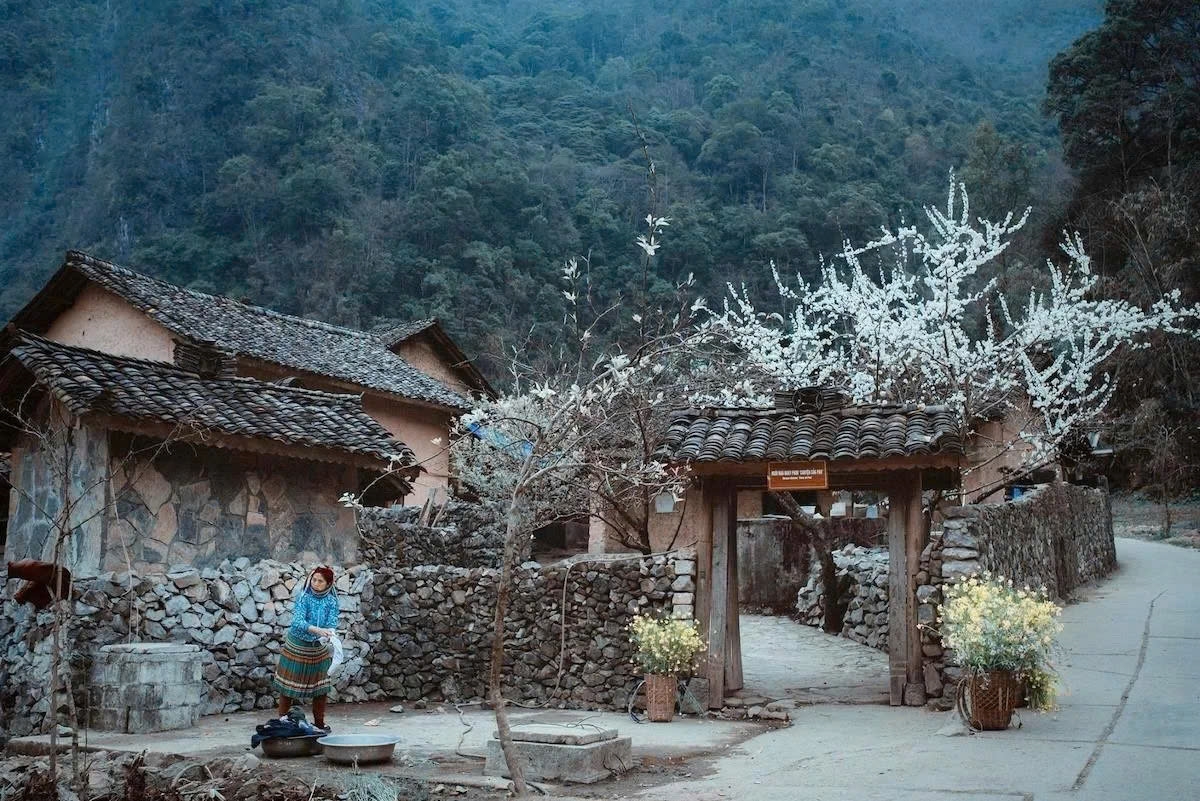 Traditional houses with earthen walls and tiled roofs are structures that need to be preserved and promoted
The role of government and inter-sectoral cooperation
Local authorities, including Dong Van commune in Tuyen Quang province, and the Ministry of Culture, Sports and Tourism must play a key role in issuing planning documents, guidelines, certifying ancient houses and providing financial support. Inspecting and monitoring the implementation of conservation regulations. Support infrastructure: access roads, electricity, water, waste management,... This also involves collaboration with non-governmental organizations, researchers, architectural experts, heritage conservationists, universities, artists,… to bring about new initiatives, restoration techniques, heritage digitization and the creation of innovative tourism products.
Developing tourism while preserving the ancient town of Dong Van is not an easy path, but it is a necessary one. It requires the concerted efforts of the government, the people, experts and even tourists. Preserving the soul of the old town is not just about preserving memories, but also about preserving the future, about preserving the unique character that each step taken through this old town will forever remember. Therefore, preserving the old town is not just about preserving houses and alleys. It’s about preserving its soul and character. And to achieve that, it requires a visionary and responsible government, effective coordination among various sectors, working together to build a Dong Van that is both vibrant in the eyes of tourists and sustainable in the hearts of the local people./.
