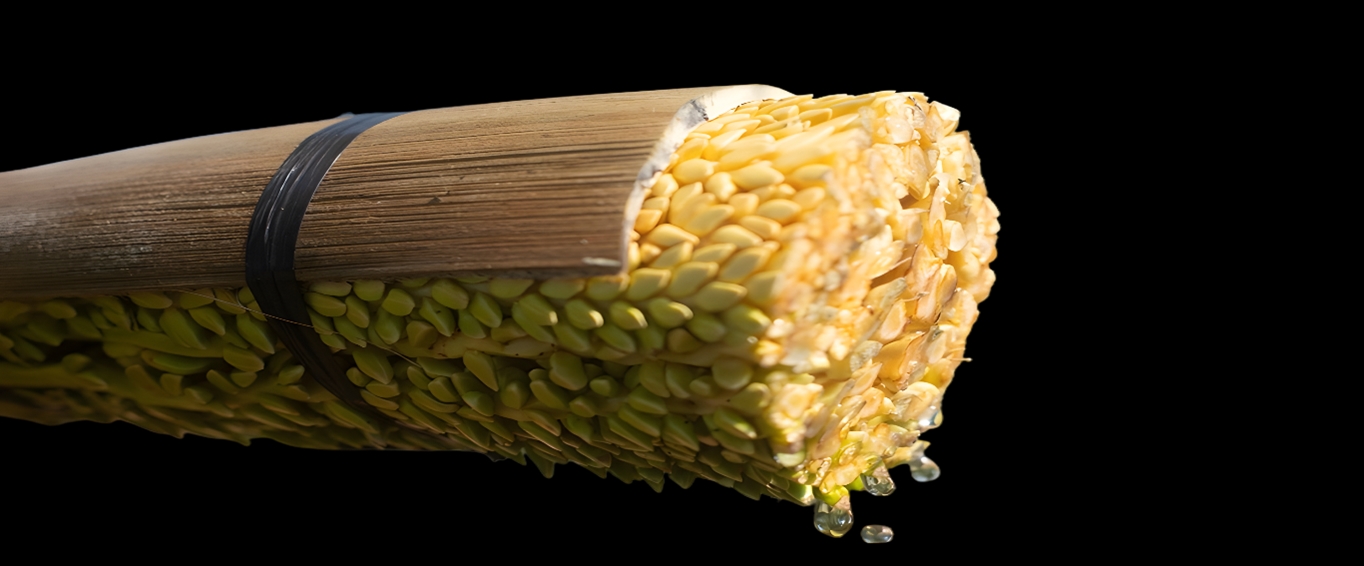
 Coconut nectar is a product harvested from the flowers of the coconut tree
For generations, coconut trees have been a familiar crop in the Southwest region of Vietnam and to be currently one of the nine key industrial crops in the country. However, farmers mainly sell raw fruit, the output is unstable due to their dependence on traders. Faced with this situation, Thach Thi Chal Thi and her husband, Khmer people from Tieu Can commune, Vinh Long province determined to find a new direction for coconut cultivation in their homeland.
Having worked for large corporations, but Ms. Thach Thi Chal Thi decided to leave the city and return to her hometown to start a business making products from coconut flower nectar. Months of failed experiments were followed, but thanks to her perseverance in learning the techniques, she succeeded. The difference in efficiency was clear, a household with a few coconut trees would only earn a few hundred thousand VND per year selling the fruit, but selling the coconut sap could bring in several million VND per month. In 2020, the couple’s idea of producing coconut flower nectar won first prize in the national youth startup competition, paving the way for the establishment of Sokfarm Company, which in Khmer means “happy agriculture”, with Thach Thi Chal Thi as its director. From coconut blossom nectar, Sokfarm develops a diverse range of products including beverages, soy sauce, vinegar and blends them with cocoa… Currently, the company is the first enterprise in Vietnam to inherit and continue the traditional coconut flower nectar harvesting industry of the Khmer people in South (Vietnam), capable of producing and supplying approximately 20,000 products per month to the domestic market and exporting to the Netherlands, Japan, Cambodia,...
Currently, Sokfarm has 25 hectares of organic coconut trees, producing 70 tons of fresh coconut nectar per hectare per year, employing over 30 workers, 280 local people involved in supplying raw materials. In addition to partnering with poor and near poor households, in order to expand its raw material supply area, the company also proactively collaborates with middle-income households, those with 5-6 acres of coconut trees or more. Sokfarm aims to connect with 1,000 households by 2030, contributing to the revival of the once-diminished coconut nectar harvesting industry; at the same time, providing a solution to help the Khmer people avoid displacement due to the increasingly severe saltwater intrusion in the Southwestern region of Vietnam.
In reality, the weather in the Southwestern region of Vietnam is changing erratically, with saltwater intrusion being a major problem severely impacting livelihoods and production, while the traditional livelihoods of the Khmer people depend heavily on agriculture and related activities. Faced with uncertainties caused by technical, environmental, market and increasingly unfavorable production conditions, the livelihoods of the people, especially the Khmer are becoming more difficult.
Between these challenges, Ms. Thach Thi Chal Thi’s model stands out with its comparative advantages. Specifically, if farmers only grow rice on one hectare of land, they will not be able to make a living. However, on the same area, coconut trees yield 50-70% more sugar than sugarcane, helping people earn 5-6 million VND per month, enough to keep them in their homeland and committed to the traditional coconut tree. On the other hand, coconut trees can tolerate salinity levels of 4-10‰, demonstrating high adaptability to climate change and saltwater intrusion in the Southwestern region of Vietnam.
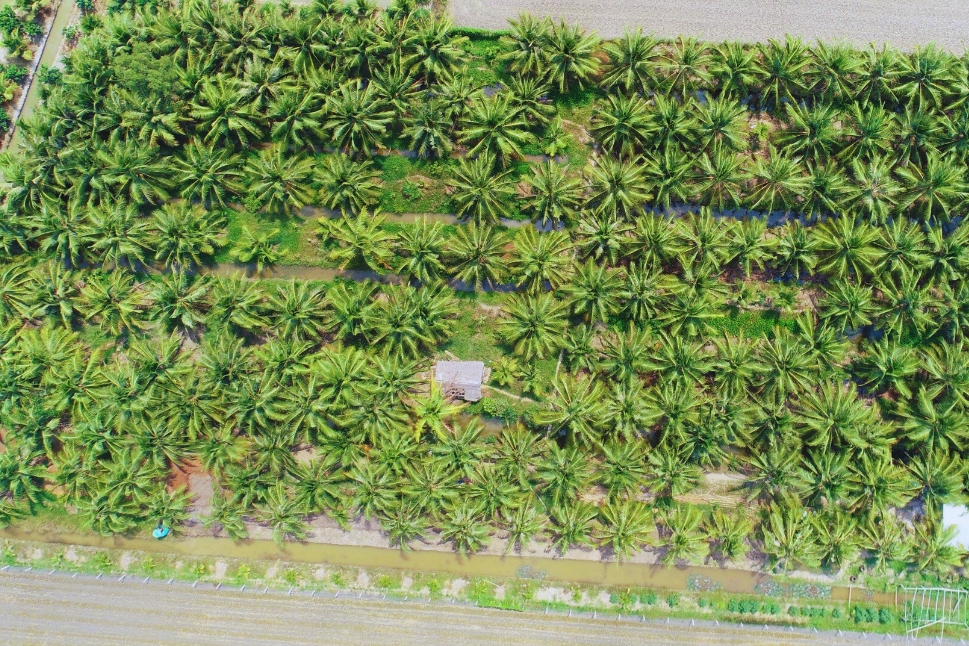 Sokfarm’s raw material coconut garden
In July 2025, the organic coconut nectar model won second prize at the national finals, advancing to Climate Launchpad - the world’s largest green startup competition, organized annually by EIT Climate-KIC - the European Union’s climate innovation initiative in over 60 countries. This victory is a recognition of a solution that helps farmers in the Southwest region of Vietnam adapt to climate change and saltwater intrusion, preserve traditional Khmer crafts, contribute to reducing global emissions and promote a green economy. For consumers, this also provides assurance that the product has been evaluated by leading experts and meets standards for sustainability, safety and transparency.
The shift from traditional rice farming to the Sokfarm production model is a good suggestion and should be encouraged to be replicated in order to create social impact, provide sustainable livelihoods, contribute to improving the lives of the Khmer people and protect the environment in the Southwestern region of Vietnam.
