In the Mong language, giay cakes are called “Pé” or “Dúa”. When offering giay cakes to ancestors, they must be offered in pairs of two. The distinguishing feature of the giay cake offered as a sacrifice is that it has no filling inside and uses no spices. The Mong people believe that: the two round giay cakes symbolize the Moon and the Sun, to be the source of humankind and all living things. The thoughts, hopes and wishes of children, grandchildren for the new year are embodied in the round giay cake. The cake also symbolizes the love and fidelity of young men and women.
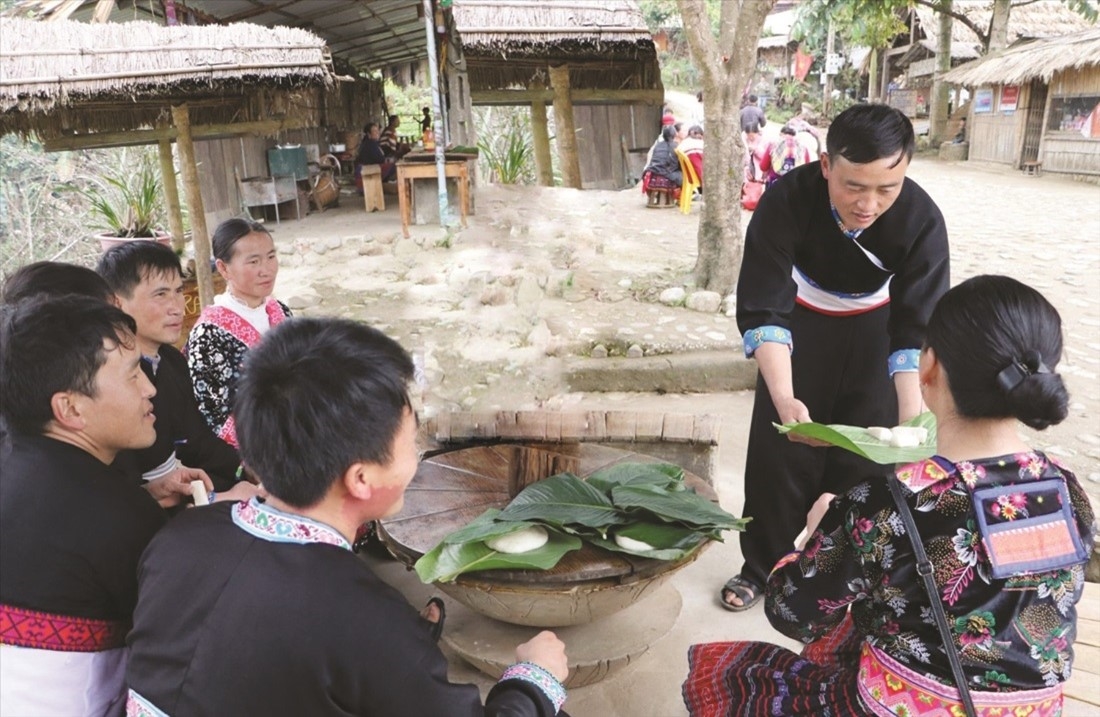 The Mong people use giay cakes to offer guests on New Year’s Day.
Making these fragrant, chewy giay cakes requires many steps and demands skillful hands. Firstly, have to choose white, fragrant glutinous rice with large, uniform grains; when steamed, it will produce sticky rice. The rice is rinsed, soaked in water for about 4-5 hours, drained and then placed in a wooden steamer to cook the sticky rice. Sticky rice needs about an hour to be thoroughly cooked; it must be pounded immediately while still hot. if let it cool before pounding, the cake will not be smooth, it will be hard, dry and will crack when shaped, resulting in an unpleasant taste.
The mortar used to pound the giay cakes of the Mong people is made from a sturdy, hollowed-out tree trunk, while the pestle is also made from a hard, molded piece of wood. During the pounding process, strong, skillful young men use pestles to push the sticky rice roll to one side, then pound it again in a “rolling” motion to ensure the rice is evenly mashed. The more thoroughly the rice is pounded, the more pliable it becomes, forming a smooth, white, sticky paste. The finely pounded, pristine white sticky rice, still hot is skillfully rolled and shaped by the women into pretty, round cakes, resembling the moon and the sun.
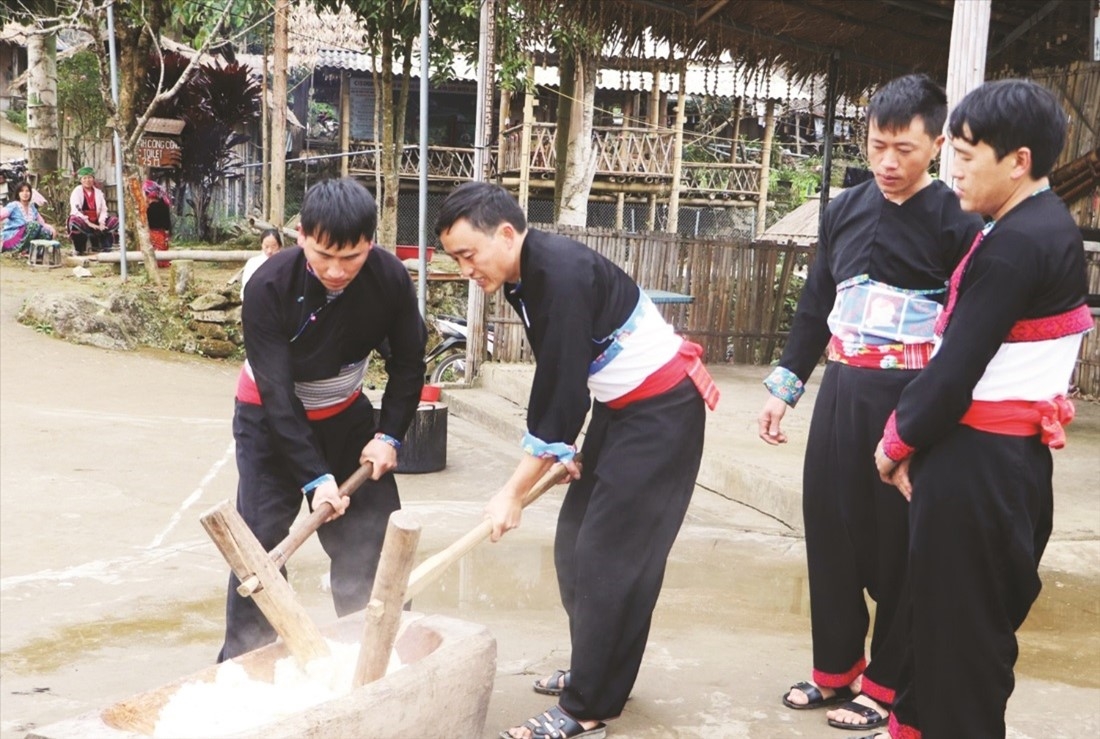 The process of pounding the rice flour for making giay cake is mainly done by men
Ms. Va Thi Ly from Co Ma commune, Son La province, said: “In order to make fragrant, chewy and delicious giay cakes, the rice used must be fragrant, sticky upland glutinous rice”. After selecting the best quality rice, it is dried at a suitable temperature so that when milled, the grains do not break but still retain their delicious aroma and chewy texture.
Giay cakes are cut into small pieces and fried or grilled over charcoal for about 10 minutes, the cakes are soft and puffy, with a distinctive flavor of mountain sticky rice. The cakes are shaped into circles, representing heaven and earth, symbolizing fullness and abundance when worshipping ancestors.
Mr. Mua A Thang from Si Pa Phin commune, Dien Bien province said: giay cakes are not only a traditional dish but also a symbol in the community culture of the Mong people. Each cake embodies profound humanistic and spiritual values, deeply rooted in gratitude to our ancestors. While chung cakes (Vietnamese traditional sticky rice cakes) are an indispensable dish during Tet (Lunar New Year) for the Kinh people, giay cakes are considered the culinary essence of important holidays for the Mong people in the Northwest highlands.
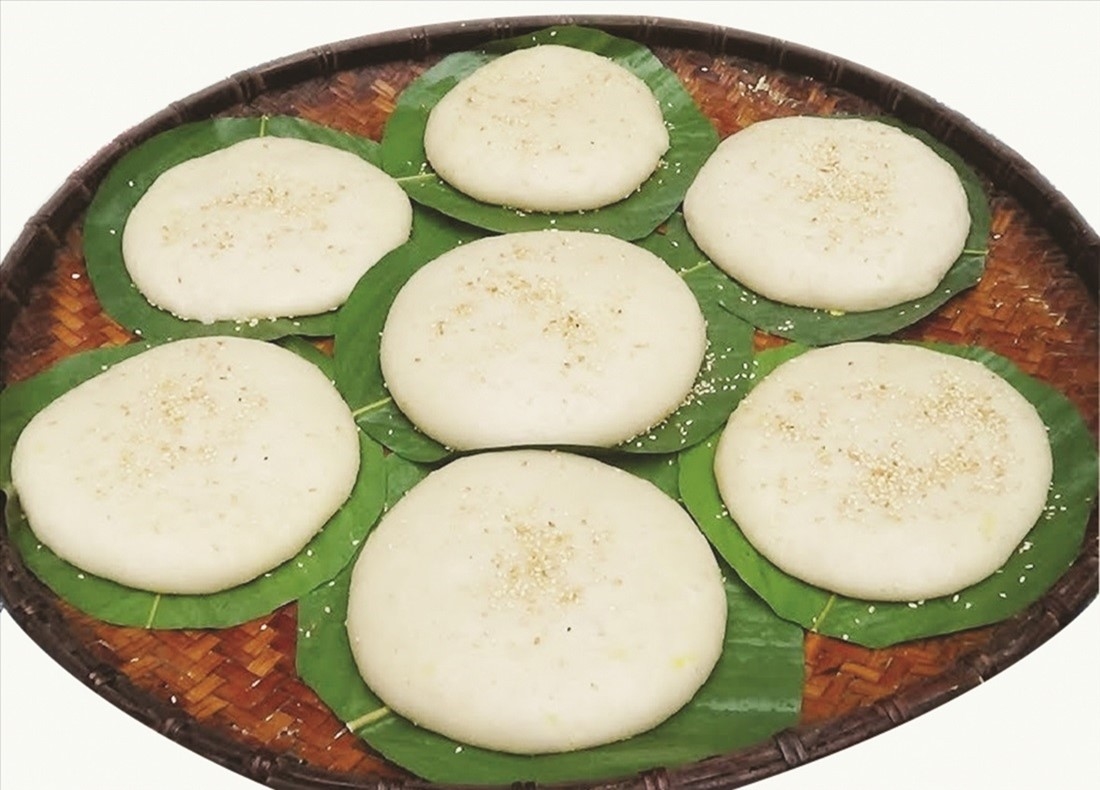 The round, full giay cake symbolizes gratitude to one’s origins and loyalty, unwavering devotion in love
Today, although the lives of the Mong people have developed and there has been interaction with other ethnic groups, the Mong people in the Northwest highlands still preserve and pass on the technique of making giay cakes to future generations. It is also a way to educate and foster love for one’s homeland and country and to preserve the cultural roots of the nation. Especially during holidays and festivals, Mong boys and girls often bring giay cakes with them when celebrating the spring festival, as a meaningful gift from Mong men and women when seeking a spouse.
Ha Lien, from Muong Khuong commune, Lao Cai province, shared: “Every time Tet (Lunar New Year) comes around, I am very happy to join my mothers and sisters in making giay cake, a characteristic dish that is indispensable in the Tet feast of the Mong people. I also learned from my mothers and sisters about making cakes, how to choose rice and how to pound the dough until it was smooth... From that, I developed a love for the unique culture of the Mong people”.
The tradition of making giay cakes among the Mong people during Tet (Lunar New Year) not only demonstrates respect for and inheritance of tradition but is also a unique spring activity that attracts many tourists to the Northwest highlands./.
