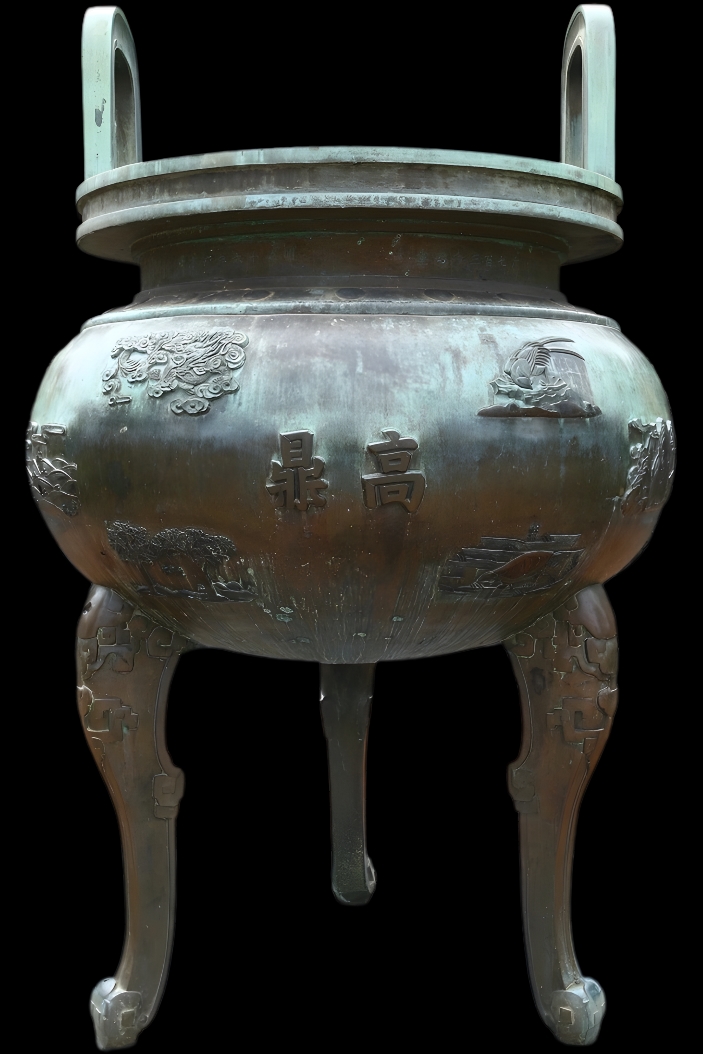
 The Nine Dynastic Urns, symbols of the power and longevity of the Nguyen Dynasty
Historical value: The ancient capital of Hue is home to many important historical relics of the Nguyen dynasty, the last feudal dynasty of Vietnam. Structures such as the Hue Citadel, the Hue Imperial City, the Forbidden City and the tombs of the Nguyen emperors, including the tombs of Gia Long, Minh Mang, Tu Duc are testaments to an important period in the country’s history.
At the heart of the Hue ancient capital relics complex lies a system of three interlocking citadels, built symmetrically and strictly adhering to traditional architectural principles and Eastern philosophy. The Hue Imperial City was begun in 1805 during the reign of King Gia Long and completed in 1832 during the reign of King Minh Mang. The citadel was built according to the Western Vauban military architecture, but it remains in perfect harmony with natural elements such as the Perfume River and Ngu Binh Mountain. This is the outermost wall, encircling the entire capital. The Imperial Citadel (Dai Noi), located in the center of the capital, placing the court’s offices and ancestral temples. This area includes famous structures such as the Ngo Mon Gate (main gate) and the Thai Hoa Palace (where important ceremonies and court rituals took place) - symbols of the dynasty’s power and authority. The Forbidden City is the innermost walled enclosure, reserved exclusively for the emperor and the royal family.
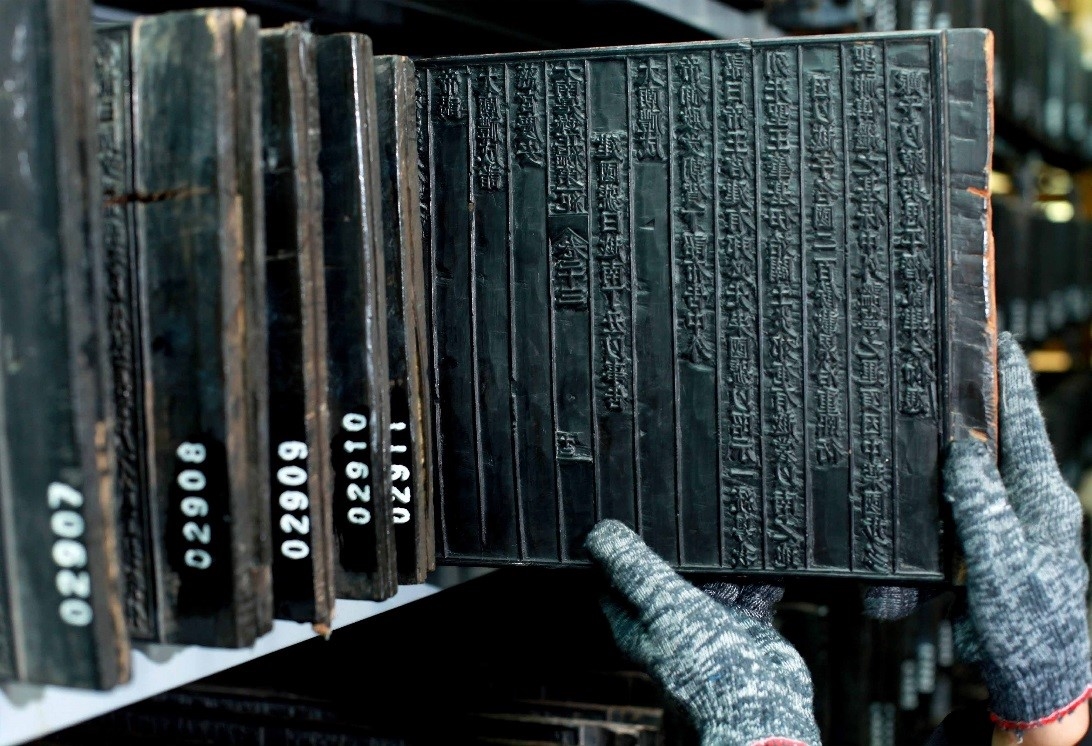 The woodblocks of the Nguyen Dynasty are carefully preserved at the National Archives Center IV
Despite suffering significant damage from war, the remaining traces still reveal the sophistication and opulence of the palace architecture. The arrangement of the three citadels along a vertical axis running from south to north created a perfectly symmetrical architectural whole, to be a clear testament to the level of urban planning and architectural artistry under the Nguyen dynasty.
Outside the citadel, the tombs of the Nguyen emperors are scattered on the outskirts, along the Perfume River and on the hills, forming an integral part of the unique value of the historical relics complex. Each tomb, such as the tombs of Gia Long, Minh Mang, Tu Duc and Khai Dinh are a unique work of architectural art, clearly reflecting the personality, ideology and aesthetic concepts of each emperor.
Cultural values: The complex of historical relics is not only an architectural masterpiece but also a spiritual symbol, a place where diverse cultural values converge. This place still preserves a rich spiritual life, reflected in its vast system of temples, the worship of the Mother Goddess and its religious diversity. The ancient capital of Hue also preserves a priceless treasure of intangible cultural heritage, most notably Hue Royal Court Music, which was honored by UNESCO as a masterpiece of oral and intangible heritage of humanity in 2003. Court music is not just music, but also a comprehensive art form, closely associated with solemn court rituals.
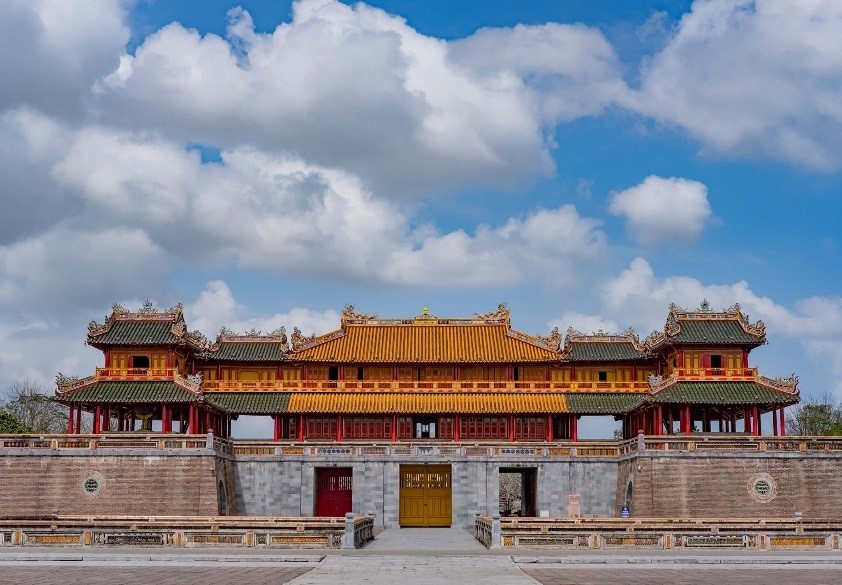 The Imperial City of Hue is a masterpiece of ancient architecture, part of the Hue Imperial Citadel complex
Furthermore, customs and festivals such as the Te Giao ceremony, the Ban Soc ceremony, the system of poetry and literature on imperial architecture, the Nguyen Dynasty woodblocks and Nguyen Dynasty imperial archives have also been recognized as world documentary heritage, further affirming Hue’s position as a cultural center. Most recently, “The relief castings on the nine bronze cauldrons in the Hue Imperial Palace” were also recognized as a world documentary heritage.
Today, the historical relics complex of the ancient capital of Hue has become a top tourist destination in Vietnam. This place is not only a complex of ancient architecture but also a vibrant cultural space where visitors can touch history, admire art and feel the refined and tranquil character of the former capital city.
Hue today, still preserving the essence of an ancient capital, continuing to leverage these unique heritage values to become an important driving force in its socio-economic development strategy, affirming its role as a distinctive cultural center of the country and the region.
