Abstract: New religious phenomenon; Identification and classification; Management; Activity.
1. Identifying the activities of “new religious phenomena” in Vietnam within the context of state management
Regarding the phenomenon of new religious movements, this article does not aim to conduct a theoretical study or trace their concepts, origins and broad developmental trajectories; instead, it approaches these phenomena specifically in relation to the management of religious activities in Vietnam. Consequently, religions that have emerged and flourished for decades or centuries becoming globally influential but have only recently appeared in Vietnam and lack legal recognition are still collectively referred to as “new religious phenomena”. It is termed a “religious phenomenon” because it possesses the constituent elements of a religion, namely an object of worship, doctrine, religious law, rituals and an organizational structure, yet remaining in a rudimentary, underdeveloped and unstable state, lacking societal acknowledgment and legal recognition. It is considered “new” because it emerged after the religions and religious organizations that already hold legal status in Vietnam.
About origins: New religious movements in Vietnam have emerged in two forms: those introduced from abroad brought in by overseas Vietnamese, individuals returning after studying or working overseas, or Vietnamese nationals who married foreigners and returned to propagate the faith and organize activities and those that originated domestically. This type is significantly influenced by traditional religions (Buddhism, Catholicism, Protestantism) and folk beliefs.
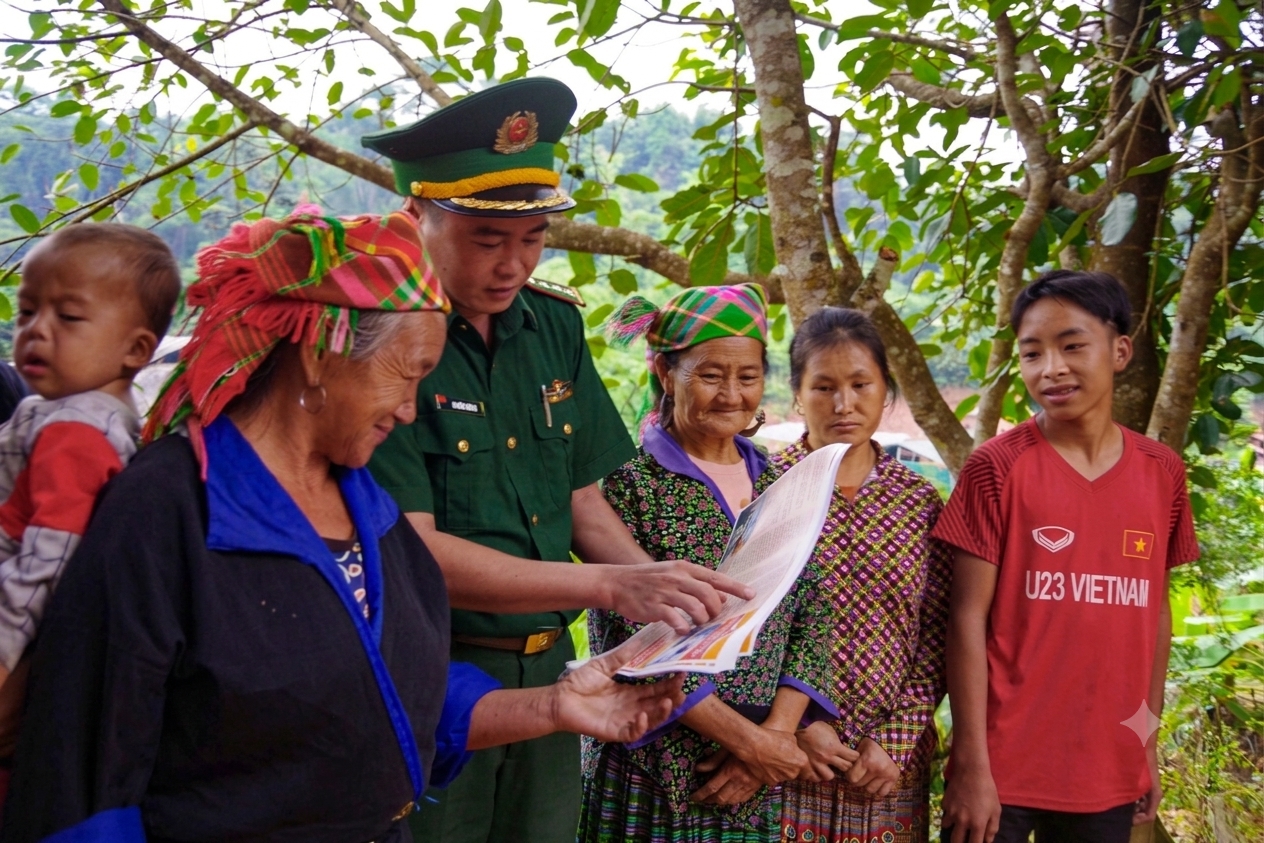 Raising awareness among the public, particularly ethnic minority and mountainous communities to remain vigilant against plots that exploit religion to sow division within the great unity of ethnic groups and religions
About doctrine, canon law and rituals: These are primarily borrowed, assembled, and adapted from the teachings, rules and rites of traditional religions and belief systems, but simplified and pared down to avoid duplication and minimize criticism from established religious groups. The aim is to create a sense of familiarity while simultaneously establishing a distinction from traditional religions and beliefs.
About names and founders: Most new religious movements seek to adopt unique names to avoid overlapping with those of established religions or belief systems. Some groups choose names linked to the object of worship, most notably President Ho Chi Minh, while others adopt the name of their founder. Certain groups employ different names in different localities to facilitate the expansion of the faith and evade detection by the authorities.
The founders or “sect leaders” vary widely in terms of age, gender, background and profession; however, research indicates that the majority are middle-aged women. This fact serves as a “compelling and intriguing” draw for potential followers. Most leaders of these new religious movements possess the ability to preach to large crowds, compose verse spontaneously, and speak with an eloquence that captivates their audience. Notably, they all claim to possess “spiritual” powers and a connection to the divine entities that commissioned them to establish their faiths.
About organization: New religious movements all establish organizational structures, though these are typically simple, comprising just one to three tiers. There is usually a clear hierarchy: a president, group leader or mission leader; two vice-presidents or deputy leaders; committee members (with the number determined by the founder’s preference and the required tasks), each responsible for a specific area or region… In groups characterized by strong extremist elements, the titles and organizational structures often resemble those of administrative bodies or secular associations rather than the typical framework of a religious organization. A prime example is Ms. Xuyen, who founded the Way of Heaven of Vietnam marking January 1, 2001, as the date of the faith’s inception and established a home-based shrine known as the Hoa Binh (Peace) Shrine in formerly Hai Duong province. She established a provisional association with herself as President, supported by five vice-presidents and 18 committee members; the organization comprised 123 groups (each with a leader and two deputy leaders) and approximately 27,000 active members across 45 provinces and cities. Hai Duong had the highest number of members (over 4,370), followed by Bac Giang (approximately 4,460). Nguyen Thi Dien also established the “Dien Hoang Thien Long” home-based worship council consisting of 19 individuals to oversee rituals and promote the expansion of the faith.
About activities: Most new religious movements place great importance on disseminating their tenets, doctrines, religious laws, rituals and operational rules, a task that is also fundamental to any religion. Activities for adherents include retreats, meditation sessions, collective practice, listening to doctrinal teachings, prayer, and the practical application of religious tenets. Communal religious activities typically take place on a regular basis weekly or monthly as well as on holidays, the founder's (or religious leader's) birthday and occasions commemorating national events. Venues for these activities often include the religious leader’s private residence (such as a shrine or temple), adherents’ homes, business premises, rented or borrowed facilities (like hotels or lodging establishments) or public spaces.
About the target audience for outreach: The approach is diverse, aiming to reach all possible groups, with a specific focus on individuals facing hardships, those with low levels of education or limited social awareness and those who have lost faith in life or whose belief in traditional religions and faiths has waned; it also targets individuals with close family ties or strong bonds based on economic interests or employment to the organization’s founders.
2. Classification of the activities of new religious movements
2.1. Basis for classifying the activities of new religious phenomena in relation to management affairs
Grounded in the cultural traditions of the Vietnamese nation, religious ethics and cultural values have gained societal recognition. Regulations governing belief and religious activities as well as prohibited acts are set forth in the 2016 Law on Belief and Religion and the 2026 Law on Belief and Religion (Amended), which prohibit actions such as: (i) Discrimination or stigmatization based on belief or religion; (ii) Coercing, bribing, or obstructing others from following or not following a belief or religion; (iii) Insulting beliefs or religions; (iv) Violating regulations regarding belief or religious activities by: infringing upon national defense, security, national sovereignty, public order and safety or the environment; acting contrary to social morality; infringing upon the physical integrity, health, life or property of others; insulting the honor or dignity of others; obstructing the exercise of citizens’ rights and obligations; or inciting division among ethnic groups or religions, between believers and non-believers, among followers of different beliefs or religions; (v) Exploiting beliefs or religion for personal gain, or exploiting beliefs or religion to commit any of the acts specified in clause (iv) above; (vi) Using cyberspace, artificial intelligence or technology to violate the law on beliefs and religion.
Accordingly, when considering moral values, traditional culture and legal regulations regarding belief, religion, and other relevant laws, the specific nature of “new religious phenomena” and whether they violate any prohibitions will serve as a crucial basis for their classification and the determination of appropriate management methods.
2.2. Classification of the activities of new religious phenomena from a management perspective
The emergence and development of new religious phenomena follow the identification process outlined above; however, there are various methods of classification depending on the approach taken, with the most common current classification being: (i) Classification based on religious origin (including those originating from foreign countries and introduced into Vietnam, and those originating domestically); (ii) Classification based on historical approach (time of appearance and development); (iii) Classification based on relationship with traditional religions and beliefs (types close to Buddhism, Protestantism, Catholicism; types close to folk beliefs; types that are a mixture of religion and traditional beliefs); (iv) Classification based on the characteristics and impact of new religious phenomena: purely positive; involving extremist religious practices; or exhibiting a mix of positive and negative aspects; (v) Classification based on the nature of activities: purely religious; superstitious or profit-driven; extremist, subversive and harmful to society and national security.
Among the aforementioned classification methods, classification based on operational nature is the most comprehensive and significant; this approach allows for the identification of other classification categories and the assessment of the impacts of mass mobilization systems from various perspectives. It serves as a crucial foundation for management entities to formulate policies and operational strategies tailored to each specific type.
2.2.1. Purely religious activities
Newly formed religious movements are based on tenets established by their founders often expressed through poetry and prose which are further supplemented and refined as the movements evolve. These tenets incorporate praise for the Party, President Ho Chi Minh and national heroes as well as for the object of worship and the newly established religion itself, while also setting forth regulations for spiritual practice and rituals. In the course of proselytizing, they disseminate these doctrines and instruct believers on practices, forms of worship, and the observance of commandments and prohibitions. Through scriptures, books, poems, and sermons, their leaders also address issues regarding negative phenomena and social ills such as criticizing corruption, wastefulness, bureaucracy and the lack of democracy among certain state officials, as well as denouncing the vices and misconduct of religious dignitaries and clergy in contemporary religions. They call for the elimination of superstitious practices within religious life. They urge followers to pursue virtuous living, shun social vices, and cultivate moral character, while also encouraging support for and participation in local social welfare initiatives. Religious texts are largely handwritten and subsequently typed and photocopied for distribution to the public; video and audio recordings are also produced and shared on social media platforms as a means of spreading their teachings.
2.2.2. A type of religious activity characterized by elements of superstition and profiteering
Like purely religious activities, this type also encompasses the constituent elements of a religion. However, from the very inception of its doctrines and rules, it has incorporated “mystical” and superstitious elements, while exploiting the situation for the material gain and reputational aggrandizement of its founders. In particular, it exploits the images of leaders and national heroes, deifying them as Saints or reincarnated Buddhas. The founder always promoted and polished himself by calling himself a saint, god, or Buddha, propagating the true spirit of the prophets in dreams and asking to establish a religion to help the country (criticizing real society). Especially propagandizing treatment without using drugs but using unscientific treatment methods, deceiving people to gain illegal profits (healing with spirituality, with original energy, with practice...). Emphasis is placed on healing through the supernatural power of the deity they worship: this includes administering water over which prayers have been recited and employing methods that directly affect the patient's body, such as the use of “extrasensory perception”, “spiritual power” or “bio-energy fields”… Beliefs of this nature are heavily imbued with mysticism and unconventional elements that easily lure followers, particularly those suffering from severe or chronic illnesses. Some exploit the situation by promoting spiritual healing to sell scriptures, holy water, talismans, and homemade remedies or by charging fees for spiritual practice sessions and energy-transmission rituals, all to serve the interests of the founder and the leadership group.
There are practices contrary to the nation's fine customs such as making offerings, presenting flowers, and praying based on the belief that these acts can resolve any problem: curing illnesses, wiping out debts, and ensuring a livelihood without the need for actual work. Many adherents neglect their work to focus on rituals, abandon ancestral worship, reject visits to pagodas, regard their own sect as supreme and isolate themselves from the broader community (groups such as the Duong Van Minh movement and the World Mission Society Church of God, for instance, view ancestral worship as devil worship that must be eradicated). This runs counter to traditional Vietnamese culture and leads to the breakdown of family and kinship ties.
2.2.3. Activities of an extremist or subversive nature that pose a threat to society and national security
The activities of this group center on propagating mystical, nonsensical, and unrealistic claims such as the idea that mere prayer ensures food without the need to work, grants literacy or leads to the forgiveness of bank debts as well as doomsday prophecies promising salvation and a life of immense wealth and luxury to believers; these tactics serve both to recruit new members and to sow confusion and doubt, thereby preventing existing participants from leaving. Certain activities infringe upon the morals, physical integrity, health, lives, property, honor, and dignity of others (such as the “Chan Khong”, “Chat Ngon Tay” and “Pha Toc” sects in Son La province, groups that have since been dismantled by authorities). Other actions include discriminating against or attacking other religions (the “Supreme Master Ching Hai” group attacking Buddhism and claiming that Ching Hai herself is the Buddha) and coercing or bribing individuals into joining, particularly by obstructing or intimidating followers who intend to leave the group.
This classification is merely relative; in reality, there are groups that engage in religious activities while also exhibiting elements of superstition or profiteering, as well as groups that combine religious practice with extremist actions and political undertones. Consequently, identifying and classifying these groups is a challenging task, yet it is highly beneficial for management purposes.
3. Proposing operational approaches for new religious phenomena
Firstly, establish a unified stance regarding new religious phenomena. Based on identification and classification, it is necessary to adopt a unified perspective:
Regarding purely religious activities, it is necessary to study and provide guidance on registering for collective religious activities once the conditions stipulated by the Law on Belief and Religion are met. During the course of these activities, social and religious impacts must be monitored and evaluated to serve as a basis for approval at subsequent stages.
Religious activities heavily characterized by superstition or profiteering require objective assessment and corrective action to eliminate such elements. For the time being, applications for registration of collective religious activities should not be considered; instead, efforts must focus on education and persuasion to guide founders and adherents in rectifying both doctrine and practice, thereby ensuring that religious activities remain purely religious in nature. Only after the problematic elements have been rectified and the activities clearly demonstrate a genuine, purely religious or spiritual character should the registration of collective religious or spiritual activities be considered and facilitated in accordance with the law.
Activities characterized by superstition, profiteering, extremism, and subversion incorporating malevolent, religious and harmful political elements must be combated and eliminated. Violations should be strictly addressed in accordance with the law through a synchronized application of measures, including public awareness campaigns, education and administrative and criminal sanctions. Early detection and timely information-sharing are essential to ensure that the public, religious dignitaries, and followers remain vigilant and assist competent authorities in addressing issues. When handling such matters, it is necessary to distinguish specific violations so as not to harm the public’s faith. Efforts to raise awareness and disseminate information must be intensified so that followers and the general public recognize the dangers and consequences associated with individuals who exploit people's beliefs for their own ends; this will encourage them to abandon such practices and choose to follow genuine religious beliefs and practices.
Secondly, propaganda solution: Promote extensive education and propaganda among the People about preserving and promoting the tradition of Ancestor worship, honoring and remembering those who have contributed to the Fatherland, the nation and the People. Widely disseminate guidance No. 3420/HD-BVHTTDL dated October 2nd, 2012 of the Ministry of Culture, Sports and Tourism on the use of the National Flag, National Emblem, National Anthem, portrait of President Ho Chi Minh and other related documents. Do not “deify” President Ho Chi Minh and national heroes elevating them to the status of saints, deities, immortals, Buddhas or saviors to serve as a cover for illegal religious activities or to exploit them for the purpose of deceiving and recruiting followers for non-religious ends. Instead, promote the noble ethics and culture of traditional religions to help strengthen national cultural values and discourage people from heeding the distorted propaganda of new religious movements.
4. Conclusion
In recent times, the entire political system has addressed the phenomenon of new religious movements through specific policies and measures. However, shortcomings persist regarding their identification, classification, and monitoring, as well as a lack of consensus on how to handle them. These issues stem from insufficient information, the complex and shifting nature of these movements’ activities and a lack of unified understanding, resulting in suboptimal and unclear outcomes, thereby providing pretexts for organizations and individuals to fabricate stories and make slanderous accusations. Despite the nature of the issue being the same, different localities adopt varying approaches: in favorable areas, they seek ways to conduct missionary work, whereas in challenging areas, they operate covertly or lie low. This situation negatively impacts the policy of guaranteeing freedom of belief and religion and provides a pretext for organizations hostile to Vietnam to exploit these religious groups to level false accusations against the country regarding human rights violations in the religious sphere.
While the nature of the issue is the same, different localities adopt varying approaches ranging from actively proselytizing in favorable areas to operating covertly or evading detection in challenging ones. This inconsistency undermines the policy of guaranteeing freedom of belief and religion, and provides a pretext for organizations hostile to Vietnam to exploit these new religious phenomena to level false accusations of human rights violations in the religious sphere.
* Deputy Head of the Faculty of Anthropology and Religion, University of Social Sciences and Humanities, Vietnam National University, Hanoi
References
1. Hoang Van Chung (2014), Approaches of Certain States Worldwide to New Religious Movements, Journal of Religious Research, No. 9.
2. Le Tam Dac (2015), “Some Characteristics of New Religious Movements' in Northern Vietnam Today”, Journal of Religious Research, No. 4 (142).
3. Le Thi Lien (2017), Survey and study of the current situation and proposal of solutions regarding new religious movements in Vietnam today, survey and research project.
4. Nguyen Van Minh (2016), “New religious phenomena” among ethnic minorities in the Central Highlands today, Vietnam Social Sciences Joutnal, No. 3 (100).
5. Nguyen Quoc Tuan (2012), On “New Religious Movements”, Journal of Religious Research, No. 12/2011 and No. 1/2012.
6. Chu Van Tuan (2022), “Identifying unlawful organizations and groups operating under the guise of religion and the erroneous views of hostile forces regarding religion in Vietnam today”, published in the Vietnam Academy of Science and Technology’s electronic journal.
7. National Assembly (2026), Law on Belief and Religion.
