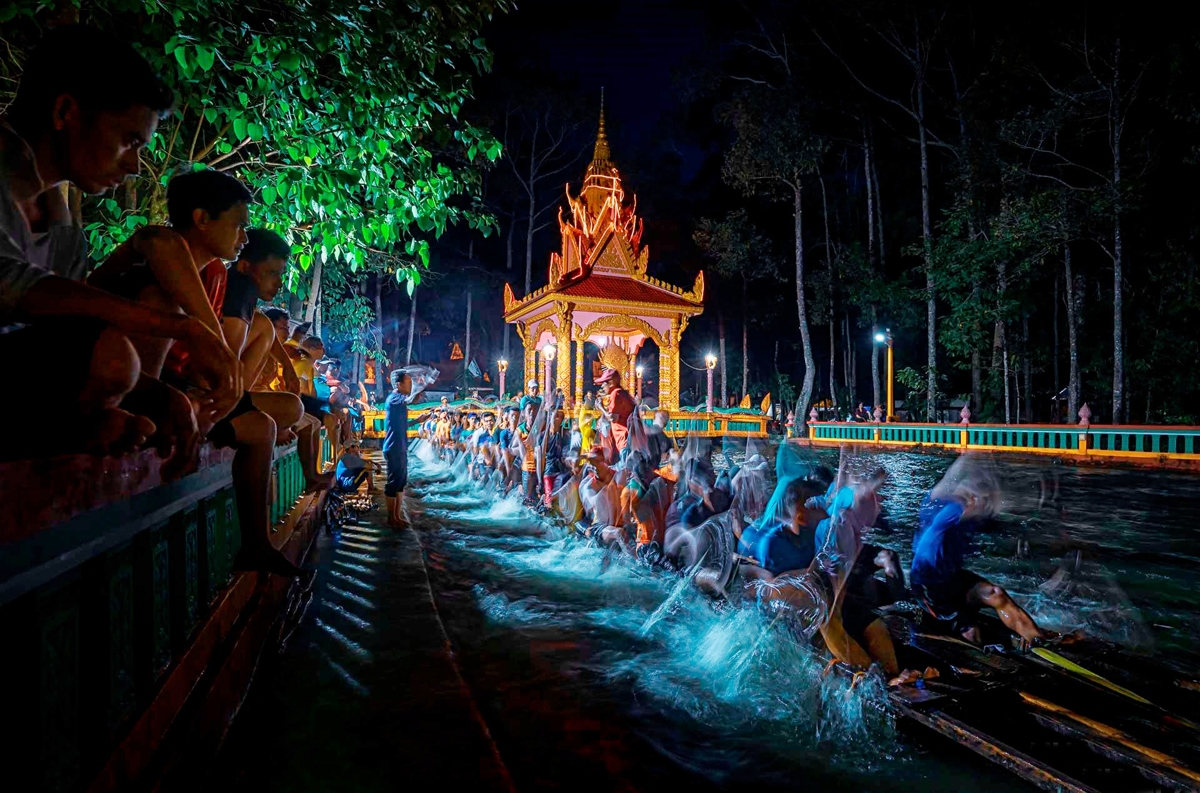
 Boat racing is a unique traditional cultural activity of the Khmer people in the Southwest region of Vietnam.
The human soul merges with the river’s soul
Nowhere else is the Southwestern region as closely intertwined with people and water as in Vietnam. The river is the road, the market, the kitchen, the source of livelihood and the inspiration for countless songs and melodies. From the moment they are in the cradle, children in the Southwestern region are lulled to sleep by the sound of waves lapping against the boats and the sweet folk songs sung by their parents on the river.
On the vast waterways, floating markets become the “heart” of life in the Southwestern region.
From Cai Rang to Nga Nam (Can Tho city), the scene of buying and selling on boats is bustling from dawn: vendors hang bunches of bananas and baskets of oranges on makeshift “display poles” as a signal, buyers call out to each other, and laughter echoes amidst the murky, silt-laden water. Floating markets are not only places for exchanging goods, but also places that preserve the flavors, customs and human warmth of that peaceful land.
Folk echoes between the alluvial plains
Mr. Son Minh Thang, former member of the Central Committee of the Communist Party of Vietnam and former Secretary of the Party Committee of the Central Agencies Bloc, stated: The culture of the riverine region is not only present in the way of life but also deeply ingrained in music, beliefs and cuisine. From the melodious folk songs of the “mai nhi” and “mai day” on the river to the soulful “vong co” tunes at the waterfront, everything combines to create a sweet country melody, both rustic and poignant. The art of Don Ca Tai Tu (Southern Vietnamese folk music) - an intangible cultural heritage of humanity is the embodiment of the soul of the people of the Southwestern region: full of love, valuing loyalty, friendship and always knowing how to share.
The cuisine of the Southwestern region is also a distinctive cultural feature of the region. From simple meals like braised fish in a clay pot and sour soup with water hyacinth flowers, to fermented fish hotpot and snakehead fish... each dish carries the essence of the river and the generous spirit of the people. Each dish is not just about delicious taste, but also tells a story of hard work, creativity and human connection in everyday life.
When talking about the Southwestern region, one cannot forget the unique festivals that bear the strong imprint of the community. The Ok Om Bok festival, the colorful Ngo boat race of the Khmer people, or the Nghinh Ong festival to pay tribute to whales - the “god” that protects fishermen at sea, all blend together, reflecting the cultural diversity of the Kinh, Khmer, Hoa and Cham ethnic groups living together in this alluvial land, Mr. Thang shared.
Preserving the soul of the river between the modern flow
Modern life is gradually creeping into the Mekong Delta. The large bridges and highways connecting the two banks open up opportunities for economic development, but also bring with them a number of concerns: floating markets are becoming deserted, many folk songs are being forgotten and the unique riverine culture seems to be fading away in the hustle and bustle of industrial life.
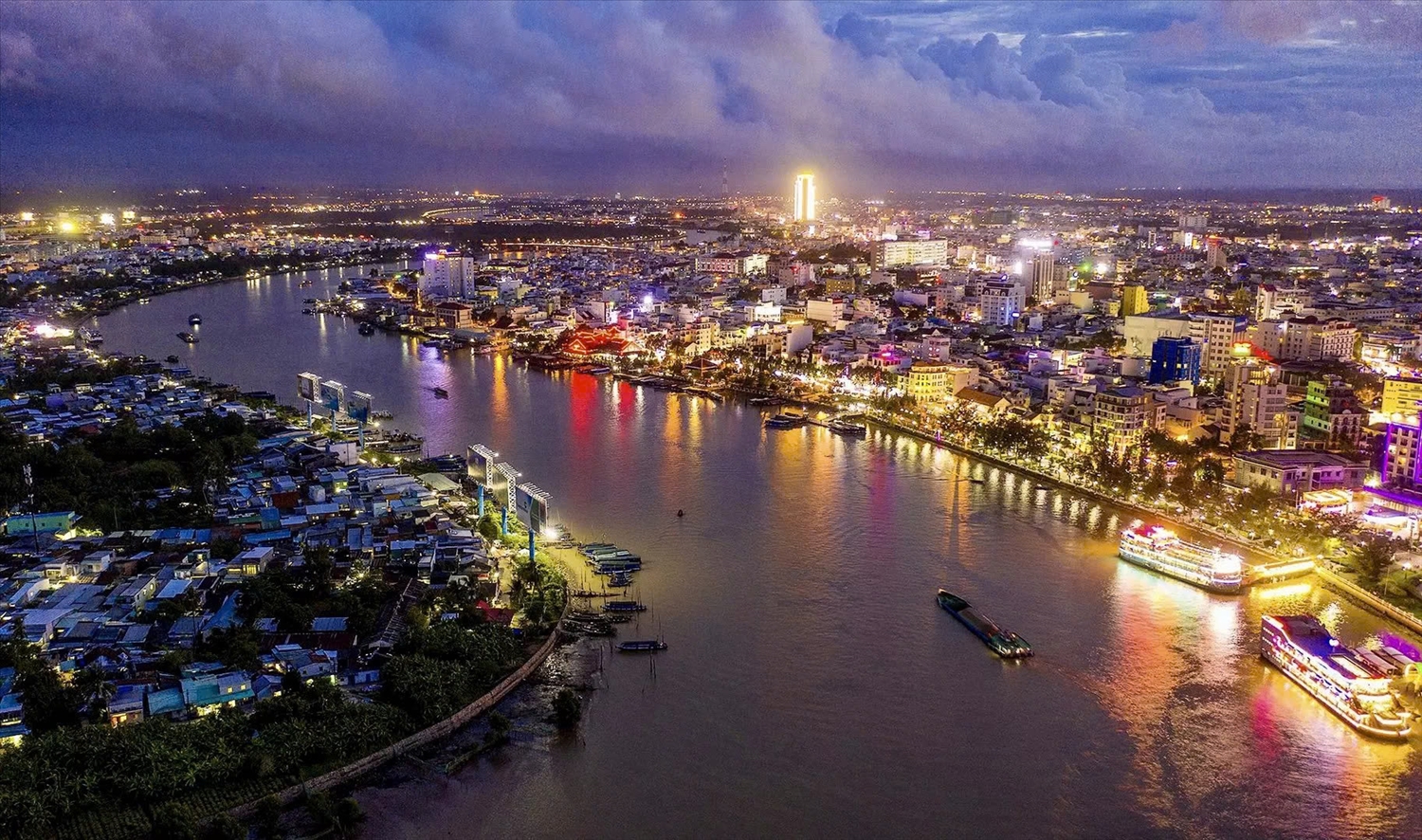 A corner view of Can Tho city today
Preserving the culture of the riverine region is not just about preserving a custom or a festival, but about retaining the “soul” of the people of the Southwestern region, people who value righteousness, affection and live slowly but profoundly. Many localities are reviving folk festivals and developing community-based tourism and ecotourism in orchards so that culture can live in today’s life, rather than just remaining in museums or books.
Today, the Mekong Delta still witnesses the ebb and flow of the tides, and the sounds of folk songs on the riverbanks and children playing in the river still echo. Despite the changing times, the genuine kindness, gentleness and generosity of the people of the Southwestern region, the “essence of the river” infused in every word and smile remain as pure as the never-ending flow of alluvial soil.
The riverine culture of the Southwestern region is not only a heritage, but also a testament to the vibrant spirit of a land that knows how to harmonize with nature, how to transform hardship into prosperity and how to preserve its roots between countless changes.
