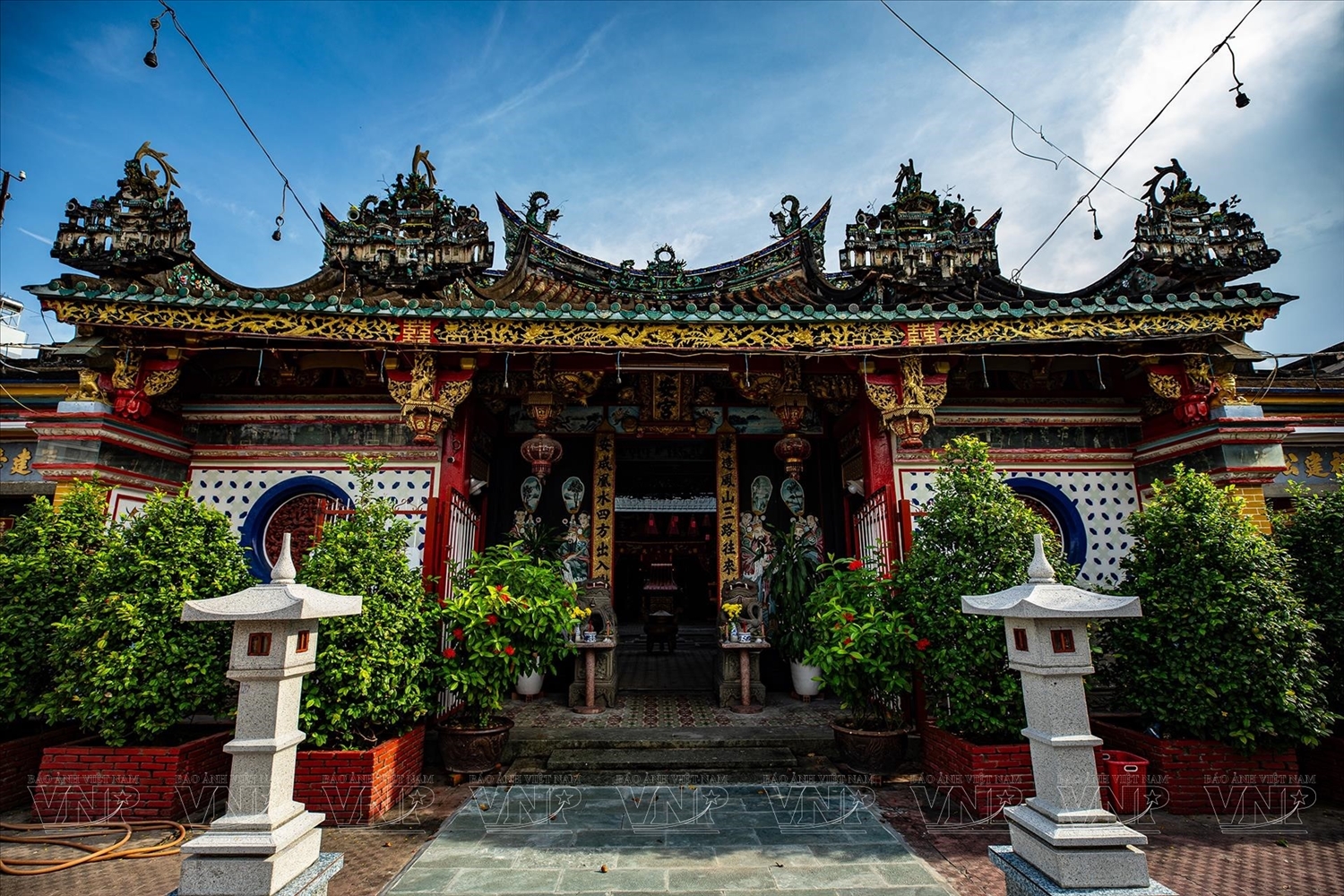
 Kien An Cung (also known as Ong Quach pagoda) is nearly a hundred years old
What sets Kien An Cung completely apart from other pagodas is its distinctly Fujian architectural style, unadulterated and proudly preserving its original appearance. The pagoda faces directly onto the Cai Son canal and to be built in the shape of the Chinese character “Cong”, creating a majestic, enclosed yet airy space. The pagoda’s facade is striking, featuring elegant blue glazed brick walls combined with exquisite ceramic reliefs. The soul of architectural art lies in the roof. The yin-yang tile roof system is designed according to the “five elements” principle, with curved eaves pointing towards the sky, mimicking the image of a boat, symbolizing the seafaring origins of the people of Fujian. On the roof ridges, ancient artisans skillfully sculpted figures of immortals, mythical creatures and phoenixes using colorful ceramics. The combination of ceramic mosaic and sculptural techniques has created a magnificent beauty, possessing both the stillness of time and the dynamism of visual art.
Upon entering the main hall, visitors are overwhelmed by the system of ornate horizontal plaques, couplets and intricately carved decorative panels. All the large wooden pillars were painted in brilliant red and gold. What makes the interior of Kien An Cung so valuable are the unique wood carvings on the beams and partitions. More than just decorative patterns, each piece is an excerpt from classic stories such as Romance of the Three Kingdoms, Journey to the West, or paintings depicting the Twenty-Four Filial Piety Stories. The techniques of relief carving and openwork carving reached a supreme level, creating multi-layered forms with immense depth. Through images of Guan Yu (a symbol of loyalty and righteousness) and stories of filial piety, the pagoda serves as a school for moral education, reminding future generations of humanistic values: humanity, affection, intelligence, belief. Under the soft glow of burning incense sticks, the wooden reliefs seem to come alive, telling stories of the past, of national pride and of humanity’s yearning for goodness.
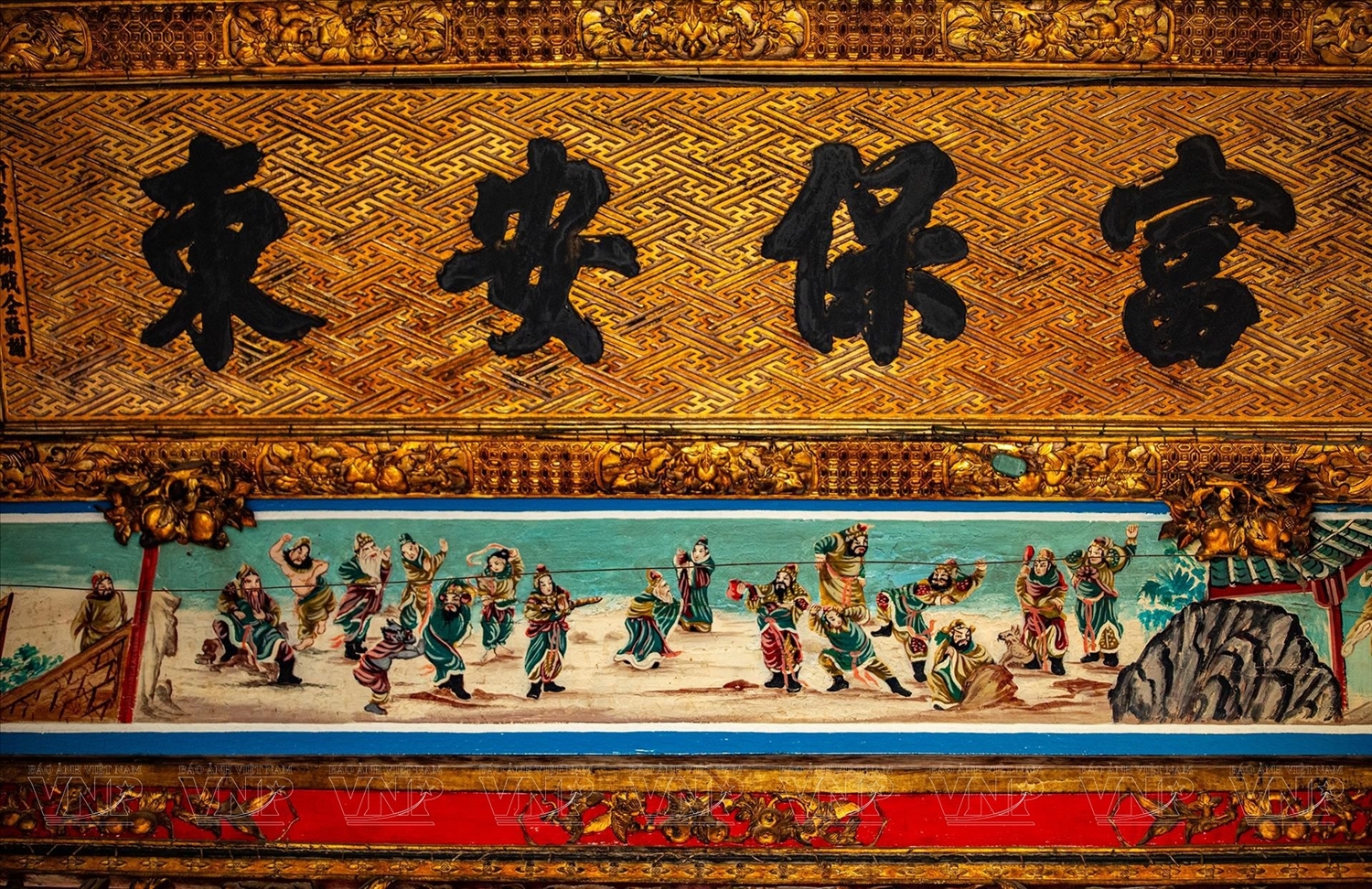 At Kien An Cung, there are many elaborate carvings depicting ancient stories and legends with high aesthetic value
The main deity worshipped at Kien An Palace is Quang Trach Ton Vuong (commonly known as Ong Quach), a deity representing filial piety and integrity of the Fujian people. Every year, on the 22nd of February and the 22nd of August in the lunar calendar (the birthday and death anniversary of Mr. Quach), the pagoda becomes a gathering place for a large number of people from the Mekong Delta region. Kinh, Chinese and Khmer People descent all come here to offer incense and pray for national peace and prosperity and favorable weather. This is the most objective proof of harmony between communities. The rituals at the pagoda are still meticulously preserved according to ancient traditions, from the ceremonial music ensemble to the arrangement of offerings, creating a solemn and mystical cultural space in the heart of the modern city.
In the context of cultural tourism becoming a trend, Kien An Cung is an impressive destination that attracts tourists to Dong Thap province. Kien An Cung is not simply a religious structure, but also a symbol of community solidarity and to be a landmark affirming the presence and significant contributions of the Chinese community to the diverse cultural landscape of Dong Thap. In 1990, the ancient Kien An Cung pagoda was recognized as a national historical and cultural relic, affirming its special value in the treasure trove of Vietnamese heritage. Preserving and promoting the value of Kien An Cung means preserving a part of the glorious memory of the land and people of South (Vietnam)./.
