This place is not only a religious center for Buddhists in the Seven Moutains region but also a unique architectural wonder, showcasing a blend of traditional Vietnamese culture and Phu Tang architecture (Japan), creating a distinctive mark rarely found anywhere else in the Mekong Delta.
Phuoc Lam Pagoda is also known as Lau Pagoda due to the unique design of its structure. Although it lacks a clearly defined upper floor like modern architectures, but the Lau Pagoda makes a strong impression with its layered, tiered structure (like a stack of matches) cleverly arranged on top of each other.
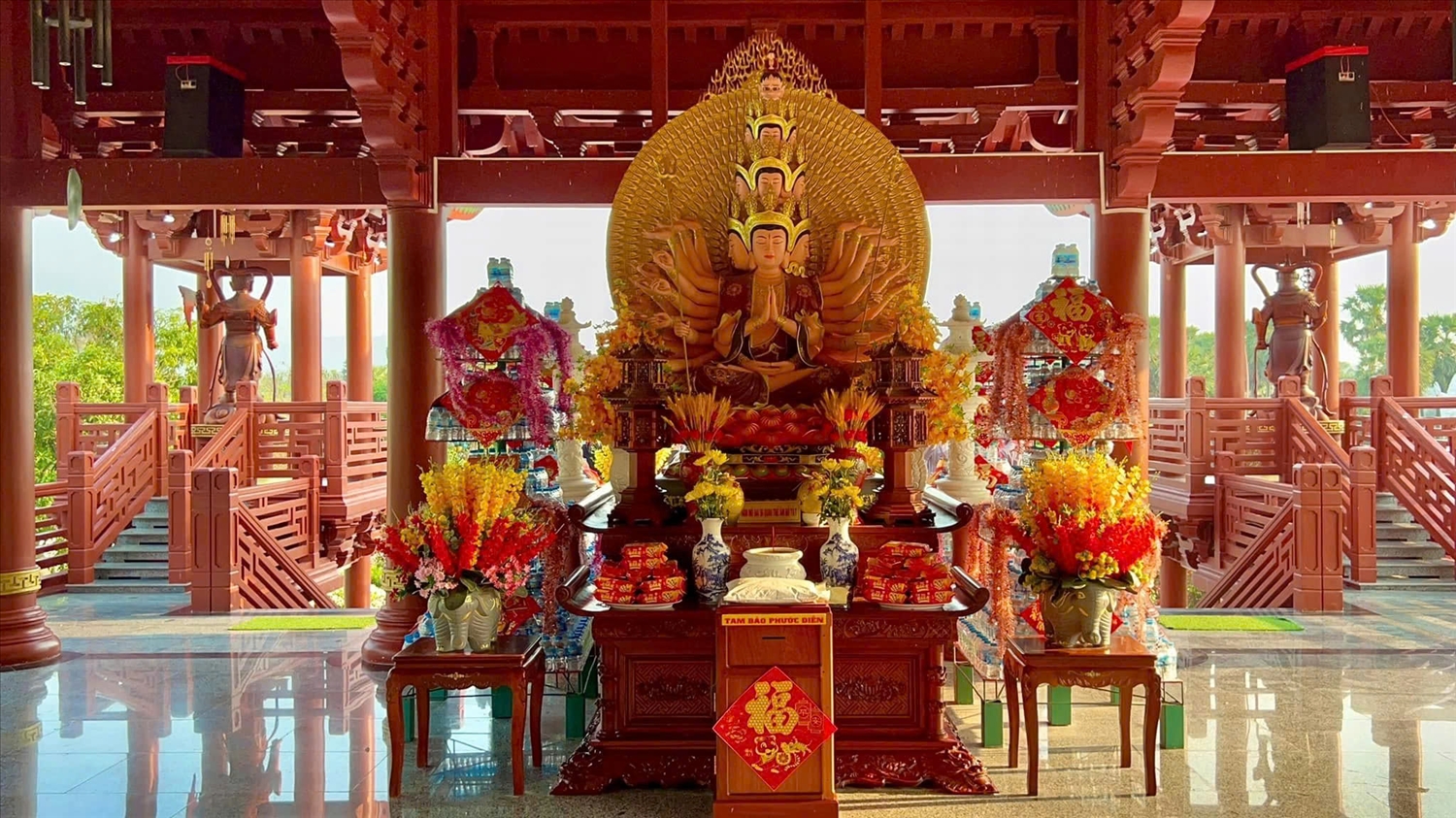 The statue of the Goddess of Mercy (Quan Am) is located at Lau Pagoda
The temple, over 130 years old, was repeatedly damaged by bombs and shelling during the war. Originally built between 1937-1940 and having undergone numerous renovations and expansions, especially the restoration after 2009, Lau Pagoda has taken on a new and unique appearance. Architects and artisans have used roof stacking techniques, creating balconies and canopies that extend and overlap each other, resulting in a captivating space.
The Lau Pagoda resembles a massive, complex architectural structure, with hundreds of layers of red tiled roofs in a Phu Tang style (with Japanese architectural influences) rarely seen in the southern region. The dominant color scheme is the brick red of fired bricks and the deep brown of wood, creating a classic and warm atmosphere. What makes Lau Pagoda special is its system of interconnected corridors and winding staircases that do not follow the usual vertical rules. Pilgrims feel as if they have wandered into a space that alternates between open and closed, where each step and each turn reveals a new space, a tranquil courtyard, or leads to a small prayer room, making them forget whether they are on the ground floor or have ascended to an upper floor.
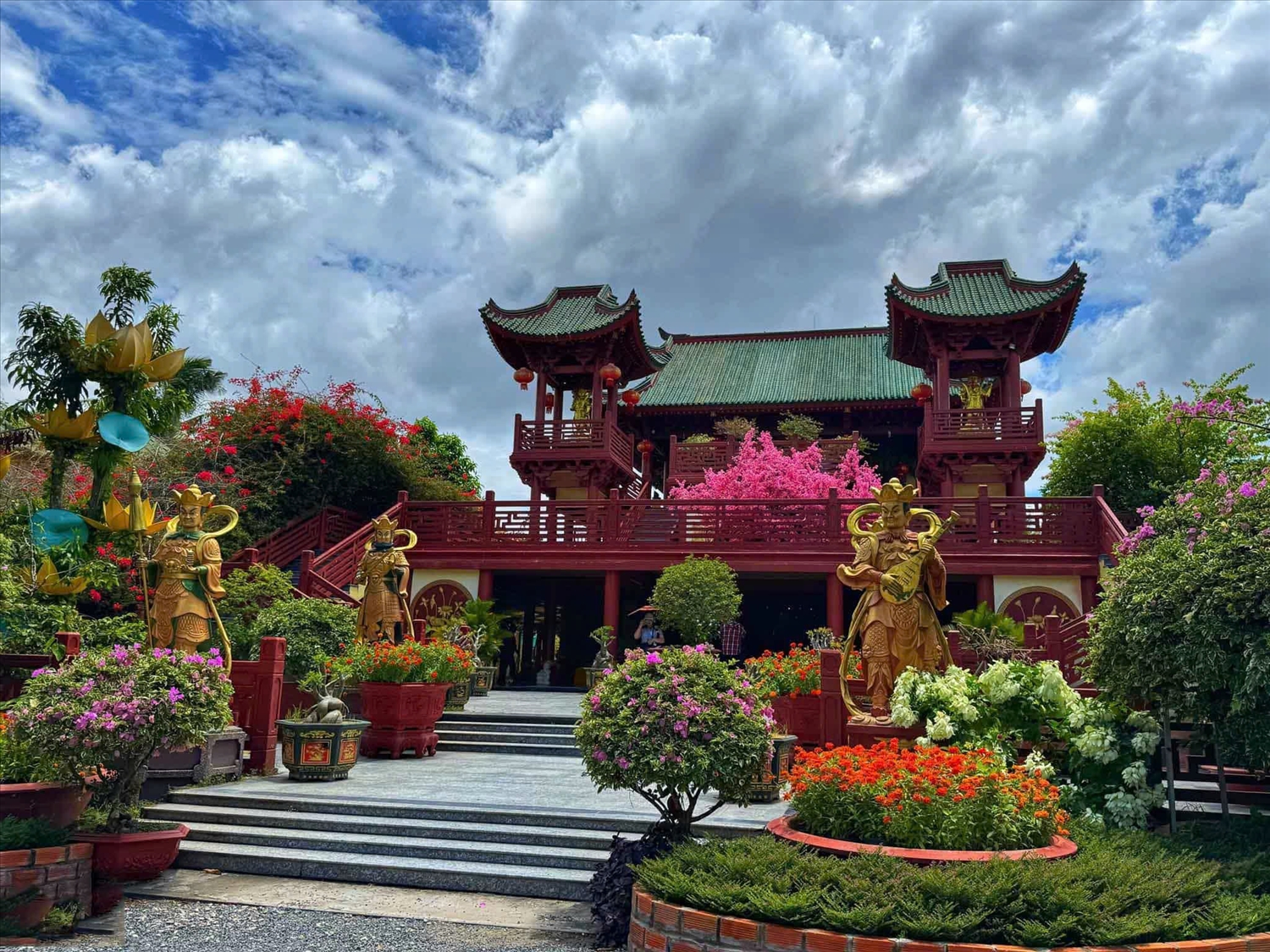 Lau Pagoda embodies a beauty that blends traditional Vietnamese architectural styles with those of the Phu Tang style (Japan)
The architecture of Lau Pagoda is a prime example of the harmonious blend of Eastern architecture in the heart of the Seven Mountains. Although inspired by Japan through its wide, curved roofs and small balconies, the pagoda still retains the essence of traditional Vietnamese architecture with its yin-yang tiled roofs and exquisite carvings. Within the temple grounds, the architectural beauty blends seamlessly with the expansive natural landscape, creating a “miniature park”.
The meticulously maintained ornamental gardens and lotus ponds, along with the suspension bridge spanning the fish pond, create numerous ideal spots for taking photos. This blend of ancient architecture and natural beauty has made Lau Pagoda a popular destination for young people who love taking photos in traditional Vietnamese dresses or costumes, or simply seeking a peaceful and tranquil place amidst a spiritual atmosphere.
Especially, within the pagoda grounds, there is a traditional ox cart characteristic of the Khmer people of the Seven Moutains region, along with a brightly painted coconut tree, showcasing the cultural blend of the ethnic groups in the area.
Lau Pagoda is not only a unique architectural masterpiece but also a deeply engaged Buddhist center, closely connected to the everyday lives of people in the Mekong Delta. Besides pilgrimage activities during major holidays such as the Lunar New Year, Vu Lan Festival or Buddha’s Birthday, Lau Pagoda also regularly organizes charitable activities and provides free vegetarian meals for Buddhists, tourists, and the poor in the area. This fully embodies the spirit of compassion and generosity of Buddhism, transforming the temple into a place for cultivating kindness and contributing to social welfare in the local area.
