Keywords: Japan; Life cycle rituals; Spiritual life.
1. Rituals during infancy and adolescence
The early years of a Japanese person’s life are marked by a series of important rituals, reflecting the family and community’s concern for the child’s development and well-being.
Naming ceremony
The naming ceremony is usually held by the family on the night of the seventh day after the child is born. The ceremony may be presided over by a midwife or a long-lived man living near the child’s family's residence (or the pagoda’s residence). Those invited included the maternal relatives, the midwife, close neighbors and a few neighborhood children.
The purpose of the ceremony is not only to name the child but also to inform the ancestors about the birth of the new member of the family and in order to pray for their blessings so that the child will be healthy and grow quickly. Naming ceremonies are usually quite elaborate, especially for the firstborn child. The solemnity was expressed through rituals and lavish meals featuring many dishes not typically served on ordinary days. In particular, red bean rice is indispensable; it's both for the family to enjoy and to give to guests as a token of gratitude for their help and as a gift to relatives on this occasion.
Ritual for praying for good luck
After a child reaches 30 (or 31) days, 51 days and 101 days of age, people continue to perform rituals to pray for good fortune, marking important milestones in the early stages of life. This ceremony is usually held within the family, with the participation of the child’s maternal grandparents.
On the day of the ceremony, children are dressed in new, beautiful clothes, called celebratory attire. The highlight of the ceremony is taking the child to a shrine (usually the shrine of the god who governs the Ujigami region) to pray for good fortune, hoping to receive blessings and good things from the gods. Afterward, the child was taken to the maternal grandparents’ house to receive celebratory clothes that had been prepared and sewn beforehand by the maternal side. Your grandparents might also give you some other things like a small blanket, socks and gloves. The ceremony continues at the child’s home with a rather lavish meal attended by close relatives. Everyone offered blessings and gifts to the child, thus concluding the ceremony marking this important milestone in their life.
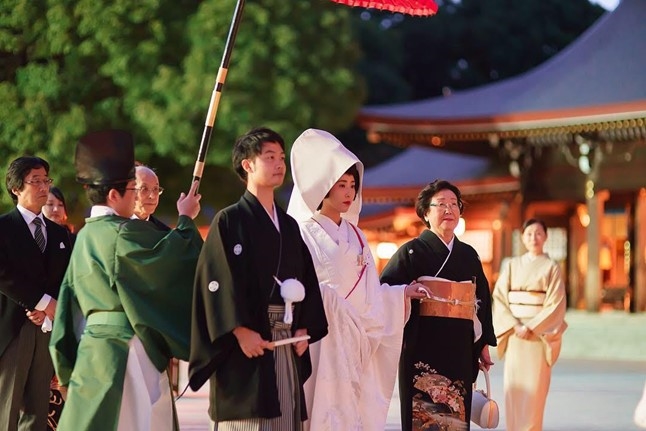 In Japan, marriage is an important ceremony in a person’s life
Shichigosan ritual
Shichigosan is a celebratory ceremony for children turning 3, 5, and 7 years old; the name of the ceremony itself reflects the significance of these ages. The Japanese believe odd numbers are lucky, so they perform rituals when girls turn 3 and 7 and boys turn 3 and 5, with the purpose to celebrate their growth and maturity in life. The Shichigosan ceremony is usually held at home with the participation of relatives, friends and close neighbors.
For three-year-old children, this is the first time they wear a kimono, usually made of cotton and tied with a belt. On this occasion, children wear new clothes, with girls often wearing outfits made of more diverse fabrics, patterns and colors. Generally, children of this age are dressed in their finest traditional clothing to go to the temple for ceremonies, hoping to pray for good health, good fortune and continued growth and maturity. The ritual of visiting the temple also aims to seek the blessings of the deity who governs that land, at the same time, they receive a baptismal ceremony from the temple’s abbot to ward off misfortune and bad omens in their life’s journey.
After the ceremony, children are given candy and cakes by their parents, packaged in bags decorated with images of cranes and turtles, but most importantly, they must have apricot candy. Chitose candies come in two colors, red and white, symbolizing good fortune and containing prayers for the health and growth of children. Cranes and turtles symbolize longevity, while Chitose means thousand years. Upon returning home, the ceremony continues with congratulations and gifts from everyone, wishing the child all the best.
2. Rituals marking the coming-of-age and integration into the community
Coming-of-age ceremony
The coming-of-age ceremony (or coming-of-age ritual) is a very important milestone in the life cycle, marking a major turning point from childhood to adulthood. The coming-of-age ceremony originates from an ancient ritual called Genpuku. Genpuku was a coming-of-age ceremony for males (of any age) from noble families and fighter level (samurai classes). By the 16th century, Genpuku had changed to Genpuku Shiki and became popular among all social classes. A common feature of the ceremony is the ritual of changing hairstyles and clothing, abandoning childhood names and adopting new adult names, thereby assuming the status and responsibilities of a mature young man. The ritual for women is simpler, as they only need to shed their children’s clothing and put on adult attire.
Genpuku Shiki was the precursor to Seijinshiki, with a fairly standardized ritual up to the Edo period (1603-1868), notable for the ceremony of determining a person’s adulthood by cutting off the hair at the front of their forehead. During the Modern period (1868-1945), the coming-of-age ceremony underwent changes in some regulations and the age was increased to 18-20 years old. In 1948, the law designated January 15th as a day to celebrate and encourage young people who had become adults and were ready to begin an independent life. In 2000, based on the “Happy Monday” system, the law stipulated that the coming-of-age ceremony would be held on the second Monday of January each year for those who had reached the age of 20.
In the past, coming-of-age ceremonies took place in temples, with participants wearing their most beautiful and elegant traditional attire. For women, the attire is furisode, a distinctive type of kimono with long sleeves. However, because traditional costumes are very expensive, participants often borrow or rent them instead of buying them separately. Nowadays, instead of wearing traditional formal attire, most men wear Western-style formal wear. While temples were once the primary venues for these ceremonies, today the locations for conducting them vary widely, including: theaters, parks, stadiums, city halls, districts, counties. The ceremony takes place in the morning, where officials give speeches, and then they present a gift (usually a small amount of money) to the adults. After the ceremony, participants gather in groups to celebrate with family and friends, commemorating this significant moment.
After the coming-of-age ceremony, men and women who reach the age of 20 are recognized as adults and have all the rights and obligations of a citizen as stipulated by law, at the same time being held fully responsible for their actions before the law and society.
Marriage ceremony
Marriage is a momentous event in a person’s life, marking a significant milestone and a grand celebration. Differences in Japanese marriage ceremonies are primarily due to the influence of local and regional customs and traditions rather than ethnic factors. Traditional marriage ceremonies largely adhere to Shintoism (Shinto rituals).
The dates for both the engagement ceremony and the wedding are carefully chosen to avoid days considered inauspicious, which could negatively impact the important event. The day before the official wedding ceremony, the bride must perform rituals such as visiting a temple for a ceremony and holding a farewell party with her parents and neighbors, because most of the wedding ceremonies take place at the groom’s house.
Before the wedding ceremony, both the newlyweds and a representative from the temple will perform a ritual signifying purity according to Shinto beliefs. During the vow ceremony, the bride and groom exchange cups of wine as part of the Sansankudo ritual. San represents the number 3, Ku represents the number 9, and Do represents the end. The bride and groom sip sake three times from a set of three cups, from smallest to largest. Sansankudo implies that the first three sips represent the bride, groom and their parents; the next three sips symbolize drinking away hatred and deceit. Ku is considered a lucky number in Japanese culture. Because it marks the end with the harmony of two human souls. Next comes the introduction of the two families. After the important ceremony for the newlyweds is over, the wedding reception begins. According to tradition, a few days after the wedding, the bride returns to her parents' home, bringing gifts for relatives and friends, at the same time goes around greeting and thanking the neighbors.
In Japan, there are two main forms of marriage: arranged marriage and marriage based on mutual love. Besides traditional Shinto marriage ceremonies, there are also modern forms of marriage following Christian, Buddhist and other common rituals. Recently, Western-style wedding ceremonies have become quite popular, with weddings often held in churches, even for those who are not religious or in hotels, restaurants, even in special wedding rooms. At these locations, many people perform rituals according to Shinto rites.
The engagement ceremony has also changed. In fact, this ritual helps to formalize the relationship between the two families, with both families meeting at a banquet, exchanging gifts and preparing for the upcoming wedding. However, nowadays, this ceremony seems to have been omitted; instead, the man gives the woman an engagement ring and receives a gift in return. It is noteworthy that a service for renting people to attend weddings has emerged and is on the rise. Thus, the attendees at traditional marriage ceremonies in the past were often replaced by guests posing as friends, family members and colleagues.
3. Funeral and coming-of-age rituals
Funeral rites
In Japan, funeral rites are considered very important in a person’s life. The sequence of funeral ceremonies must comply with legal regulations and customs. Most funerals in Japan are conducted according to Buddhist rites unless there are specific religious requirements for the deceased. After washing the deceased, they are wrapped in white cotton cloth and dressed in a white kimono, with the left side facing up first. The shirt was folded and tied to the left, avoiding the use of scissors and mainly using glue to secure it. The deceased’s clothing was entirely white, including the belt, hat, gloves and socks. During funeral ceremonies, attendees and mourners typically wear white mourning attire. Those who are close to the deceased must wear white mourning attire from their hat to their belt and socks.
When considering the changing elements in funeral rituals, it can be observed that the fundamental nature remains consistently maintained, while minor changes are made to adapt to the trends of the times. However, a major change is that the attire of relatives and mourners has shifted from white to black, becoming the current custom. In Japan, cremation rituals have largely replaced burial rituals. Along with that, the cost of funeral services, even hiring people to attend funerals is rising rapidly. It is precisely these changes in funeral rituals that have created a financial burden for many families today.
From the time of burial until the seventh day, family members must perform rituals of lighting incense and candles at the grave of the deceased. The 35th day after the funeral is called the anniversary of the death, and family members perform a bathing ritual with the belief that it washes away bad luck. On the 49th day, the family of the deceased performs the Kiake ceremony, signifying the end of the mourning period and the associated taboos. The most important offering in the Kiake ceremony is the ox tongue cake, made from rice flour, consisting of 49 pieces arranged in a bamboo basket to be brought to the pagoda for the ceremony.
Japanese funeral rituals not only reflect a sense of community but also encompass the empathy and shared grief of everyone in the face of loss. Furthermore, it expresses the wish for the deceased to attain liberation and to bless the living with peace and good fortune.
The ceremony of becoming an elder
The coming-of-age ceremony (Kanreki) is very important in everyone’s life when they reach the age of 60. When a person reaches old age, family and clan members will organize a celebration, which mainly takes place at home.
The elderly person, dressed in formal attire, usually traditional ceremonial robes, in addition to a ponshin, a sleeveless garment, sits on a cotton cushion in front of an altar or the most sacred place in the house. Family members, relatives, and guests took turns presenting gifts and offering congratulations. Following this ceremony was a celebratory feast with lavish dishes.
The attire for the coming-of-age ceremony is predominantly red. According to ancient beliefs, the color red represents continuous movement and vibrant, resilient energy. Furthermore, it also encompasses the experience and perseverance of each individual throughout their life. The color red is understood to represent old age and reaching old age, but it also symbolizes a wish for the good things of the past to continue, with enduring peace and tranquility in the remainder of life.
The ritual of honoring the elderly has not only not disappeared but has also developed into a new form to express respect for the elderly through the annual Elderly Respect Day. During the period from 1966 to 2002, Respect for the Aged Day became a national holiday, celebrated annually on September 15th. Since 2003, Respect for the aged day has been observed on the third Monday of September. On this day, people take time off work and authorities at all levels organize various activities for the elderly, such as giving them commemorative gifts. Families with elderly members still perform the longevity celebration ceremony, albeit with some changes in age (usually from 70 years old and above) and slightly different methods compared to the traditional ceremony, but the core meaning remains largely unchanged.
4. Conclusion
The life cycle rituals of the Japanese people contain many unique traditional cultural elements that have been preserved to this day. These rituals reveal the Japanese people’s views on humanity, the world around them, as well as their religion, beliefs, customs and traditions. These factors have played a crucial role in unifying community consciousness throughout history to the present day. The true essence of the ritual is preserved, maintained and its positive aspects are promoted. Although some challenges remain in the context of globalization, life cycle rituals have long been an indispensable element of community life and are always closely linked to the cultural characteristics of this nation. Therefore, the issue of preserving Japanese cultural identity is affirmed to be linked to maintaining life cycle rituals, because if these rituals fade away, the traditional aspects of the culture, as well as the beauty and identity of the nation and people that have existed since ancient times, will be lost.
References
1. International Society for Educational Information (ISEI) (2003), Understanding Japan, Culture and Information Publishing House, Hanoi.
2. Pham Thu Giang (2012), An Overview of Japanese Culture. Social Sciences Publishing House, Hanoi.
3. Mai Chi (Editor, 2004), Japanese Culture - Perspectives, Hanoi National University Publishing House, Hanoi.
4. Vu Thi Thanh Huong (2011), Japanese Culture, Vietnam Education Publishing House, Hanoi.
5. Nguyen Gia Khiem (2015), Japanese Religion, National University of Hanoi Publishing House, Hanoi.
