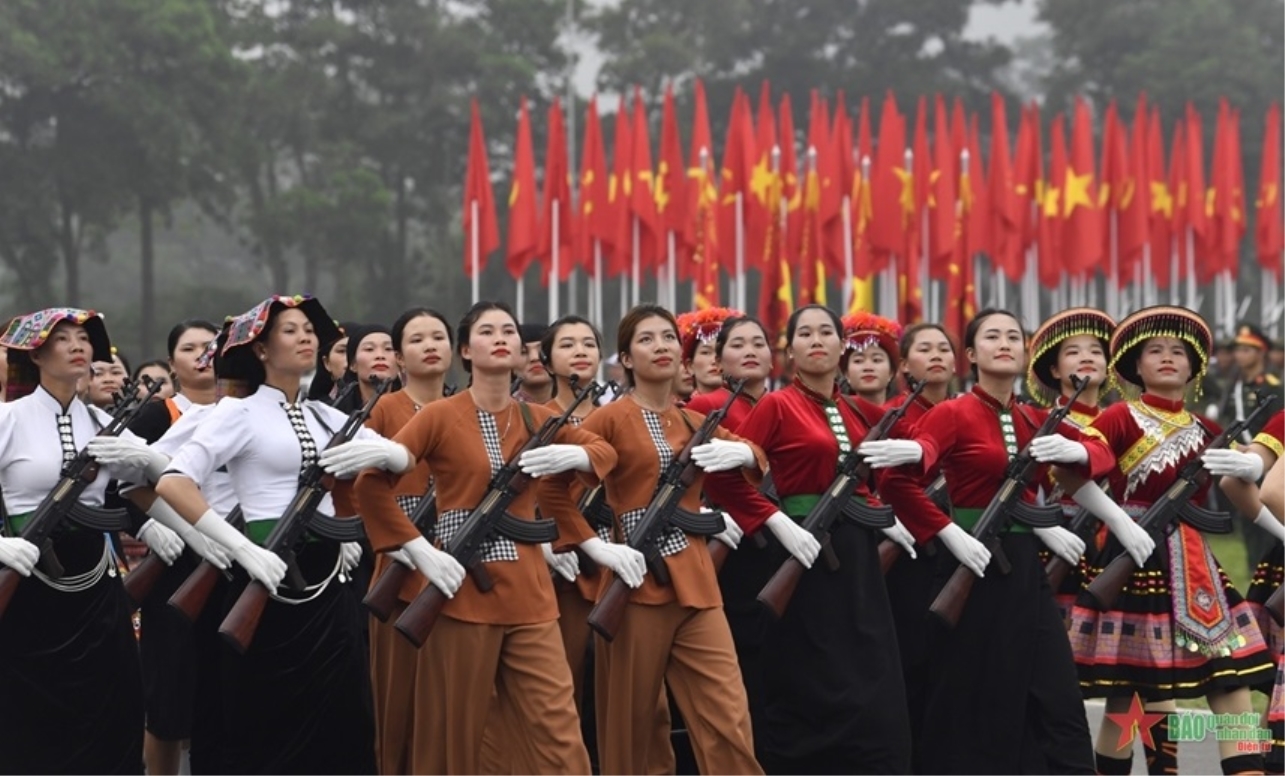
 National unity is the source of Vietnam’s strength
Keywords: National unity; Source of strength; Vietnam.
1. Introduction
Throughout the history of nation-building and national defense of the Vietnamese people, unity has always been affirmed as a core value, an intrinsic driving force that creates strength to overcome all challenges. From the traditions of village communities to the spirit of solidarity among 54 ethnic groups, the unity of will and action has become the foundation ensuring the nation's longevity. In the current context, as Vietnam enters a new stage of development requiring both political stability and deep integration into international life, the issue of consolidating and promoting the strength of national unity becomes even more urgent. Global changes, non-traditional security challenges, social polarization and the influence of the market economy necessitate a re-evaluation of the elements that constitute solidarity and the proposal of adaptive solutions. Therefore, studying the content of “National Unity - The Source of Vietnam’s Strength” not only has theoretical significance but also contains profound practical value for the sustainable development of the country in the new era.
2. Research results
2.1. The theoretical basis and ideological foundation of national unity
National unity is a strategic concept in Vietnamese socio-political thinking, formed from the crystallization of historical traditions, cultural philosophy and revolutionary scientific theory. Firstly, from a cultural and historical perspective, the spirit of community cohesion has been nurtured since the founding of the nation with the mindset of “mutual support and solidarity” and “mutual assistance and compassion”. Traditional social structures based on village and national communities fostered a shared sense of national destiny, viewing cohesion among population groups as vital for coping with natural disasters, foreign invasions and maintaining cultural identity. This tradition is the primary basis for shaping the ideology of national unity. From a modern theoretical perspective, Ho Chi Minh’s thought plays a fundamental guiding role in the concept of national unity. With the viewpoint of “Unity, unity, great unity - Success, success, great success” and viewing great unity not just as a political slogan but as a long-term strategy, ensuring the mobilization of all forces, regardless of class, religion, ethnicity or social past. According to President Ho Chi Minh, the goal of unity is to strive for national independence, the freedom of the people, and the happiness of the entire society; therefore, unity must be placed on the common interests of the nation, taking tolerance and harmony as the guiding principle. The principle of “the people are the foundation” has become the overarching ideological axis, affirming the people's role as the main actors in all revolutionary endeavors. In terms of political theory and law, the Communist Party of Vietnam’s guidelines have developed the ideology of national unity into a system of viewpoints that are both scientific and practical. National unity is a long-term strategy and a consistent policy of the Party and the State, institutionalized in the Constitution and legal documents to ensure the equal rights of all ethnic groups, the right to freedom of religion and the right of the people to participate in social management. The theory of solidarity is also linked to the model of the Vietnam Fatherland Front - a broad political alliance organization that plays a core role in consolidating social consensus and promoting community strength.
Furthermore, in the context of globalization and international integration, the theoretical basis of national unity has expanded to include modern values such as social cohesion, sustainable development, human security and national sovereignty. The combination of traditional national cohesion with modern governance standards creates a comprehensive theoretical foundation, helping to strengthen internal power and enhance the capacity to respond to new challenges. Thus, national unity is not only a historical legacy but also a dynamic system of theoretical and ideological values, suitable for the requirements of national development in the new period.
2.2. National unity in Vietnamese history
National unity is a consistent law of development throughout Vietnamese history, affirmed through the momentous turning points in the process of nation-building and national defense. From the very beginning, when the Lac Viet and Au Viet communities merged to form the Van Lang - Au Lac State, the spirit of solidarity among the tribes laid the foundation for the nascent national consciousness. During the feudal dynasties, from the Ly-Tran to the early Le dynasties, the close bond between the court and the people, along with the spirit of “unity from top to bottom”, created a unified military-civilian strength, helping the nation defeat many major invasions, most notably the three resistance wars against the Yuan-Mongol invaders. These victories were not only military achievements, but also vivid manifestations of the great unity among different social classes, religions, and ethnic groups within the national community. In the modern era, this spirit of unity continued to be elevated to an ideology of national independence linked to the strength of the people. During the August Revolution of 1945, the unity among workers, peasants, intellectuals, religions, and patriotic forces created a historic transformation, ushering in an era of national independence, freedom for the people, and happiness for the nation. During the two wars of resistance against French colonialism and American imperialism, national unity became the fundamental strategy, where every citizen was a soldier and every village was a fortress. The strength of the “people’s support” combined with the armed forces and the vast rear base, played a decisive role in the victory of the national liberation and reunification of the country.
In the era of reform and international integration, national unity continues to be a key factor in establishing political and social stability, mobilizing resources for development and expanding the nation’s position in the international arena. The consensus between the State, various social strata and the Vietnamese community abroad promotes the transition to a socialist-oriented market economy, while ensuring a balance between growth and social progress. Achievements in poverty reduction, education development, science and technology, and the capacity to respond to global challenges all stem from national cohesion. From a historical perspective, national unity is not only a traditional value but also a continuous red thread ensuring the survival of the Vietnamese nation. It is the foundation for the country’s continued sustainable development, adapting to the changes of the times and firmly protecting its independence and sovereignty in the context of globalization.
2.3. The role and significance of national unity in the current period
In the context of the 21st century, with its rapid, multifaceted and unpredictable changes, national unity continues to affirm its strategic role in Vietnam’s sustainable development. Firstly, from a socio-political perspective, unity is a key factor in ensuring institutional stability and strengthening the people’s trust in the Party and State’s policies. The unity of will and social consensus create favorable conditions for implementing major policies such as industrialization, modernization, the development of the digital economy and the building of a rule-of-law state. Political stability is not only a prerequisite for development but also a “soft shield” that helps the country withstand global shocks. Economically, national unity contributes to effectively mobilizing domestic and foreign resources, fostering cooperation, innovation and entrepreneurship. The coordination between the State, businesses, intellectuals, farmers, and workers helps to create synergistic strength, providing impetus for green growth, strategic infrastructure development and enhanced national competitiveness. In the context of deep integration, solidarity is also the foundation for leveraging the strength of the Vietnamese community abroad, connecting knowledge and capital to serve national development. In terms of culture and society, solidarity is a condition to protect and promote national cultural identity and strengthen community cohesion in a diverse and volatile social environment. As urbanization, labor mobility and the influence of digital media increase division, solidarity helps strengthen bonds between social groups, minimizing conflicts and increasing adaptability to change. At the same time, solidarity is also the foundation for achieving social justice, caring for vulnerable groups, and developing human beings comprehensively.
In terms of national defense and security, national unity creates a solid “people’s support base, enhancing the ability to protect national independence, sovereignty and interests in the context of increasingly fierce strategic competition among major powers. Combining national strength with the strength of the times, along with consensus in addressing issues of maritime territories, non-traditional security, and cyberspace sovereignty, further demonstrates the vital importance of national unity. Thus, in the new era, national unity is not only a traditional value but also a decisive driving force helping Vietnam overcome challenges, seize opportunities and affirm its position in the region and the world.
2.4. Challenges facing national unity
In the context of increasing innovation and international integration, national unity faces many complex challenges, requiring a thorough understanding in order to find appropriate solutions.
Firstly, increased social stratification caused by the market economy and regional development disparities create a risk of declining consensus, especially in ethnic minority areas and remote regions. Differences in access to resources, public services, and information can lead to feelings of envy and reduce social cohesion.
Secondly, the impact of globalization and the digital media environment poses new challenges to ideological orientation and unity of understanding. The rapid spread of harmful information and distorted narratives easily erodes trust, incites conflict and weakens social defense capabilities.
Thirdly, labor migration, urbanization, and individualized lifestyles are transforming traditional community structures, weakening existing social bonds. A segment of young people distancing themselves from national cultural and historical values also impacts the foundation of solidarity.
Fourthly, non-traditional security challenges such as climate change, natural disasters, epidemics and strategic competition among major powers demand a high degree of solidarity. Without unity, it is difficult for society to gather strength to respond effectively.
In general, the great national unity bloc is facing multi-dimensional changes, requiring the process of consolidating and promoting the strength of solidarity to be comprehensive, flexible and sustainable.
2.5. Orientation and solutions to strengthen national unity
Strengthening national unity in the current period requires a comprehensive approach, harmoniously combining ideological orientation, institutions, and social solutions. Firstly, it is necessary to continue consolidating the ideological foundation of national unity by raising awareness of the role of unity in national development. Political and ideological education, historical education, and the cultivation of traditional cultural values must be widely implemented, especially among young people, in order to strengthen social consensus and consolidate faith in the country’s development path.
From an institutional perspective, it is necessary to improve the policy system to ensure social justice, narrow regional disparities, and enhance the quality of life for the people. Promoting socio-economic development in ethnic minority and mountainous areas, along with improving the social security system and public services, will contribute to strengthening the bonds between social groups. In addition, it is necessary to improve the effectiveness of the Fatherland Front and other political and social organizations to promote their role as a bridge between the Party, the State and the people, fostering a spirit of dialogue, listening and social criticism.
In the digital media environment, it is necessary to implement measures to strengthen community communication capacity, enhancing the ability to selectively receive information and effectively combat distorted and divisive narratives. Promoting the strength of national unity also includes encouraging the participation of intellectuals, entrepreneurs and the Vietnamese community abroad through mechanisms that attract resources, knowledge and innovation.
Therefore, solutions need to be implemented in a coordinated, flexible, and sustainable manner, aiming to build a harmonious and unified society in which all members have the opportunity to contribute to the long-term development of the country.
3. Discussion
An analysis of the role of national unity reveals that it is not only a traditional value but also a core component of national governance capacity in the modern context. However, to transform unity from a symbolic slogan into a real strength, special attention must be paid to the operational factors of contemporary society. On the one hand, achievements in political stability, economic growth, and international integration affirm the strength of national unity; on the other hand, challenges such as social polarization, information competition and changing values in the digital age necessitate innovation in methods of mobilizing forces. This requires a combination of institutional solutions, social media, civic education, and mechanisms for citizen participation in government governance. Therefore, the discussion emphasized that solidarity is only sustainable when it is linked to fairness, transparency and social trust.
4. Conclusion
National solidarity, as a historical and strategic value, continues to play a key role in Vietnam's development in the new context. Theoretical and practical analysis shows that the strength of solidarity not only originates from the tradition of community cohesion but is also reinforced by institutions, social consensus and the ability to adapt to global challenges. Promoting national unity requires a flexible combination of building trust, ensuring social justice and creating conditions for all segments of the population to participate in the national development process. This affirms that unity remains the source of strength and a solid foundation for Vietnam to move towards sustainable development and integration.
* Nha Trang Central Ethnic Minority Preparatory University
** Journal of Ethnic and Religious research
References
1. Nguyen Quang Dinh. (2023). Preserving and promoting the role of the great national unity bloc, towards the goal of a prosperous people, a strong nation, democracy, fairness and civilization in the spirit of the 13th Party Congress, https://www.tapchicongsan.org.vn/web/guest/chinh-tri-xay-dung-dang/-/2018/863803/gin-giu%2C-phat-huy-vai-tro-khoi-dai-doan-ket-toan-dan-toc%2C-huong-toi-muc-tieu-dan-giau%2C-nuoc-manh%2C-dan-chu%2C-cong-bang%2C-van-minh-theo-tinh-than-dai-hoi-xiii-cua-dang.aspx#
2. Ho Chi Minh (2011). Complete Works, Volume 5, 9. Hanoi: Publishing House. National Politics Facts.
3. General Secretary To Lam (2025), Promoting the strength of national unity to develop the country, https://www.tapchicongsan.org.vn/media-story/-/asset_publisher/V8hhp4dK31Gf/content/phat-huy-suc-manh-dai-doan-ket-toan-dan-toc-de-phat-trien-dat-nuoc
4. Hau A Lenh. (2024). Implementing ethnic policies contributes to consolidating and strengthening national unity, https://mattran.org.vn/dan-toc-ton-giao/thuc-hien-chinh-sach-dan-toc-gop-phan-cung-co-tang-cuong-khoi-dai-doan-ket-dan-toc-56114.html
5. Resolution No. 43-NQ/TW dated November 24th, 2023, of the Eighth Conference of the Central Committee of the 13th Party Congress on continuing to promote the tradition and strength of national unity, building our country to become increasingly prosperous and happy.
6. Nguyen Phu Trong. (2023). Promoting the tradition of national unity, building our country to be increasingly prosperous, civilized and happy. Hanoi: National Political Publishing House.
7. Nguyen The Trung. (2025). Implementing national unity in the new era according to Ho Chi Minh’s thought, https://hochiminh.vn/tu-tuong-dao-duc-ho-chi-minh/nghien-cuu-tu-tuong-dao-duc-ho-chi-minh/thuc-hien-dai-doan-ket-toan-dan-toc-trong-thoi-ky-moi-theo-tu-tuong-ho-chi-minh-12770
