In this ritual of the Thai people in Mai Chau (Phu Tho province), the offering tray absolutely does not include any food from livestock or poultry. This custom originates from an oral tradition imbued with humanistic values.
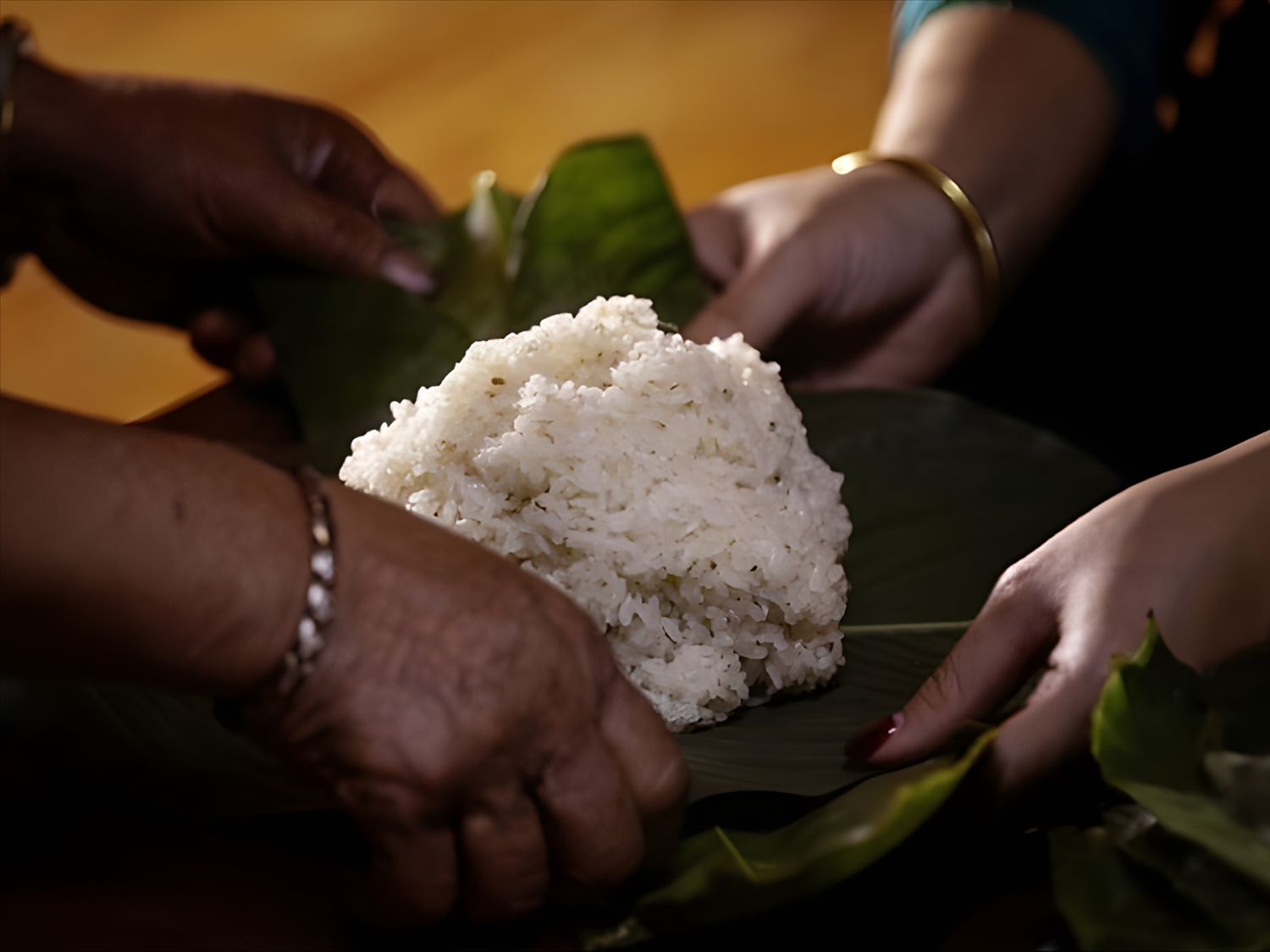 After cooking, the sticky rice is fanned to cool and then wrapped into small, square packages in banana leaves to offer to ancestors
The story goes that in the days when humans and animals could still speak to each other, a poor family whose father had recently passed away wanted to prepare a new meal to offer to their ancestors, but all they had left in the house was a mother hen raising her chicks. The night before the ceremony, the couple discussed slaughtering a chicken for the offering. The mother hen, overhearing their conversation, choked back tears and instructed her chicks to cherish each other, for one day she would no longer be there. The homeowner overheard the scene, was moved by the sacred maternal love of the animals and decided to keep the flock of chickens to raise them. The husband then took his net to the stream to catch fish for the ceremony. From then on, the Thai people developed the custom of offering stream fish as part of the new rice offering. Over time, the offering of new rice transcended the meaning of an agricultural ritual, becoming a cultural symbol of respect for life and compassion, which the Thai people have steadfastly preserved.
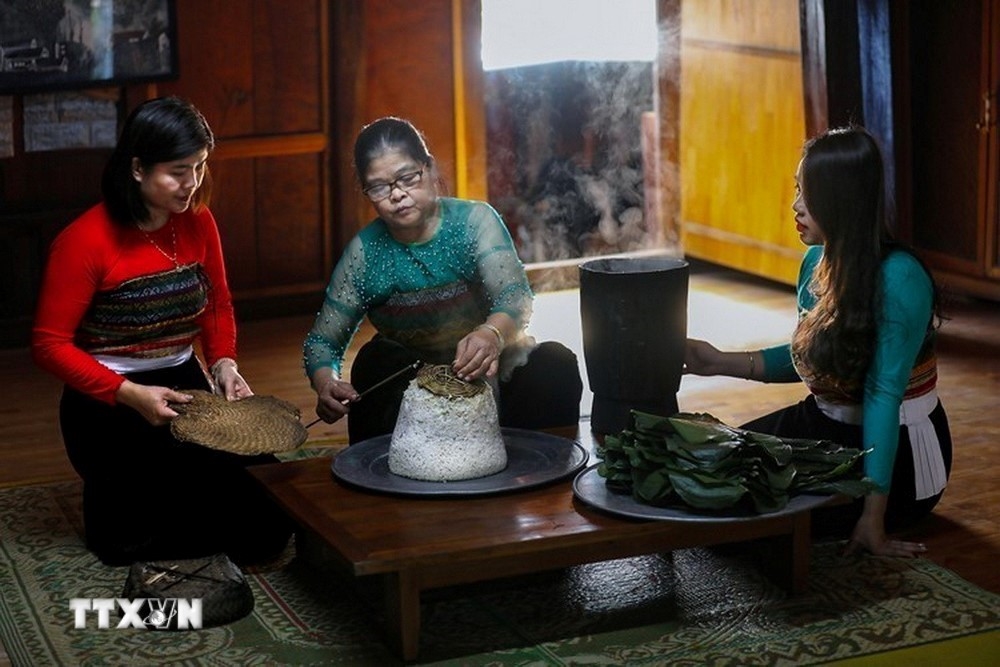 Preparing items to offer to the ancestors
Ms. Loc Thi Nha from Mai Chau commune shared that fish is traditionally prepared in two ways: grilled and steamed. Grilled fish is marinated with crushed ginger leaves, lemongrass, fresh chili peppers, fish sauce and salt. Steamed fish, wrapped in banana leaves and tied with bamboo string, to be steamed for about an hour and retaining the original flavor of the mountains and forests, fragrant and rustic, just like the lifestyle of the Thai people. Fish and sticky rice are two indispensable dishes in the offering tray.
After preparing the offerings, the family proceeds to set up the altar according to the ritual order. The homeowner is the one who directly performs the salt-sprinkling ritual. He (or she) holds a bowl of white salt and slowly sprinkles small pinches onto the offering trays, doing so with a solemn demeanor. This action is not meant to season the offerings, but rather has symbolic meaning, recalling a difficult period when there wasn’t enough salt to share, so it was symbolically sprinkled on the offering trays.
After the salt-sprinkling ritual, the offerings are neatly placed in front of the ancestral altar. The shaman recites a prayer that recounts the journey of human survival from the early days of land reclamation, building embankments, channeling water, establishing fields and farms. The prayer emphasizes the hard work of human labor, considering rice grains as the result of sweat, toil and the protection of ancestors. The prayer also serves as an invitation to the ancestors to witness and share in the blessings with their descendants, in order to protect the family’s health, ensure prosperous business and bring bountiful harvests; and to grant safe and smooth journeys to the forest, streams and for productive work in the new year.
During the harvest festival, Thai families typically invite “four corners of the house, three corners of the kitchen”, meaning close relatives, neighbors and friends, to attend the ceremony. Guests may not bring money or gifts, but the most precious thing is their good wishes and their joyful presence is a sign of a lucky new harvest for the host.
After the ceremony, the host invites guests to drink rice wine, enjoy stream fish and sticky rice and participate in the traditional Xoe dance and bamboo pole dance in the courtyard. The lively sounds of the circle dance and the flickering firelight in front of the stilt houses create a characteristic atmosphere of togetherness within the Thai community.
According to Ms. Nguyen Thi Quynh Lan, Head of the Culture and Social Affairs Department of Mai Chau commune, the new rice harvest ceremony embodies the humanistic philosophy of life, the spirit of community solidarity, love of nature and gratitude to ancestors of the Thai people; it is an opportunity for the older generation to educate their children and grandchildren to appreciate rice, understand the value of labor and be connected to the land and the community. Therefore, whether working far from home or busy making a living, Thai descendants always try to return home to reunite with their families on this sacred holiday./.
