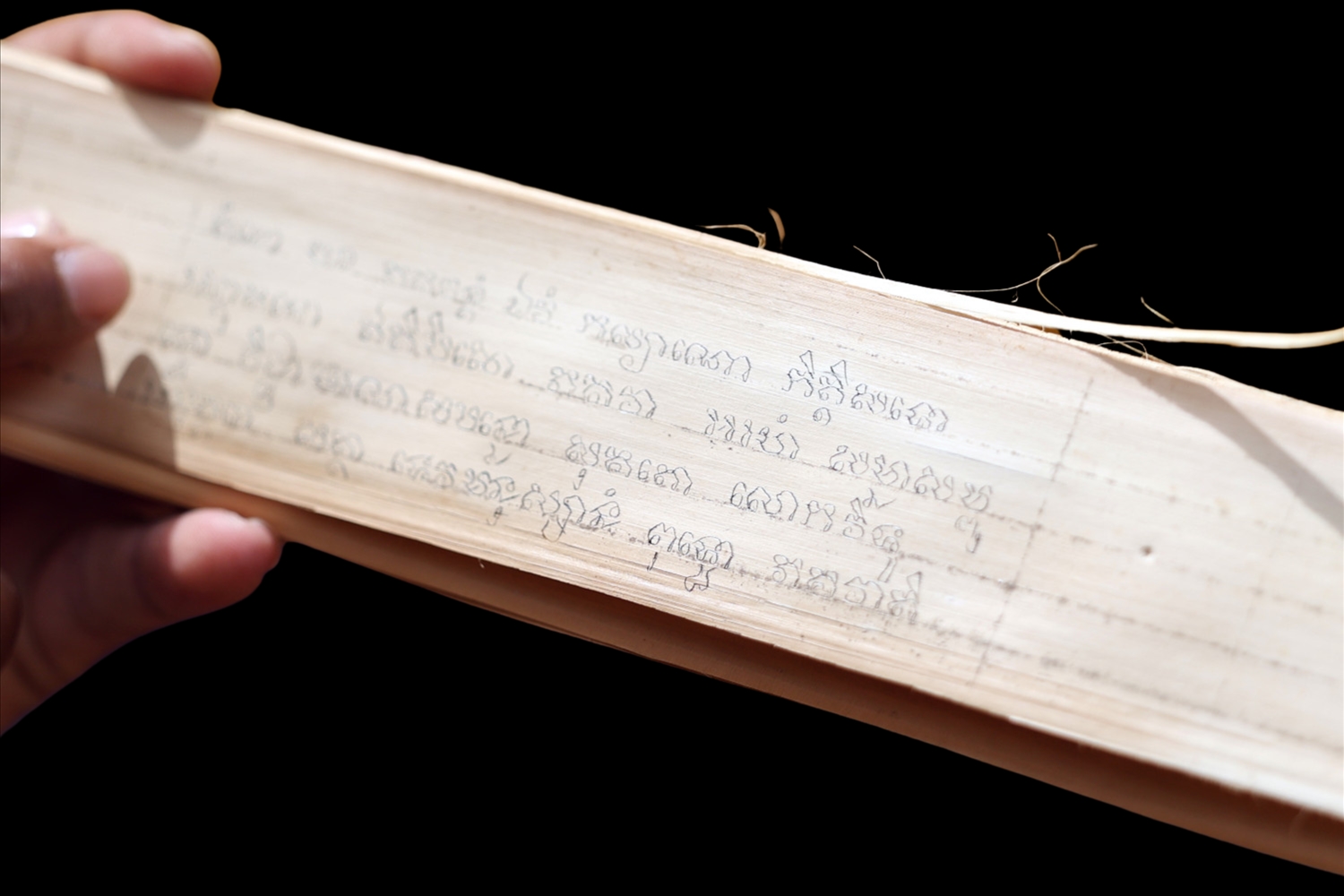
 The content of the palm-leaf scriptures encompasses philosophies regarding cultural and spiritual life, as well as Buddhist ethical standards
. They represent a unique cultural heritage that showcases the ingenuity, creativity and knowledge of the Khmer people. Palm-leaf scriptures are being preserved and their value promoted, particularly in the fields of education and tourism. Centuries-old sets of these scriptures, created by the Khmer people of Southern Vietnam, are currently housed in pagodas across the Seven Mountains region of An Giang Province, where they are cherished as national treasures.
With intellectual values as well as unique creativity preserved by the Khmer people for many generations, “Knowledge and techniques of writing on leaves of the Khmer people” are recognized by the Ministry of Culture, Sports and Tourism as an intangible cultural heritage.
The Khmer people possess their own spoken and written language, with a system of scriptures based on Pali. The integration of Pali into the Khmer language has further enriched and diversified it. About their writing system, the Khmer people recorded information on stone stelae and palm-leaf manuscripts (satra) and later on paper. These records reflect the concepts, thoughts and experiences concerning the material and spiritual lives of generations of Khmer people.
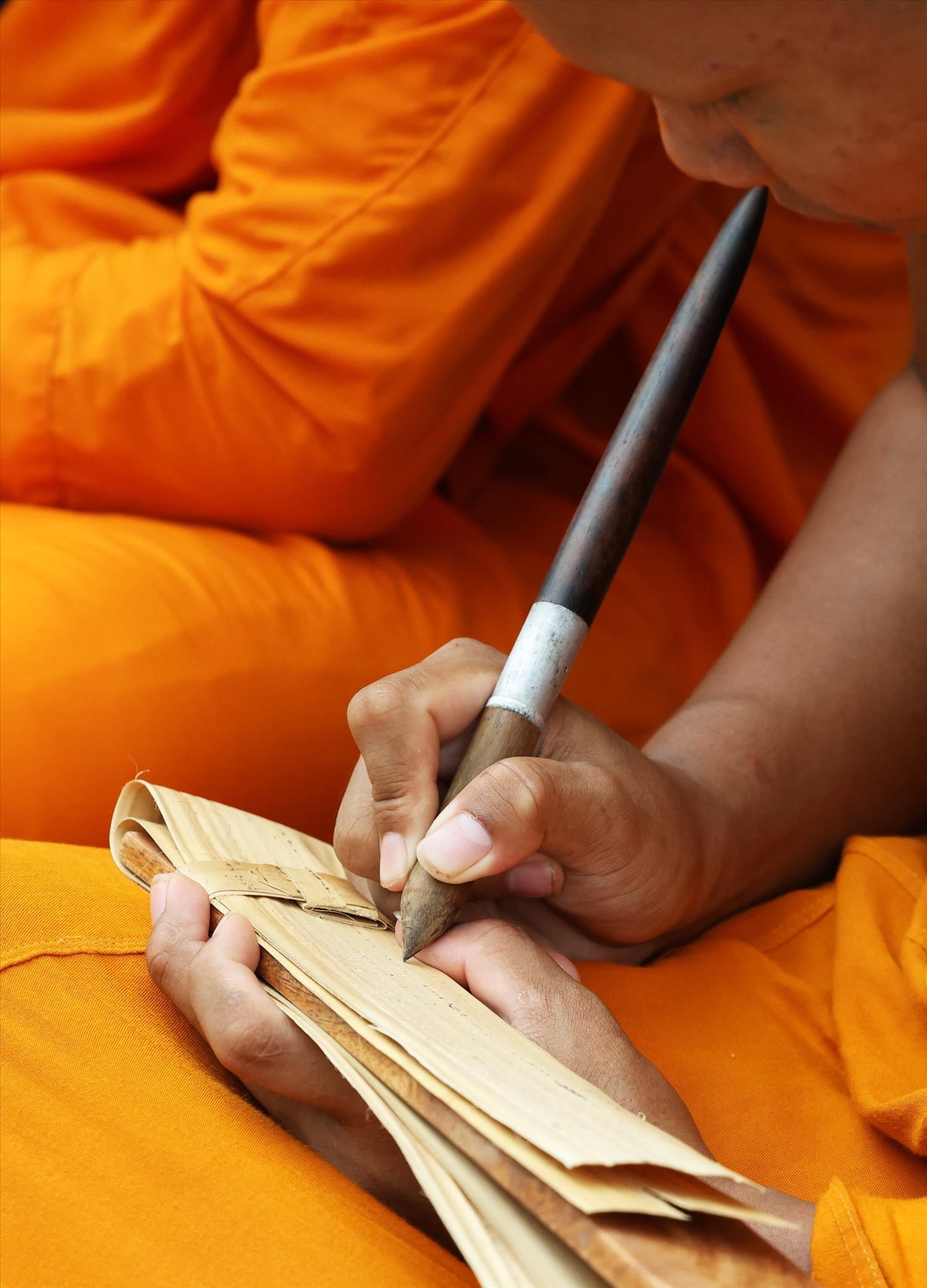 The monks are writing on palm-leaf manuscripts
The palm-leaf manuscripts is part of the popular palm-leaf scriptures system of Theravada Buddhism in Southeast Asia and South Asia. More than 1,000 years ago, the La Lettuce Sutras, the first written heritage of Theravada Buddhism following lineages from India and Sri Lanka, made a historic migration throughout Southeast Asia. Inheriting the technique of inscribing scriptures onto palm leaves, the Khmer community in the border regions of An Giang province has preserved, passed down and promoted this unique art form across generations. For the Khmer people, this is not merely a craft technique but also holds significant importance in their religious and spiritual lives.
In Southern Vietnam, the palm-leaf scripture tradition emerged around the 19th century. The knowledge and techniques regarding palm-leaf writing possessed by the Khmer people of An Giang province represent a form of folk knowledge that embodies an invaluable treasure trove of human wisdom, encompassing philosophy, architecture, astronomy... Palm-leaf scriptures document every aspect of the social, cultural and religious life of the Khmer people; as rare Theravada Buddhist texts, they serve as a testament to the formative and developmental era of this genre of Buddhist scripture. These manuscripts are utilized by monks for research, teaching and study.
The content of the palm-leaf scriptures embodies the Buddha’s teachings, as well as the folk rhymes, folktales and traditional games integral to Khmer culture, all of which convey profound life philosophies. These scriptures capture the simple yet beautiful spirit of the Khmer people across generations, particularly reflecting how the Buddha’s teachings have become deeply ingrained in their daily lives.
As they primarily expound the Buddha's teachings and encourage people to lead virtuous lives, these palm-leaf scriptures hold unique cultural value; they are unrolled for recitation only on significant occasions for the Khmer community, such as Vesak, the Flower Offering Ceremony, the Robe Offering Ceremony, the Moon Worship Festival and ancestral worship ceremonies. Palm-leaf manuscripts generally fall into four categories: Satra Chobap, recording customary laws and moral teachings; Satra Labok, containing fables and folklore; Satra Tamnong, comprising literary works, particularly renowned ones; and Satra Tes, recording Buddhist scriptures and legends about the Buddha.
It can be said that the palm-leaf scriptures embody the religious culture of the Khmer people in An Giang province. These treasures bequeathed by past generations showcase the exceptional technical, aesthetic, and artistic skills of Khmer artisans, evident in everything from the selection and drying of the leaves to the processing and application of black pigment to make the characters stand out. These intangible cultural values hold significant importance in the spiritual, faith-based and religious lives of the Khmer people, making the palm-leaf scriptures the first written heritage of Theravada Buddhism in Vietnam./.
