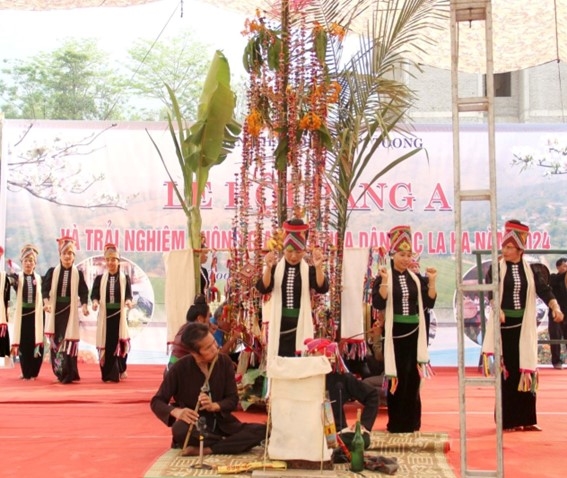
 The Pang A Festival is rich in the cultural identity of the La Ha ethnic group
Pang A - the sacred meeting point of the village
In the life of the La Ha people, the Pang A festival is considered “the great festival of the village”. This is an occasion for the community to give thanks to their ancestors and deities for protecting the village, ensuring favorable weather and bountiful harvests, at the same time in order to pray for a peaceful and prosperous new year. Typically, the festival takes place after the harvest, when people have time to rest and prepare offerings carefully.
The Pang A festival is usually held at the head of the clan’s house or in the center of the village, which is considered the sacred hub that unites all members. What is special about the Pang A ceremony is that it is not only a religious ritual but also a symbol of unity. Each family and clan contributed labor and resources, working together to erect the ceremonial pole, prepare the ceremonial buffalo, rice wine, sticky rice, pork... products from the daily agricultural production of the La Ha people.
The origins of the Pang A ceremony are closely linked to the La Ha people’s belief in the spiritual world. They believe that all things have souls; humans, plants, mountains and forests are all connected to and governed by spirits. herefore, the annual Pang A festival is held to express gratitude to guardian deities such as the mountain god, water god, rice god and village god…
The most important ritual of the Pang A ceremony is the offering led by the shaman, with betel nuts, wine, rice, sticky rice and buffalo and pork meat arranged respectfully on the altar. With the rhythmic sounds of flutes and drums, the shaman recites prayers in the ancient La Ha language, asking the spirits for blessings of health, bountiful harvests and peace for the village. Following the ceremonial part is the festive part, with dances mimicking activities such as hunting, rice planting and rice pounding... both recreating daily labor and conveying the philosophy of harmony with nature.
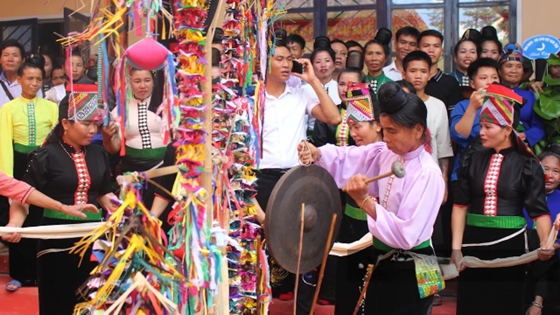 The Xang Bosk tree is indispensable in the Pang A festival
Pang A in the era of integration
Mr. Quang Van Pan (Tat Uot village, Muong Khieng commune) shared: Pang A is a traditional festival of the La Ha people that has been preserved from this generation to the other generation. This is also an occasion for the villagers to give thanks to the spirits. The festival is especially a place for people from all over the village to gather, exchange cultural and artistic ideas; share experiences in farming and animal husbandry; and discuss business development and how to overcome poverty.
Many La Ha villages now form performing arts groups, including drum and flute ensembles and participate in performances at the National Unity Day and cultural festivals at the commune and provincial levels. As a result, Pang A has gradually become a source of pride for young people, no longer an unfamiliar ritual or something only for the elderly.
Ms. Lo Thi Luyen (Tat Uot village, Muong Khieng commune) said: Previously, only adults participated in the ritual, but now young people are learning to dance and learn the La Ha language to sing in Pang A. Children are excited to wear beautiful costumes, help erect the ceremonial pole and beat the drums.
In recent years, communes in Son La province where the La Ha people live have proactively implemented many cultural preservation programs. Many classes teaching the Pang A ritual have been opened, at the same time the villages have received funding to restore the festival according to traditional standards. Projects to build community centers, festival grounds and exhibition spaces for La Ha culture are also prioritized for investment.
Mr. Dinh Manh Hung, Secretary of the Party Committee of Muong Khieng commune said: “Preserving Pang A is not just about keeping a festival, but about preserving the cultural memory of the La Ha people”. The authorities and the local people worked together to record the prayers, systematize the musical instruments, restore the costumes and compile documents, in order to ensure that future generations will understand and continue the tradition”.
From a small village ritual, Pang A has today become a cultural symbol of the faith, camaraderie and enduring vitality of the La Ha people. In the context of globalization, where some young people are easily swept away by modern lifestyles, Pang A serves as a reminder of their roots and enduring spiritual values./.
