Keywords: Religious ethics; Religious culture; Cultural values; Vietnam.
During the country’s Renewal period, the Party issued Resolution No. 24/NQ-TW of the Politburo, dated October 16th, 1990, affirming that religion and beliefs constitute a spiritual need for a segment of the general public. Religious ethics contain many elements compatible with the endeavor to build a new society. In numerous subsequent documents, the Party has advocated for respecting and promoting the positive cultural and ethical values of religion within the process of building a new society.
Directive No.37/CT of the Politburo dated July 2nd, 1998, on religious work in the new situation affirmed: “The fine cultural and ethical values of religions are respected and encouraged to be promoted” [1]. Resolution of the 5th Plenum of the 8th Party Central Committee (1999) on building an advanced Vietnamese culture deeply imbued with national identity clearly states: “Encourage ideals of fairness, benevolence and goodness... within religions, at the same time promoting education to overcome superstition and opposing the exploitation of religion and belief for malicious political purposes” [2].
Resolution No. 25/NQ-TW, dated March 12th, 2003, of the 7th Plenum of the 9th Party Central Committee, further developed the Party’s stance on religious matters, including the perspective on promoting religious cultural and ethical values. Accordingly, the Party encourages religious organizations to participate in the socialization of activities in the fields of healthcare, culture, social affairs and education…
The 13th National Party Congress affirmed the need to: “Strongly arouse the spirit of patriotism, the will for national self-reliance, the strength of great national unity and the aspiration to develop a prosperous and happy country” [6]. Therefore, leveraging the positive cultural and ethical values as well as the resources of religions is crucial for the country’s current development; this fosters a combined strength in achieving goals and objectives related to socio-economic, cultural, educational and healthcare development, while also strengthening national defense and security and expanding cooperative foreign relations. At the same time, it contributes to thwarting all plots and schemes by hostile and reactionary forces aimed at undermining the Vietnamese revolution, firmly safeguarding the Party’s ideological foundation, and building the country.
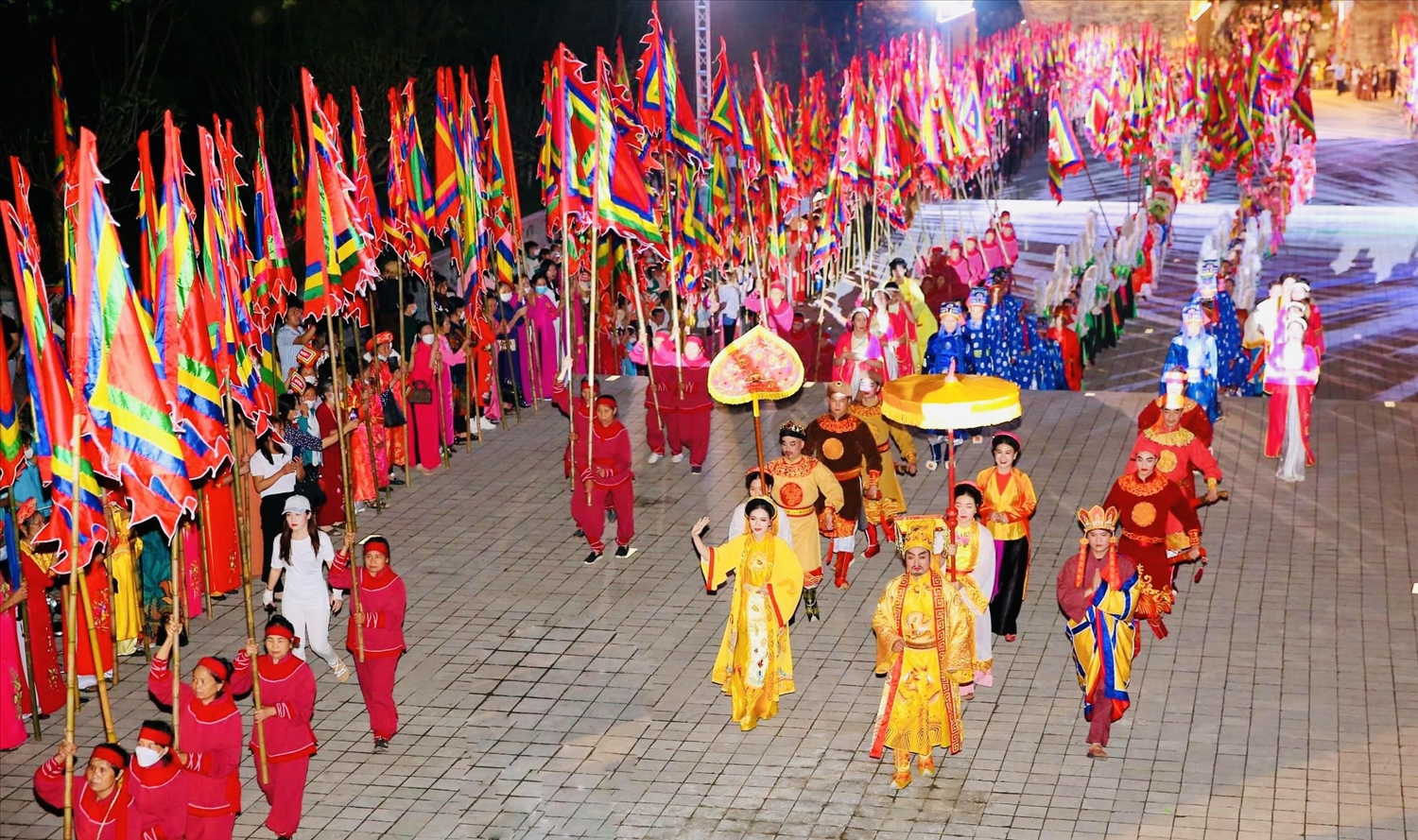 ring the period of national innovation, the good cultural and moral values of religions are respected and encouraged to be promoted
Firstly, the landscape of religious culture is flourishing, contributing to the enrichment of the national cultural landscape.
The number of State-recognized religious organizations has increased, alongside a rise in the ranks of clergy, monastics and adherents, as well as in the number of places of worship and religious training institutions [8]. In 2003, the country had six religions and 15 organizations comprising 17 million followers, approximately 20,000 places of worship, 34,000 clergy members, and 78,000 religious functionaries, by 2022, the government had recognized 43 organizations across 16 different religions, with over 27 million followers, more than 53,000 clergy members, approximately 148,000 religious functionaries, and over 29,700 places of worship… [13]. Many religious places of worship have been renovated to become more spacious and well-maintained; hundreds of hectares of land across various localities have been allocated to religious organizations for the construction of places of worship, thereby meeting the people’s legitimate religious needs. The number of religious training schools and classes is steadily increasing. The State has also facilitated opportunities for many religious dignitaries and clergy members to study abroad and further their professional qualifications.
Every year, there are over 8,000 festivals related to beliefs and religions, drawing tens of thousands of adherents [13]. Major religious festivals such as Vesak and the Vu Lan Festival (Buddhism), Christmas (Catholicism and Protestantism), the Yen Dieu Tri Festival (Cao Dai) and the Founding Day of Hoa Hao Buddhism are celebrated on a grand scale in many localities across the country... The State also pays attention to and facilitates large-scale commemorative events and international religious conferences, such as: The United Nations Day of Vesak (2008, 2014, 2019, 2025); the 11th Buddhist Women's Conference (2009); and the centennial celebration of the arrival of Protestantism in Vietnam (2011); General Chapters of religious orders, the International Conference of the Missionary Sisters of Our Lady and the regular assembly of Jesuits from the East Asia-Australia Province; The 10th Plenary Assembly of the Federation of Asian Bishops' Conferences, the 50th anniversary of the establishment of the Catholic Hierarchy in Vietnam, the 350th anniversary of the founding of the Catholic Dioceses of Southern Vietnam (Dang Trong) and Northern Vietnam (Dang Ngoai),...
Changes in the religious and cultural landscape contribute to building a cultural and social life that is increasingly civilized and modern.
Secondly, the general knowledge and political awareness of religious dignitaries, clergy and followers are increasingly being enhanced; religious communities are growing more confident and enthusiastic, actively participating in socio-political life.
Vietnamese Buddhism with the motto “Dharma - Nation and Socialism”; Catholicism with the motto “Living the Gospel in the heart of the nation to serve the happiness of the people”; Protestantism with the guiding principle: “Live the Gospel, worship God, and serve the Fatherland and the people”; Cao Dai with the motto: “A glorious nation, a radiant Faith”; Hoa Hao Buddhism, with the guiding principles of “revitalizing the faith, remaining closely bound to the nation, aligning with State policies and laws and contributing to the building and defense of the Fatherland”... Many religious dignitaries have set an exemplary lead in guiding the activities of their organizations and followers toward an engaged approach walking alongside the nation, integrating faith with secular life and making positive contributions to society.
Thirdly, religious dignitaries, clergy and followers actively participate in patriotic emulation movements and the building of a cultured lifestyle.
In response to the policies of the Party and the State, emulation movements encouraging people to “live a good secular and religious life” have been widely organized in various forms across regions with significant religious populations. Through these movements, the fine cultural and ethical values of religions are vividly demonstrated in everyday life.
The movement “All people unite to build cultural life” in residential areas was creatively applied by many dignitaries, monks and religious followers associated with the characteristics of each religion, forming movements such as: “Building exemplary and progressive pagodas”, “Building advanced parishes and communities and exemplary Catholic families”... Movements to combat crime, drugs and social evils; to foster a new lifestyle regarding funerals, weddings and festivals; in order to establish and implement village and residential community conventions and codes of conduct, all have been enthusiastically supported by a large number of religious followers.
Fourthly, religious dignitaries, clergy and followers actively participate in the socialization of education and healthcare, as well as in charitable and social activities.
In recent years, education promotion funds established by religious organizations in many regions have been changing the beliefs of religious people, contributing to improving the educational level of religious believers. Numerous charity classes, schools, preschools and literacy classes for the visually impaired, established by religious dignitaries, clergy and religious organizations have been making practical contributions to education and training, while increasingly earning public trust. Many religious medical clinics have been operating effectively, contributing alongside the State to improving the quality of healthcare for the public. Charitable and social welfare activities are actively carried out by a large number of religious dignitaries, clergy, and followers in various forms such as providing production capital; establishing schools and charity classes; building social welfare centers; awarding scholarships; offering medical care; providing disaster relief; organizing blood drives; and assisting vulnerable groups…
In order to ensure that the positive cultural and ethical values of religion continue to be effectively promoted in real life, the following measures should be implemented:
Firstly, strengthening research and the identification of cultural values and religious ethics, unify perspectives across the entire political system, and establish a legal framework for promoting these cultural values and religious ethics.
The Party and the State need to prioritize the promotion of scientific research on religion and the assessment of religion's role in social life. Based on the nation’s traditional cultural and ethical values and their compatibility with the task of building a new society, it is necessary to identify the values and anti-values within religion. On that basis, appropriate policies are formulated to promote the positive values of religion while gradually mitigating its negative aspects; additionally, the perspectives and responsibilities of the entire political system are aligned regarding religious issues in general and the cultural and ethical values of religion in particular.
Secondly, socio-political organizations need to work closely with religious organizations to guide religious activities in compliance with the law, at the same time creating conditions for these organizations to continue promoting their positive cultural and ethical values.
Thirdly, step up research into and the study of the experiences of countries that have successfully applied cultural values and religious ethics to national construction and development.
In recent years, acknowledging the practical role of religion in social life and adopting a more open perspective, certain nations which once strictly enforced the separation of religion from the state and politics have begun to gradually adjust their policies to harness religious resources, particularly in the realms of culture and ethics. Singapore, which shares many similarities with Vietnam regarding religious diversity, has successfully implemented policies promoting religious harmony and has effectively leveraged religious cultural values in its national development, achieving encouraging results. Laos and Thailand have also been quite successful in utilizing religious cultural values to foster national development.
The policy models regarding religious harmony, the integration of religious education, and the utilization and promotion of religious cultural and ethical values for social development in countries within the region share many similarities with...
In terms of culture and society, Vietnam offers valuable models that can be applied to more effectively harness and promote cultural and religious-ethical values in service of the nation’s construction and development in the new period.
References
1. Politburo Directive No. 37/CT dated July 2nd, 1998, on religious work in the new situation.
2. Communist Party of Vietnam, Documents of the Fifth Plenum of the 8th Central Committee (1999).
3. Communist Party of Vietnam, Documents of the 12th National Party Congress, Office of the Party Central Committee, Hanoi, 2016, p.165.
4. Standing Committee of the National Assembly, Ordinance No. 21/2004/PL-UBTVQH11 dated June 18th, 2004, on Belief and Religion.
5. Resolution No. 25/NQ-TW, dated March 12th, 2003, of the Party Central Committee on religious affairs in the new situation.
6. Documents of the 13th National Party Congress, Vol. I, National Political Publishing House, p.171.
7. An Initial Exploration of the Relationship between the State and the Church, Religious Publishing House, Hanoi, 2003.
8. According to the Government Committee for Religious Affairs, as of 2014, Vietnam has 13 religions with 41 religious organizations and 1 practice that have been recognized and registered by the State with nearly 24 million followers, 83 thousand dignitaries, 250 thousand positions, 46 training establishments, and 25,000 places of worship.
9. Vietnam and the Issue of Human Rights, Hanoi 2005, p.1.
10. Arguments Refuting Erroneous and Hostile Views, National Political Publishing House, Hanoi, 2014.
11. Religion and Religious Policy in Vietnam. Religious Publishing House, Hanoi, 2022, p.90-91.
12. According to Nguyen Cong Huyen, “Promoting the Role of Religious Organizations in Social Charity Activities”, Journal of Religious Affairs, No. 10/2009, p.12-14.
13. MA. Nguyen Van Long, Religions in Vietnam have never enjoyed such favorable conditions for their activities as they do today, https://mattran.org.vn/dan-toc-ton-giao/chua-bao-gio-cac-ton-giaoo-viet-nam-co-dieu-kien-hoat-dong-thuan-loi-nhu-hiennay-49720.html, ngày 14/05/2023.
14. Ho Van Duc, Promoting the fine cultural and ethical values of religions for the cause of national development today, https://www.quanlynhanuoc.vn/2024/02/08/phat-huy-nhunggia-tri-van-hoa-dao-duc-tot-dep-cua-cac-ton-giao-cho-sunghiep-phat-trien-dat-nuoc-hien-nay/, ngày 08/02/2024.
15. Dr. Vu Chien Thang, Awakening and promoting ethical and cultural values and religious resources to serve the cause of national development, ttps://tapchicongsan.org.vn/media-story/-/
asset_publisher/V8hhp4dK31Gf/content/khoi-day-va-phathuy-gia-tri-dao-duc-van-hoa-va-nguon-luc-ton-giao-phucvu-su-nghiep-phat-trien-dat-nuoc, dated June 11th, 2022.
