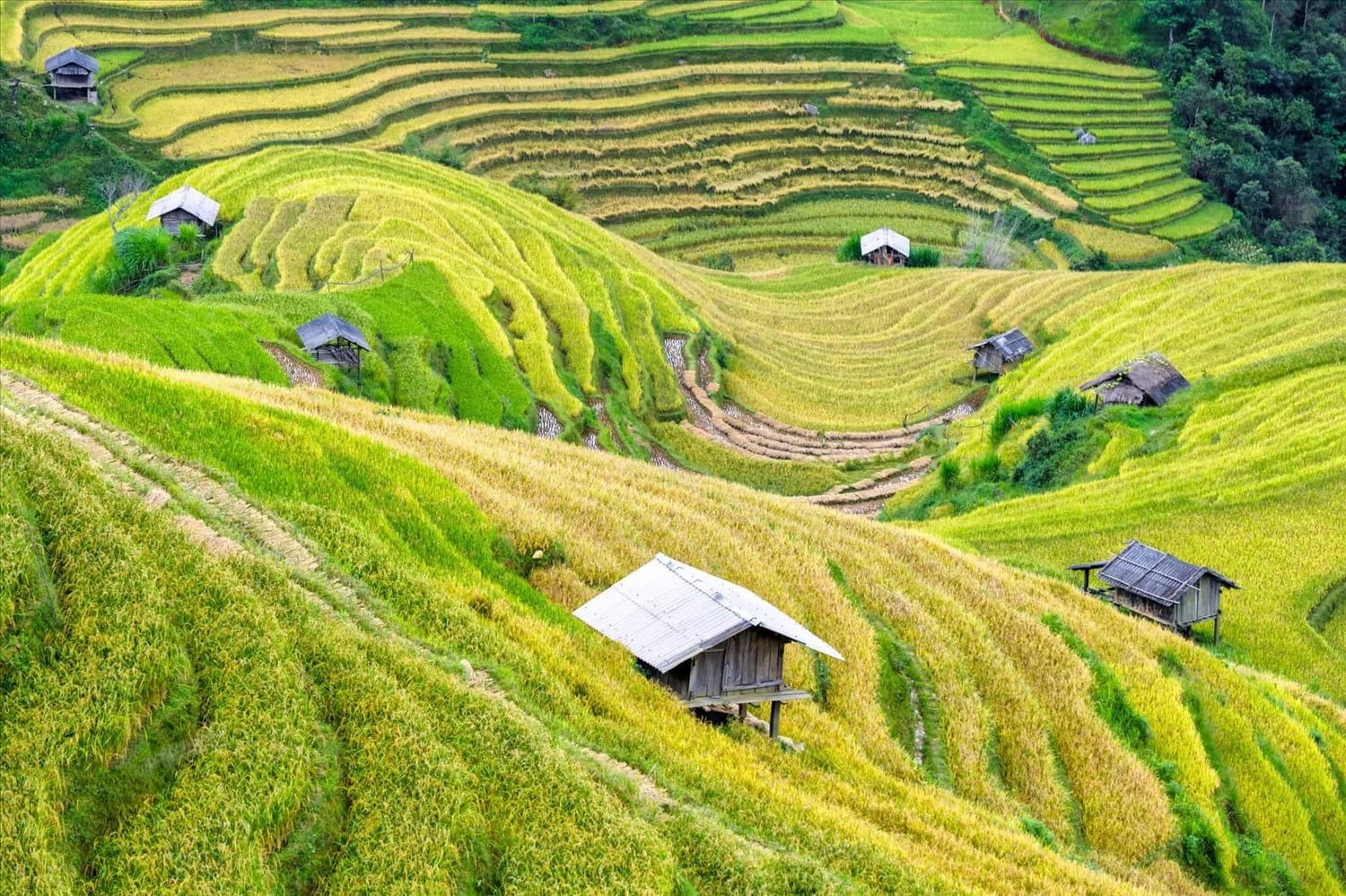
 Mai Chau (Phu Tho province) has become a famous tourism destination both domestically and internationally
From rustic countryside homes to tourism destinations
In recent years, many rural areas in Vietnam have become bright spots on the tourism map. In Northern Vietnam, Lac village (Mai Chau, Phu Tho province) or Duong Lam ancient village (Son Tay, Hanoi capital) have attracted tourists with their moss-covered tiled roofs, the sound of looms weaving brocade and simple yet heartwarming home-cooked meals. In Central Vietnam, tourists can visit Tra Que vegetable village (Hoi An, Da Nang City) to try their hand at growing vegetables and making rice paper rolls, or visit Tam Thanh mural village (Da Nang City) to admire the vibrant walls telling stories of the villagers.
In the Mekong Delta, community tourism is flourishing with traditional riverside houses and gardens. Tourists can paddle boats to pick pomelos, enjoy traditional folk music amidst orchards laden with fruit, simple yet unforgettable experiences. Meanwhile, in the Northwest highlands, villages like Cat Cat (Sa Pa) or Ta Van (Ta Van commune, Lao Cai province) immerse visitors in the cultural space of the Mong, Dao and Giay ethnic groups, where the sound of the flute resonates by the fire and the warm smiles of the local people fill the heart with warmth.
According to Dr. Lo Giang Pao, Vice President of the Vietnam Mountainous Region Economic Support Association: The biggest difference of community tourism is that the local people engage in tourism activities right in their own hometowns. They run homestays, cook for guests, and guide them through cultural experiences, from weaving and pottery making to cooking traditional dishes. Tourists come not only to admire the scenery, but also to “live with the village”, in order to work alongside the villagers and enjoy the simplest things in life.
This model has yielded a “double benefit”: creating stable income while simultaneously fostering awareness of cultural preservation and environmental protection. Seeing tourists appreciate the beauty of their homeland makes the local people even more proud and more determined to preserve the landscape, houses and traditional craft villages. Many rural areas that previously lacked young people are now seeing their children return to start businesses with green tourism models, a welcome sign for the new rural development, Dr. Lo Giang Pao further shared.
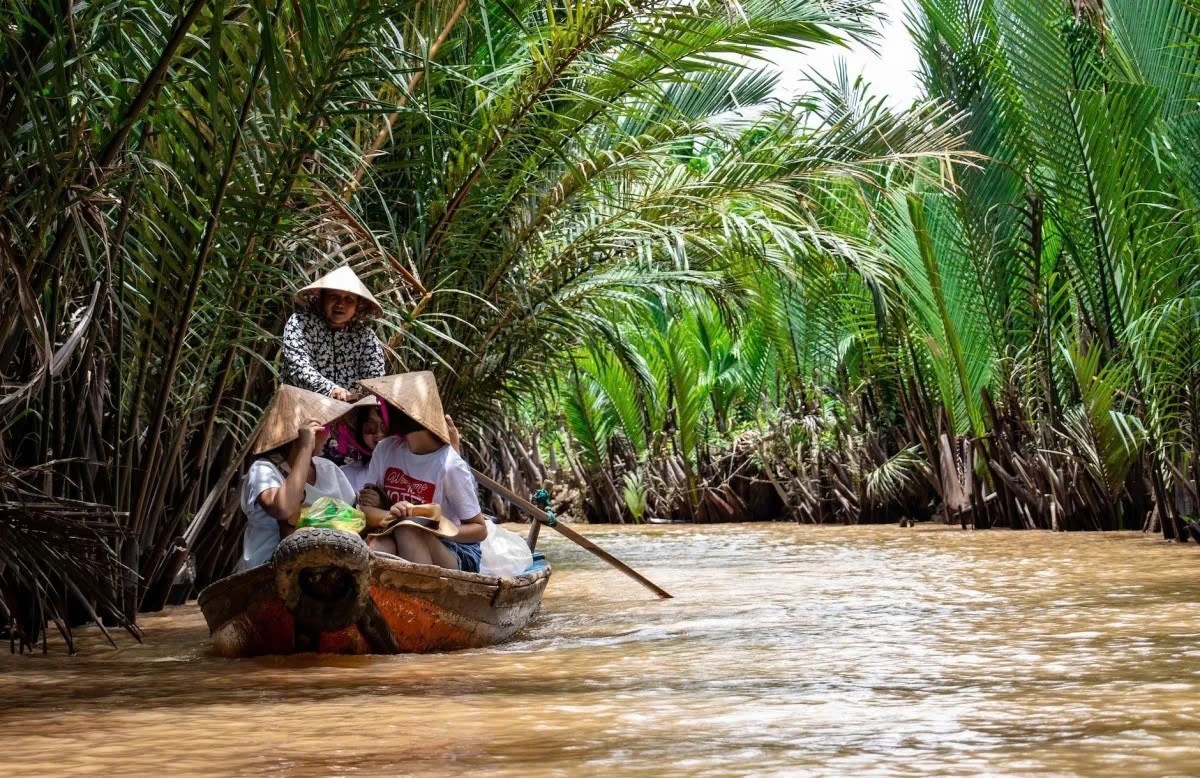 River tourism in the Mekong Delta has been and continuing to attract tourists
Challenges from rapid development
However, in many places, tourism development is still driven by trends, lacking long-term planning and direction. Some rural villages have become overly “touristified”, causing their unique identity to gradually fade. Homestays are springing up everywhere but lack quality, the landscape is becoming overly urbanized and tourism products are repetitive, lacking differentiation.
In addition, many people involved in tourism rely on experience rather than professional service, management and marketing skills. The question of how to attract tourists, then have them return, remains a difficult one for many localities. Without proper guidance, the “green path” can easily become a “short way” to short-term gains.
For community tourism to develop sustainably, the key is to preserve the soul of the village - the soul of the countryside. Local authorities need to play a facilitating role: supporting infrastructure, providing skills training, connecting markets and promoting local brands. Businesses need to invest responsibly, respecting local culture, while the people must take ownership of the model, understanding that “culture is the most valuable resource”.
Many experts believe that community-based tourism is only truly successful when it becomes “the life of the people” rather than “a stage for tourists”. Every house, every dish, every folk tale, if told with sincerity can become a unique tourism product, bearing the mark of Vietnam.
Community tourism is not only a new way of doing tourism, but also a path to making Vietnamese villages “greener, more beautiful, and richer”, both materially and spiritually. In the brightly lit old houses, in the hospitable smiles of the people, we see a Vietnam that is changing but still retains its roots. Between the flow of modernity, community tourism serves as a bridge between tradition and the future, where every step taken by tourists contributes to preserving and reviving the soul of Vietnamese villages.
