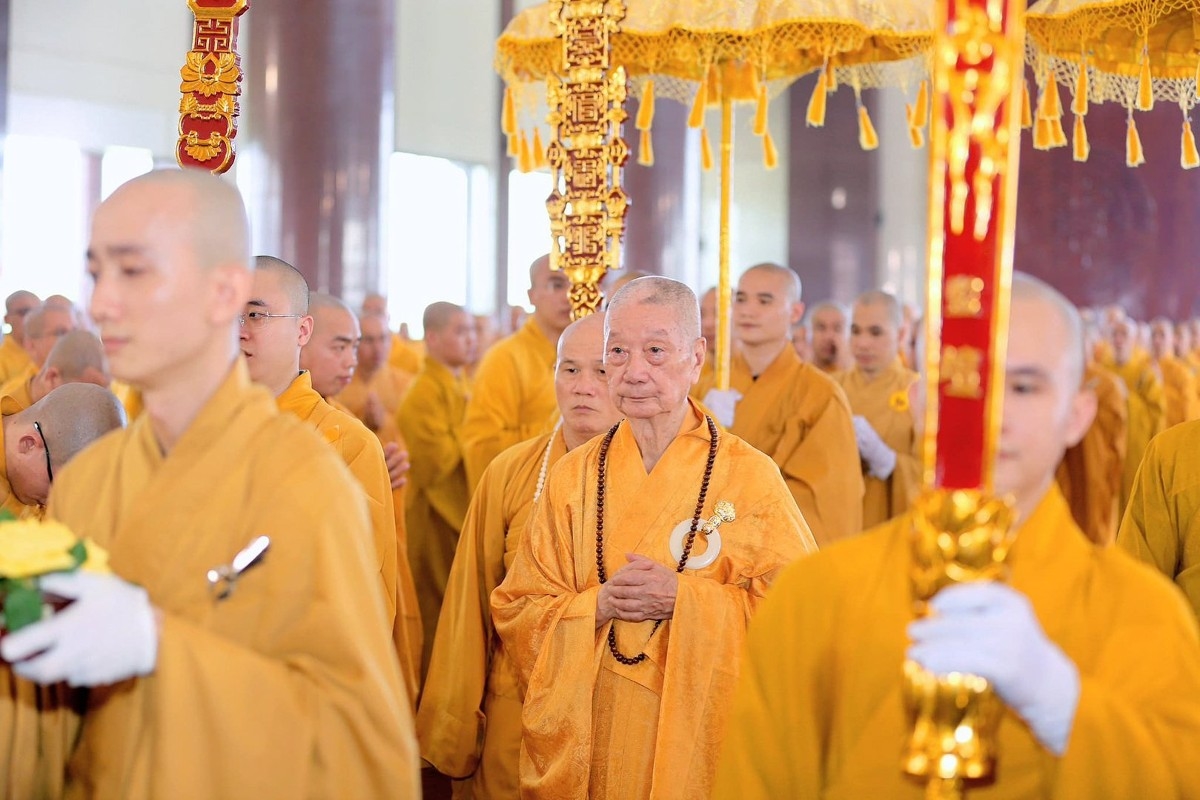
 The Vassa (Summer Retreat) Formal Observance Ceremony at the Vietnam Buddhist University in Ho Chi Minh city
Every year, when the rainy season arrives, monks and nuns set aside their itinerant missionary activities to gather under a single temple roof, living and practicing together for three months. Underlying this traditional observance is the core foundation that has enabled the monastic community to endure for centuries: a spirit of harmony and purity.
In Buddhist terminology, the concept of “Sangha” does not refer to a single individual but represents a community comprising at least four monks or nuns, functioning upon two pillars: purity and harmony. Purity serves as the measure of each member’s moral integrity, while harmony constitutes the supreme lifeblood of the Sangha community.
The Buddha’s establishment of the Rains Retreat rule within the Vinaya Pitaka stemmed from two fundamental reasons: Firstly, out of a spirit of compassion, to avoid trampling upon and harming insects and newly sprouting life during the rainy season in ancient India; Secondly, it stemmed from a pragmatic adaptation to the social context of the time, when Indian public opinion frowned upon travel during the rainy season as well as serving as a mandatory mechanism requiring members of the monastic order to return to a shared residence, thereby strengthening communal bonds following months of itinerant ministry.
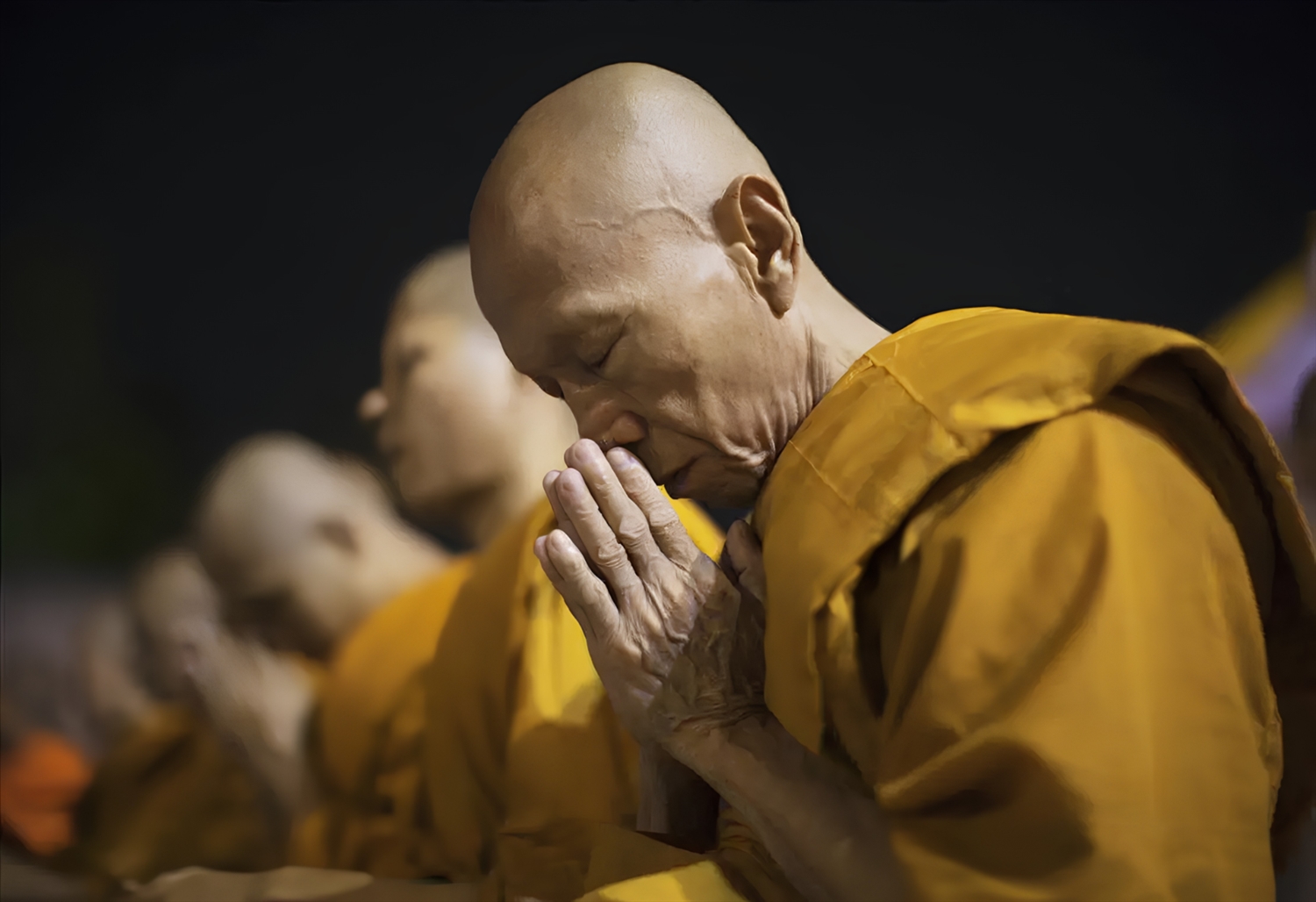 The summer monastic retreat is a timeless form of communal living
Throughout their religious practice, each monk and nun brings unique experiences and perspectives. The Rains Retreat serves as a centripetal force, gathering everyone together in a shared physical and spiritual space. Within the retreat, the spirit of harmony is embodied through a rigorous daily regimen grounded in the Six Principles of Harmonious Living (Six Principles of Reverent Harmony):
Living together in harmony: Residing under the same roof during the summer retreat, with equality regardless of the size of the monastery or the number of years of monastic seniority.
Harmony in speech and absence of dispute: Using gentle, harmonious language during discussions and the chanting of scriptures and precepts.
Harmony and Joy: Uniting in the goal of spiritual advancement and rejoicing in the progress of fellow practitioners.
Communal observance of precepts: All members adhere to the system of precepts and monastic regulations; no individual stands outside the shared rules.
Harmonious resolution through shared understanding: Sharing insights and reaching a consensus on doctrine through discussions.
The principle of “sharing offerings equally” ensures fairness regarding material resources. The Vassa (Summer Retreat) model represents a distinctive legacy of community governance, harmoniously blending strict discipline with a form of early parliamentary democracy. All decisions concerning the retreat’s operations or internal affairs require the absolute consensus of the monastic community, reached through the formal Karma (Sangha act) process.
The Vassa (Rainy Season Retreat) inauguration ceremony at the start of summer and the Pavāraṇā (Invitation) ceremony at its conclusion are the two milestones that most clearly exemplify this distinctive feature. On the day of Pavāraṇā, every member of the Sangha from the presiding senior monk to the newly ordained bhikkhu, kneels before the assembly and sincerely asks fellow practitioners to point out any faults regarding three aspects: what was seen, what was heard and what was suspected. This is a mechanism for the self-resolution of internal conflicts, enabling the monastic community to cleanse itself of accumulated grievances and maintain its purity without relying on the authoritarian authority of any single individual.
In Vietnam, the tradition of the Summer Retreat clearly reflects the cultural diversity among religious sects and ethnic communities. The coexistence of these traditions enriches the spiritual and religious life of Vietnam’s ethnic communities.
Northern Buddhism (Mahayana): The Rains Retreat typically begins on the 16th day of the fourth lunar month and concludes on the 15th day of the seventh lunar month. The Pavarana (Self-Inquiry) ceremony coincides with the Vu Lan festival (Filial piety festival), creating a cultural and religious occasion that fosters a strong bond between monastics and lay Buddhists.
In Theravada Buddhism, the Rains Retreat takes place from the middle of the sixth lunar month to the middle of the ninth lunar month. The retreat concludes with the Pavarana ceremony and the grand Kathina festival (Robe-Offering Ceremony), both of which are deeply imbued with the cultural characteristics of the Khmer people.
The Summer Retreat is a timeless form of communal living. By prioritizing harmony and the observance of precepts over the individual ego, the tradition of the Summer Retreat affirms that: A collective can only achieve sustainable development when each member commits to shared principles and maintains connections rooted in compassion and understanding. This constitutes a valuable legacy contributed by Buddhism to the stream of human culture./.
