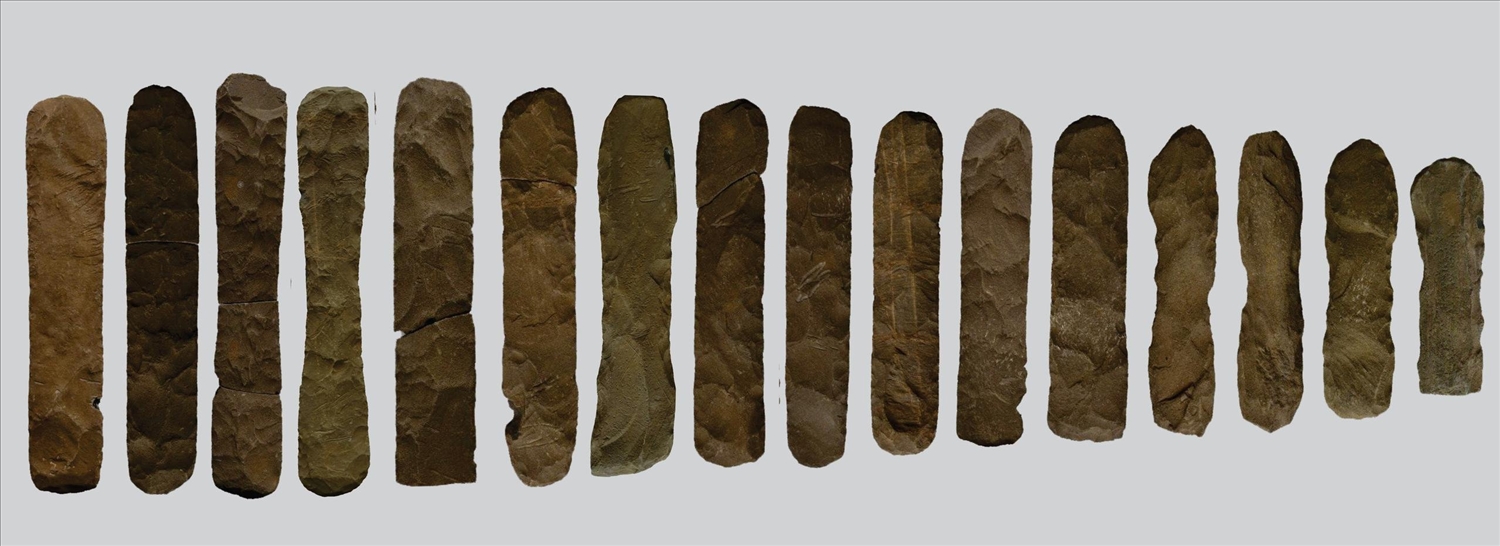
 The Dak Son stone xylophone
Discoveries and archaeological value
The Dak Son stone xylophone was discovered in 2014 in Nam Xuan commune, Krong No district, Dak Nong province (formerly), now Dak Sak commune, Lam Dong province. The set consists of 16 bars, of which 11 bars are intact, 4 bars are broken in half and 1 bar is broken into three pieces. Fortunately, the broken pieces of the stone xylophone could be reassembled and restored to their original form, making them suitable for studying the manufacturing techniques and taking measurements of their weight, length, width and thickness; the material used to make the xylophone was rhyolite (metamorphic schist). The Dak Son stone xylophone is one of the most important archaeological discoveries in the Central Highlands in recent decades.
In the stone xylophone set, the long, thick bars produce low notes; the short, thin bars produce high notes. In the high register, the sound of the stone xylophone is clear and resonant. In the lower register, the guitar resonates like an echo from a cliff. The sound of the stone xylophone was praised by the late Professor Tran Van Khe - a renowned researcher of Vietnamese traditional culture and music as “expressing emotions just like a human being”. The surface texture, with its patina and traces of craftsmanship, reveals the techniques of grinding and measuring to achieve the desired pitch, evidence of a well-established musical tradition with a high level of technical and aesthetic skill among prehistoric mountain dwellers.
Stone xylophones in the spiritual life of the community
Stone xylophones are closely associated with the cultural and spiritual life of the ethnic groups in the Central Highlands, especially the Mnong people. Ancient people believed that the sound of the stone xylophone not only served the spiritual life of the living but also acted as a bridge between humans and heaven, earth and deities. The Dak Son stone xylophone not only demonstrates the refined auditory perception of prehistoric inhabitants but is also closely linked to their beliefs and community life, reflecting the harmony between humans and nature. Researchers note that the xylophone set opens up a glimpse into the spiritual life of prehistoric times, where music was intertwined with rituals of thanksgiving to the land and forests, with ceremonies praying for favorable weather, worshipping ancestors and connecting communities during important festivals.
The stone xylophone, called goong lu by the ethnic groups in the Central Highlands, meaning “stones that sound like gongs” is the oldest percussion instrument in Vietnam and one of the oldest musical instruments of humankind. To this day, the stone xylophone remains both a rare musical instrument that is still preserved and used in folk traditions, and a symbolic object with ceremonial significance in the cultural and spiritual life associated with the production process and life cycle of the local ethnic minority communities in the Central Highlands. The sound of the stone xylophone is still used to enhance the sacredness of rituals and create a lively atmosphere for dances in festivals, such as: Gong festivals, harvest festivals, housewarming celebrations... Conservation efforts are being intensified by local authorities through education in schools and outreach to tourists.
Stone xylophones are one of the ancient musical instruments that constitute the value of the Central Highlands Gong Culture Space heritage, which has been recognized by UNESCO. The Dak Son stone musical instrument was recognized as a national treasure by the Prime Minister in 2024. Along with the Loc Hoa, Binh Da and Khanh Son stone xylophones sets (named after the locations where they were discovered), the Dak Son stone xylophone contributes to the formation of a unique stone xylophone cultural space stretching from Central Vietnam to the Central Highlands and Southern Vietnam; tt is a symbol connecting the past with the present, contributing to elevating Vietnam’s heritage on the international stage.
According to the Department of Culture, Sports and Tourism of Lam Dong province, the Dak Son stone xylophone could become the soul of art performances linked to experiential tourism at the museum - the place where the musical instruments are displayed providing an opportunity for the public to access the heritage, foster national pride and affirm the enduring creativity of the Vietnamese people throughout history./.
