Upon entering the Mang Mu corn house, you’ll immediately be overwhelmed by the golden hues of carefully selected corn cobs, neatly tied and hung on the walls, ceiling and floor, creating a space that resembles a nature exhibition hall. Sunlight filters through the gaps in the wooden walls, reflecting on the corn stalks, on the gentle, simple face of the woman, on the traditional farming tools and implements, making every little corner a rare and unique spot for taking Instagram-worthy photos, with eye-catching images that are both unusual and familiar. That visual effect is beautiful to you, but it also holds great significance for the Mong people, because corn is their main staple food. The more corn there is in the house, the more the people feel secure and comfortable.
That interesting art installation is the idea of Mr. Giang A Sua. In 2017, with the desire to both preserve the traditional corn preservation method and create a space for visitors to better understand the life and culture of the Mong people, Mr. Sua creatively designed the corn house to become an authentic experiential destination. Here, the locals invite you to try grinding corn with a stone mortar and pestle, making men men (steamed corn flour) - a simple dish with the rich flavors of the mountains and forests; listening to the locals telling stories about how to choose corn varieties, the harvesting time,and methods of hanging corn for preservation… Each piece of knowledge you acquire will help you gain a deeper understanding of the working life, production methods and folk knowledge of the Mong people.
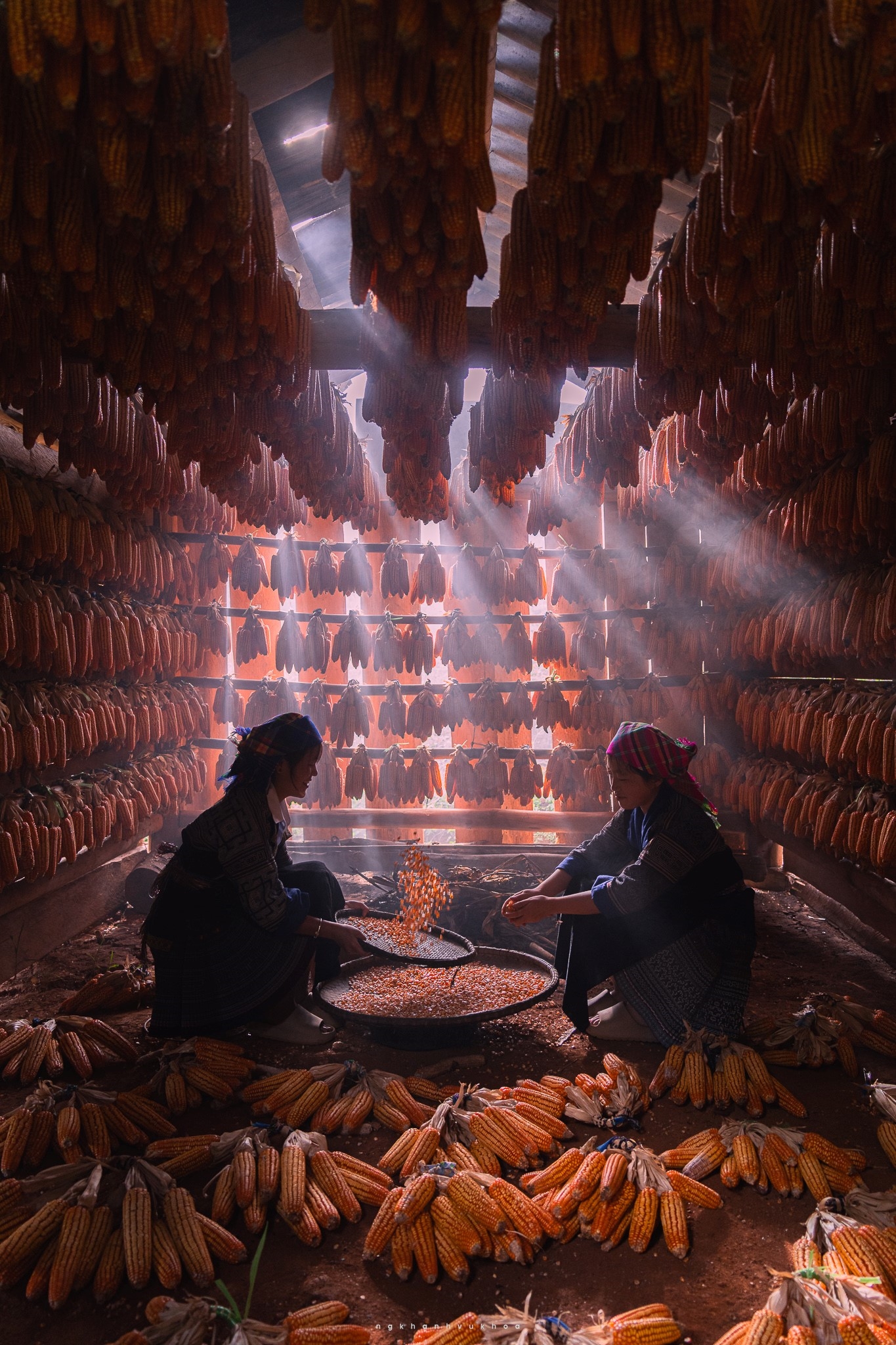
At the corn house, Mua Thi My and Ho Thi Bla are two women who will directly guide you in using copper brushes dipped in hot beeswax to create unique patterns on linen fabric - a traditional craft technique preserved through generations, deeply rooted in the Mong ethnic culture. This experience not only helps you better understand the process of creating traditional costumes, but also providing a delightful feeling of being immersed in local cultural identity. For many tourists, it's also a journey to discover the history, art, and soul of the Mong people in the mountains of Northwest (Vietnam).
If you’re planning a trip to Mu Cang Chai, be sure to visit the Mang Mu corn house, because there aren’t many places like this where the Mong people have creatively transformed agricultural products and everyday items into a “living museum” of their culture. The house leaves a lasting impression of an ethnic identity through its introduction in the simplest language: corn and the stories of the people who grow it. The Mang Mu corn house will make you exclaim “Wow” in surprise and admiration; it will make you slow down, observe more closely to understand the messages subtly emanating from each ear of corn hanging on the wall, from each basket of bright yellow corn kernels on the floor, helping you to deeply understand the diligence in labor, along with the courage and intelligence of the Mong people in conquering nature…
A helpful tip for your trip is to visit in the fall, when the corn is ripe and golden yellow, creating the most stunning visuals. A beautiful photograph not only helps you preserve memories of places you’ve visited, but also evokes deep emotions in your soul, making you love even more the simple yet incredibly sincere and warm nature of the Mong people here.
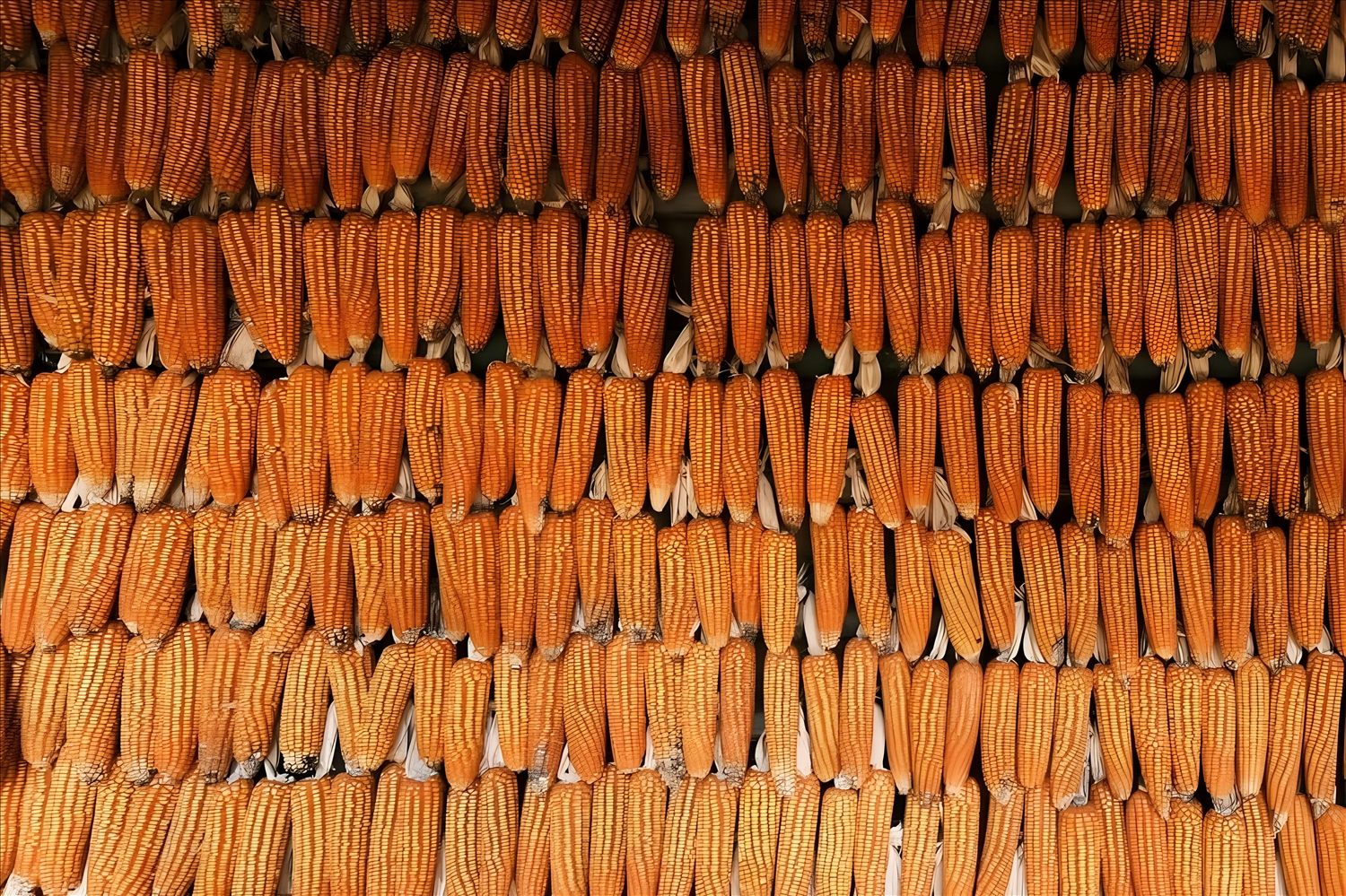 The corn harvest season for ethnic minorities in the highlands
The Mang Mu corn house is located just a few kilometers from the center of Mu Cang Chai commune, making it convenient to include in an itinerary that includes experiencing Khau Pha Pass, terraced rice fields or nearby Mong villages. The entrance fee is merely symbolic for tourists…
Here’s another tip: if you choose to visit the Mang Mu corn house between the end of December and the end of January, you’ll have the chance to admire the blooming To Day flowers covering the hillsides, mountain slopes and highland valleys. The flowers have five petals, bloom in dense clusters, have long red stamens, making them much more vibrant than peach blossoms. In the Mong people’s culture of Mu Cang Chai, when the thick-flowered flowers bloom profusely, it signals the transition of nature into spring…/.
