Keywords: Buu Son Ky Huong Religion; Officials, followers; National unity.
1. Introduction
Throughout the history of the Vietnamese revolution, national unity bloc has always been identified as a strategic guideline and a tremendous source of strength ensuring all of the nation’s victories. Within that great unity, religions in general and local religions in particular play a especially important role, both as a spiritual need of a segment of the population and as a social force contributing to the stability of community life.
2. The doctrines and precepts of the Bao Son Ky Huong religion
The Buu Son Ky Huong religion was founded by Mr. Doann Minh Huyen (also known as the Buddhist Master of Tay An) in late 1849, at Dao Kien Valley (today it is Tay An ancient pagoda, Long Kien village, Nhon My commune, An Giang province). The Buu Son Ky Huong religion emerged amidst significant social changes in the South (Vietnam), it early on demonstrated a spirit of engagement with the world, connecting religion with life and linking faith with social responsibility. Throughout various historical periods, the officials and followers of the Buu Son Ky Huong religion have always stood alongside the nation, contributing to building and strengthening national unity.
From the very beginning of its establishment, with its principles, objectives, doctrines and precepts emphasizing patriotism, filial piety, goodness and national self-reliance, rejecting oppression and enslavement, Mr. Doan Minh Huyen advocated recruiting outstanding individuals with a deep commitment to the nation and good moral character as followers of Buu Son Ky Huong. Therefore, it can be seen that the community of Buu Son Ky Huong followers were good farmers who had participated in many uprisings against the feudal court and the French colonial invaders, led by the disciples of the Buddhist Master. Later, when the uprisings failed, they had to endure brutal repression from the enemy, so the followers of Buu Son Ky Huong inherently valued patriotism, love for their people and hatred of foreign invaders. Besides that, there were also middle-class intellectuals who, resentful of their unfortunate fate, became disciples of the Buddhist Master hoping to change their destiny and the course of events. Despite their diverse backgrounds, under the guidance of the Buddhist Master, they all united in purpose, shoulder to shoulder, shouldering the responsibility of religious work, reclaiming land, establishing villages and stabilizing their new lives.
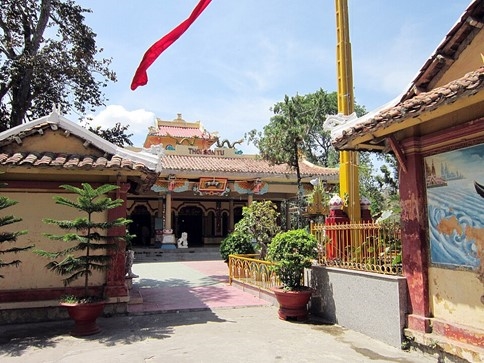 Thoi Son Pagoda in An Giang province is a pagoda of the Buu Son Ky Huong religion
Followers of the Buu Son Ky Huong religion consider “cultivating virtue” as the supreme principle in their spiritual practice, this helps people eliminate evil and strive for goodness, self-improvement, doing good and avoiding evil, accumulating merit for the future when they will participate in the “Long Hoa festival”. “Cultivating virtue” also helps people to always live in accordance with moral principles, in order to benefit their families and society, in order to uphold ethical values and to possess the virtues of humanity, righteousness, propriety, wisdom and trustworthiness.
The Buu Son Ky Huong religion takes the “five great prohibitions” as its precepts, including: prohibiting killing, harming people and harming animals; prohibiting greed, theft and the enjoyment of ill-gotten gains; prohibiting adultery and depravity (both mental and physical); prohibiting alcoholism, drug use, gambling, prostitution, superstition, spirit mediumship and fortune-telling; prohibiting deceit, false speech, sarcasm and division,…
Killing, harming people, and harming animals are prohibited: This prohibition clearly reflects the ideology of compassion, kindness and respect for the lives of humans and all living beings. The prohibition against killing, harming people and harming animals not only aims to limit violent behavior but also guides believers towards a life of harmony, tolerance, love and protection of life.
Greed, theft, the enjoyment of ill-gotten gains are forbidden; receiving without working for it is unacceptable: This prohibition emphasizes honest labor and opposes acts of greed, appropriating the property of others or unjustly profiting. Through this, the Buu Son Ky Huong religion educates its followers to live honestly, diligently and knowing how to respect the fruits of one’s own labor and that of others. From a social perspective, this precept contributes to the formation of a sense of law compliance, minimizes property-related violations, at the same time encouraging followers to participate in productive labor, making positive contributions to socio-economic development.
Adultery and depravity are forbidden: This precept guides believers towards upholding family morality, fidelity in marriage, respecting for traditional customs and values. This is one of the important ethical standards of traditional Vietnamese society, aimed at protecting family happiness - the basic unit of society. Adherence to these prohibitions helps to curb morally deviant behavior, contributing to the building of stable and healthy family life, thereby creating a solid foundation for social stability.
Alcohol, drug use, gambling, prostitution, superstition, spirit mediumship and fortune telling are prohibited:
This prohibition aims to prevent acts that cause physical degradation, moral decay, disruption of family happiness and social instability. At the same time, eliminating superstition, shamanism and fortune-telling affirms the progressive ideology of the religion, promoting reason, honest labor and moral cultivation through concrete actions, avoiding dependence on blind faith. Through diligent practice, the officials and followers of the Buu Son Ky Huong religion actively contribute to the prevention and control of social evils, the building of a healthy cultural life at the grassroots level, the consolidation of social order and the strengthening of national unity.
Deception, falsehood, sarcasm, division,… are forbidden: This precept requires believers to maintain honest and truthful speech, avoiding lying, misrepresenting the truth, speaking maliciously or inciting conflict between people. Prohibiting derogatory, sarcastic, and divisive language aims to protect the integrity of social relationships, strengthening trust and fostering solidarity within the community. Through this, believers are educated on how to behave in a cultured manner, in order to respect others and in order to contribute to building a stable and healthy social environment. In the doctrinal system of the Buu Son Ky Huong religion, the “five great precepts” hold a particularly important position, serving as the foundation for guiding the moral behavior and lifestyle of its followers. These prohibitions not only carry religious significance but also embody profound humanistic values, aligning with the traditional moral standards of the Vietnamese people and the demands of social life.
Through the practice of the “five great precepts”, the officials and followers of the Buu Son Ky Huong religion not only perfect their personal morality but also contribute to maintaining social order, strengthening community consensus and cohesion, thereby promoting the positive role of religion in the national unity.
3. Followers of the Buu Son Ky Huong religion actively participate in patriotic emulation movements and strictly abide by the Party’s guidelines and the State’s policies and laws
Currently, the vast majority of followers of the Buu Son Ky Huong religion (referred to as Buu Son Ky Huong believers) are Kinh people living mainly in the Mekong Delta region, with their primary occupation being farming, with low income and educational levels. The majority of believers live in remote areas, former resistance zones, and have been practicing their religion for many years. They have a tradition of patriotism, and therefore, despite limited and difficult economic, cultural and social life, they have made many contributions during the resistance period as well as in the construction and protection of the Fatherland. They have faithfully followed the Party’s guidelines and policies, the State’s laws and the administration and leadership of the local government. The followers of Buu Son Ky Huong actively participate in local social and charitable activities and organizations and have faith in the leadership of the Party and the State.
Since the policy of registering religious activities and recognizing organizations was implemented, religious establishments have gradually become more stable in their operations. The followers are united within the national solidarity bloc, actively participating in social charity activities, focusing on studying and practicing their faith according to the principles and objectives of the religion. Religious officials and followers should effectively implement the Party's religious policies, the State’s laws, and local regulations, maintaining harmonious relations between pagodas and between pagodas and other religions in a spirit of solidarity and mutual respect. During traditional holidays and festivals, some provinces have proactively invited prominent officials and followers to gatherings, exchanges, encouragement and gift-giving, creating a warm and open atmosphere. Although the Buu Son Ky Huong religion does not have a unified religious organization, with the attention of various levels and sectors, temples have been recognized as organizations of Buu Son Ky Huong and granted seals for official transactions. Therefore, the religious followers were very reassured and enthusiastic about the Party’s guidelines and the State’s policies and laws on religion.
Despite the difficult economic conditions faced by the majority of Buu Son Ky Huong followers, who are primarily engaged in agricultural labor, the implementation of the “national solidarity movement to build a cultured life in residential areas” and the joint effort to build new rural areas has been actively supported by a large number of Buu Son Ky Huong followers.
As a religious organization registered and recognized as a pagoda, the Buu Son Ky Huong religion has recently carried out several practical activities such as: visiting and giving Tet gifts to Vietnamese Heroic Mothers, visiting and giving gifts to the elderly, visiting those suffering from serious illnesses; giving Tet gifts to poor people; holding gatherings and awarding outstanding students during the Lunar New Year; visiting and helping fellow followers and relatives near and far who are sick,... Responding to the call of the Central Committee of the Vietnam Fatherland Front, the entire religious community contributed to and assisted compatriots affected by floods and storms in the North and Central regions and supported victims of agent orange... In particular, the entire community has mobilized to build charitable houses. Over the years, despite many difficulties in life, with the spirit of “mutual support”, the followers of the Buu Son Ky Huong religion have regularly participated in social charity activities. In addition, the temple management boards have encouraged followers to display the national flag respectfully and solemnly during holidays and festivals; reminded followers not to participate in gatherings or demonstrations incited by malicious elements.
The coordination of religious affairs regarding Buu Son Ky Huong between the Fatherland Front and local departments, organizations is clearly demonstrated by the increasing number of followers of working age participating in the activities of state agencies and being active members in movements launched by the Central Committee of the Vietnam Fatherland Front such as: The movement to “eradicate poverty and reduce hunger” includes providing relief to people affected by natural disasters and floods; mobilizing followers to contribute alongside local authorities in building roads and bridges, contributing funds and labor to construct charitable houses; actively participating in the humanitarian donation campaign launched by the Vietnam Red Cross Society. Furthermore, followers of the Buu Son Ky Huong religion also participate in monitoring the activities of state agencies and organizations, which is to build and protect the government and contribute to strengthening the close relationship between the people and the state.
The registration of religious activities and recognition of the Buu Son Ky Huong religion in accordance with the law has yielded positive results in the implementation of the Party and State’s religious policy. The followers and laypeople of the Buu Son Ky Huong religion are very pleased to see that the State has met the religious needs of the people, thereby further strengthening the faith of the followers in the Party’s policies and the State’s laws. The recognition of the legal status of the Buu Son Ky Huong religious establishments has limited illegal activities, thereby ensuring the religious needs and practices of followers and lay people; at the same time, it facilitates strengthening the relationship between the government and the religious organization and help functional agencies to manage religious activities in accordance with the law. After being registered and recognized as an organization, the officials and followers have strictly adhered to the Party’s policies, the State’s laws, the religious activities according to the annual program registered with the authorities.
4. The team of officials contributes to strengthening the great national unity
The officials of the Buu Son Ky Huong religion, with their position and prestige within the community of believers, playing a crucial role in communicating, explaining and concretizing the Party’s guidelines and policies, as well as the State’s laws and regulations to the believers. Through religious activities, sermons, moral guidance, religious officials help believers understand their rights and responsibilities as citizens, thereby voluntarily complying with the law and avoiding violations due to lack of understanding or being misled.
Conversely, religious affairs also serve as a channel for conveying the legitimate thoughts and aspirations of believers to local authorities, helping the government to promptly grasp the religious situation and public opinion, thereby enabling them to implement appropriate, flexible and effective management measures. Through their role as intermediaries, the officials and followers of the Buu Son Ky Huong religion contribute to building trust and mutual understanding between religious followers and the government and other social forces. When policies and guidelines are communicated in an appropriate, understandable, and easily accepted manner, it reduces apprehension and thus enhancing social consensus. The bridging role of the officials and followers of the Buu Son Ky Huong religion reflects the viewpoint that “religion is connected to life”, that religion accompanies the nation. Through social activities, charity work, moral education and community building, the image of religion becomes more accessible and positive in social life. This not only enhances the social standing of the Buu Son Ky Huong religion but also contributes to strengthening national unity, creating a solid foundation for the stability and development of the country.
5. Conclusion
The officials and followers of the Buu Son Ky Huong religion are closely connected within the national unity bloc, actively participate in social charity activities, focusing on studying and practicing the religion according to its principles and objectives. Religious officials and followers should effectively implement the Party's religious policies, the State’s laws and local regulations, maintaining harmonious relations between temples and between pagodas and other religions in a spirit of solidarity and mutual respect. It can be said that the Buu Son Ky Huong religion, throughout its formation and development has effectively upheld the tradition of patriotism and national solidarity, making significant contributions to the cause of building and defending the country.
References
1. Nguyen Thanh Xuan (2020), Religion and religious policy in Vietnam, Religious Publishing House, Hanoi.
2. Nguyen Thanh Xuan, Le Tam Dac (2020), Religious life in Vietnam during the renovation period, Political Theory Publishing House, Hanoi.
3. Do Quang Hung (2005), The religious issue in the Vietnamese revolution - Theory and practice, National Political Publishing House, Hanoi.
4. Government Religious Affairs Committee (2015), Collection of lectures on religion and religious affairs, Hanoi.
5. Government Religious Affairs Committee (2021), “Training materials on knowledge and professional skills in information and communication on policies and laws regarding beliefs and religions and religious affairs” according to Decision No. 219/QD-TTg dated February 21st, 2019 of the Prime Minister, Hanoi.
