Located in Bom Bo village, Bom Bo commune, Dong Nai province, Soc Bom Bo is the birthplace of the immortal song “The Sound of the Pestle in Soc Bom Bo” by the late composer Xuan Hong. The song praises the X’tieng ethnic people for their unwavering loyalty to the revolution, pounding rice at night by the light of bamboo torches to provide food for the soldiers.
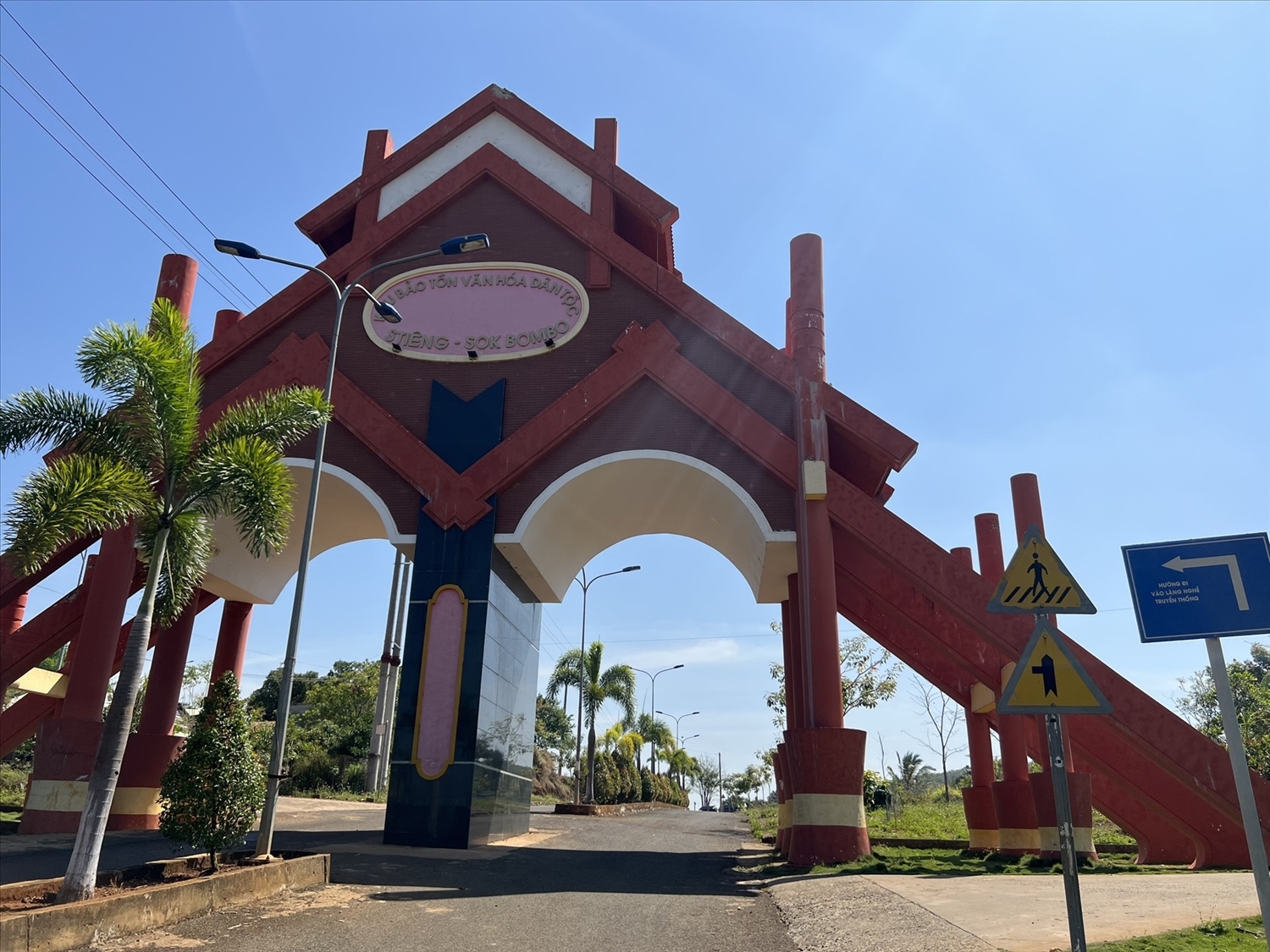 Soc Bom Bo Nature Conservation area (Photo: Lao Dong Newspaper)
“The torch made of bamboo blazed with fire,
Soc Bom Bo resounds with the sound of pestles pounding late into the night,
Carrying the baby to the hammock to rock it gently,
Pounding rice at night because they are busy working in the fields during the day.
The revolution needed a lot of rice to fight the America,
Soc Bom Bo has mortars and pestles available here,
The people of Bom Bo have hands readily available,
With patriotism and hatred for the enemy, day after day.
The fire blazed,
The sound of the pestle pounding late at night, cack cum cum cup cum”...
During the early years of the resistance war against the America, Bom Bo village was a solid rear-area unit. The enemy launched numerous fierce sweeps aimed at destroying the base, inflicting heavy losses on the revolutionary forces. The Party cell, the guerrilla unit and the local troops rose up together to fight the enemy from multiple directions. In those days, people had to burn thatch grass and bamboo to make charcoal, soak it in water, filter the water to use as a substitute for salt, but they were still willing to eat wild roots to give rice to the revolution, eat ash to give salt to the soldiers.
Despite facing difficult conditions due to enemy sabotage of production and burning of fields, the people of Bom Bo village still cleverly organized production and actively supported the revolution with rice, food and other supplies. Not only were the people of Bom Bo village bustling with activity in pounding rice to feed the troops, but they also planted thousands of sharpened stakes, fortifying their village to fight against enemy raids in nearly 50 large and small battles, eliminating hundreds of enemy soldiers and supplying much food and provisions to the revolution.
In the last months of 1964 and the beginning of 1965, the movement to fight against and dismantle the strategic hamlets by our people intensified. The Military Region and the Regional Military Command decided to launch the Phuoc Long - Dong Xoai Campaign to destroy a portion of the enemy’s elite forces, supporting the people in intensifying guerrilla warfare, revolting to dismantle strategic hamlets, expanding the liberated area, at the same time providing support for the key attack direction and local armed forces in organizing raids on isolated outposts and checkpoints. During this campaign, in addition to other needs of our forces such as weapons, uniforms and supplies, the need for food for the troops is extremely urgent. In order to ensure secrecy, the Campaign Command could not mobilize civilian laborers to transport food supplies and had to mobilize them locally. Therefore, the superiors assigned Bom Bo the squirrel to provide logistical support for the Phuoc Long - Dong Xoai Campaign.
The Soc Bom Bo National Historical Site witnessed the hardships faced by the team building the North - South corridor connecting the large rear area of the North with the large front line of the South; to be a place that commemorates the pride in the tenacious and indomitable fighting tradition of the X’tieng ethnic people, a place that acknowledges the contributions in terms of manpower and resources of the ethnic minority people that contributed to the great victory of Spring 1975; to be a place that commemorates the close solidarity between the army and the people during the national liberation revolution...
Today, Bom Bo village has been transformed into the X’tieng ethnic Cultural Conservation Area, covering a total area of 113 hectares. This is a place that provides an overview of the customs, traditions, typical cultural features and the history of the X’tieng people’s struggle against foreign invaders. Visitors here can learn more about the rice-pounding movement of the X'tieng people during the resistance war against the US to save the country, with the highlight being the miraculous feat of the X’tieng people pounding 5 tons of rice in 3 days and nights to supply food for the Phuoc Long - Dong Xoai campaign in 1965. In addition, the conservation area has also been invested in many projects that have set Vietnamese records, such as: The largest set of gongs and drums in Vietnam made of red copper and tin, consisting of 6 gongs and 5 drums with a diameter of 2.15m and weighing 600kg; the stone xylophone weighs 20 tons; traditional longhouses; memorial gardens; festival grounds; traditional craft villages specializing in brocade weaving, blacksmithing, basket weaving, rice wine production; flower route… has turned Bom Bo village into a popular destination for organizing educational activities about the origins and glorious history of the nation - meaningful tourism activities for everyone, every household in the early days of the new year.
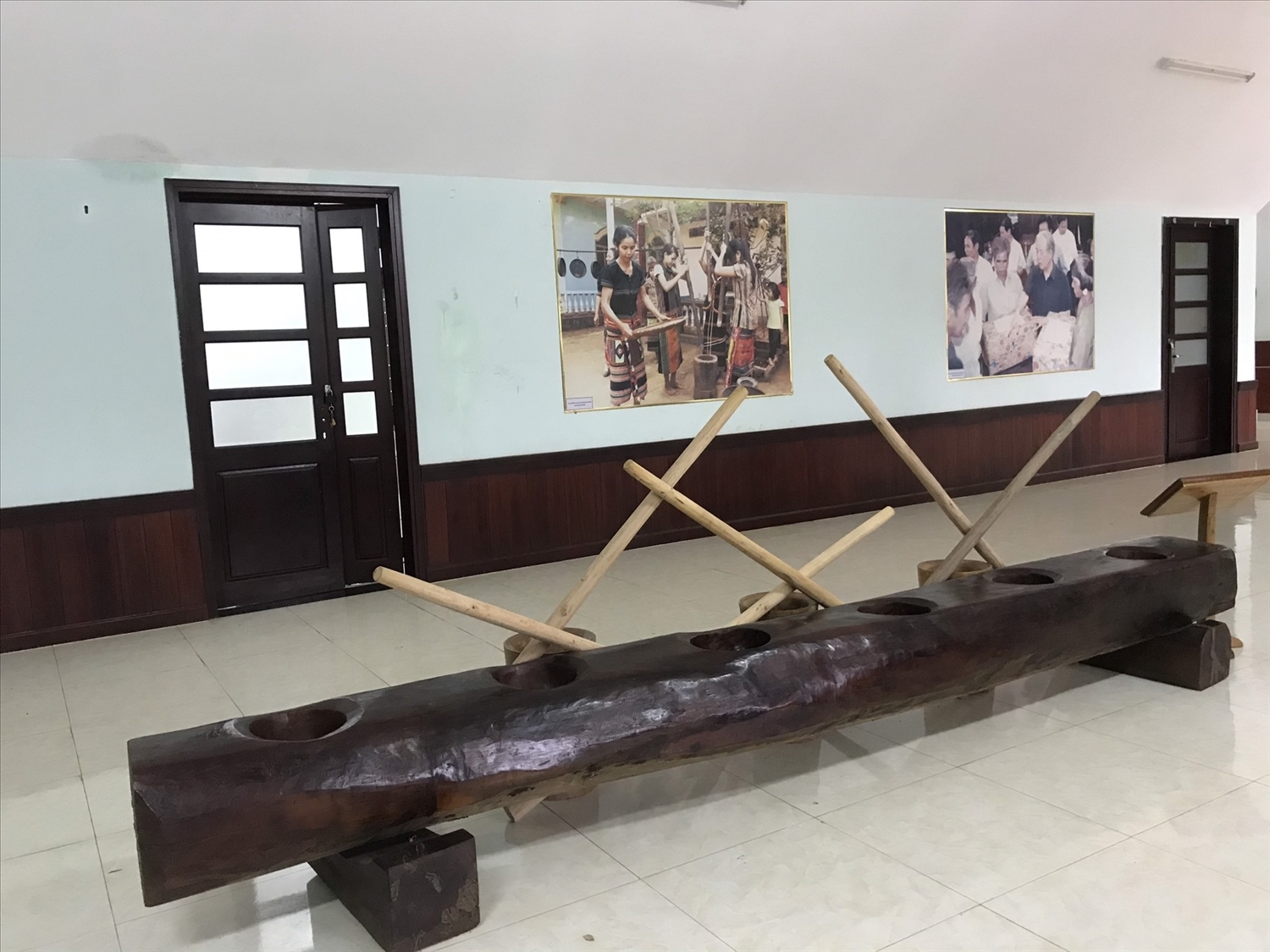 Rice pounding mortar made from tree trunks, an invention of the people of Soc Bom Bo to increase rice pounding productivity to feed the troops (Photo: Lao Dong Newspaper)
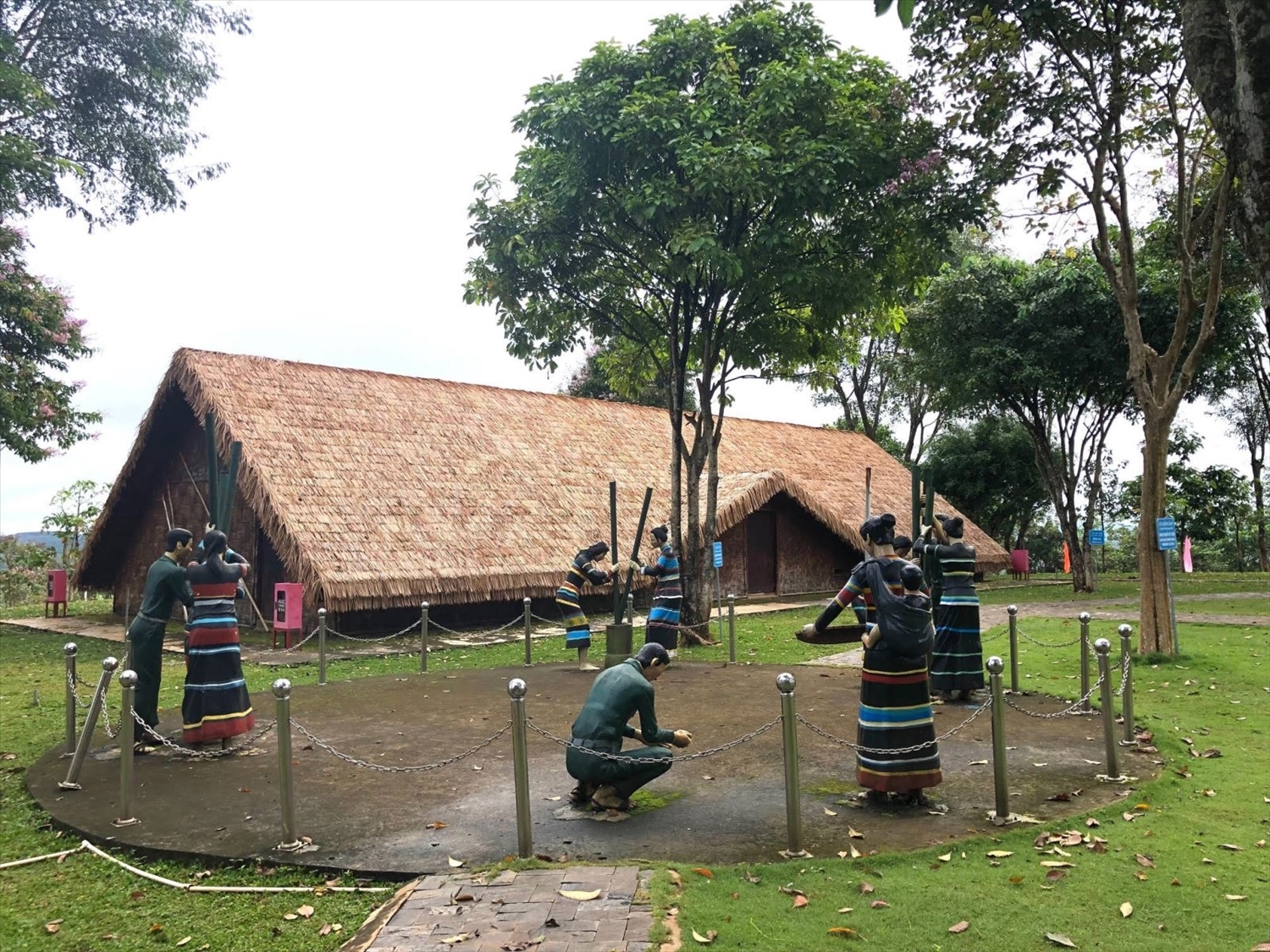 The scene of pounding rice to feed the troops has been recreated in the conservation area
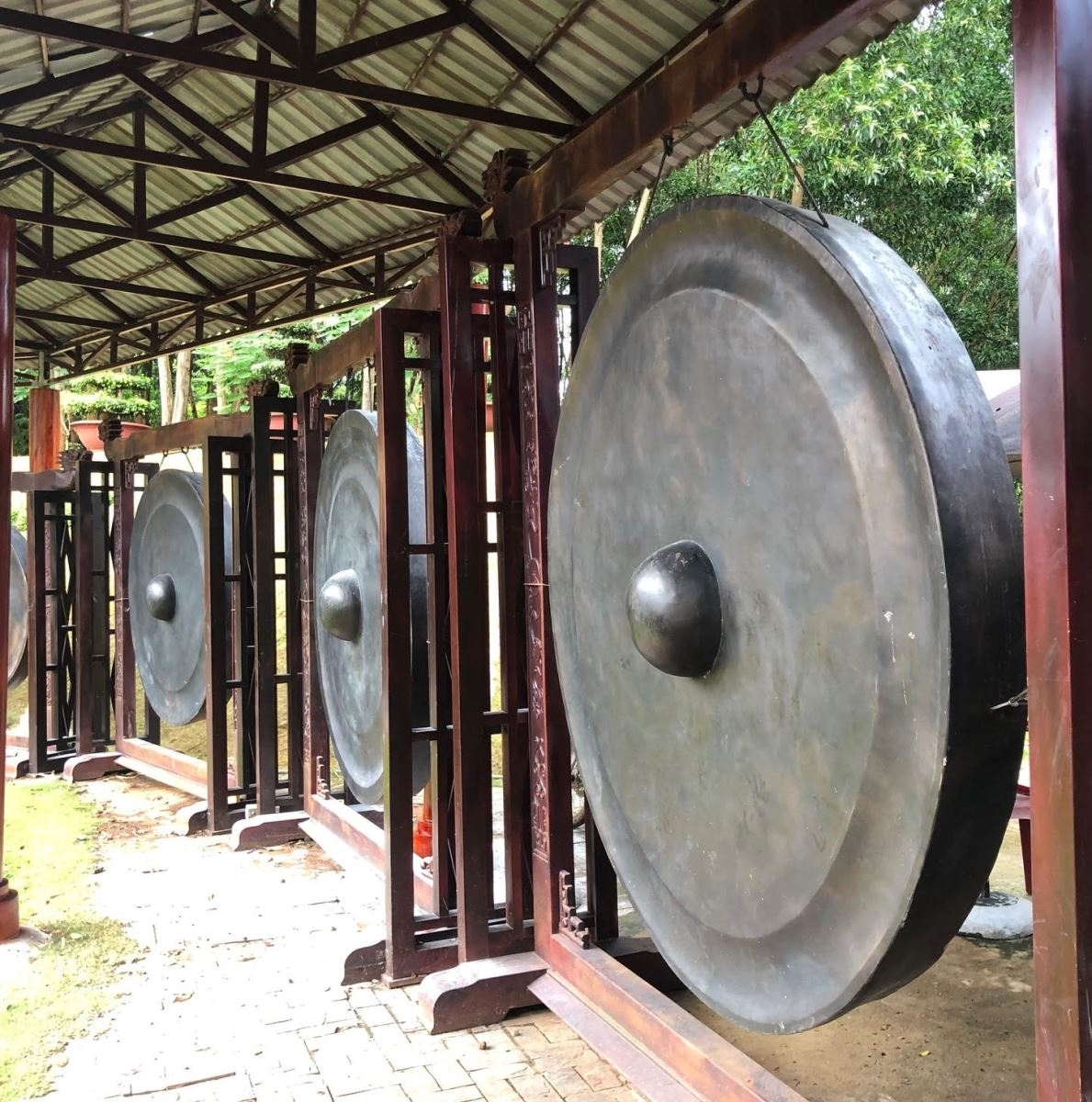 The gong set in Bom Bo village
