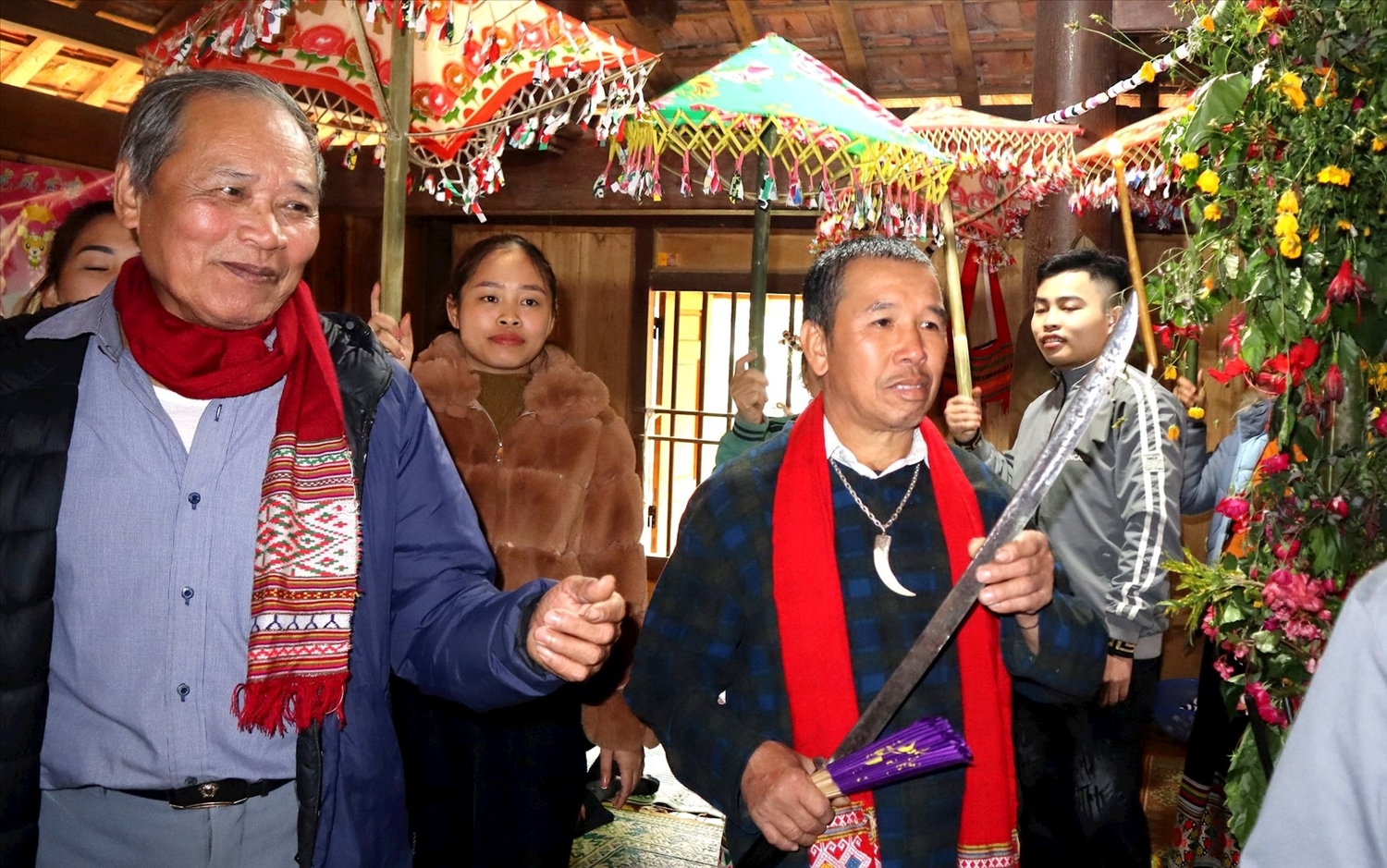
 The Thai ethnic group return to the shaman’s house to drink rice wine to celebrate the first thunder of the year
The Dao ethnic group celebrate Tet (Lunar New Year) with torches, sharp knives and burning bamboo tubes
Before the New Year’s Eve ceremony, the homeowner lights a bundle of torches, then, holding the blazing torch in one hand and a large, sharp knife in the other, walks from the house to the street while chanting prayers to ward off evil spirits, misfortune and bad luck. After offering prayers, the homeowner, holding a brightly burning torch and a sharp knife in hand, returned to the house, praying for good fortune, blessings and prosperity as they went. At the same time, the children in the house gathered around the fire, burning fresh bamboo tubes to create popping noises that would drive away evil spirits and bad things from the house and their minds, praying for a brighter, more intelligent and more mature new year than the previous one. After this ritual, the whole family washes their faces to welcome the sacred moment of the new year amidst the fragrant incense smoke, respectfully paying homage to their ancestors.
The Pa Then ethnic group close their doors tightly, lock them securely and welcome the New Year’s Eve moment
On the night of the 30th of Tet (Lunar New Year’s Eve), the Pa Then ethnic group close and lock their doors in every house. After closing all the doors, the homeowner takes the bowl of water from the altar, cleaning and washing it and replacing the water with fresh water, beginning the New Year’s Eve ritual. On the morning of the first day of the Lunar New Year, the doors are opened to welcome the new year, at this time, the custom of keeping New Year’s Eve a secret is finally lifted.
The Pu Peo ethnic group make black sticky rice cakes to offer to the ancestors of the old year and white sticky rice cakes to offer to the ancestors of the new year
The Pu Peo ethnic have a very unique New Year’s custom. According to their beliefs, green sticky rice cakes (chung cakes) are sacred and indispensable in their traditional New Year’s celebration. On the evening of the 29th of the lunar month, the Pu Peo ethnic group wrap black sticky rice cakes to bid farewell to the old year. They still use banana leaves, sticky rice and bean filling, but the rice is dyed black with non-toxic water from forest leaves and the filling is made with black beans or black sesame seeds. The cakes baked overnight are offered as a farewell ceremony for the old year on the morning of the 30th of Tet (Lunar New Year’s Eve). People believe that this will close the chapter on the bad luck and misfortunes of the past year. On the he 30th day of the Lunar New Year, people eagerly wrap white sticky rice cakes made with white sticky rice and a filling of peeled yellow mung beans or white beans. The cakes are boiled overnight and taken out at dawn to be offered to the ancestors to welcome the new year. People believe that by making white sticky rice cakes, their ancestors will bring them good fortune and blessings for the whole year.
The Lolo people wait until dawn to celebrate New Year’s Eve
For the Lo Lo people, the 30th day of the Lunar New Year is the most important day. In the afternoon, every household performs the year-end ritual, praying for health and vitality for all family members. In this ritual, men are offered hens, while women are offered roosters. Farming tools such as hoes, shovels, machetes, plows and harrows were all covered with yellow and silver-colored paper for good luck. On New Year’s Eve, the entire Lo Lo community strained their ears, anxiously awaiting the first rooster’s crow at dawn. When the first rooster crows, it marks a sacred moment and the entire Lo Lo village joyfully celebrates New Year’s Eve. The homeowner lights incense to offer prayers for the new year, sending someone to fetch water for good luck and waking up the pets to celebrate the New Year with the family.
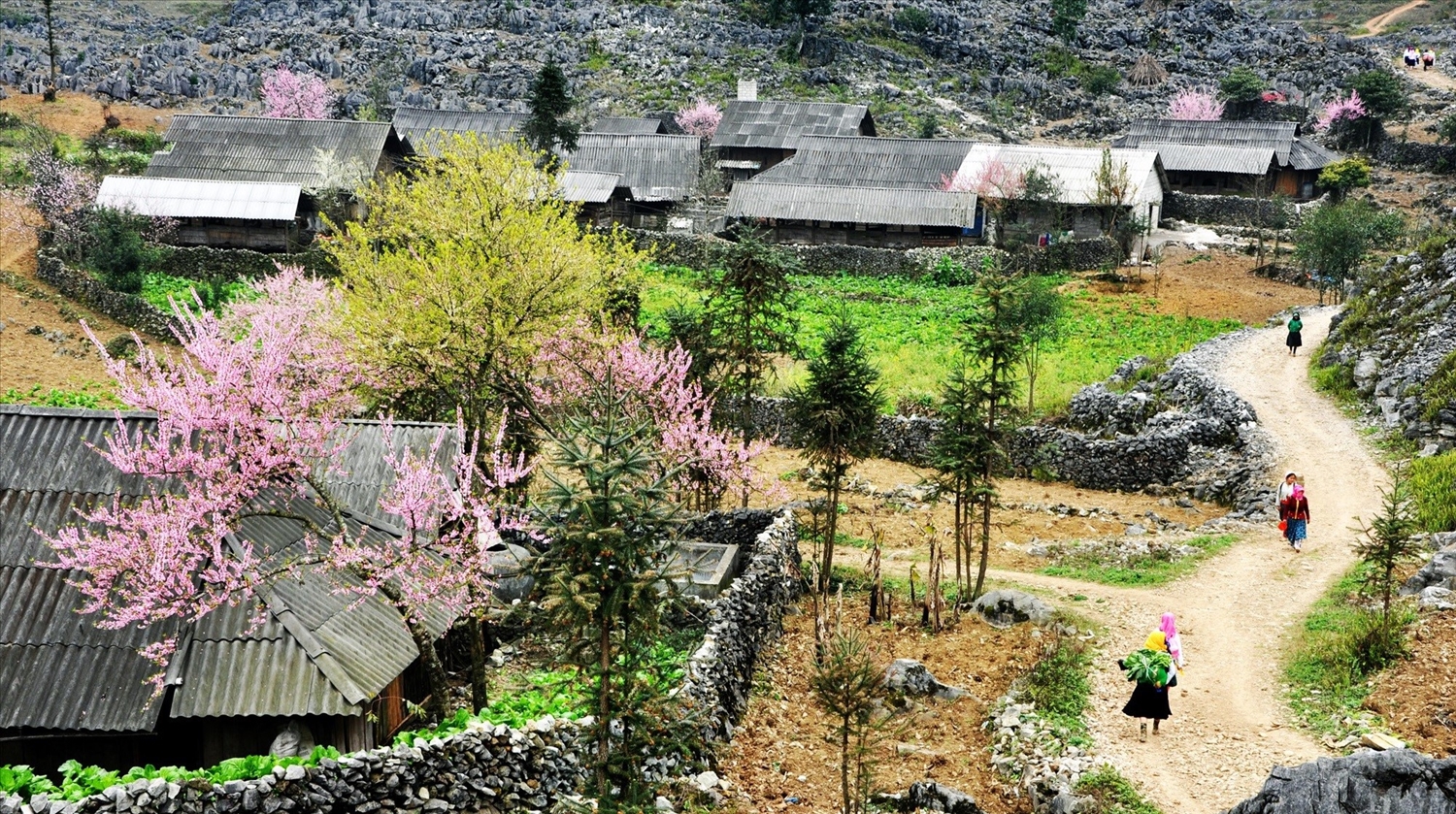 Lo Lo ethnic village in Tuyen Quang province
Thai ethnic group celebrate the New Year when the sound of thunder fills the air
In some regions, the Thai people have a custom of celebrating the New Year when the first thunder of spring arrives. The traditional Lunar New Year of the ethnic minorities is not based on specific dates but depends on the natural order of heaven and earth. As the seasons change, people prepare to celebrate the Lunar New Year, eagerly awaiting the sound of thunder. Whenever the first thunder of the season sounds, the homeowner wakes everyone up to stir up things to awaken it. After offering prayers to the ancestors and to heaven and earth, the homeowner gives each person in the house a chicken egg. The village gongs rise with prayers for the sun to be as white as a peeled egg, as round as a mountain melon and as pink as a blooming bauhinia flower. The eggs were boiled and everyone ate their share. Based on the sound of thunder, the village elder predicts a good and peaceful new year. Everyone joins in the festivities, drinking rice wine, singing folk songs, dancing the Xoe dance and playing gongs to celebrate the arrival of thunder, bringing favorable rain and wind for the new harvest.
