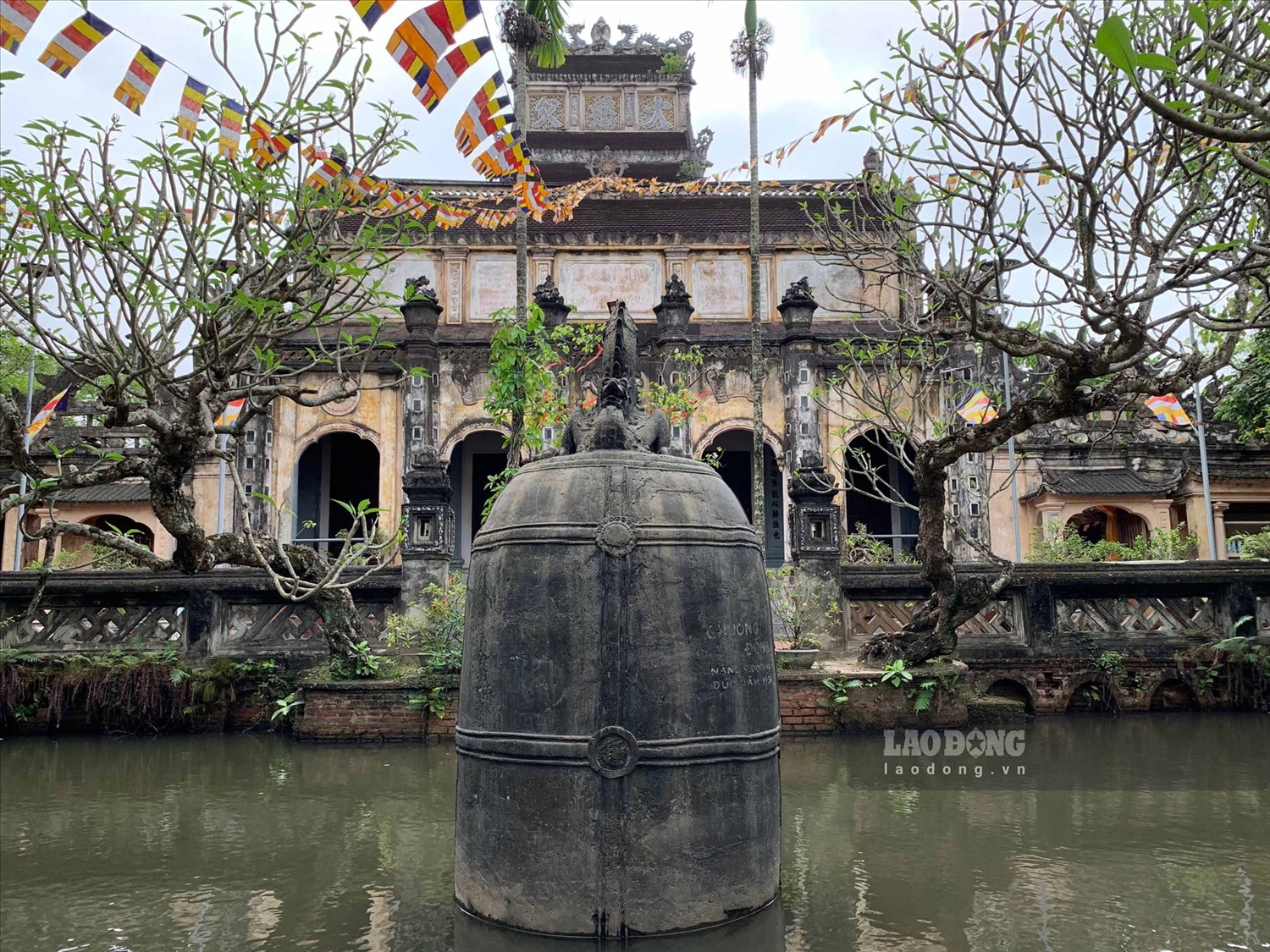
 Co Le pagoda is one of the famous scenic spots and a special national historical and cultural relic of the Red River Delta region (Photo: Lao Dong Newspaper).
Co Le pagoda, located in Co Le commune, Ninh Binh province, was built during the Ly Dynasty (12th century) on a square plot of land nearly 10 Northern Vietnamese acres (36,000 m2), surrounded by picturesque mountains and water, with a small river and lake. Besides worshipping Buddha, this sacred pagoda also venerates Saint Nguyen Minh Khong. According to the inscriptions preserved at the temple, the Venerable Founder was a fisherman; at the age of 29, he became a monk. He, along with Zen masters Giac Hai and Tu Dao Hanh, became sworn brothers and traveled to North India to study the practice of “Mind without defilements”, attaining “perfect integration of morality, concentration and wisdom, entering sainthood, transcending the ordinary and traveling through the sun and moon”.
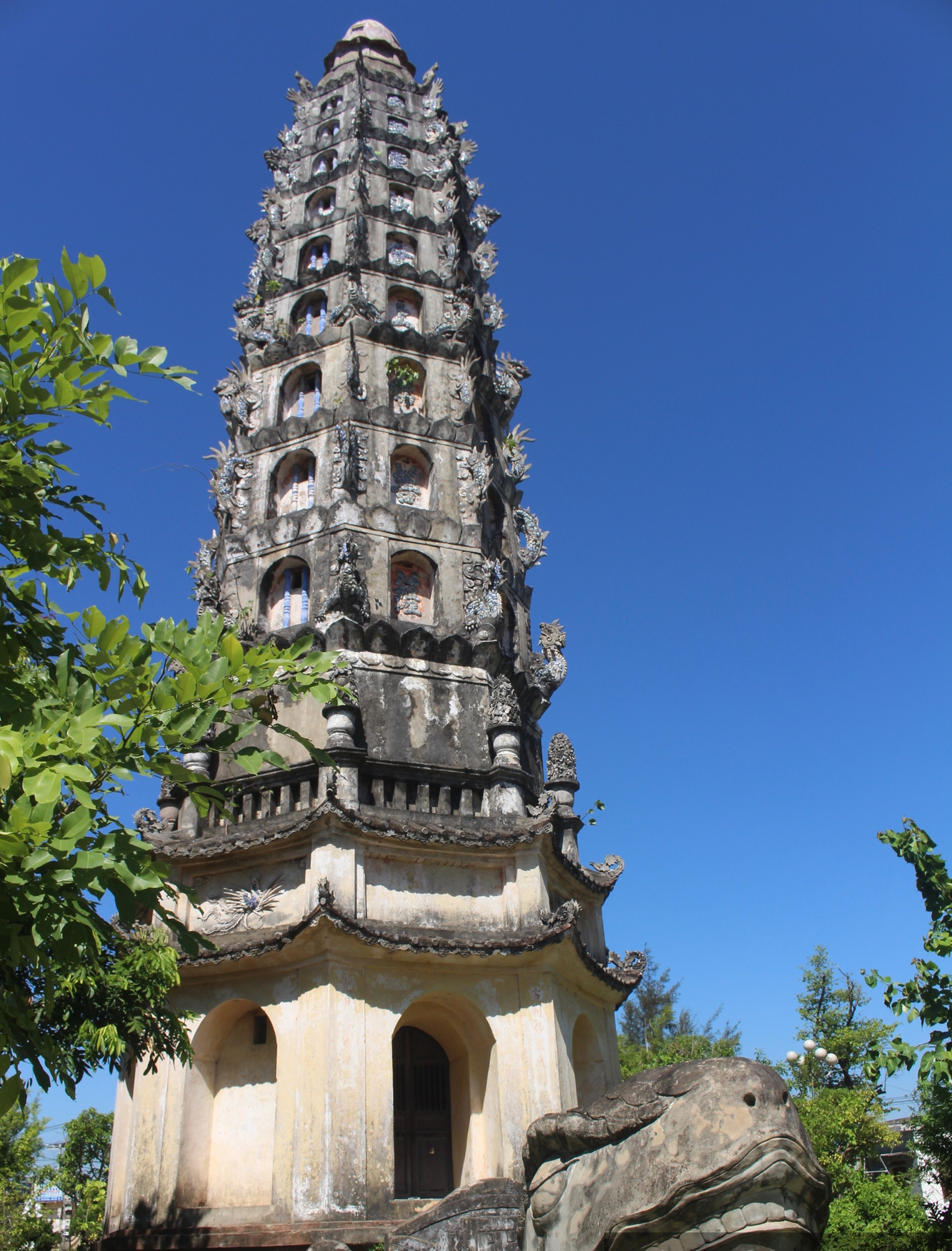 Nine-tiered lotus tower at Co Le pagoda
After attaining the six supernatural powers, all three returned to their homeland. Venerable Master Tu Dao Hanh became the abbot of Sai Son Pagoda. Venerable Master Nguyen Minh Khong became the abbot of Co Le pagoda. Venerable Master Giac Hai was the abbot of Dien Phuc pagoda. The three became known as the “Three Holy Ancestors of Southern Heaven”. Later, Emperor Nguyen Minh Khong traveled across the Song Dynasty to raise copper to cast the “Four Treasures of An Nam” - four precious artifacts of our country, including: A Buddha statue over 4 meters tall at Quynh Lam pagoda, Quang Ninh province; the Quy Dien Bell weighing 1,000 kg at Luc Dau Giang, Hai Phong city; the 9-floors Bao Thien Tower in Hanoi capital; and the Pho Minh Peak weighing 1,000 kg in old Nam Dinh province (today is Ninh Binh province).
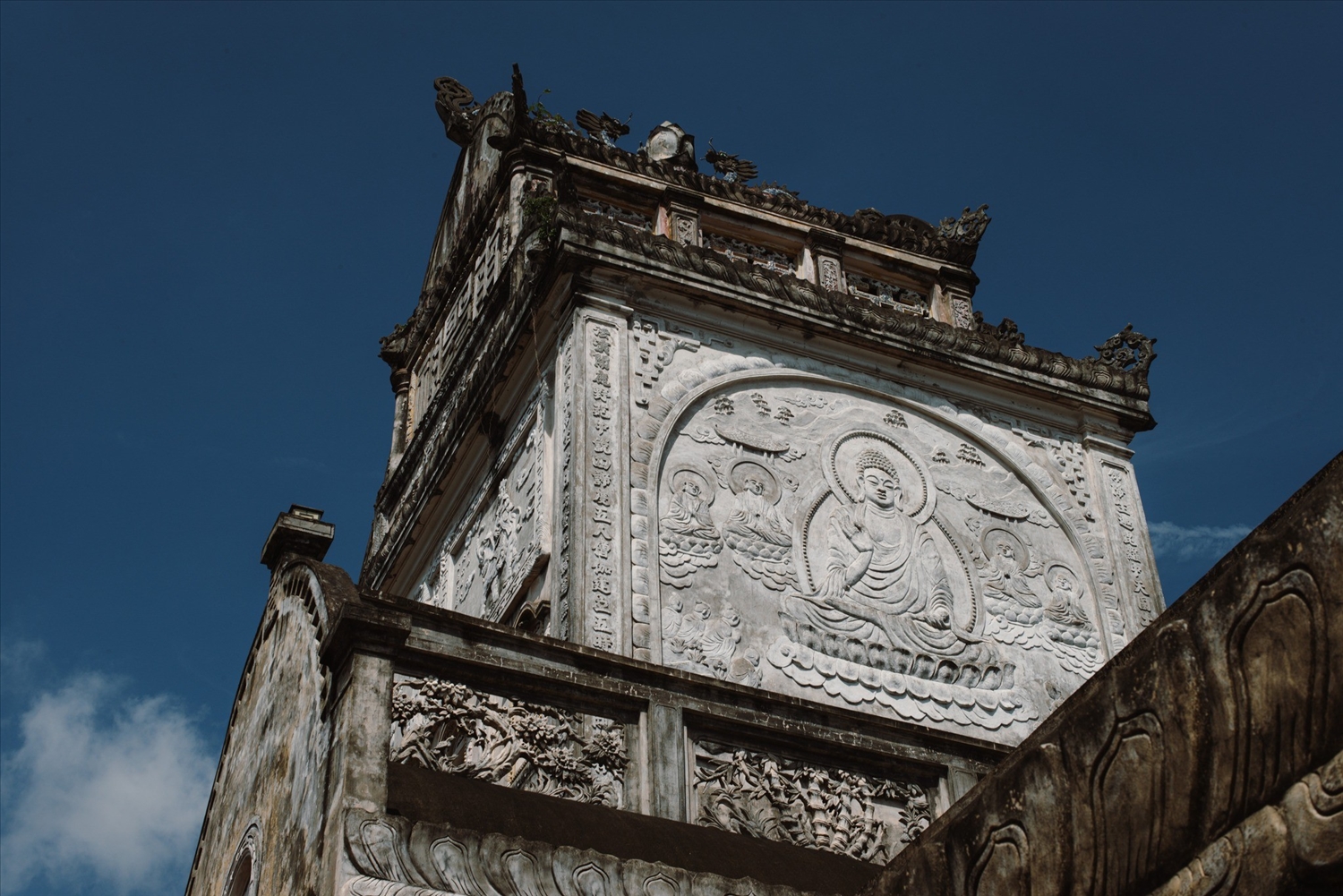 Co Le pagoda boasts numerous unique Buddha statues and works of art, ranging from original Buddha statues to sculptures carved in stone and wood (Photo by Viet Duc Tran/Vietnam Travel)
Co Le pagoda comprises numerous architectural structures, spreading out in an east-west direction. The main architectural complex begins with the Nine-Lotus pagoda. From the Nine-Tiered Lotus pagoda, crossing the arched bridge over the lake leads to the Three-Gate entrance. Beyond a wide courtyard paved with red bricks is the Buddhist Assembly Hall (in the middle), Linh Quang pagoda - a shrine dedicated to Saint Tran and two prominent scholars of the Tran dynasty, the First-Rank Scholar Dao Su Tich and the Dr. Dao Toan Phu (on the left) and the Mother Goddess Shrine (on the right). Behind the Assembly Hall, on the left and right sides are the Left Mountain Bridge and the Right Mountain Bridge, spanning the lake and leading to a small courtyard paved with bricks, which is where the Main pagoda is located. Connected to the main pagoda are the ancestral shrine and the lecture hall (Dharma Hall). On either side of the main temple are two rows of corridors, left and right (each with 25 rooms), running parallel and extending from the pagoda’s front hall to the end of the courtyard, past the ancestral hall and guesthouse. From the guesthouse, across a short courtyard is the pavilion and the bell tower “Kim Chung Bao Cac”. At the far end of the grounds is the garden of stupas and tombs of Venerable Pham Quang Tuyen and Venerable Thich The Long.
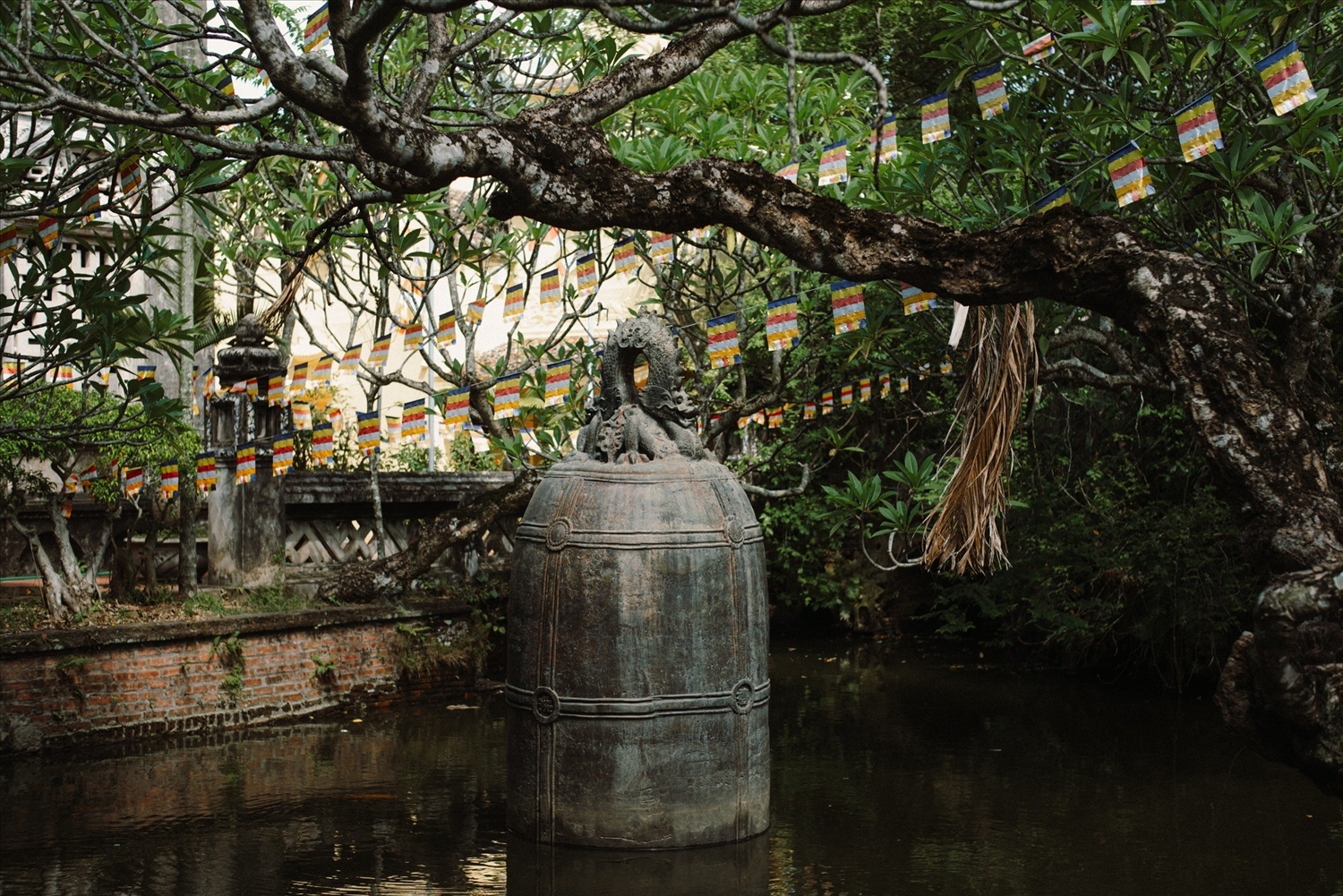 Co Le pagoda also proudly houses a special bell called Dai Hong Chung, weighing 9 tons, placed in the middle of the lake in front of the main hall. This is one of the largest bells in Vietnam (Photo by Viet Duc Tran/Vietnam Travel).
Within the Co Le pagoda complex, the main pagoda possesses unique artistic value, combining traditional Vietnamese architecture with Gothic architecture of Catholic churches, a rare feature in Vietnam. Co Le pagoda still preserves a 9-ton bell, located in the middle of the lake in front of the main hall - one of the largest bells in Vietnam, known as Dai Hong Chung, cast by Venerable Thich The Long in 1936.
According to the elders, when the bell was just cast, the resistance war broke out, and the people in the area, fearing destruction by the enemy, submerged the bell in a lake. In 1954, the bell was salvaged and placed on a stone pedestal for visitors to admire, where it has remained ever since. In 2005, Buddhist followers donated funds to cast another bell weighing 9 tons, which is hung on the second floor of the bell tower in the pagoda. The third floor has a bronze bell cast during the Le Dynasty, in the 7th year of the Canh Thinh reign (1799), weighing 300kg.
The highlight of the overall architecture of Co Le pagoda is the Nine-Tiered Lotus Tower, a multi-tiered structure that gradually rises into the air - a characteristic architectural style of Buddhism. The tower is octagonal in shape and built in the middle of a large lake. The base of the tower is a turtle placed in the middle of a square lake, with the turtle’s head facing inwards towards the pagoda and its tail facing outwards. The tower has 11 levels: 1 base level, 9 lotus flower levels and 1 spire level. The 9 lotus flower levels symbolize “nine heavens”, a distinctive feature of Buddhist beliefs. The tower’s supporting structure consists of a central circular column, designed with a base that widens gradually towards the top. Around the column are 64 steps leading from the base to the top of the tower, where a bronze statue of Amitabha Buddha is placed in meditation.
During the resistance against French colonialism and American imperialism, Co Le pagoda served both as a meeting place for directing the revolutionary movement in old Nam Dinh province (today is Ninh Binh province) and as a base for sheltering cadres, guerrillas and regular army soldiers. Especially, the pagoda has 27 monks who shed their robes to enlist in the army and defend the country, and 12 monks who sacrificed their lives on the battlefields.
With these outstanding values, the historical and architectural heritage of Co Le pagoda was classified as a special national monument by the Prime Minister on September 11th, 2025. Ninh Binh province has determined that it will combine preservation with the development of cultural tourism, making Co Le pagoda a highlight of Ninh Binh province’s heritage space, contributing to promoting the image of the ancient capital region to domestic and international tourists.
