The year 2025 also marks a significant milestone with the establishment of the Ministry of Ethnic and Religious Affairs based on the restructuring of the organization and functions of the Committee for Ethnic Minorities Affairs and the assumption of state management responsibilities regarding religion, in order to reorganize the apparatus according to Resolution No. 18-NQ/TW.
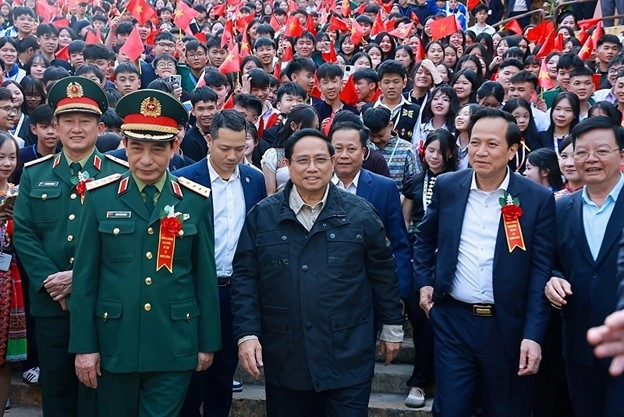 Prime Minister Pham Minh Chinh, Minister of National Defence Phan Van Giang and Minister of Ethnic and Religious Affairs Dao Ngoc Dung attended the groundbreaking ceremony for the project to invest in infrastructure for high schools in the Viet Bac mountainous region and pre-university schools under the Ministry of Ethnic and Religious Affairs.
Focus on building institutions that serve development
On March 1st, 2025, Ceremony for the Announcement of the National Assembly’s Resolution establishing the Ministry of Ethnic and Religious Affairs took place in a formal manner. This event was not only an organizational adjustment but also clearly demonstrated the consistent viewpoint of the Party and State that ethnic and religious affairs are issues of long-term strategic importance, directly linked to national unity, with political and social stability and sustainable national development.
Faced with the enormous workload resulting from the first-ever establishment of a Ministry of State Management for Ethnic and Religious Affairs within the Government apparatus, the Ministry of Ethnic and Religious Affairs proactively followed the resolutions and directives of the Party, the National Assembly, the Government and the Prime Minister, focusing on institutional building, with the overarching goal: “How can we ensure that ethnic minorities and religious communities enjoy and have their material and spiritual needs met more effectively; respect their right to freedom of belief, religion or non-belief, non-religions as stipulated by law; ensure the unity of all ethnic groups and religions?”
Based on the “six clear principles”: clear person, clear task, clear time, clear responsibility, clear product and clear authority, the Ministry submitted to the Government for promulgation Decree No. 124/2025/ND-CP dated June 11th, 2025, regulating the decentralization, delegation of power and delineation of authority of local governments at two levels in the field of ethnicity, beliefs and religions affairs. This is one of the earliest Decrees issued among the 28 Decrees on decentralization, delegation of power, delineation of authority and institutionalization of the principle of “local authorities decide, local authorities act, and local authorities take responsibility”. Regulations have been implemented to reduce and simplify 78 out of 108 administrative procedures in the field of ethnicity, belief and religion, achieving 72.2%; submitted to the Government issued Decree No. 272/2025/ND-CP dated October 16th, 2025, on the demarcation of ethnic minority and mountainous areas for the period of 2026-2030; Decree No. 255/2025/ND-CP dated September 29th, 2025, on criteria for identifying ethnic groups still facing many difficulties or with specific challenges, serving the development of policies for the period of 2026-2030.
In implementing the rearrangement and reorganization of administrative units at all levels and building a two-tiered local government organizational model, the Ministry has completed guidance on the implementation of the regimes and policies of the National Target Program for socio-economic development in ethnic minority and mountainous areas in the administrative units undergoing rearrangement and reorganization. Complete the compilation of a list of commune-level administrative units in mountainous areas to serve the election of deputies to the 16th National Assembly and deputies to People’s Councils at all levels for the term of 2026-2031...
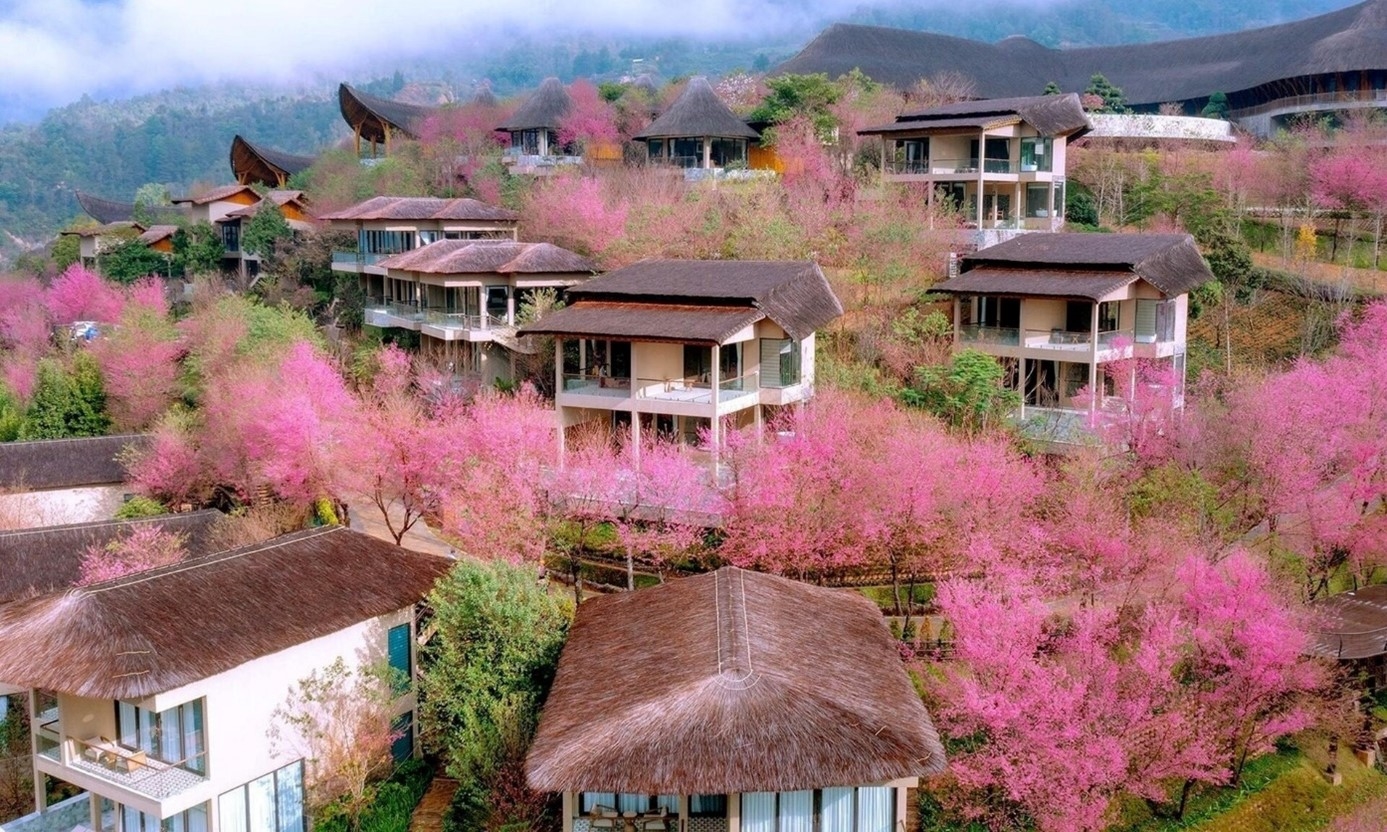 Ethnic minority and mountainous areas are increasingly attracting investment and development attention from domestic and foreign businesses (In the photo: Garrya Mu Cang Chai tourism area)
The mark of the National Target Program
A highlight of 2025 is the successful implementation of the National Target Program for socio-economic development in ethnic minority and mountainous areas, phase I (2021-2025), which has basically achieved its set goals, with 6 out of 9 target groups meeting or exceeding the plan. The total investment of over 137 trillion VND in phase I has brought about significant changes in the ethnic minority and mountainous areas. Against the backdrop of rising global poverty rates, Vietnam has recorded a decrease in its overall poverty rate to only about 1%; the poverty rate among ethnic minority households has also decreased to about 11%.
Specifically for 2025, as of November 30th, the disbursement rate of the Program reached approximately VND 12,513.4 billion, equivalent to 36.5% of the plan. In absolute terms, the disbursement of central government budget funds for the Program in 2025 (including funds carried over from previous years) is higher than the funds of the two National Target Programs at the same time, specifically: Public investment capital is 1.33 times higher than the New Rural Development Program; 3.56 times higher than the Sustainable Poverty Reduction Program; recurrent funding capital is 4.62 times higher than the New Rural Development Program; 1.7 times higher than the Sustainable Poverty Reduction Program.
Substantive movements
In its first year of establishment, the Ethnic and Religious Affairs has “come a relatively long way”, contributing to creating a solid foundation for the comprehensive and sustainable development of ethnic minority and religious areas. Notably, the Ministry advised the Prime Minister and the Head of the Central Steering Committee on a decisive implementation plan to shorten the time to complete the elimination of temporary and dilapidated houses by 5 years and 4 months compared to the target set in Resolution No. 42-NQ/TW, with a total of 334,234 houses newly built or repaired. The successful elimination results of temporary and dilapidated houses is considered a project reflecting the will of the Party and the people; to be a special national project; to be an important milestone for the Ministry of National Defense, with nationwide impact, celebrating the 50th anniversary of the liberation of the South and the reunification of the country, the 80th anniversary of the August Revolution and the National Day of the Socialist Republic of Vietnam.
Production activities in ethnic minority and religious areas have seen positive changes. Production and business activities have been maintained, creating more jobs, helping to increase the average income and improve the material and spiritual lives of ethnic minorities. Efforts to preserve and promote traditional cultural values in conjunction with community tourism development have been intensified. Many historical and cultural relics have been recognized at the provincial and national levels.
Education and training continue to be a top priority. The major policy of the Party and State to completely waive tuition fees for students from preschool to high school in public schools, implemented from the beginning of the 2025-2026 school year, has created momentum to promote universal education and reduce the burden on ethnic minorities and religious communities. Educational facilities are being upgraded to meet standards. Localities in the land border area have simultaneously held groundbreaking ceremonies for the construction of boarding schools for primary and secondary levels, affirming their determination to develop education in this strategic area.
Healthcare and public health services are given attention and priority. The poor and ethnic minorities in disadvantaged and especially disadvantaged communes are provided with health insurance cards by the State and to be entitled to 100% reimbursement of medical examination and treatment costs.
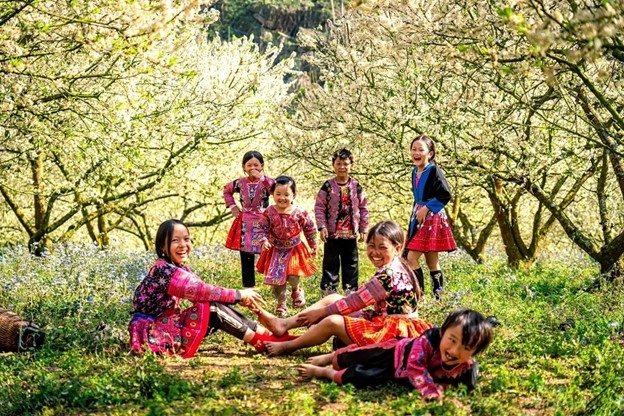 Ethnic Children always receive attention from their families, schools and society helping them to develop comprehensively
Vibrant religious activities
In 2025, religious activities across the country were vibrant, attracting a large number of religious leaders, followers and the People participated. Recognized and registered religious organizations must comply with the law, operate purely religiously, adhere strictly to the charters and regulations approved by the State. Many religious organizations hold term Congresses and annual conferences in accordance with the law, continuing to define their operational direction in close association with and in solidarity with the nation. Authorities at all levels are paying attention to guiding, resolving the legitimate needs and aspirations of religious organizations and individuals, contributing to strengthening the relationship between the government and religion, making it increasingly open and close; consolidating the trust of religious leaders, officials, and followers in the leadership of the Party and the management of the government at all levels.
Following the Prime Minister’s directive, the Ministry proactively guided and assisted the Vietnam Buddhist Sangha in successfully hosting the United Nations Vesak Celebration in 2025 from May 6th-8th, 2025, in Ho Chi Minh City, this event received high praise from both domestic and international audiences, contributing to affirming religious freedom in our country and promoting the image, people and land of Vietnam.
New Spring - New Hope
In 2025, ethnic and religious affairs left many significant marks, not only measured by numbers, but also by the transformation in the material and spiritual lives of ethnic minorities and religious communities.
The Year of the Horse is knocking at the door. In villages, hamlets, parishes, and monasteries… the joy of welcoming spring blends with the confidence to enter 2026 - the first year of implementing the Resolution of the 14th National Congress of the Party and ethnic and religious affairs will continue to receive attention, be given their rightful place to accompany the country into an era of prosperous and powerful development.
