Keywords: Management experience; Religious activities; Some Asian countries.
1. State management of religious activities in China
The People's Republic of China (China) is a country with a population of 1.324 billion people and an area of 9,597,000 km2. It is a multi-ethnic and multi-religious country; however, up to now, the Chinese government only recognizes five religions: Buddhism, Taoism, Islam, Catholicism and Protestantism (New Christianity). The number of religious followers in China accounts for just over 10% of the population, specifically: Buddhism has over 65 million followers, Islam 21 million followers, Catholicism 12 million followers, Protestantism 20 million followers,… Since the reform period, religious policy and state management of religious activities in China have undergone many changes. The Chinese government has enacted legal regulations to manage all religious activities. In practice, the religious policy and state management of religious activities in China raise several points of concern.
From the understanding that religion is a long-standing entity and that the religious needs of a segment of the population are undeniable, the policy orientation towards religion and religious affairs, the management of religious activities in China have recognized the existence of religion and met the religious needs of a segment of the people.
The Chinese government has established legal regulations related to beliefs and religions. Specifically, in 1991, it issued two documents: Measures for the Management and Registration of Religious Organizations and Measures for the Registration of Religious Establishments; and in 1994, it issued the Decree on the Management and Registration of Religious Establishments. In particular, in 2004, the Government (State Council) issued the Regulations on Religious Affairs, amended and supplemented in 2016. These are legal documents that reflect religious policy and implement the management and control of religious activities in China.
In its policies and state management of religious activities, China places great emphasis on the international relations of religions, adhering to the principle that religions must resolutely maintain their independence and autonomy. Religious organizations, religious activity sites and religious training institutions are not subject to the control of foreign powers.
In addition to regulations concerning specific religious and social activities of individuals and religious organizations, Chinese law clearly defines the legal responsibilities of individuals and religious organizations to society, the Party and the State. In particular, Chinese law clearly stipulates prohibitions related to religious activities, along with specific financial and criminal penalties.
China is one of the few countries with a specialized agency for managing religious activities - the State Council’s Bureau of Religious Affairs, a ministerial-level agency with a system extending down to the grassroots level. The Bureau of Religious Affairs advises the Communist Party of China on its views and policies regarding religion, exercises state management over religious activities, at the same time handling administrative violations related to religious affairs.
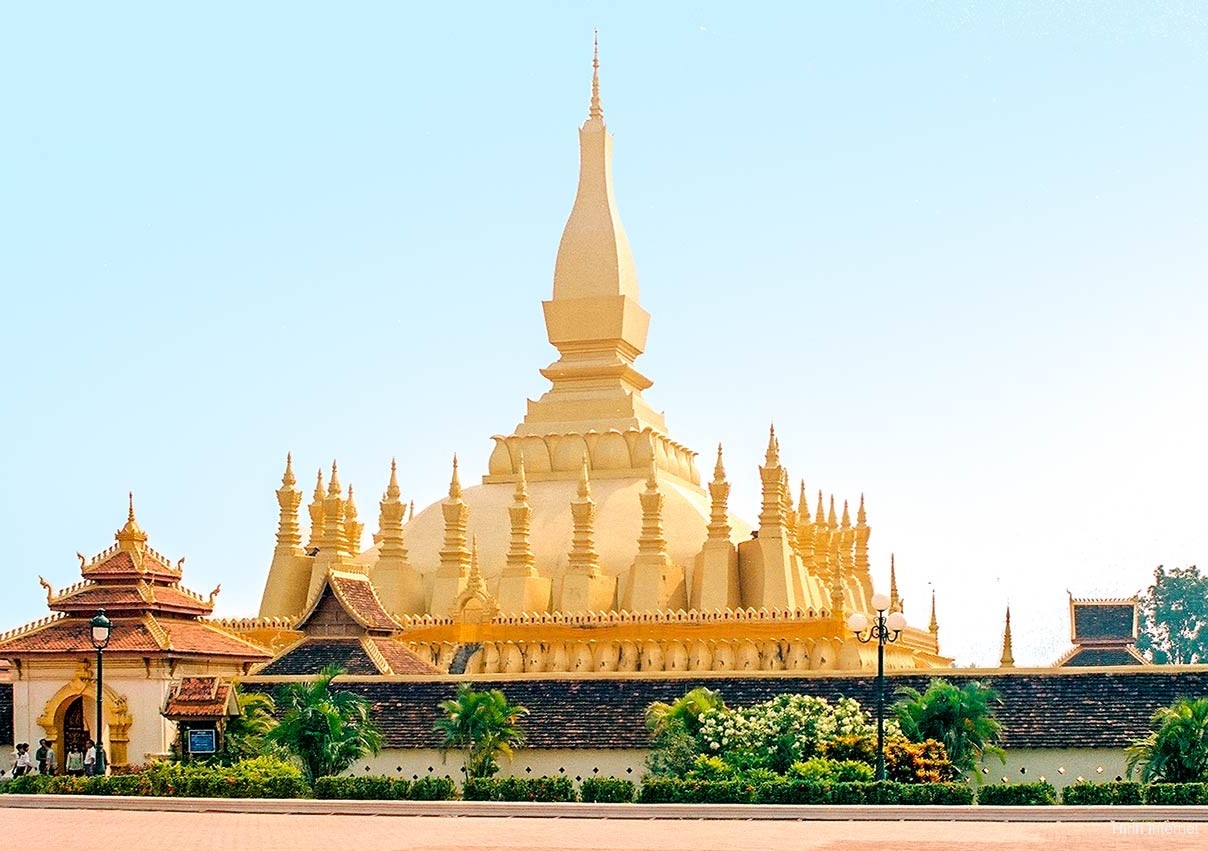 Laos Buddhist architectural works
2. State management of religious activities in Laos
The Lao People’s Democratic Republic is a Southeast Asian country with a population of 7.5 million and an area of 236,800 square kilometers. Laos is a predominantly Theravada Buddhist country, with followers accounting for over 65% of the population. Other religions include Catholicism, Protestantism, Islam and Baha’i. Previously, the Kingdom of Laos identified Buddhism as its state religion. After 1975, the Lao People’s Democratic Republic continued to value Buddhism as a religion with significant influence on the country, but accepted and maintained religious diversity. In particular, since the beginning of the 21st century, Laos has also enacted laws on religion and implemented state management of religious activities. Religious policy, religious affairs and the management of religious activities in Laos have aspects that require attention.
Laos entered a period of reform in 1986 and the Lao People’s Revolutionary Party congresses consistently included discussions on religion. The 11th Party Congress in 2015 affirmed the reform policy regarding religion in Laos, based on respect for the people’s freedom of belief and religion. In particular, promoting the role of monks and religious clergy in participating in activities for the benefit of the country and its people is the main policy direction and management approach for religious activities in Laos.
The Lao government has institutionalized the Party’s stance on religion by enacting legal regulations on religious activities through Decree No.92/SL-CP, dated July 5th, 2002, on the management and protection of religious activities in the Lao People's Democratic Republic. After a period of implementation, Decree 92/SL-CP was replaced by Decree 135/SL-CP, dated August 16th, 2016. Decree 92/SL-CP (2002) and Decree 135/SL-CP (2016) are policies and legal frameworks related to certain religious activities in Laos.
The history and culture of Laos are closely linked to Theravada Buddhism, so the Decree on the Management and Protection of Religious Activities is not only a legal regulation but also reflects the policy towards religion, especially Buddhism, specifically, as follows: Training of monks, including general education programs; construction and repair of temples and pagodas; organization of Buddhist festivals; relations between monks and the government, especially between senior monks and the government; relations between Lao Buddhism and Buddhism in other countries in the region and internationally,…
Due to the unique characteristics of religion and religious policies, religious affairs and the management of religious activities are less administrative in nature. According to Decree No.135/SL-CP, currently in Laos, there are more than 51 tasks related to the relationship between religion and the political system. Of these, only about 20 are administrative procedures involving government at all levels, from central to local, while the rest are tasks related to guiding, assisting, and protecting religious activities in accordance with the spirit of Decree 135/SL-CP, which includes the element of “protecting the activities of religion”.
3. State management of religious activities in Japan
Japan is located in Northeast Asia, covering an area of 377,855 square kilometers and with a population of 128.5 million people. Shintoism, the traditional religion deeply rooted in Japan’s history and culture, is practiced by approximately 60% of the population. Buddhism was introduced to Japan at the beginning of the Common Era and, having merged with Shintoism, has a widespread influence; its followers account for more than 20% of the population. Other religions include Catholicism and Protestantism… Japan was a country that opened to the West in the mid-nineteenth century, so the principle of religious freedom was soon formed. However, for many reasons, Shinto still dominated all aspects of political, cultural and social life until the second world war (1939-1945). The transformation in religion, religious policy, and the management of religious activities since World War II, when the United States was entrusted by the United Nations as the trustee of Japan from 1945 to 1952, presents several points of concern.
In order to limit the role of Shintoism and achieve religious equality, the United States helped Japan draft a constitution that included provisions on religious freedom, and also enacted the Law on Religious Entities in December 1945, replacing the 1939 Law on Religious Organizations. However, due to its overly lenient nature, many superstitious, extremist, and negative religious organizations were recognized. Following the Sarin terrorist attack by the Aum Shinrikyo cult in 1995, Japan adjusted its Religious Entities Law to be stricter and more regulatory of religious activities.
The Law on Religious Legal Entities clearly and comprehensively stipulates the conditions for religious legal entities, the required documents (including charters) and administrative procedures for recognition as a religious legal entity, the personnel at all levels of religious legal entities, the state agencies that recognize religious legal entities, subordinate religious organizations (affiliated legal entities), the merger and dissolution of religious legal entities and related issues concerning the resolution of mergers and dissolutions of religious legal entities,...
The Law on Religious Entities not only regulates the legal status of religious organizations but also serves as a normative legal document concerning the religious activities of individuals and religious organizations. Specifically, activities related to religious organizations include: registration of religious activities, locations of religious activities, places of worship, assets of religious organizations,... Religious organizations are required to report to the authorities on their activities and assets periodically, including complaints related to religion and regulations on penalties for violations of the law.
In Japan, the recognition of religious legal entities and the management of religious activities are carried out through a multi-sectoral, term-based, two-tiered Council of Legal Entities mechanism. At the central level, the Japanese government assigns this responsibility to the Ministry of Education, Culture and Sports (with the Cultural Affairs Bureau as the coordinating body), the Ministry of Finance and several other relevant ministries and agencies. At the provincial and municipal levels, a multi-sectoral mechanism is in place. Of particular interest is that the number of members of the Legal Entity Council is clearly defined, and they must be religious believers and intellectuals.
4. State management of religious activities in Singapores
Singapore is a Southeast Asian nation, established in 1965, with an area of 647 square kilometers and a population of 5.7 million people. Approximately 87% of the population are religious believers. Due to its characteristics as a “migration society”, Singaporeans have a strong religious belief system, as religion has historically served as a source of spiritual support in various circumstances. Singapore is considered one of the top 10 countries in the world with the highest religious diversity index, with many religions and religious organizations coexisting. Buddhism, Taoism, Hinduism, Islam and Christianity (Protestantism and Catholicism) are the main religious groups, accounting for approximately 81.4% of the total number of religious followers; the remainder are other religions, such as: Judaism, Shiaism, Zoroastrianism, Baha'i,... As a religiously diverse nation, with religion closely linked to the nation, Singapore, despite being a relatively newly established country has a comprehensive and detailed legal system covering all aspects of social life, including religion. In the field of religion, Singapore does not have its own specific legal regulations; these are reflected in the Constitution and related legal documents.
The Constitution legalizes freedom of belief and religion, specifically: freedom of religion and the right of each individual to practice their religion are fundamental freedoms. Every religious group and organization has the right to establish and maintain educational institutions for children in their own language and religion; no one is compelled to learn or participate in any religious rituals or worship other than their own. Along with the Constitution, there are legal regulations related to the religious activities of believers and the activities of religious leaders and officials, such as: registration of religious organizations, missionary activities, training of religious leaders, social welfare activities, international activities,…
Besides its open and liberal policies towards religion, which cater to the needs and aspirations of individuals and religious organizations, the Singaporean government also has strict and rigorous mechanisms for handling violations of the law. Relevant legal regulations for handling violations include: the Criminal Code, the Internal Security Act, the Act on Social Organizations and Associations,.... Specially, in 1991, the Singapore Parliament enacted the Maintenance of Religious Harmony Act. Defining by law what is and isn’t permitted in religious activities has fostered civic awareness of law compliance. Thanks to this, Singapore has successfully implemented respect for and guaranteed the freedom of belief and religion for all people, regulated religious activities according to the law, and promoted the positive role of religion; at the same time, it has prevented religious conflicts and curbed extremist tendencies in religions.
Besides distinguishing between what is permissible and impermissible in religious activities, the Singaporean government supports interreligious cooperation, viewing it as a key element in the relationship between religions and the State. While in European and American countries, religious affiliation, primarily among Christian denominations, is structured through National Churches (NCs) that are members of the World Council of Churches (WCC), in Singapore it is an affiliation of all religious organizations. This demonstrates tolerance and harmonious relations between religions, reflects the State’s religious policy and is a characteristic feature of the relationship between the State and religion in countries in the region and the world.
Singapore does not have a dedicated government agency for the management of religious activities. Government ministries and agencies directly regulate religious activities in accordance with relevant laws. Religious issues that the State must address are assigned to the Ministry of Community Development, Youth and Sports, specifically the Community Development Department. Although Singapore does not have a dedicated religious affairs agency, it has established the Presidential Council for Religious Harmony. The function of the Presidential Council for Religious Harmony is to review and report to the Minister in charge on matters affecting the maintenance of religious harmony in Singapore, as referred by Parliament and the Minister in charge; reviewing and making recommendations on orders sent to the Council by the Minister in charge.
5. Conclusion
From religious and religious policies, religious affairs, and state management of religious activities in several countries such as China, Laos, Japan, and Singapore, it can be seen that: in all countries, regardless of the mechanism used to manage religious activities, the first and most important point is respect for and guarantee of the freedom of belief and religion for all people. This has become a principle enshrined in the constitutions of each country. All citizens maintain religious practices, expressing their religious beliefs in their homes and places of worship. The religious activities of believers are always given priority. Importantly, regardless of the mechanism, those working in religious affairs and in state management of religious activities must have a thorough understanding of religion. Laos, Japan and Singapore have a majority of religious people, so the team of civil servants doing religious work and managing religious activities has an understanding of religion, so the work becomes convenient, gentle and effective.
References
1. Government Religious Affairs Committee, Decree No.135/CP (2016) on the management and protection of religious activities in the Lao People’s Democratic Republic (Translation by the Central Committee of the Lao Front for National Construction), Hanoi, 2022.
2. Do Quang Hung, Religious Policy and the Rule of Law, National University of Hanoi Publishing House, Hanoi, 2013.
3. Pham Hong Thai (Editor), Religious life in Japan today, Social Sciences Publishing House, Hanoi, 2005.
4. Nguyen Cao Thanh, Religious policy in China, Journal of Religious Affairs, No. 1+2/2007.
5. Nguyen Tuan Thuy, Religious legal entities in Japan, Journal of Religious Affairs, No. 4/2020.
6. Nguyen Quynh Tram, Religion and religious policy in Singapore, Journal of Religious Affairs, No. 4/2022.
7. Nguyen Thanh Xuan, Religion and Religious Policy in Vietnam, Religious Publishing House, Hanoi, 2021.
8. Nguyen Thanh Xuan, Overview of religion and religious policy in Laos, Journal of Religious Affairs, No. 1+2/2022.
9. Lu Van, Religious Policy in China - 100 Questions and Answers, Religious Publishing House, Hanoi, 2014.
