Keywords: Human rights; Law on Beliefs and Religions; Freedom rights of belief and religion.
1. Freedom rights of belief and religion in the constitution
In Vietnam, the right to freedom rights of belief and religion of citizens has always been recognized and expressed in the constitutions throughout different periods, from the 1946 Constitution - the first constitution of the Democratic Republic of Vietnam, and subsequently affirmed and expanded in the 1959, 1980, 1992 and 2013 Constitutions.
The 1946 Constitution stipulates: “Citizens have the right to freedom of speech, freedom of publication, freedom of organization and assembly, freedom of religion, freedom of residence and movement within the country and abroad”. The provisions on freedom of belief and religion in this constitution are still general in nature, not specific enough and lack measures to ensure their implementation. However, the presence of civil rights, including the right to freedom of belief and religion is still considered the core of the democratic constitution, affirming the success of Vietnam’s constitutional history.
The 1959 Constitution inherited the idea of freedom of belief and religion from the 1946 Constitution and clearly affirmed that “Citizens of the Democratic Republic of Vietnam have the right to freedom of belief, in order to follow or not follow any religion”.
The 1980 Constitution is a development that inherits and incorporates the provisions of the 1946 Constitution and the 1959 Constitution. Based on that, the 1980 Constitution emphasizes that “Citizens have the right to freedom of belief, in order to follow or not follow any religion”, at the same time defines measures to ensure the exercise of this right: “No one shall exploit religion to violate the law and policies of the State”. This regulation not only affirms the consistent stance in the Vietnamese State’s policy of recognizing and guaranteeing the essential individual freedoms of citizens, but also affirms the State’s strict attitude towards acts that exploit freedom rights of belief and religion to undermine the revolution.
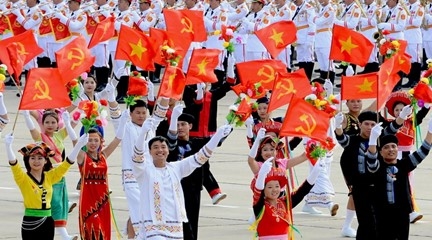 Vietnam has made continuous efforts to build and improve its legal system regarding human rights
The 1992 Constitution was born out of the comprehensive reform process of the Vietnamese Party and State. In the spirit of promoting democracy and expanding the democratic freedoms of citizens, the 1992 Constitution clearly and comprehensively recognizes the right to freedom of belief and religion: “Citizens have the right to freedom of belief and religion, in order to follow or not follow any religion”. All religions are equal before the law. Places of worship of all faiths and religions are protected by law. No one shall infringe upon freedom of belief and religion or exploit belief and religion to violate the laws and policies of the State”.
Based on the aforementioned constitutions, the 2013 Constitution continues to affirm the consistent stance of the Party and the State in recognizing, respecting, protecting and guaranteeing the freedom rights of belief and religion for all people. This is also the highest legal basis for everyone to be protected and to exercise their freedom of belief and religion: “1. Everyone has the right to freedom of belief and religion, in order to follow or not follow any religion”. All religions are equal before the law. 2. The State respects and protects the right to freedom of belief and religion. 3. No one shall infringe upon freedom of belief and religion or exploit belief and religion to violate the law.
The 2013 Constitution made important amendments regarding the subject of the freedom rights of belief and religion, stating that it is not only the right of Vietnamese “citizens” but also the right of all “people” and this right is not limited by nationality, gender, age,... Recognizing the concept of “everyone” having the right to freedom of belief and religion also affirms the solidarity and unity of all Vietnamese people in the cause of national unity, in the process of building and defending the Fatherland. Furthermore, the 2013 Constitution also emphasizes the role and responsibility of the State and its guarantees in recognizing, respecting, implementing and protecting human rights and civil rights, including the freedom rights of belief and religion; adds regulations to strengthen the mechanism for implementing human rights and the fundamental rights and obligations of citizens.
For the first time, the issue of limiting rights was stipulated as a principle in the 2013 Constitution, stating that “Human rights and civil rights can only be restricted by law in cases where it is necessary for reasons of national defense, national security, social order and safety, social morality and public health”.
2. The implementation of human rights regulations through the exercise of the freedom rights of belief and religion in the law on belief and religion
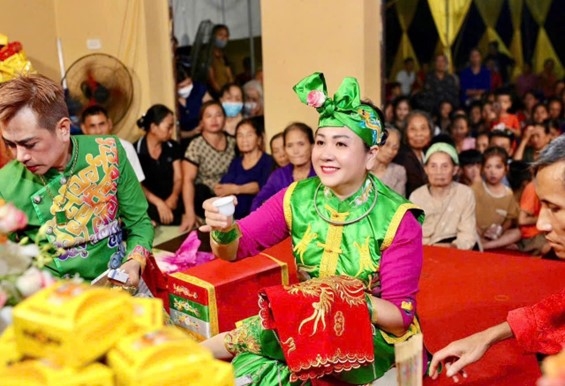 The 2013 Constitution affirms that “Everyone has the right to freedom of belief and religion”
2.1. The Law on beliefs and religions - a concrete step in implementing the 2013 Constitution regarding the freedom rights of belief and religion
The Law on Beliefs and Religions was passed by the 14th National Assembly of the Socialist Republic of Vietnam at its 2nd session on November 18th, 2016, and came into effect on January 1st, 2018. This is currently the highest ranking legal document directly regulating the field of belief and religion, at the same time it is also one of the first laws enacted to concretize human rights in the 2013 Constitution - that is everyone’s freedom rights of belief and religion.
The Law on Beliefs and Religions has many progressive new points, demonstrating openness and transparency, while being consistent with the spirit of the 2013 Constitution and ensuring compatibility with international treaties to which Vietnam is a signatory. it has also created a legal basis for everyone to exercise their right to freedom of belief and religion and contributed to enhancing transparency in the operation of the state apparatus.
In order to concretize the freedom rights of belief and religion enshrined in the 2013 Constitution, the Law on Belief and Religion has added specific provisions on the content of the right to freedom of belief and religion; the ways to exercise the freedom rights of belief, religion and the State’s policies demonstrating respect for and protection of the freedom rights of belief and religion. The specific provisions of the Basic Law establish a mechanism to recognize and guarantee the freedom of belief and religion of Vietnamese citizens and foreigners legally residing in Vietnam, contributing to ensuring the freedom rights of belief and religion as a human right in the spirit of the 2013 Constitution.
The law has expanded the scope of subjects entitled to freedom rights of belief and religion from “citizens” to “everyone”, accurately reflecting the nature of freedom rights of belief and religion as a human right in accordance with the spirit of the 2013 Constitution. In particular, the Law dedicates a chapter (Chapter II) to the right to freedom of belief and religion, in order to more clearly reflect the scope of the Law’s application and to fundamentally demonstrate the State’s policy of respecting and guaranteeing the freedom rights of belief and religion for all people. Specifically:
Firstly, the freedom rights of belief and religion for all people
Article 6 of the Law stipulates that several entities are entitled to the freedom rights of belief and religion, namely “everyone”; “each person”; minors; religious dignitaries, officials, and clergy; persons detained or held in custody in accordance with the law on the execution of detention and custody; minors; religious dignitaries, officials and clergy; persons detained or held in custody in accordance with the law on the execution of detention and custody; persons serving prison sentences; persons undergoing measures of placement in reform schools, compulsory education facilities, compulsory drug rehabilitation centers; and foreigners legally residing in Vietnam.
Especially, for the first time, the Vietnamese State’s law on religion stipulates in a very humane way that “Persons who are temporarily detained or imprisoned according to the law on the execution of temporary detention and imprisonment; persons serving prison sentences; persons undergoing measures of placement in reform schools, compulsory education facilities, compulsory drug rehabilitation facilities have the right to use religious texts and express their religious beliefs”. Thus, the freedom rights of belief and religion is guaranteed and protected by the State even for those whose civil rights are restricted. This is the fullest expression of freedom rights of belief and religion, first of all, a human right, an inherent right, a right that everyone is born with and is not granted by any organization or individual.
Secondly, the rights of religious organizations and affiliated religious organizations
The law stipulates fundamental principles regarding the rights of religious organizations and affiliated religious organizations. These rights include religious activities in accordance with the charter, regulations and similar documents of the religious organization.
Thus, the essential conditions for maintaining and developing the religious activities of religious organizations have been comprehensively and fully guaranteed legally.
Thirdly, the freedom right of belief and religion for foreigners legally residing in Vietnam
The law dedicates an article in Chapter 2 to regulating the freedom of belief and religion of foreigners legally residing in Vietnam, affirming that “Foreigners legally residing in Vietnam are respected and protected by the Vietnamese State in their right to freedom of belief and religion”. In principle, foreigners legally residing in Vietnam are respected and protected in their freedom rights of belief and religion and have the same rights regarding belief and religion as Vietnamese citizens. Specifically, foreigners legally residing in Vietnam have the right to: engaging in religious activities, participating in religious practices and activities; using legal locations for concentrated religious activities; inviting Vietnamese religious dignitaries, officials and clergy to perform religious ceremonies and preach; inviting foreign religious dignitaries and clergy to preach; entering religious institutions for monastic life, studying at religious training institutions, or attending religious training courses of religious organizations in Vietnam; bringing religious publications and religious items to serve their religious needs in accordance with Vietnamese law”. Regarding “religious officials and clergy”, this refers to foreigners legally residing in Vietnam who are permitted to preach at religious establishments or other legally recognized locations in Vietnam.
Fourthly, prohibited acts are stipulated in the Law on Beliefs and Religions
The law has also initially concretized the principle of limiting human rights as stipulated in Clause 2, Article 14 of the 2013 Constitution in regulations on acts strictly prohibited in religious activities for religious organizations, individuals and state agencies. The purpose of listing prohibited behaviors is to prevent organizations and individuals from violating the law in exercising their freedom rights of belief and religion.
Fifthly, the obligations of agencies, organizations and individuals in exercising the freedom rights of belief and religion
The Law on Beliefs and Religions has stipulated many basic rights for agencies, organizations and individuals in religious activities. In addition, the Law also specifically defines the obligations of agencies, organizations and individuals when carrying out activities related to religious beliefs and practices.
3. Some measures to improve the effectiveness of implementing regulations on freedom rights of belief and religion.
In order to ensure the consistent and effective implementation of the provisions on freedom rights of belief and religion in the Law on Belief and Religion, the following measures should be taken simultaneously:
Firstly, raise awareness among civil servants, citizens and the community through human rights education
Only when officials, civil servants and all segments of the population deeply understand the provisions on freedom rights of belief and religion in the 2013 Constitution and the Law on Belief and Religion will the effective implementation of these rights be achieved. Therefore, raising awareness among officials, civil servants and all segments of the population, including Vietnamese people abroad, about human rights, the rights and obligations of citizens, including the freedom rights of belief and religion is content of particular importance.
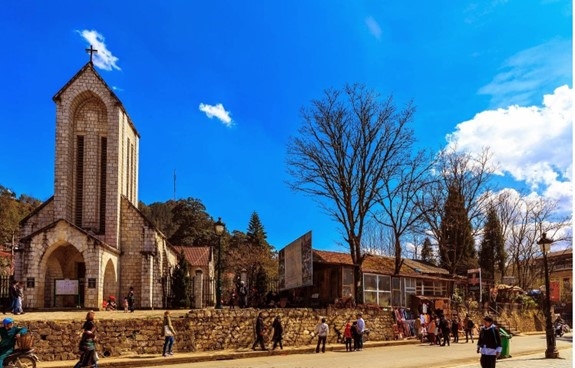 Sapa Church, a religious center for ethnic minority communities in Sapa ward, Lao Cai province
Secondly, continuing to review, amend, supplement, or enact new legal documents to better ensure the implementation of the freedom rights of belief and religion.
Priority should be given to amending, supplementing, enacting new legal documents on belief, religion and related to belief, religion in order to ensure the freedom rights of belief and religion.
Thirdly, widely disseminate the regulations on freedom rights of belief and religion in the Law on Belief and Religion.
For the field of belief and religion - a sensitive and highly complex area, so the dissemination and popularization of laws on belief and religion to believers, religious leaders, officials and clergy is of great importance. The current reality shows that awareness of the law in general and the law on belief and religion in particular among religious communities is very limited. A lack of legal knowledge remains one of the fundamental causes of legal violations among people of religious faith. Especially, due to a lack of legal understanding, some followers of religious organizations are still being exploited to distort the Party and State’s religious policies, undermine national unity, cause political instability.
Fourthly, streamlining, strengthening and improving the organizational structure and personnel involved in state management of beliefs and religions.
The rational arrangement to ensure the implementation of the freedom rights of belief and religion as stipulated in the Constitution and laws; improving the quality of training for civil servants working in religious affairs, this includes focusing on training and improving the professional skills and expertise of state management officials in the field of belief and religion to meet assigned tasks, enhancing management capacity and law enforcement and establishing incentive policies to attract civil servants to work in state management of belief and religion.
Fifthly, accelerating administrative procedure reforms in the field of belief and religion.
Whether human rights and civil rights, including the freedom rights of belief and religion are actually guaranteed and protected depends heavily on administrative procedure reforms. In recent times, administrative procedures in the field of belief and religion between religious organizations and individuals and competent state agencies have been carried out smoothly, ensuring compliance with prescribed processes and timelines. However, the implementation of administrative procedures in this field has also revealed some difficulties and limitations, such as the fact that resolving administrative procedures takes a long time, while regulations on the time for resolving procedures are sometimes very short, in many cases, when citizens go to administrative agencies to make requests, proposals, or to exercise their freedom rights of belief and religion, they have to go through many steps and levels,... Therefore, promoting administrative procedure reforms to ensure and protect the freedom rights of belief and religion of the people in order to ensure that human rights are implemented more effectively in practice, to be an important task at present.
4. Conclusion
Human rights are the inherent privileges (including human dignity, needs, interests and capabilities) that are recognized and protected by international law and the laws of countries. This is a right, a common value of humanity, determined primarily on the ethical (natural, inherent values of human beings) and legal levels. In Vietnam, the recognition of human rights (including the right to freedom of belief and religion), the fundamental rights and obligations of citizens are stipulated in the Constitution; in the Law on Belief and Religion. The Law on Beliefs and Religions is a continuation and concretization of the provisions of the 2013 Constitution on human rights. Implementing the Law on Beliefs and Religions is a crucial task for the entire political system; therefore, the implementation process requires the active and serious participation of the people, all levels and sectors, under the leadership of Party committees and government authorities at all levels. Protecting this right, in addition to the responsibility of competent state agencies to implement the aforementioned measures, also requires each citizen to proactively study, understand and fully grasp the content of the Law; a full understanding of human rights, fundamental rights and obligations of citizens, including the freedom rights of belief and religion; applying the content and provisions of the Law to exercise and protect their legitimate rights and interests. This is also one of the effective mechanisms for protecting effectively freedom rights of belief and religion and human rights./.
* Government Religious Affairs Committee
References
1. Ministry of Justice, Human Rights in the 2013 Constitution: New perspectives, new approaches and new provisions, National Political Publishing House, 2014.
2. Faculty of Law, Vietnam National University, Hanoi, Scientific Commentary on the Constitution of the Socialist Republic of Vietnam 2013, National Political Publishing House, 2016.
3. National Assembly of the Socialist Republic of Vietnam (1946, 1959, 1980, 1992, 2001), Constitution, Labor Publishing House.
4. National Assembly of the Socialist Republic of Vietnam, Constitution of the Socialist Republic of Vietnam 2013, http://moj.gov.vn, 2013.
5. National Assembly of the Socialist Republic of Vietnam (2016), Law on Beliefs and Religions.
6. The Government, Decree No. 162/2017/ND-CP dated December 30th, 2017, providing detailed regulations on a number of articles and measures for the implementation of the Law on Beliefs and Religions.
7. The Government, Decree No. 95/2023/ND-CP dated December 29th, 2023, providing detailed regulations on a number of articles and measures for the implementation of the Law on Beliefs and Religions.
8. Permanent Office on Human Rights and Ho Chi Minh National Political Academy, Human Rights, Fundamental Rights and Obligations of Citizens in the Vietnamese Constitution, Hanoi, 2015.
9. The Minister of Home Affairs, Circular No. 03/2024/TT-BNV dated June 13th, 2024, stipulating the decentralization of certain state management tasks regarding beliefs and religions within the Ministry of Home Affairs.
10. Ministry of Interior, Decision No. 491/QD-BNV dated July 10th, 2024, on the announcement of administrative procedures in the field of belief and religion within the scope of state management functions of the Ministry of Interior.
