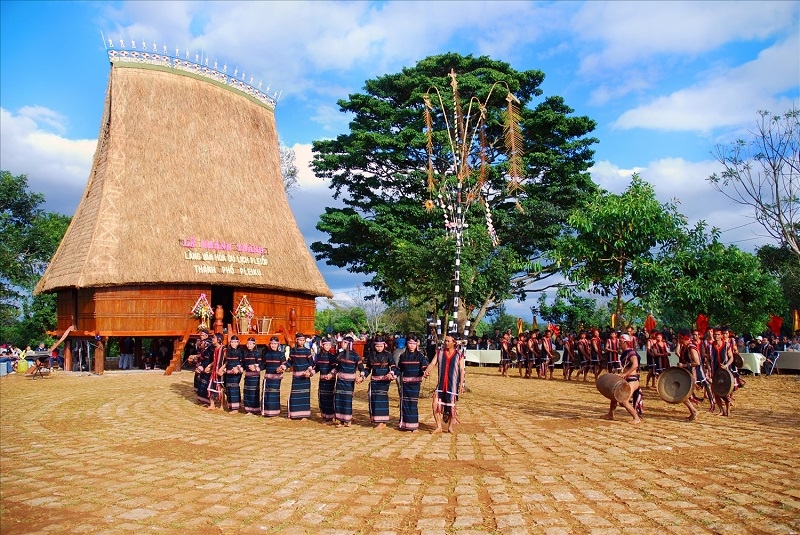
 The Gia-rai people, Op village perform gong music next to their traditional communal house
From traditional stilt houses
Stepping into famous community tourism villages like Mo Hra or Kep, inhabited by the Gia-rai people in Gia Lai province, the first thing that catches the eye of visitors is the unique longhouses with their rustic wooden and thatched roofs. For the Gia-rai people, the long house is not just a place to shelter from the rain and sun, but a symbol of kinship and family unity according to their matriarchal system. Each house becomes a “living museum”, attracting visitors who come to sit by the warm fireplace in the center of the house, listening to the village elders tell legends about the gods (Giang) and understand the profound spiritual life intertwined with nature in this place.
The sound of gongs, the Xoan dance
In the context of community tourism, gongs are being restored to their rightful place as the very breath of life. Traditional festivals such as the new rice harvest festival and the funeral rites (Po thi) are recreated in the most authentic way possible to serve tourists, while still retaining their sacredness. Visitors are not just spectators but are invited to immerse themselves in the graceful dance movements of the Gia-rai girls, creating a sense of connection. It was the pride of seeing their ethnic culture admired by foreigners and visitors from afar that motivated the young Gia-rai people to pick up their gongs drum again and relearn the songs passed down from their ancestors. Tourism has created an intrinsic conservation impetus within the community.
From the finest in brocade weaving to wood carving
One of the most distinctive features of community tourism in Gia Lai province is the restoration of traditional craft villages. The intricately patterned brocade fabrics with their distinctive color combinations (black, red, white) of the Gia-rai people are now not only everyday clothing but have also become valuable souvenirs.Beneath the towering traditional communal house, the image of Gia-rai women meticulously working at their rudimentary looms has become a symbol of perseverance. Along with that is the art of carving tomb statues, a distinctive feature in the beliefs of the Gia-rai people. The wooden statues of people sitting with their chins propped up, mothers embracing their children or animals surrounding the burial grounds not only showcase the art of sculpture, but also reflect the Gia-rai people’s conception of death, the world of the living and the world of the dead.
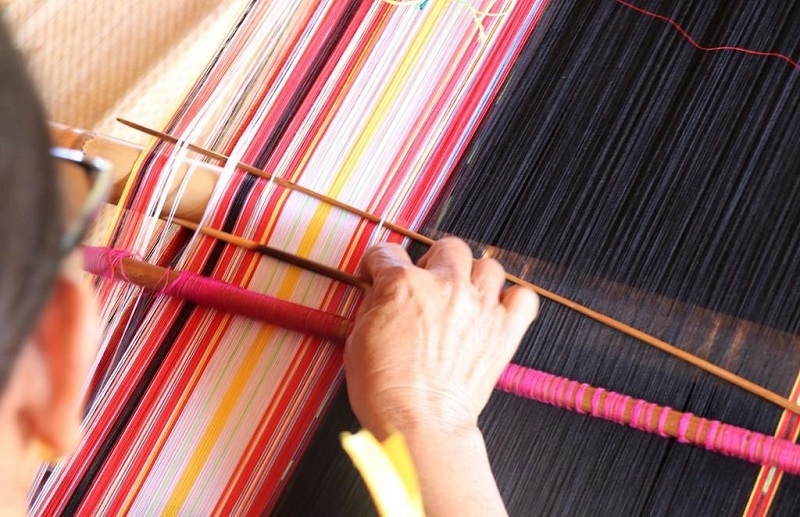 The Gia-rai women meticulously work at their rudimentary looms to create unique brocade fabrics.
Cuisine
The Gia-rai people have skillfully transformed rustic dishes such as fragrant sticky rice cooked in bamboo tubes, fire-grilled chicken with the flavors of the mountains and forests and sour and spicy yellow ant salt into unforgettable specialties. Sitting together around a pot of rice wine, visitors can experience a communal drinking ritual from the way the Gia-rai people invite guests to drink, or the way they share grilled meat, demonstrating warmth and sincerity, making visitors feel not like strangers, but part of the village.
It can be seen that the Gia-rai people preserve the soul of their culture by allowing it to live within the community, in order to interact with and shine in the eyes of international friends through tourism. This approach not only provides a livelihood but also represents a journey of self-affirmation for an ethnic group. This place is preserving an invaluable cultural “treasure”, not only for the Gia-rai people, but also for the diverse Vietnamese culture as a whole.
