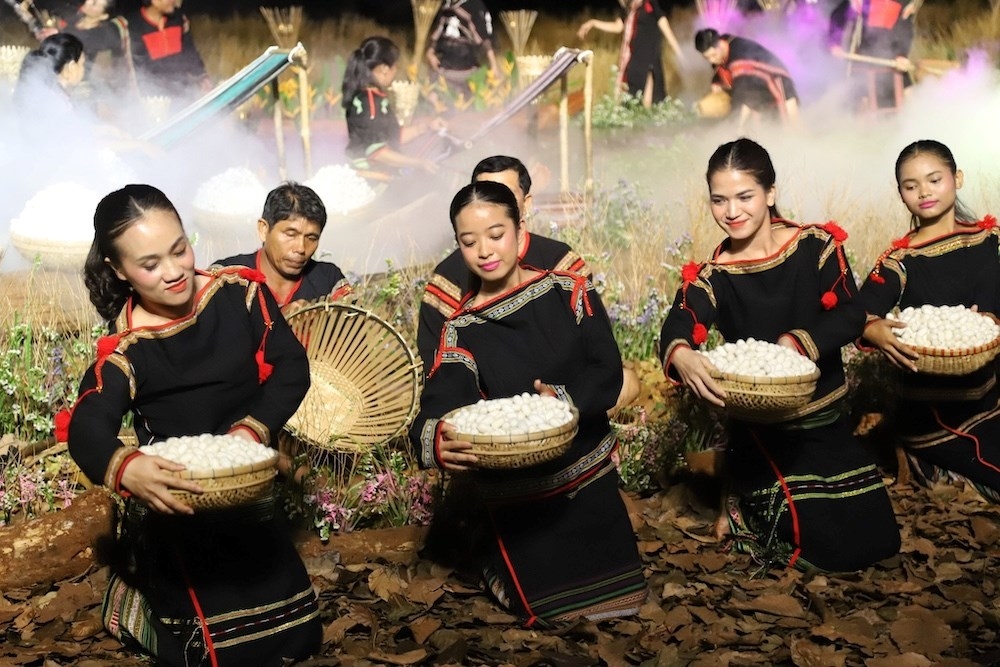
 Festival and tourism activities in ethnic minority areas are always linked to the preservation and promotion of cultural heritage values
Keywords: Relationship; Cultural preservation; Unleashing internal strengths; Ethnic minority communities; Sustainable development.
1. Introduction
In the process of sustainable development, culture is increasingly recognized not only as a field that needs preservation, but also as an important endogenous resource that promoting socio-economic development. For ethnic minority communities, culture is closely linked to history, local knowledge, customs, beliefs and social norms, forming the foundation of their identity and vitality. However, in the context of globalization, urbanization and the strong impact of the market economy, many traditional cultural values are facing the risk of disappearing, while the internal strengths of ethnic minority communities have not been effectively exploited and promoted.
In practice, it has been observed that in many localities, cultural preservation efforts remain administrative and formalistic, detached from socio-economic life and the development needs of the community. Conversely, economic development activities lacking a cultural foundation can easily lead to a decline in identity, a breakdown of traditions, and social imbalance. This highlights the urgent need to re-evaluate the relationship between cultural preservation and the promotion of the internal strengths of ethnic minority communities as two inseparable aspects of sustainable development.
In this context, studying the relationship between cultural preservation and the development of the internal strengths of ethnic minority communities has profound theoretical and practical significance. Clarifying this relationship not only contributes to perfecting the theoretical basis for sustainable development based on culture and community, but also provides scientific basis for policy making, aiming to link cultural preservation with livelihood development, empowering ethnic minority communities and enhancing the self-reliance capacity of ethnic minority and mountainous areas.
2. Research results
2.1. The current state of cultural preservation and the internal strength of ethnic minority communities
Over the years, significant achievements have been made in preserving the culture of ethnic minority and mountainous areas, contributing to the preservation of ethnic identity and strengthening the spiritual foundation of ethnic minority communities. Many tangible and intangible cultural heritages have been inventoried, collected, restored and honored; traditional festivals, crafts, languages, scripts and local knowledge are gradually receiving attention for preservation. Through cultural and development programs, projects, and projects, community awareness of heritage value is raised, creating a premise for linking cultural preservation with livelihood development and community tourism in some localities.
However, the current state of cultural preservation still has shortcomings and limitations. In some places, preservation activities are still administrative in nature, focusing on short-term projects, concentrating on performance or reconstruction rather than being closely linked to the daily lives of the community. “Static preservation” leads to the separation of many cultural values from their original social and ecological context, diminishing the social function and spiritual significance of heritage. Furthermore, urbanization, cultural exchange, and the impact of the market economy are rapidly transforming traditional cultural spaces, posing significant challenges to long-term preservation efforts.
About community resources, it can be seen that this is a rich resource but has not been fully utilized. Ethnic minority communities still maintain many important endogenous factors, such as: Local knowledge of farming practices, resource management, self-governing institutions, close-knit community relations, and distinctive cultural values. In some localities, this internal strength has been unleashed through livelihood development models linked to culture, such as: Community-based tourism, ecological agricultural production, and traditional handicraft industries contribute to improving people’s incomes and enhancing their self-reliance.
However, overall, the internal strength of ethnic minority communities has not yet become the main driving force for development. Limited educational attainment, management skills, access to markets and digital technology mean that many ethnic minority communities are still unable to proactively exploit and transform their cultural values into resources for sustainable development. Furthermore, the role of the community as an active participant in conservation and development programs remains unclear; many important decisions are still imposed from outside, reducing the motivation and responsibility of the people.
The above situation shows that while cultural preservation and the development of the internal strengths of ethnic minority communities have achieved certain results, a significant gap still exists between the goals and reality. The lack of organic integration between cultural preservation and the development of community resources is undermining the effectiveness of both processes. This necessitates a dynamic, community-centered approach to cultural preservation, considering the development of community resources as a key condition for ensuring sustainable development in ethnic minority and mountainous areas.
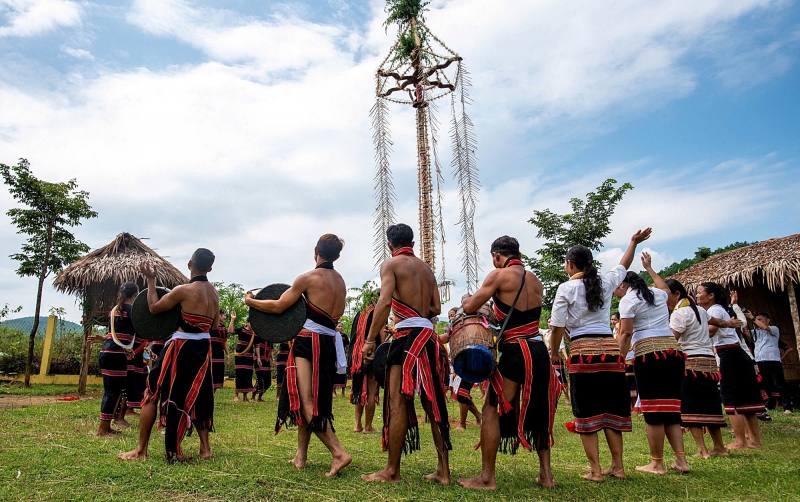 Thanks to the preservation and promotion of the traditional cultural values of ethnic minorities, community-based tourism in Da Nang has developed (In the photo: Ca Dong people in Da Nang city celebrate the new rice harvest festival)
2.2. The relationship between cultural preservation and the development of the internal strengths of ethnic minority communities
Preserving culture and promoting the internal strengths of ethnic minority communities are two processes that have a dialectical relationship, interacting with and complementing each other in the goal of sustainable development. Culture is not only an object to be preserved, but also a vital spiritual foundation and endogenous resource for ethnic minority communities to self-organize, adapt and develop. Conversely, the internal strength of the community can only be truly unleashed and effectively utilized when closely linked to the unique cultural values of each ethnic group.
Firstly, cultural preservation plays a fundamental role in forming and strengthening the internal capacity of ethnic minority communities. Cultural values, such as local knowledge, behavioral norms, traditional social institutions and ethnic identity, contribute to maintaining community cohesion, strengthening social trust and enhancing self-governance capacity. When culture is preserved vividly in daily life, ethnic minority communities have a foundation to maintain social stability, pass on knowledge and foster a sense of responsibility for their own long-term development. In this context, culture becomes the “social glue”, creating intrinsic strength for ethnic minority communities.
Secondly, leveraging community resources is a crucial driving force in ensuring the sustainability of cultural preservation. When communities are empowered, actively participate and directly benefit from preservation activities linked to livelihood development, culture is no longer a burden or administrative obligation, but becomes a resource that creates socio-economic value. Cultural-based development models, such as community tourism, traditional handicraft economy, or agriculture linked to local knowledge, demonstrate that when the internal strengths of ethnic minority communities are harnessed, people have a strong motivation to protect and enrich their cultural heritage.
Thirdly, the relationship between cultural preservation and the development of ethnic minority communities is a two-way, interactive, and mutually supportive one. Cultural preservation separated from development can easily lead to superficiality, “static preservation”, lacking vitality and difficult to sustain in the long term. Conversely, socio-economic development not based on a cultural foundation can diminish identity, disrupt traditional social structures and eroding the internal strength of ethnic minority communities. Only when these two processes are closely linked can culture become a resource for development and development create conditions for culture to be preserved and disseminated.
Fourthly, this relationship needs to be placed in an appropriate institutional and policy context. The role of the State and related entities is to create a legal framework, support mechanism and space for the ethnic minority community to promote its role as a subject in both cultural preservation and development. Thus, preserving culture and promoting the internal strengths of ethnic minority communities will be two unified aspects, both aiming towards the goal of sustainable development in ethnic minority areas in the current period.
2.3. The challenges posed by the balance between cultural preservation and the development of the internal strengths of ethnic minority communities.
In the process of integrating cultural preservation with the development of the internal strengths of ethnic minority communities towards sustainable development, many complex issues have arisen and are being raised, requiring comprehensive identification and resolution, as follows:
Firstly, there is a lack of close alignment between conservation goals and development requirements. In many localities, cultural conservation is still implemented through an administrative approach, focusing on reconstruction and performance, while socio-economic development activities are not based on a cultural foundation. This separation makes it difficult for culture to become an endogenous resource and reduces the motivation for ethnic minority communities to participate.
Secondly, the role of ethnic minority communities as key stakeholders has not been fully utilized. In many conservation and development programs, ethnic minority communities remain in a passive beneficiary position, lacking the right to participate in monitoring and benefit sharing. This leads to a situation where conservation depends on external resources, while the internal strength of ethnic minority communities, which is a decisive factor in sustainability, has not been unleashed and strengthened.
Thirdly, the risk of commercialization and distortion of cultural values is increasing in the context of market economy and tourism development. When culture is exploited as a “product” detached from the community life of ethnic minorities, symbolic values, social functions and spiritual meanings may be simplified or even distorted. This not only affects national identity but also weakens the cultural strength of ethnic minority communities.
Fourthly, the educational level, management skills, market access and technological capabilities of many ethnic minority communities are limited, while the mechanisms for capacity building support do not meet practical requirements. In addition, the institutional and policy framework related to cultural preservation and the development of ethnic minority communities lacks consistency and has not created effective coordination among relevant stakeholders.
The above issues show that we need to have an integrated approach, placing cultural preservation and promoting the internal strength of the ethnic minority community in a unified relationship, taking the ethnic minority community as the subject. Only when these “bottlenecks” are resolved, the relationship between cultural preservation and promoting the internal resources of ethnic minority communities will truly become the foundation for sustainable development of ethnic minority and mountainous areas.
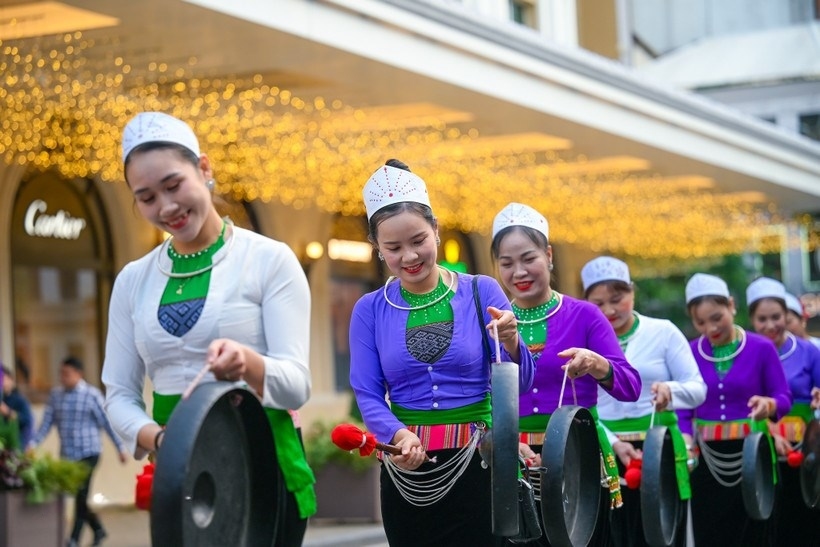 The Muong ethnic group performs gong music in the Ho Guom pedestrian area, Hanoi capital
2.4. Orientations and solutions for preserving culture and promoting the internal strengths of ethnic minority communities
Preserving the culture and promoting the internal strengths of ethnic minority communities needs to be oriented towards a sustainable development approach, with the community at the center and culture considered an important endogenous resource for development. The overarching direction is to shift from administrative, static conservation to dynamic conservation, closely linked to the lives, livelihoods and self-reliance of communities. Based on this, solutions need to be implemented synchronously at the central level, within ethnic minority communities and in development settings, as follows:
Regarding institutions and policies: The legal framework needs to be improved to ensure the right of ethnic minority communities to participate, make decisions and benefit from conservation and development activities. Programs, plans and projects related to culture need to clearly integrate the goal of promoting the internal strengths of ethnic minority communities, avoiding a situation where preservation is separated from development. At the same time, mechanisms for protecting local knowledge and sharing benefits fairly should be established to encourage communities to proactively preserve and promote their cultural values.
About capacity building for ethnic minority communities: Emphasis should be placed on training and developing knowledge and skills in management, organization, and business based on cultural values for local people, especially the younger generation, village elders, community leaders and artisans. Developing a core team of local leaders capable of connecting traditional and modern knowledge will contribute to strengthening self-governance and the sustainability of development models.
Regarding implementation: It is necessary to promote livelihood development models linked to cultural preservation, such as community tourism, traditional handicraft economy and ecological agriculture based on local knowledge. These models need to be designed to suit the specific socio-cultural context, limiting the tendency towards commercialization and distortion of cultural values. In addition, it is necessary to strengthen multi-stakeholder linkages between ethnic minority communities, the government, businesses, and social organizations to mobilize resources, provide technical support and expand markets.
Therefore, it is necessary to strengthen communication, education and cultural dialogue to raise social awareness of the role of culture and the inherent strengths of ethnic minority communities in sustainable development. Only when the preservation of culture and the promotion of the inherent strengths of ethnic minority communities are implemented in a unified manner, with ethnic minority communities as the main actors, will sustainable development in ethnic minority and mountainous areas have a solid and lasting foundation.
3. Discussion
It is evident that cultural preservation and the development of the internal strengths of ethnic minority communities are closely and organically related; however, realizing this relationship in the practical development of sustainable ethnic minority and mountainous regions still faces many challenges. In particular, the article focuses on analyzing the subjective role of the ethnic minority community and the dynamism of culture. Many conservation programs, schemes and projects in fact still favor a top-down approach, limiting the ability to awaken the internal resources of the ethnic minority community.
The research also showed that when culture is placed within the flow of life and linked to sustainable livelihoods, ethnic minority communities have a stronger motivation to protect and enrich their cultural values. However, this process requires a delicate balance to avoid commercialization and cultural distortion, which can undermine cultural resilience and social cohesion.
Furthermore, the role of institutions and policies should be recognized as important intermediary factors regulating the relationship between cultural preservation and the development of the internal strengths of ethnic minority communities. The lack of mechanisms for empowering ethnic minority communities, sharing benefits fairly and enhancing their capacity will disrupt this linkage. Therefore, an integrated, interdisciplinary, and long-term approach is needed, in which ethnic minority communities are identified as the main actors, and cultural preservation and the promotion of the internal strengths of ethnic minority communities are considered two unified aspects of sustainable development in ethnic minority and mountainous areas.
4. Conclusion
Preserving culture and promoting the internal strengths of ethnic minority communities are organically linked and inseparable in the goal of sustainable development. Culture is not only a heritage that needs to be preserved, but also an important endogenous resource that contributes to strengthening social cohesion, enhancing self-reliance and guiding the development of ethnic minority communities. At the same time, the internal strength of the ethnic minority community is only truly aroused and effectively promoted when it is associated with a specific cultural value system and actively practiced by the community in life.
In practice, the limitations in cultural preservation and the development of internal strengths mainly stem from a separate approach to these two processes and from the failure to fully utilize the leading role of ethnic minority communities. Therefore, in the current phase, it is necessary to shift to an integrated, community-centered approach that links cultural preservation with livelihood development, empowerment and equitable benefit sharing. Only when cultural preservation and the development of the internal strengths of ethnic minority communities are implemented as two unified aspects of development will ethnic minority and mountainous areas have a solid foundation for sustainable development.
* Journal of Ethnic and Religious Research
References
1. Central Committee of the Communist Party (2014). Resolution No. 33-NQ/TW on building and developing Vietnamese culture and people to meet the requirements of sustainable national development, Hanoi.
2. Nguyen Thi Song Ha (2023), Policies for preserving and promoting the cultural values of ethnic minorities in Vietnam, https://tapchicongsan.org.vn/web/guest/van_hoa_xa_hoi/-/2018/828114/chinh-sach-bao-ton-va-phat-huy-gia-tri-van-hoa-cac-dan-toc-thieu-so-o-viet-nam.aspx
3. Nguyen Phu Trong (2021), Striving to build, preserving and promoting the unique values of advanced Vietnamese culture, rich in national identity, Communist Journal, No. 979 (December).
