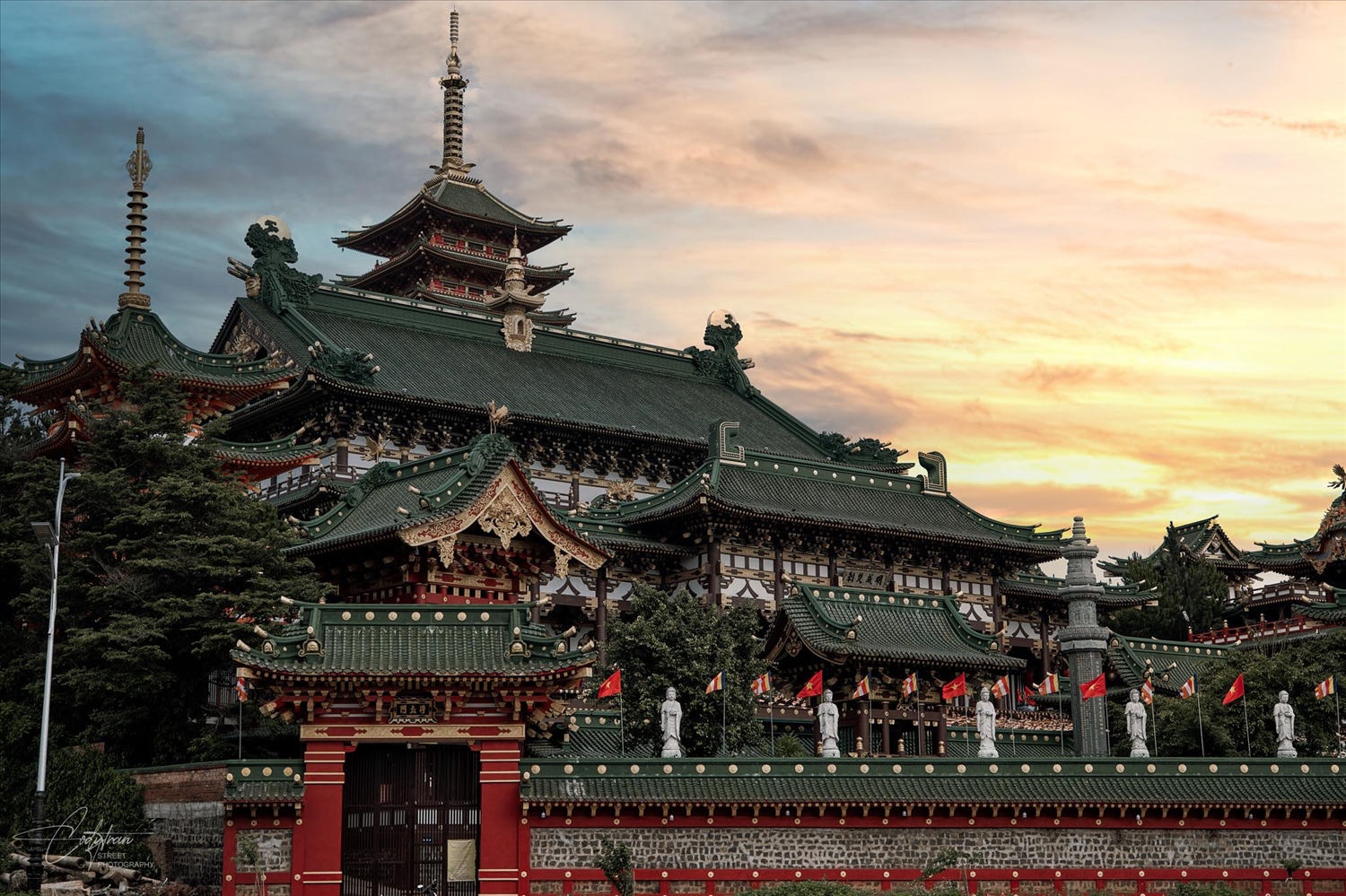
 Minh Thanh pagoda (Gia Lai province)
Keywords: Buddhism; Social development; Central Highlands; Gia Lai province; State management of religion.
In the current context of development, religion is increasingly recognized not only as a belief phenomenon, but also as a factor with profound impact on social life. In Vietnam, Buddhism is one of the major religions, with a long history and close ties to the nation. Particularly, in the Central Highlands region, characterized by its multi-ethnic and multi-religious nature and many unique social issues, the role of religious organizations, including Buddhism, is becoming increasingly important.
Gia Lai province is one of the typical areas of the Central Highlands, with many socio-economic difficulties, uneven population distribution and inconsistent levels of development. In this context, Buddhist activities are not limited to the religious sphere but extend to many social fields such as charity, education, culture, environment and participation in the political system.
During the term of 2022-2026, the Buddhist organization of Gia Lai province underwent significant changes, particularly the merger of the organizational systems between Gia Lai and Binh Dinh provinces, aiming to streamline the apparatus and improve operational efficiency. This adjustment was a necessary adaptation to the requirements of administrative reform and the new development context. In terms of organizational structure, the Executive Board of the Vietnam Buddhist Association of Gia Lai province has been streamlined towards specialization, with departments and branches operating relatively synchronously in fields such as monastic affairs, education, Dharma propagation, social charity, culture and media. Buddhist activities are implemented widely from the provincial level to the grassroots, forming a relatively complete system. The work of increasing the number of monks and nuns, educating them, organizing summer retreats, ordination ceremonies and training monastic talents has been implemented in an orderly and high-quality manner. Buddhist propagation has seen many innovations, adapting to the digital age; expanding to young people, ethnic minorities, and remote areas. Activities guiding Buddhists are increasingly practical and diverse; models of study, retreats, and moral education for youth are organized systematically, humanely and practically. In particular, charitable and social welfare work has achieved outstanding results with a total value of over 165 billion VND, contributing to supporting the poor, the vulnerable and people in disadvantaged areas.
1. The role of Buddhism in social development in Gia Lai province
In the context of social development in the Central Highlands region, where many unique ethnic, religious and socio-economic characteristics exist, Buddhism not only fulfills its purely religious function but also participates extensively in various aspects of social life. The practical activities of the Vietnam Buddhist Association of Gia Lai province during the term of 2022-2026 demonstrate that Buddhism has played a significant role as a social entity, contributing to development in many different dimensions.
Firstly, Buddhism as a social welfare agent
One of the most prominent manifestations of Buddhism’s social role in Gia Lai province is its contribution to social welfare. During the term of 2022-2026, the total value of charitable and social activities of the province’s Buddhist community reached over 165 billion VND. The scale and scope of these activities extend beyond mere material support, encompassing a systematic approach aimed at addressing fundamental social issues. Activities include disaster relief, medical assistance, housing construction for the poor, scholarships and care for vulnerable groups. Notably, during natural disasters and epidemics, Buddhist institutions have proactively mobilized resources and organized timely relief efforts, contributing to stabilizing people’s lives.
From a theoretical perspective, Buddhism in Gia Lai province can be seen as fulfilling a part of the non-state social welfare system. Given limited public resources and a vast geographical area, the Buddhist participation in providing social services has helped fill gaps in the social security system. Furthermore, charitable activities contribute to strengthening social trust, enhancing community cohesion and mitigating the risk of social instability.
Secondly, its role in moral education and human development
Besides social welfare, Buddhism also makes significant contributions to education, especially moral education and character development. Through its Buddhist training system, meditation retreats, doctrinal classes and activities guiding Buddhists, Buddhism has conveyed ethical values such as compassion, kindness, altruism and social responsibility.
In practice, thousands of young people participating in summer retreats and Buddhist activities have been exposed to an educational environment that fosters value orientation. This is a crucial factor in the context of a segment of youth at risk of deviant behavior under the influence of the market economy and integration.
Furthermore, the training of highly qualified monks and nuns, many of whom have received training abroad, not only enhances the quality of religious human resources but also contributes to the overall intellectual resources of society. Therefore, Buddhism is not only a place for preserving religious knowledge but also a broader social educational institution.
Thirdly, the role in preserving and promoting cultural values
Buddhism in Gia Lai province plays a crucial role in preserving and promoting cultural values, especially in the context of globalization and strong cultural changes. Buddhist monasteries are not only places of ordinary religious activity but also cultural spaces, repositories of traditional values of the nation and local communities.
Through organizing festivals such as Buddha's Birthday and the Vu Lan Festival (a Buddhist festival honoring parents), along with cultural activities, exhibitions, and the preservation of temple architecture, Buddhism has contributed to maintaining the national cultural identity. These activities not only serve religious needs but also create community cultural values, contributing to improving the spiritual life of local people.
Particularly in the multi-ethnic and multi-religious environment of Gia Lai province, Buddhism plays a role as a cultural intermediary, contributing to the harmonization of differences in lifestyles, religious practices and beliefs, thereby promoting interaction, adaptation and connection between different communities and religious groups.
Fourthly, the role in strengthening national unity and participating in social governance
A prominent feature of Buddhism in Gia Lai is its active participation in the socio-political system. According to statistics, 48 representatives in the Provincial and Commune People’s Councils for the term (2026-2031) are Buddhist monks and nuns, accounting for over 45.7% of the total number of religious representatives in the province; and 70% of communes and wards have Buddhist monks and nuns who are members of the Vietnam Fatherland Front. The participation of many monks and nuns in organizations such as the Vietnam Fatherland Front, the People’s Council and other social organizations shows that Buddhism is not outside the governance process but has become an integral part of this system.
This participation is significant in many respects. Firstly, it contributes to strengthening social consensus, as religious leaders and influential figures in the community participate in decision-making and public mobilization, acting as a bridge between the government and the people, especially on sensitive issues related to religion and ethnicity.
From a public administration perspective, this is an example of the “cooperative governance” model, in which the State plays a role in creating, coordinating and ensuring institutions, and social subjects including religious groups, participate in addressing public issues.
Fifthly, the role in promoting sustainable development
In recent years, Buddhism in Gia Lai province has actively participated in activities related to environmental protection and sustainable development. Through the implementation of programs and movements to protect the environment, especially activities against plastic waste and responding to climate change, the Executive Board of the Vietnam Buddhist Association of Gia Lai province has played a guiding role in encouraging monks, nuns and Buddhists to actively participate in activities to protect the ecological environment. This contributes to raising awareness and responsibility within the community regarding environmental issues, gradually fostering an environmentally friendly lifestyle, in line with the spirit of “Buddhism accompanying the nation” in the sustainable development phase.
Notably, these activities are implemented on the foundation of Buddhist teachings, particularly the perspective on harmony between humanity and nature. This helps create a connection between religious values and sustainable development goals, thereby enhancing the effectiveness of social advocacy programs.
From the above analysis, it can be affirmed that Buddhism in Gia Lai province has demonstrated a multifaceted role in social development. Not limited to the religious sphere, Buddhism has participated in many essential areas of social life, from welfare, education and culture to governance and the environment. Essentially, Buddhism is shifting from the role of a “religious institution” to that of a “social development agent”. This trend aligns with the modern context, where diverse social resources are increasingly mobilized to serve development. However, to maximize this role, closer coordination between the State and the Buddhist Sangha is needed, along with improved organizational and governance capacity within Buddhist organizations themselves.
2. Conclusion
Overall, the achievements of Buddhism in Gia Lai province during the term of 2022-2026 is fundamental, comprehensive, and of significant importance to the Vietnam Buddhist Sangha, contributing to local social development. Analyzing the practical activities of the Vietnam Buddhist Association in Gia Lai province during the term of 2022-2026, it can be affirmed that Buddhism has played and continues to play an increasingly important role in the social development of the locality. Beyond its religious and spiritual functions, Buddhism has extensively participated in essential areas such as social welfare, moral education, cultural preservation, social governance and promoting sustainable development.
These contributions are clearly demonstrated through the scale and effectiveness of charitable, educational and cultural activities, as well as the participation of monks and nuns in the socio-political system. Through this, Buddhism has affirmed its role as a positive social agent, contributing to supporting the State in addressing social issues, especially in Gia Lai province, a region still facing many difficulties and unique ethnic and religious characteristics.
However, alongside the achievements, practical experience also reveals certain limitations related to organizational capacity, operational synchronization, and coordination mechanisms between the State and the Church. This necessitates further policy improvements, management innovation and capacity building for relevant stakeholders to more effectively promote the role of Buddhism in social development.
* Gia Lai Provincial Department of Ethnic and Religious Affairs
References
1. Law on Beliefs and Religions 2016.
2. Decree No. 95/2023/ND-CP dated December 29th, 2023 of the Government: Detailing some articles and measures for the implementation of the Law on Beliefs and Religions.
3. Summary report on Buddhist activities from 2022-2026 of the Executive Board of the Vietnam Buddhist Association of Gia Lai province.
4. Summary report on ethnic, belief and religious affairs in Gia Lai province in 2025.
5. Report summarizing the election of deputies to the 16th th National Assembly and deputies to the People’s Councils at all levels for the term of 2026-2031 by the People’s Committee of Gia Lai province.
