Keywords: Consistent policy; Freedom of belief and religion; Human rights; National unity; Exploiting religion.
1. The process of perfecting the policy on religious freedom
On September 3rd, 1945, at the very first meeting of the Provisional Government, President Ho Chi Minh, the head of the Democratic Republic of Vietnam, declared: “Colonialists and feudalists sought to divide the people of different faiths in order to rule them, I propose that our government declare freedom of religion and unity between the people of different faiths”. A year later, the 1946 Constitution stated: “All Vietnamese citizens have the right to freedom of religion”. In Decree No. 234/SL dated June 14th, 1955, President Ho Chi Minh affirmed: “The Government guarantees the freedom of belief and freedom of worship of the people. No one is allowed to infringe upon that freedom”. Subsequent Constitutions have continued to affirm the consistent stance on freedom of belief and religion. In particular, the 2013 Constitution represents a new step forward by replacing the phrase “citizens’ rights” with “human rights”, affirming that human rights, including the right to freedom of belief and religion, are the rights of all people, recognized, respected, protected and guaranteed by the State. The shift from “citizen’s rights” to “human rights” means that these rights apply to all people in Vietnam, regardless of nationality or citizenship status. This demonstrates a high degree of compatibility with international human rights conventions, enhancing persuasiveness in combating distorted narratives.
Throughout nearly 40 years of comprehensive national reform, the viewpoint of guaranteeing freedom of belief and religion has been consistently expressed, including the reform of religious affairs, and is marked by the Politburo’s issuance of Resolution No. 24/NQ-TW on October 16th, 1990, on “Strengthening religious affairs in the new situation”. After 13 years of implementing Resolution No. 24 of the 7th Plenum of the 9th Central Committee, the Central Committee of the Party issued Resolution No. 25-NQ/2003/TW on March 12th, 2003, on religious affairs, continuing to improve and perfect the views on religion and religious affairs. In order to institutionalize the 2013 Constitution and in the context of international integration, the religious situation continues to undergo changes, on November 18th, 2016, at the 2nd Session of the 14th National Assembly of the Socialist Republic of Vietnam, the Law on Beliefs and Religions was passed, replacing the Ordinance on Beliefs and Religions.
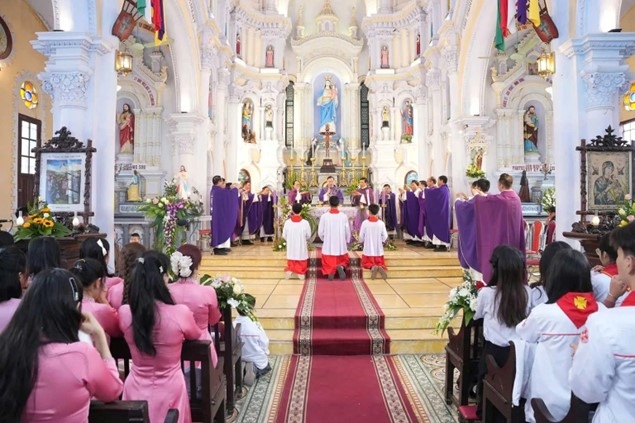 Ensuring freedom of belief and religion for all citizens is a consistent policy of our Party and State
A significant milestone was reached on December 30th, 2017, when the Government issued Decree No. 162/2017/ND-CP detailing and implementing the Law on Beliefs and Religions, further creating an important legal framework for religious activities. Following this, the Government issued Decree No. 95/2023/ND-CP on December 29th, 2023, effective from March 30th, 2024, detailing the implementation of the Law on Beliefs and Religions and replacing Decree No. 162/2017/ND-CP. The enactment of the Law on Beliefs and Religions marked a milestone in the process of perfecting Vietnam’s legal framework regarding beliefs and religions, this concretizes Vietnam’s consistent policy on freedom of belief and religion, which is of significant importance both domestically and internationally, aligns with Vietnam's current policy of institutional reform and simplification of administrative procedures and ensures the interests of the nation, the people and religious organizations. At the same time, it also affirms to the international community that Vietnam has always been an active and responsible member in ensuring human rights, including the right to freedom of belief and religion; this serves as proof to counter the distorted narratives of malicious forces that falsely accuse Vietnam of violating democracy, human rights and religion. The formation and development of religious organizations is proof that Vietnam guarantees freedom of belief and religion and equality among religions.
According to the Report summarizing 10 years of implementing Resolution No. 25-NQ/TW of the 9th Central Committee on religious affairs, prior to 2003, when the Ordinance on Beliefs and Religions was not yet in effect, the country had approximately 17.4 million religious followers out of more than 80 million people, accounting for 21.8% of the population; there were 15 religious organizations recognized by the State belonging to 6 religions: Buddhism, Catholicism, Protestantism, Cao Dai, Hoa Hao Buddhism and Islam. After more than 15 years of implementing the Ordinance, by 2018, an additional 28 religious organizations met the criteria and were recognized and registered by competent state agencies, bringing the total number of religious organizations to 43, belonging to 16 religions. Religious organizations recognized and registered by the State have developed and implemented a path of religious practice that is deeply humane, religious and responsible to the country and the nation. Along with the development of organization, registration of eligible religions and the number of followers, religious activities have also continuously increased. Since the 14th National Assembly passed the Law on Beliefs and Religions on November 18th, 2016, which came into effect on January 1, 2018, up to 2023, Vietnam has 26.5 million religious followers, accounting for 27% of the population. The establishment of religious organizations reflects, on the one hand, the Vietnamese State’s consistent commitment to upholding the right to freedom of belief and religion; on the other hand, it affirms that Vietnam does not discriminate between people with or without religious beliefs; it does not discriminate against or stigmatize any religion, whether indigenous or introduced from abroad, whether it is a long-established religion or a newly recognized one. Up to now, Vietnam has over 27.7 million followers, accounting for 27.7% of the country's population, with over 54,500 religious dignitaries, nearly 145,000 religious officials and 29,890 places of worship.
Religions, with their diverse and vibrant religious activities take place throughout the country. Religious places of worship are well-maintained, and the lives of believers are becoming increasingly prosperous. Important religious holidays and traditional festivals are celebrated solemnly, attracting large numbers of participants, including not only believers but also the general public, such as: the Buddhist Buddha’s Birthday, the Catholic and Protestant Christmas and Easter celebrations, the Great Feast of the Supreme Being, the Cao Dai religion’s Upper nguon Festival... Many religious facilities have received attention from the government, including permits for construction, repair, upgrading and renovation to provide modern and comfortable spaces, meeting the legitimate needs of believers and religious organizations for facilities.
Through religious and social activities, religious leaders, monks, followers raise awareness of their rights and responsibilities as citizens, promote religious moral values, and contribute resources to the cause of national construction and defense, effectively combating activities that exploit religion to sow discord among religious groups and the nation, and countering false accusations that Vietnam violates religion and human rights. Religious diplomacy is one of the important and regular activities of religious organizations in Vietnam.
As the country integrates more deeply into global life, the international activities of Vietnamese religions are also becoming more diverse and abundant, with an increasing number of domestic and foreign delegations traveling to and from Vietnam to study and learn about the religious situation. Religious foreign relations activities of religious organizations in Vietnam are not only carried out in accordance with the Law on Beliefs and Religions, but are also facilitated to enhance the role and position of religious organizations in international activities, as well as to provide opportunities for foreign organizations to access the realities in various regions of Vietnam, contributing to the work of ensuring the freedom of belief and religion for individuals and religious organizations.
2. Solutions to strengthen national unity
In light of current issues concerning religion and beliefs, it is necessary to continue to effectively implement the Party and State’s policies on religion and belief and promote religious unity, specifically:
Firstly, need to promote awareness among the people about religion and religious affairs. Relevant ministries, departments, and localities need to continue to thoroughly understand and strictly implement the Party’s directives and resolutions on religious affairs. Strengthening domestic and international propaganda efforts regarding religious activities and the consistent religious policies of the Party and State, especially the Law on Beliefs and Religions and Decree No. 95/2023/ND-CP issued on December 29th, 2023, effective from March 30th, 2024, detailing the implementation of the Law on Beliefs and Religions, so that officials, citizens and religious organizations and individuals understand, raising awareness and proactively implementing them correctly. Supplement and improve policies and laws on belief and religion, and other related policies and laws, to be compatible with the Law on Belief and Religion and international human rights conventions to which Vietnam is a party or signatory. Ensuring equality in responsibilities and rights among religious organizations and between religious organizations and other social organizations. The aim is to prevent religious organizations and individuals from exploiting loopholes in the law to distort, misinterpret or circumvent regulations, thereby affecting national unity and political security.
Secondly, strengthening state management of beliefs and religions, guiding religious organizations to operate in accordance with charters and regulations recognized by the State and the provisions of the law. Thoroughly considering and addressing the purely religious needs of the people in the area, distinguishing between purely religious activities and the exploitation of religion in resolving complex issues, in order to eliminate extremist political elements from religious activities and protect the legitimate rights of genuine believers from being exploited by extremist forces. Strengthening discipline and enhancing the effectiveness and efficiency of state management of beliefs and religions aims to create a safer and healthier environment for religious activities, thereby consolidating unity. Integrating the content and tasks of religious affairs work with the targets and tasks of economic, cultural and social development in areas with a large religious population in the locality. Focus on resolving issues related to housing and land associated with religion, and definitively settle long-standing land disputes and complaints related to religion in various localities. Reviewing, assessing and addressing legitimate needs regarding religious land, avoiding creating pretexts for extremist groups to gather followers, create hotspots and spread distorted propaganda that complicates security and public order. Promoting efforts to encourage religious leaders, officials and clergy to enhance their social responsibility in religious activities. Government authorities at all levels should regularly meet, interact, dialogue with religious leaders, officials and clergy to understand their thoughts and aspirations, promptly address legitimate needs and issues arising in religious activities; encouraging religious leaders, officials, monks and followers to enhance their civic responsibility in implementing policies, laws and patriotic emulation movements at the local level.
Thirdly, stabilize the organizational structure of the two-tiered local government and train a team of officials to implement policies on belief and religion. Building a suitable organizational structure and a team of qualified personnel is essential for effectively implementing the consistent policies of the Party and the State regarding beliefs and religions. Strengthen training and professional development in religious affairs for cadres and Party members working in religious affairs. Proactively research, thoroughly understand information, provide timely advice on religious affairs. Establishing a coordination mechanism in religious affairs among all levels, sectors, and agencies within the political system to enhance accountability in implementing policies and laws on religion.
Fourthly, strengthening diplomatic efforts regarding religion and proactively participating in international and regional religious forums. Through international cooperation activities, bilateral and multilateral dialogues, we aim to correctly understand Vietnam’s religious policies and speak out in support of human rights and religious freedom in Vietnam. Facilitating the participation of individuals and religious organizations in international conferences and forums related to religion.
3. Conclusion
The consistent policy of the Vietnamese Party and State on freedom of belief and religion is clearly demonstrated through the continuous improvement of legislation (especially the 2013 Constitution and the 2016 Law on Belief and Religion), which has proven effective in practice. This policy not only guarantees the human right to freedom of religion for all citizens, leading to a significant increase in religious organizations and the number of followers (accounting for 27% of the population), but also serving as the foundation and core for uniting people of all religions in a great national solidarity. Continuing to implement synchronized solutions to strengthen management, improve legislation and promote religious diplomacy is key, this is a solid foundation for promoting the role of religions in nation-building, and at the same time, it is a powerful testament to refute all distorted arguments, affirming that Vietnam is a responsible nation in ensuring human rights and striving for sustainable development.
References
1. The Provisional Government of the Democratic Republic of Vietnam, Declaration on Freedom of Religion at its first session, September 3rd, 1945.
2. National Assembly, Constitution of 1946.
3. President Ho Chi Minh, Decree No. 234/SL dated June 14th, 1955.
4. Political Bureau, Resolution No. 24/NQ-TW dated October 16th, 1990, on strengthening religious affairs in the new situation.
5. The Central Committee of the Party, 9th term, Resolution No. 25-NQ/2003/TW dated March 12th, 2003, on religious affairs.
6. The 13th National Assembly of the Socialist Republic of Vietnam, Constitution of 2013.
7. The 14th National Assembly, Law on Beliefs and Religions dated November 18th, 2016. The 14th National Assembly, Law on Beliefs and Religions dated November 18th, 2016.
8. The Government, Decree No. 162/2017/ND-CP dated December 30th, 2017, providing detailed regulations on a number of articles and measures for the implementation of the Law on Beliefs and Religions.
9. The Government, Decree No. 95/2023/ND-CP of the Government, providing detailed regulations on a number of articles and measures for the implementation of the Law on Beliefs and Religions, replacing Decree No. 162/2017/ND-CP dated December 30th, 2017.
10. Central Committee of the Party, 9th term, Report summarizing 10 years of implementing Resolution No. 25-NQ/TW on religious affairs.
11. Government Religious Affairs Committee (2006), White Paper on Religion and Religious Policy in Vietnam, Hanoi.
