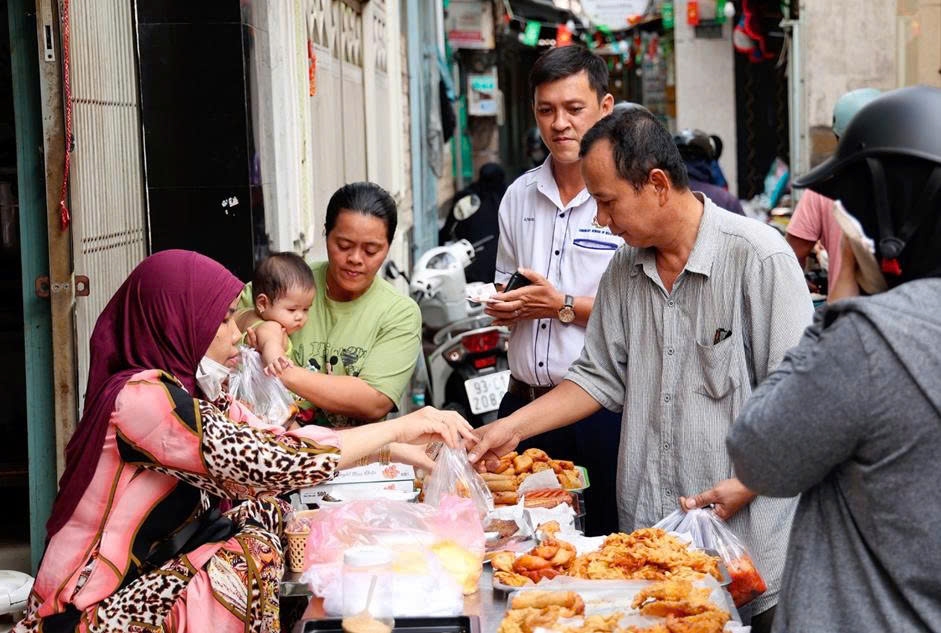
 The area near the Jamiul Anwar mosque, a center of religious activity for the Cham community is bustling in the afternoons and evenings. The local people and Muslims from other areas come here to buy Halal food
Keywords: Cham community; Developing Halal tourism; Role; Vietnam.
1. Introduction
In recent years, Halal tourism has emerged as an important segment of the global tourism industry, linked to the rapid growth of the Muslim community and the demand for travel that aligns with specific religious and cultural norms. With its large market size, high spending levels and stable growth trend, Halal tourism is opening up many opportunities for countries with potential in Islamic culture and religion. Vietnam, although not a Muslim country, possesses favorable conditions for developing Halal tourism, especially in areas with concentrated Cham Muslim communities such as Khanh Hoa, Lam Dong and some areas in the Southwestern region. The Cham community is the custodian of a unique cultural and religious value system, encompassing religious spaces, festivals, Halal cuisine, customs and local knowledge directly related to Halal practices. This is the core foundation for creating authentic, distinctive and sustainable Halal tourism products and services. However, in the current tourism development practice, the role of the Cham community has not been fully utilized. Many tourism activities are still superficial, lacking genuine community participation and posing a risk of commercialization, distorting cultural and religious values.
In this context, research clarifying the core role of the Cham community in the development of Halal tourism in Vietnam is significant both theoretically and practically, contributing to supplementing the scientific basis for a community-based approach to tourism development, provides arguments for policy planning and the development of appropriate Halal tourism models, ensuring harmony between economic development, cultural preservation and social stability.
2. Research results
2.1. The Cham community in the development of Halal tourism in Vietnam
The Cham community in Vietnam has a long-standing Islamic cultural and religious background, possessing many potential elements for the development of Halal tourism. These factors include the system of mosques (masjids), religious festivals (Ramadan, Eid), Halal-abiding cuisine, traditional crafts and close-knit social networks. The aforementioned factors create the potential to offer authentic and distinctive Halal tourism experiences, different from mass tourism products.
In fact, the development of tourism associated with the Cham community has seen some positive developments, such as: Homestay models managed by Cham families have emerged, along with the development of experiential routes combining visits to Cham cultural relics and the enjoyment of Halal cuisine, as well as several community tourism projects promoted by local authorities in collaboration with NGOs and tourism businesses. These initiatives have initially helped increase income for a segment of the community, raise awareness of cultural values, and encourage the preservation of religious and cultural practices. However, the aforementioned issues still have many limitations, such as:
Firstly, the level of community participation in the Halal tourism value chain remains fragmented and primarily focused on providing basic services (simple accommodation, basic food, souvenir sales). Participation in Halal product design, marketing, destination management and service quality control remains very limited.
Secondly, the community’s organizational and management capacity is weak: lacking skills in tourism business management, multimedia marketing, Halal service quality management, and foreign languages; this hinders their ability to access the demanding international Muslim tourist market.
Thirdly, the lack of Halal-standard infrastructure and services is a major obstacle. In many localities, accommodation facilities, restaurants and supporting services have not been standardized according to Halal criteria; the Halal certification and inspection system is still rudimentary or not widespread, leading to difficulties in establishing credibility with Muslim tourists. Furthermore, the risks of cultural commercialization and potential social backlash (when religious culture is inappropriately performed or commercialized) present a subtle challenge, requiring sensitivity in product development.
Fourthly, the institutional and policy framework supporting the development of Halal tourism specifically for the Cham community lacks clear direction; the linkage mechanism between the community, government and businesses is not strong, leading to dispersed resources and low efficiency.
Fifthly, the market information gap makes it difficult for the community to access international tourism distribution channels, promotional programs and professional partner networks.
The Cham community plays a crucial role and forms the core of Halal tourism development in Vietnam, but this potential is only partially exploited due to limitations in capacity, infrastructure, Halal standardization and support mechanisms. Sustainable development of this segment requires a community-centered approach, while also perfecting the value chain from standardizing services and enhancing community capacity to building inter-sectoral coordination mechanisms and appropriate legal frameworks.
2.2. The role of the Cham community in the development of Halal tourism
The Cham community plays a crucial and irreplaceable role in the development of Halal tourism in Vietnam, as they are the custodians, practitioners and transmitters of Islamic cultural and religious values directly linked to Halal standards.
Firstly, the Cham community is the key guarantor of the authenticity of Halal tourism products. Halal religious practices, lifestyles, rituals, cuisine and codes of conduct can only be truly maintained when organized and controlled by the Cham community itself. This helps build trust among Muslim tourists, a crucial factor in determining the quality and reputation of a Halal destination.
Secondly, the Cham community plays the role of a local Halal service provider. Through homestay models, family-style cuisine, guided cultural and religious experiences and traditional crafts, the community directly participates in the Halal tourism value chain. These services not only create livelihoods and increase income for the people, but also contribute to diversifying tourism products towards experiential, unique and sustainable offerings.
Thirdly, the Cham community is a unique source of human resources and knowledge for Halal tourism. With their in-depth understanding of religious laws, customs, and requirements, the community is able to advise, train and support other entities (businesses, accommodations, restaurants) in complying with Halal standards. This role helps to enhance the overall capacity of the local Halal tourism ecosystem.
Fourthly, the Cham community plays a role as a governance and cultural preservation partner in the development of Halal tourism. By being involved in policy planning, product design, and destination management, communities can control exploitation levels, limit excessive commercialization and protect cultural and religious spaces. Thus, promoting the role of the Cham community not only boosts economic efficiency but also ensures harmony between Halal tourism development and the preservation of cultural identity and social stability in the context of integration.
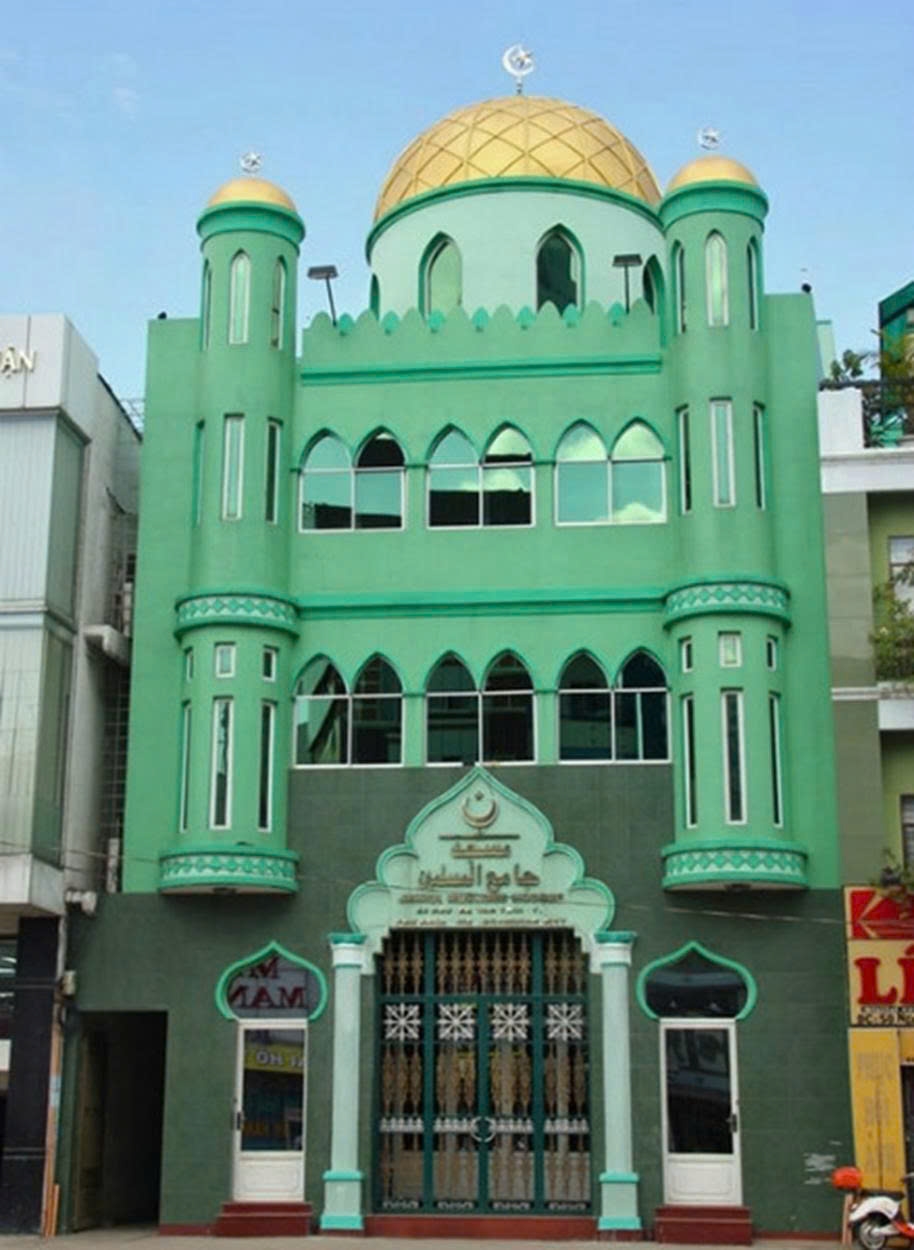 Jamiul Muslimin Mosque, Ho Chi Minh City
2.3. Advantages and opportunities for the Cham community in developing Halal tourism
The Cham community in Vietnam is facing many important advantages and opportunities to play a pivotal role in the development of Halal tourism, considering both internal and external contexts:
Firstly, the most important advantage of the Cham community is its long-standing Islamic cultural and religious foundation, which has been relatively well preserved through many generations. The system of mosques, religious ceremonies, customs, and cuisine that adhere to Halal standards creates a unique tourism resource that is difficult for external entities to replace. This forms the foundation for developing authentic Halal tourism products that directly meet the needs of Muslim tourists.
Secondly, the strong growth trend of the global Halal tourism market opens up great opportunities for the Cham community. With hundreds of millions of visitors annually and high spending power, the Muslim tourist segment is becoming a potential market that Vietnam can tap into. In this context, the Cham community has the potential to become a cultural and religious bridge, helping Vietnam build an image of a friendly and suitable destination for international Muslim tourists.
Thirdly, the policy environment, which is increasingly focused on sustainable tourism and community-based tourism, facilitates the deeper participation of the Cham community in Halal tourism activities. Policies for tourism development linked to cultural preservation, product diversification and enhancing the role of local communities are crucial foundations for promoting community-based Halal tourism models.
Fourthly, the development of digital technology and communication opens up opportunities for promotion and market connections for the Cham community. Through digital platforms, communities can showcase Halal tourism products, tell local cultural stories and directly reach international Muslim tourists at a lower cost.
In summary, the above factors indicate that, with appropriate institutional and capacity building support, the Cham community has the full potential to become a driving force for sustainable Halal tourism development in Vietnam.
2.4. Policy orientations and solutions for the Cham community in the development of Halal tourism
Firstly, it is necessary to develop a specific policy framework for the development of Halal tourism, clearly defining the role and participation rights of the Cham community. Policies need to create mechanisms for community participation from planning and product development to monitoring implementation, while ensuring a fair sharing of benefits between the community, businesses and the State. The completion of a unified and transparent Halal standards and certification system is a key condition for enhancing the reputation of Halal tourism products.
Secondly, it is necessary to focus on training human resources for Halal tourism within the Cham community, including skills in tourism management and business, foreign languages, digital communication and understanding of the international Muslim market. At the same time, support the community in accessing capital, technology and consulting services to develop Halal-certified homestay, culinary and cultural experience models.
Thirdly, it is necessary to encourage the Cham community to proactively develop conventions and principles for participating in tourism in order to control the level of exploitation and avoid excessive commercialization of religious and cultural values.
Fourthly, it is necessary to promote multi-stakeholder linkages between the Cham community, local authorities, tourism businesses and international organizations to form a sustainable Halal tourism value chain. This approach will help the Cham community play a core role, at the same time contributing to making Halal tourism a new, effective and sustainable direction for Vietnamese tourism development.
2.5. Proposing a practical model for the Cham community in developing Halal tourism
Firstly, the community-based model places the Cham community at the center of the model. The community participates from planning and product design to operation and quality control. Suitable organizational forms include community-led Halal tourism cooperatives/associations, in which Cham households provide homestay services, Halal cuisine, cultural and religious experience guidance and handicrafts. A transparent benefit-sharing mechanism helps strengthen the incentive to participate and ensures internal fairness.
Secondly, the Halal standardization pillar ensures the reliability and competitiveness of the product. The model needs to integrate a unified Halal standard system for the entire service chain (food, accommodation, religious activities), with expert advice from religious leaders and Halal certification organizations. Educating the community on Halal practices, food safety and customer service is crucial for maintaining quality.
Thirdly, the market linkage pillar aims to connect communities with travel businesses, digital platforms and the international Muslim tourist market. Local authorities play a facilitating role, supporting infrastructure, promoting and connecting partners; businesses handle marketing and distribution; the community provides core services. Digital media is being used to tell the story of Cham culture and promote Halal products. This model allows for the effective utilization of the cultural and religious resources of the Cham community, while reducing the risks of commercialization and ensuring the sustainable, authentic and inclusive development of Halal tourism in Vietnam.
3. Discussion
Analyses show that the development of Halal tourism in Vietnam can only be effective and sustainable when the Cham community is established as the central entity in the development process:
Firstly, the core role of the Cham community lies not only in providing Halal services, but also in ensuring cultural and religious authenticity, a crucial factor in building trust among Muslim tourists. Therefore, any Halal tourism development model that lacks genuine community participation risks commercialization, distortion of cultural values and a decline in sustainability.
Secondly, a crucial issue is the relationship between the community and other stakeholders within the Halal tourism ecosystem. The Cham community needs to be empowered appropriately in planning and governance, but this does not mean the community should operate in isolation. The constructive role of the State and the market-connecting function of businesses are essential supporting factors in transforming cultural and religious resources into economic value.
Thirdly, there is a need to balance economic development and the preservation of culture and religion; in which, the limits of exploitation must be established and respected by the community. Overall, developing Halal tourism in conjunction with the Cham community is a long-term process requiring a flexible, interdisciplinary, and dialogue-based approach to ensure a harmonious balance of economic, cultural, and social interests in the context of integration.
4. Conclusion
The Cham community plays a core and irreplaceable role in the development of Halal tourism in Vietnam. With their unique Islamic cultural and religious background, local knowledge and strong social network, the Cham community is the key guarantor of the authenticity, quality, and credibility of Halal tourism products. Experience shows that Halal tourism can only develop sustainably when communities are empowered to genuinely participate in the design, organization and management of the product, at the same time being guaranteed economic benefits and the right to cultural preservation. Therefore, placing the Cham community at the center of the Halal tourism development strategy not only contributes to boosting the local economy but is also an important solution for preserving and promoting cultural and religious values in the context of current integration.
*Journal of Ethnic and Religious Research
References
1. Phu Van Han, Nguyen Duy Dung (2025). Developing the Halal industry - A new direction for Vietnam in the current context, Journal of Ethnic and Religious Research, No. 2 (October).
2. Dinh Cong Hoang, Pham Thi Kim Hue, Nguyen Danh Cuong (2025), Halal tourism development and policy implications for Vietnam, https://www.tapchicongsan.org.vn/web/guest/van_hoa_xa_hoi/-/2018/1097402/view_content
3. Tang Minh Thanh Thao, Dang Ngoc Nhat Anh, Pham Dao Hong Ngoc (2024). Developing human resources for the Halal industry: experiences of other countries and policy implications for Vietnam, https://tapchicongthuong.vn/phat-trien-nguon-nhan-luc-nganh-cong-nghiep-halal--kinh-nghiem-cac-nuoc-va-ham-y-chinh-sach-cho-viet-nam-128587.htm
